Fort Hammenheil
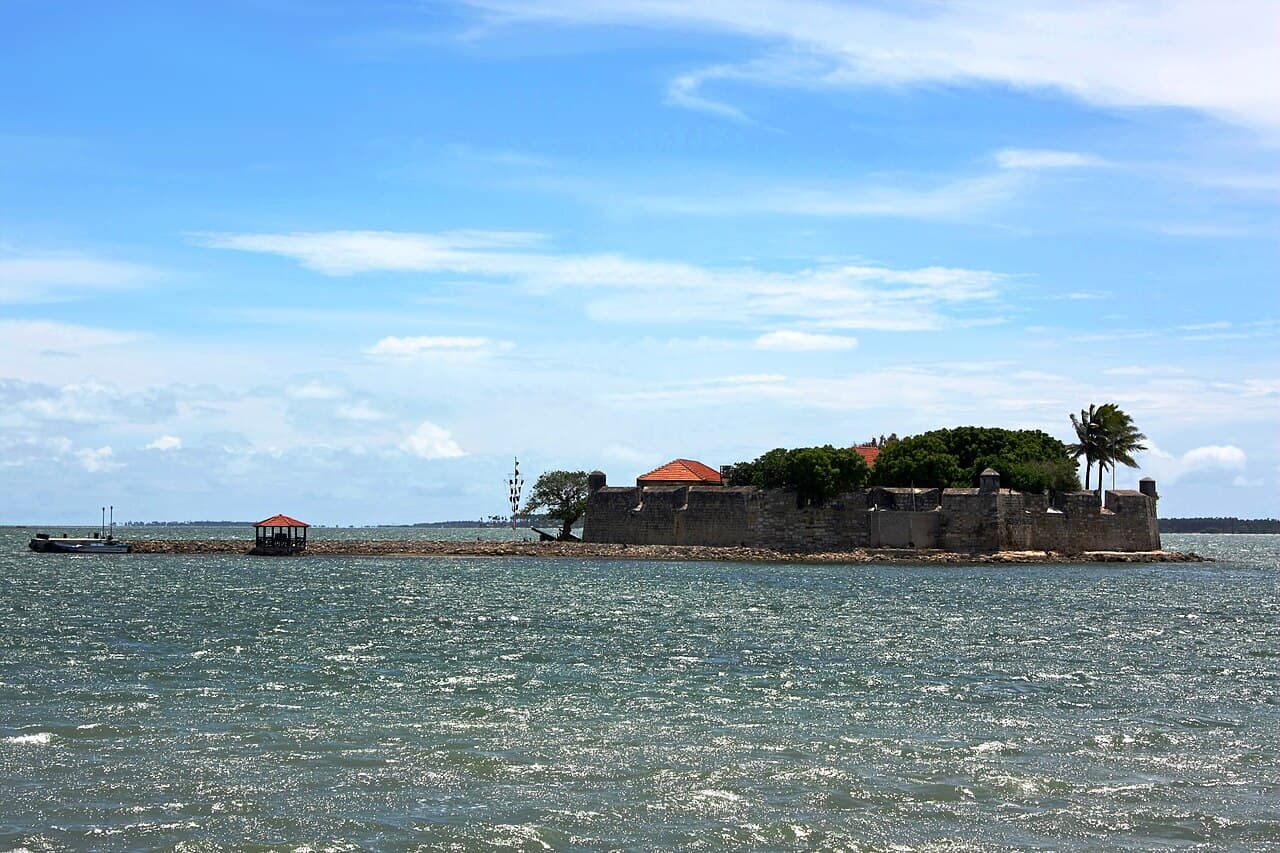
Fort Hammenheil is a historic bastioned fortress located on a small island between the islands of Kayts and Karaitivu, off the Jaffna Peninsula in northern Sri Lanka. Constructed in the 17th century during the Renaissance period, the fort reflects the military architectural style introduced by European colonial powers in the region, particularly the Portuguese and Dutch.
Historical background and strategic importance
The fort's location on a small island made it a critical point for controlling maritime routes and defending the Jaffna Peninsula, which was a valuable area due to its proximity to important sea lanes and local trade centers. The name Hammenheil is derived from Dutch, meaning "Safe harbor," indicating its role as a secure naval base and refuge for ships navigating the northern waters of Sri Lanka.
Originally built by the Portuguese in the early 17th century, the fort was later captured and rebuilt by the Dutch East India Company (VOC) in the mid-17th century, who enhanced its defensive capabilities. The Dutch modifications included the addition of bastions and reinforced walls designed to withstand artillery attacks, characteristic of the bastioned fortress style prevalent in European military architecture of the time.
Architectural features and fortifications
Fort Hammenheil exemplifies the bastioned fortress design, featuring angular bastions at its corners that provided overlapping fields of fire to defend against attackers. The fort's walls were constructed from local coral stone and limestone, materials commonly used in coastal fortifications in Sri Lanka due to their availability and durability.
The fort's compact layout was adapted to the small island's limited space, with a central courtyard surrounded by barracks, storage rooms, and a chapel. The bastions were equipped with cannon emplacements, and the fort was surrounded by a moat connected to the sea, enhancing its defensive perimeter.
The entrance was guarded by a robust gatehouse with thick walls and a drawbridge, controlling access to the fort. The fort's design reflects the military engineering principles of the Renaissance period, emphasizing strong defensive geometry and artillery resistance.
Role during colonial conflicts
Throughout its history, Fort Hammenheil played a significant role in the colonial struggles between the Portuguese, Dutch, and later the British, who took control of the fort in the late 18th century. Its strategic position allowed the controlling power to monitor and regulate naval traffic in the Palk Strait and the surrounding waters.
During the British period, the fort's military importance declined, and it was repurposed for various uses, including as a prison and quarantine station. The fort's isolated location made it suitable for detaining prisoners, including political detainees during periods of unrest.
Present condition and cultural significance
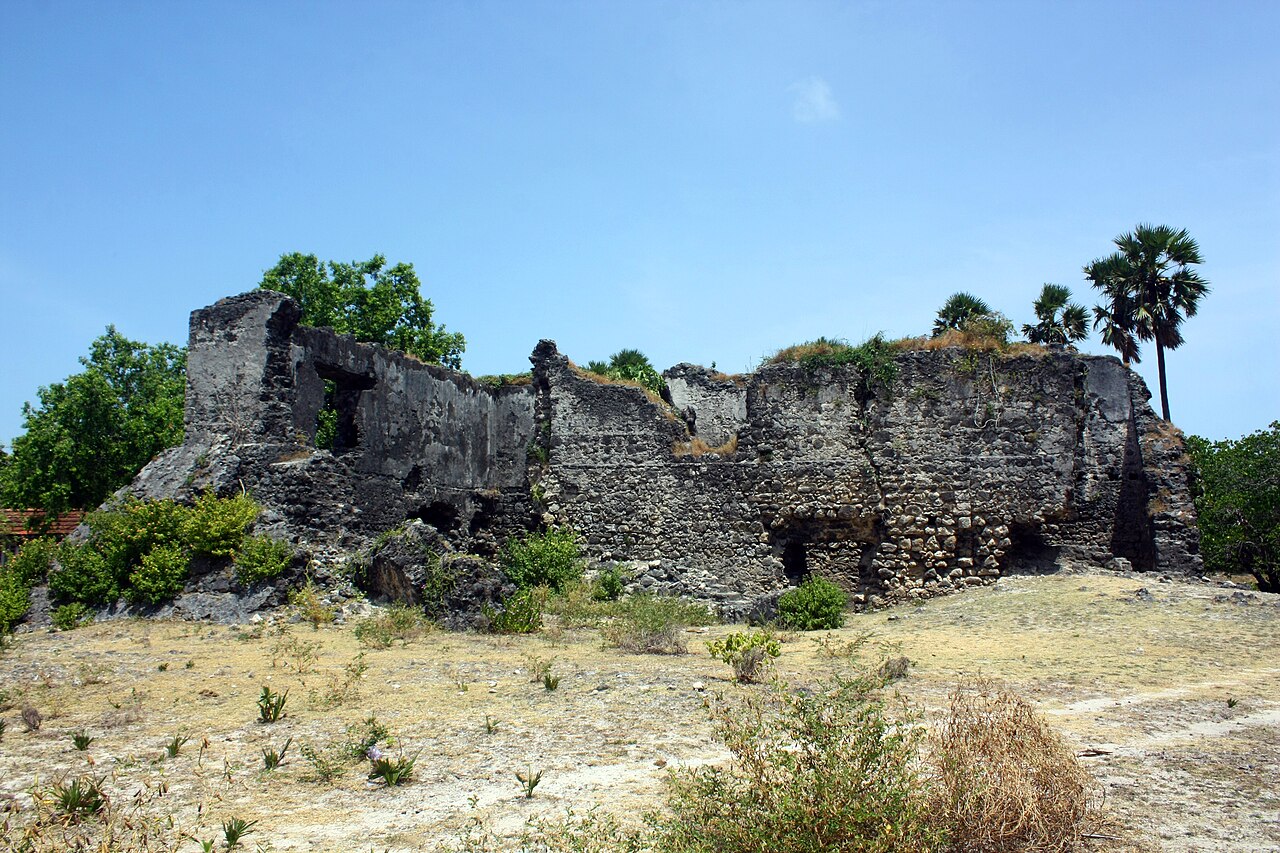
Today, Fort Hammenheil remains a partially preserved structure, with some bastions and walls still intact, though much of the fort has suffered from natural erosion and lack of maintenance. The fort is recognized as an important cultural heritage site in Sri Lanka, representing the island's colonial past and the evolution of military architecture in the Indian Ocean region.
Efforts to conserve and restore the fort have been limited, but it continues to attract historians, archaeologists, and tourists interested in colonial history and fortifications. Its unique island setting and architectural features make it a notable example of European bastioned fortresses adapted to tropical island environments.
Visiting Fort Hammenheil
Access to Fort Hammenheil is typically by boat from the nearby islands of Kayts or Karaitivu. Visitors should plan ahead as facilities on the island are minimal, and the fort is not extensively developed for tourism. The best time to visit is during the dry season when sea conditions are favorable for boat travel.
Exploring the fort offers a glimpse into the military strategies of European colonial powers and the historical maritime significance of the Jaffna region. Visitors can observe the remaining bastions, walls, and the layout that reflects the Renaissance military architectural style.
Frequently asked questions (FAQ)
- What is the historical significance of Fort Hammenheil?
- Fort Hammenheil is a prominent historical landmark in Sri Lanka, built in the 17th century by the Dutch to protect their trading interests. The fort showcases the colonial architecture of the time and serves as a reminder of the country's strategic importance in maritime trade routes.
- When was Fort Hammenheil constructed?
- Fort Hammenheil was constructed in 1669 as a defense mechanism against Portuguese and other colonial powers in the region. Its construction reflects the military architecture of the Dutch colonial period in Sri Lanka.
- How do I get to Fort Hammenheil?
- Fort Hammenheil is accessible by road, located approximately 30 kilometers from the nearest major city, Galle. Visitors can reach the fort by car or public transport; local buses frequently operate in the area, making it convenient for travelers.
- What are the opening hours for Fort Hammenheil?
- Fort Hammenheil is open to visitors daily from 8:00 AM to 5:00 PM. It is advisable to visit during these hours to fully explore the fort and its historical exhibits.
- Can I enter Fort Hammenheil without a ticket?
- Yes, entry to Fort Hammenheil is free for all visitors, allowing everyone to appreciate its historical and architectural significance. However, donations are welcome to help with the maintenance and preservation of the site.
- Is it possible to visit Fort Hammenheil year-round?
- Yes, Fort Hammenheil can be visited year-round. However, the best time to visit is between December and March, when the weather is generally dry and more pleasant for exploration.
- What nearby attractions can I visit after Fort Hammenheil?
- After visiting Fort Hammenheil, travelers can explore other nearby attractions such as the Galle Fort, a UNESCO World Heritage Site, and the beautiful beaches of Unawatuna. These locations offer rich cultural experiences and stunning views, making them perfect complements to your visit.
- What is the architecture style of Fort Hammenheil?
- The architecture of Fort Hammenheil represents Dutch colonial style, characterized by thick walls, bastions, and a strategic layout designed for defense. Its well-preserved features provide insight into the military engineering practices of the 17th century.
Photo gallery

Information
Loading map...
Visitor reviews
No reviews yet. Been here? Write the first review and help other travelers!
Write the first reviewVisited this castle? Share your experience
Your review helps other travelers and adds first-hand knowledge to our encyclopedia.