Kavilda stronghold
Kavilda stronghold (Estonian: Kavilda vasallilinnus, German: Kawelecht) is a historic castle site located on the western slope of the Kavilda River in what is today Mõisanurme village, Elva Parish, Tartu County, Estonia. This late medieval bastioned fortress was constructed in the mid-14th century and played a role in the turbulent military history of the Baltic region. Although now largely in ruins, Kavilda stronghold offers valuable insight into medieval fortification architecture and the history of the Livonian Order.
Historical background and construction
The origins of Kavilda stronghold date back to the 14th century, with historical records indicating two possible founding dates. According to the historian Leonhard von Stryk, the castle was first built in 1354 by Bartholomäus von Tiesenhausen, a nobleman associated with the Livonian Order. Other sources attribute its construction to Arnold von Vietinghoff, the Master of the Livonian Order, around 1361. This discrepancy reflects the challenges of medieval record-keeping but confirms the castle's establishment during a period of military and political consolidation in Livonia.
Kavilda was designed as a castellum-type fortress, characterized by a tower-shaped residential building which served both defensive and residential functions. The castle's strategic position on the slope overlooking the Kavilda River provided natural defensive advantages and control over the surrounding territory.
Architectural features and layout
Although much of Kavilda stronghold has not survived, archaeological studies and historical descriptions reveal it was a bastioned fortress typical of late medieval military architecture in the Baltic region. The castellum-like structure included robust stone walls and a prominent tower that served as the main residential quarters and last defensive refuge.
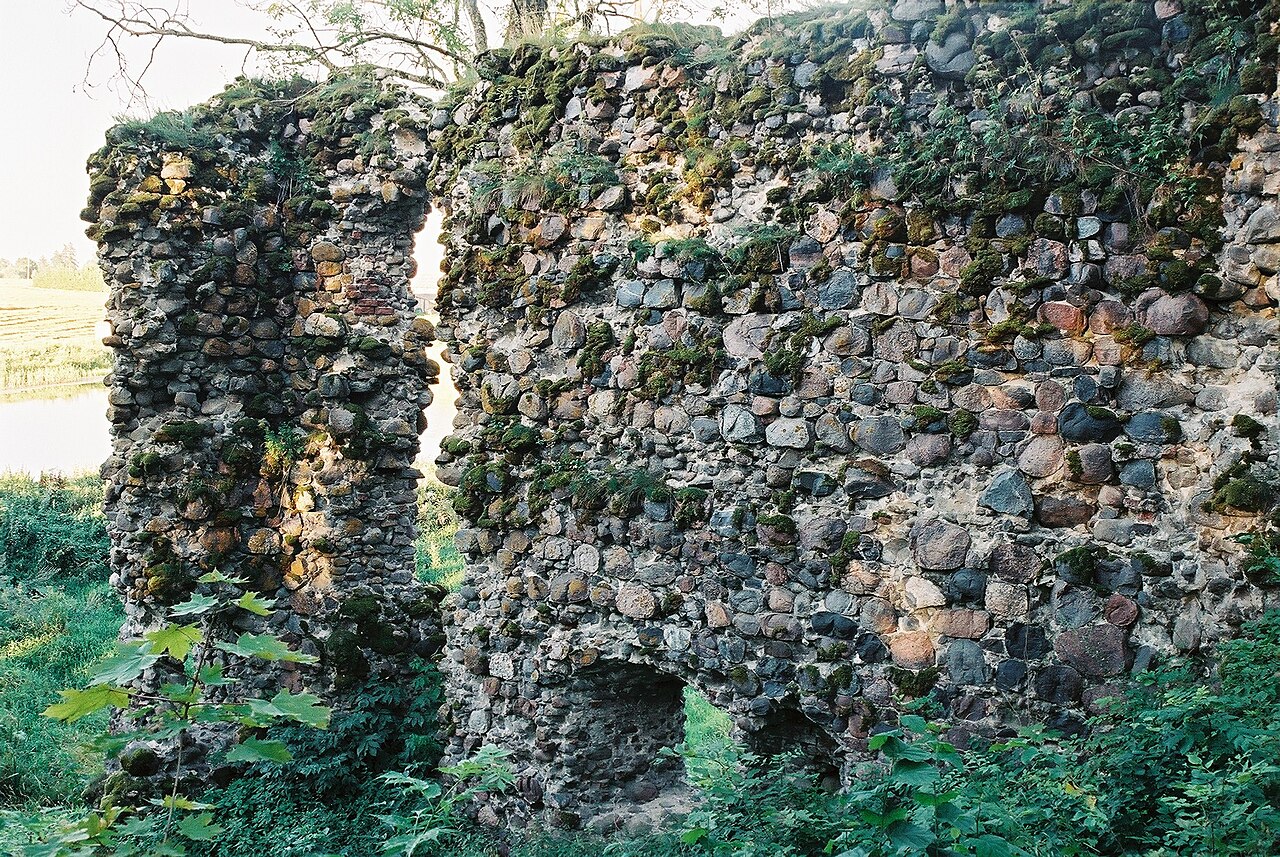
The fortress likely included a courtyard surrounded by defensive walls, with bastions or protruding defensive works to provide overlapping fields of fire against attackers. The tower's remains today consist of about one and a half floors, with much of the original structure now buried underground, indicating significant destruction and subsequent sedimentation over centuries.
Role in the livonian war and destruction
Kavilda stronghold was destroyed during the Livonian War (1558–1583), a conflict that involved multiple powers vying for control over the territories of present-day Estonia and Latvia. The castle was likely demolished between 1564 and 1582, possibly before the Polish forces invaded the region. This destruction marked the end of Kavilda as a military fortress.
After its destruction, the site ceased to function as a castle and transitioned into a manor estate, reflecting the broader decline of medieval fortifications in favor of more modern residential and agricultural estates during the post-medieval period.
Current condition and archaeological significance
Today, Kavilda stronghold exists primarily as archaeological ruins. The remaining structure is partially preserved, with only the lower floors of the main tower visible above ground. The site offers valuable opportunities for archaeological research into medieval bastioned fortress design and the military history of the Livonian Order.
The location within Mõisanurme village in Elva Parish situates Kavilda within a landscape rich in medieval heritage, attracting historians and visitors interested in Estonia's medieval past.
Cultural heritage and visitor information
While Kavilda stronghold is not a fully restored castle, its ruins are an important cultural monument reflecting Estonia's medieval fortification history. Visitors can explore the site to appreciate the remnants of the tower and the castle's strategic placement by the Kavilda River.
The site is accessible for those interested in medieval architecture and the history of the Livonian Order, although facilities and detailed visitor information may be limited due to its ruinous state.
Frequently asked questions (FAQ)
- When was Kavilda stronghold built and by whom?
- Kavilda stronghold was built in the 14th century, with sources citing either 1354 by Bartholomäus von Tiesenhausen or 1361 by Arnold von Vietinghoff, the Master of the Livonian Order.
- What type of castle was Kavilda stronghold?
- Kavilda was a bastioned fortress designed as a castellum-type building with a tower-shaped residential structure, typical of late medieval military architecture in the Baltic region.
- What happened to Kavilda stronghold during the Livonian War?
- The castle was destroyed between 1564 and 1582 during the Livonian War, likely demolished before the Polish invasion, after which it ceased to function as a fortress and became a manor estate.
- What remains of Kavilda stronghold today?
- Today, only about one and a half floors of the main tower remain, mostly underground, classifying the site as archaeological ruins with limited visible structures.
- Is Kavilda stronghold accessible to visitors?
- The site is accessible for visitors interested in medieval history and architecture, but as a ruin, it may lack extensive visitor facilities or guided tours.
Photo gallery

Information
Loading map...
Visitor reviews
No reviews yet. Been here? Write the first review and help other travelers!
Write the first reviewVisited this castle? Share your experience
Your review helps other travelers and adds first-hand knowledge to our encyclopedia.