Kasteln Castle
Kasteln Castle stands as a significant historical monument in the Schenkenberger valley near Oberflachs, Switzerland. Originally constructed around 1200, this high medieval fortress was strategically positioned a few kilometers from Schenkenberg Castle to control the surrounding region. The castle's early history is closely tied to the powerful House of Kyburg, as it was first documented in 1238 in a deed of gift to the castle's residents, who served as vassals to the Kyburgs.
Medieval origins and kyburg era
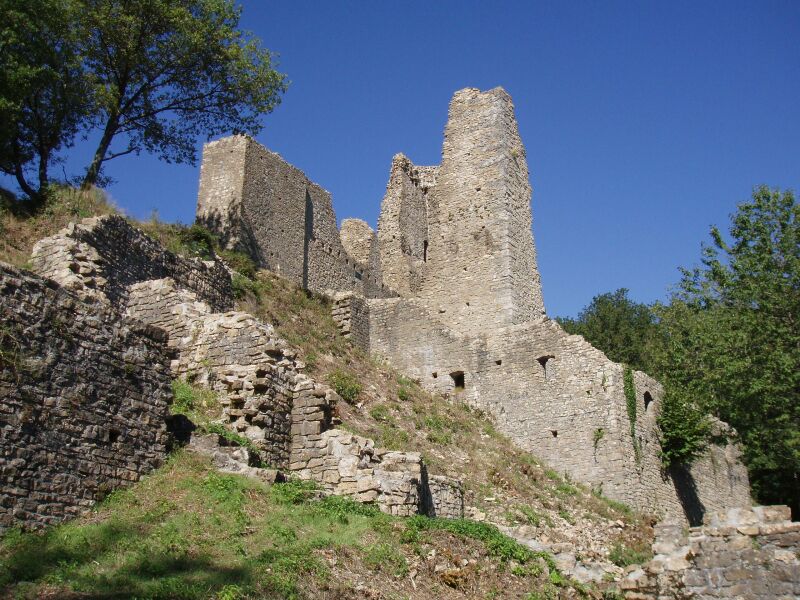
The initial fortress was designed for defense and oversight within the valley, reflecting typical medieval military architecture of the period. In 1262, the nearby Ruchenstein Castle was erected on a cliff directly behind Kasteln, serving as the seat for the Knight of Ruchenstein. The extinction of the Kyburg family line in 1264 marked a significant transition, as the castle passed to the House of Habsburg, a dominant force in European nobility. By 1301, the Ruchenstein lineage had also ended, and a decade later both castles were acquired by the lords of Mülinen from Brugg. The Mülinen family governed a modest territory on the southern edge of the Jura mountains from Kasteln, maintaining control until the early 17th century.
Baroque transformation under johann ludwig von erlach
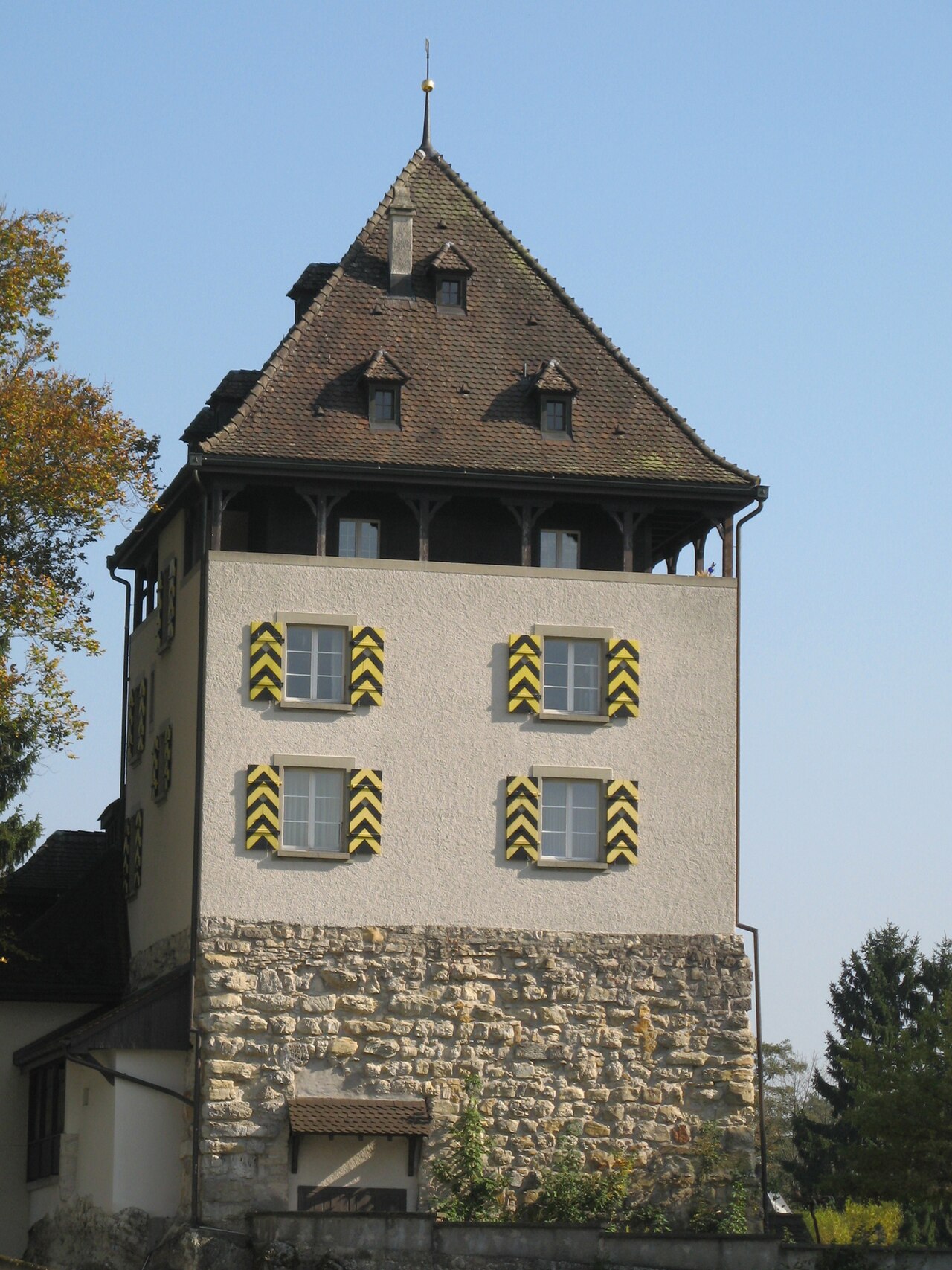
In 1631, Johann Ludwig von Erlach, a Bernese patrician and military general, purchased Kasteln and Ruchenstein castles. Von Erlach initiated an extensive reconstruction of Kasteln between 1642 and 1650, converting the medieval fortress into a representative baroque manor house. This transformation is notable as Kasteln is recognized as the only uniformly built baroque palace in the canton of Aargau. The renovation included the addition of two-story wings to the east and west of the original four-story medieval core. Materials from the demolished Ruchenstein Castle, which was dismantled in 1643, were reused in these expansions. Despite von Erlach's vision, the reconstruction was costly and prolonged, partly due to the builder's inexperience and von Erlach's frequent absences.
Architectural features and layout
The castle's core is a robust four-story structure typical of medieval defensive architecture, surrounded by the elegant baroque wings that introduced residential and representative functions. The juxtaposition of the medieval and baroque elements creates a unique architectural ensemble. The interior originally featured lavish decorations and furnishings, reflecting the tastes and status of its owners, but much of this was lost in a devastating fire in 1907.
Ownership changes and modern use
After nearly a century under the Erlach family, the castle and its small bailiwick were sold to the city of Bern in 1732 for 90,000 Taler. Following the political upheavals of the early 19th century, including the fall of the Ancien Régime and the 1803 Act of Mediation, Kasteln came under the jurisdiction of the newly formed canton of Aargau. The castle entered private ownership in 1836 before being acquired in 1855 by Frederick and Louis Carnival from Aarau, who established a rescue institution for orphans and neglected pupils of the Reformed denomination.
20th-century transformations and fire damage
On 24 August 1907, a fire set by one of the institution's pupils severely damaged Kasteln Castle and its adjacent barn. The destruction necessitated substantial rebuilding efforts, and the institution resumed operations in 1909. Over the decades, the castle's function evolved, becoming a boarding school for students with behavioral challenges by 1955. Additional facilities, including a second school building, swimming pool, and staff house, were constructed in 1969. A comprehensive renovation in 2009 updated the castle's interior and exterior to meet contemporary social education needs.
Cultural and architectural significance
Kasteln Castle is distinguished as the only uniformly constructed baroque palace in the canton of Aargau. Its architectural evolution from a high medieval fortress to a baroque manor illustrates the region's shifting political and social landscape over several centuries. The castle's preservation and adaptation for educational purposes demonstrate a continuous legacy of community use. Although the original rich interior was lost to fire, Kasteln remains a prominent example of baroque architecture layered upon medieval foundations.
Surrounding historical context
The castle's location in the Schenkenberger valley places it within a network of medieval fortifications that once controlled trade and military routes in the area. Its proximity to Schenkenberg Castle and the former Ruchenstein Castle highlights a strategic cluster of strongholds important to the Kyburg and later Habsburg dynasties. The castle's history reflects broader regional dynamics, including feudal allegiances, noble family successions, and the impact of Bernese governance.
Current status and accessibility
Today, Kasteln Castle is well preserved and functions as an educational institution, maintaining its historical structure while serving modern needs. The castle's extensive renovations ensure its stability and usability, allowing visitors and scholars to appreciate its architectural and historical significance within the Swiss cultural landscape.
Frequently asked questions (FAQ)
- What is the historical significance of Kasteln Castle?
- Kasteln Castle dates back to the 12th century and was an important stronghold in the region during the Middle Ages. It played a crucial role in the defense against invasions and served as a residence for local nobility, reflecting the feudal system of the time.
- When was Kasteln Castle built?
- Kasteln Castle was constructed in the early 12th century, making it one of the oldest fortifications in Switzerland. Over the centuries, it has undergone various renovations, preserving its medieval architecture while adapting to modern needs.
- Can I visit Kasteln Castle?
- Yes, Kasteln Castle is open to visitors throughout the year. Guided tours are available, allowing guests to explore the castle's rich history and stunning architecture.
- What are the opening hours of Kasteln Castle?
- Kasteln Castle is typically open from 10 AM to 5 PM, with extended hours during the summer months. It is advisable to check the castle's official website for any seasonal changes or special event schedules.
- Is it possible to access Kasteln Castle with a wheelchair?
- Kasteln Castle has made efforts to improve accessibility, but some areas may still present challenges due to its historic structure. It is recommended to contact the castle in advance to inquire about specific accommodations for wheelchair users.
- What is the best time to visit Kasteln Castle?
- The best time to visit Kasteln Castle is during the spring and early autumn when the weather is mild and the surrounding landscapes are particularly beautiful. Additionally, these seasons often have fewer crowds, allowing for a more enjoyable experience.
- Are there any nearby attractions to visit?
- Yes, visitors to Kasteln Castle can explore the charming town of Oberflachs and its picturesque surroundings. Nearby attractions include hiking trails, local museums, and scenic viewpoints that showcase the stunning Swiss landscape.
- How much are the ticket prices for Kasteln Castle?
- Ticket prices for Kasteln Castle are generally affordable, with discounts available for children, seniors, and groups. It's best to check the castle's official website for the most current pricing and any special offers.
Information
Loading map...
Visitor reviews
No reviews yet. Been here? Write the first review and help other travelers!
Write the first reviewVisited this castle? Share your experience
Your review helps other travelers and adds first-hand knowledge to our encyclopedia.