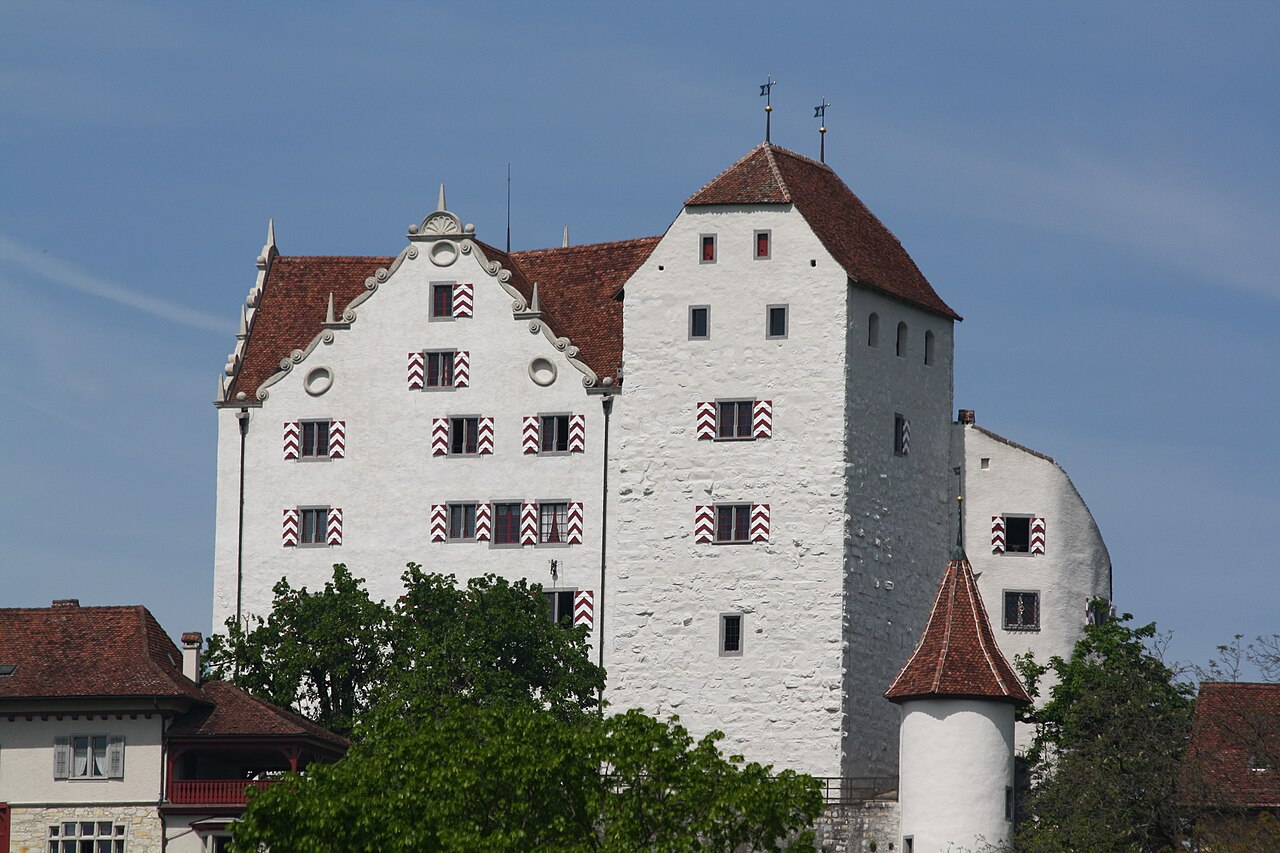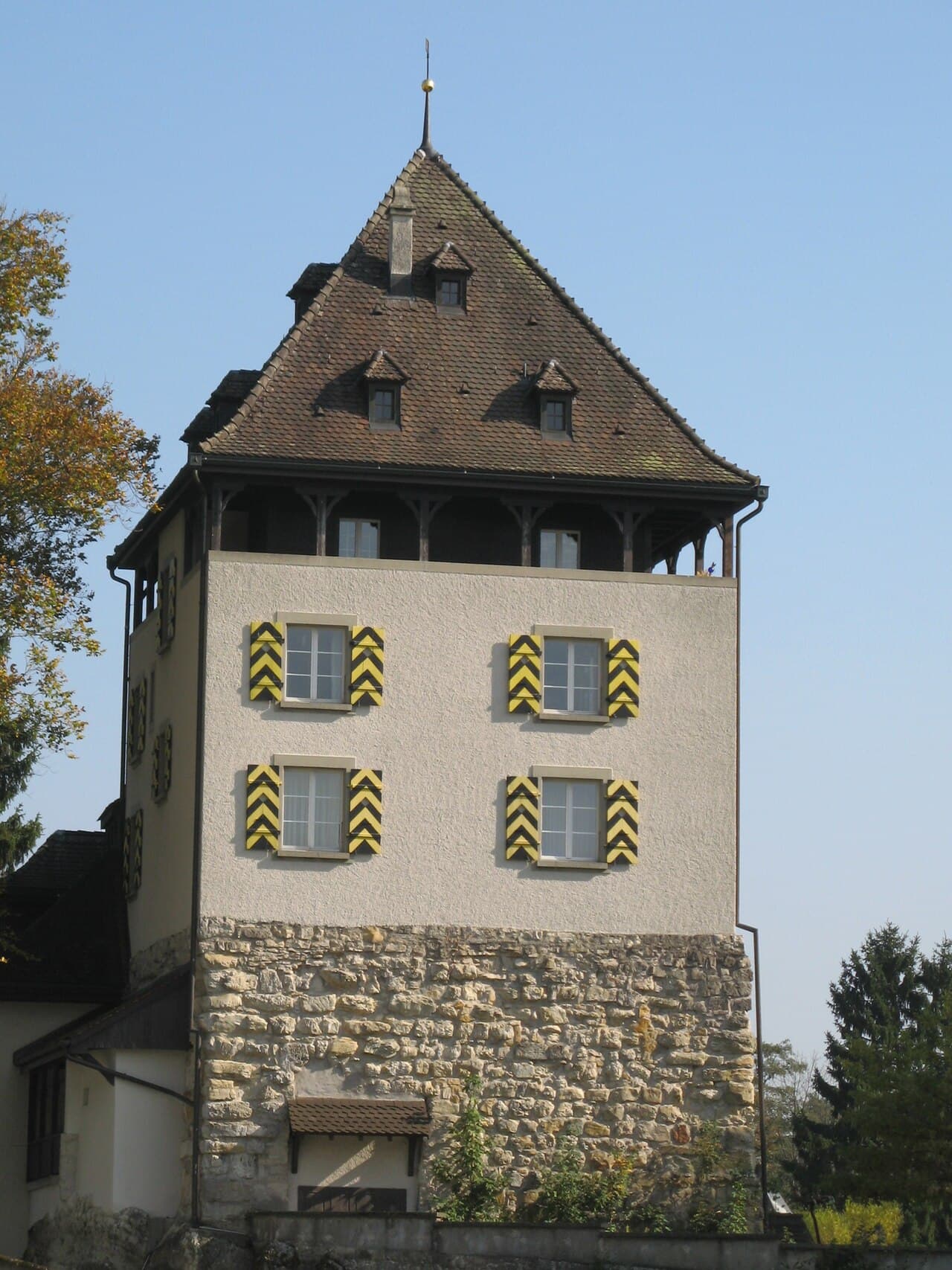
Auenstein Castle
Auenstein Castle is a historic hill castle located above the Aare river in the municipality of Auenstein, in the Swiss canton of Aargau. Constructed originally in the 13th century for the local nobleman Gowenstein, this castle has witnessed significant historical events and transformations over the centuries, reflecting the turbulent political and social changes of the region.
Medieval origins and strategic location
The castle was strategically built on a rocky hill, providing commanding views over the surrounding landscape and the vital waterway of the Aare river. This location was typical of high medieval hill castles, designed both for defense and asserting control over the nearby lands. The initial construction in the high medieval period reflects architectural features common to Swiss fortifications of the time, including robust stone walls and a compact layout optimized for defense.
Early ownership and political significance
Originally established for the nobleman Gowenstein, the castle changed hands around 1300 when it was acquired by the Lord of Rinach. The castle's ownership ties it closely to the local feudal hierarchy and the shifting allegiances of the period. The Lords of Rinach maintained the castle through the 14th century, a time marked by increasing regional conflicts.
Conflict and decline in the late medieval period
In 1389, during the conflict between the Habsburgs and the Old Swiss Confederacy, a Bernese army attacked and burned Auenstein Castle. This event was part of broader military campaigns that shaped the political landscape of what is now Switzerland. Following the Bernese conquest of the Aargau in 1415, the castle became part of the Landvogtei of Lenzburg, an administrative district under Bernese control.
Despite its strategic importance, the castle was never fully rebuilt by the Lords of Rinach after the destruction. In 1465, Albrecht von Rinach sold the ruined castle and its surrounding villages to Heinrich Hasfurter from Lucerne. The castle remained in ruins for centuries, passing through various owners but never regaining its former military or administrative prominence.
Ownership changes and 18th-19th century developments
In 1732, the castle and its territory came under direct Bernese control, remaining so until the upheavals of the late 18th century. The 1798 French invasion and the establishment of the Helvetic Republic abolished the old feudal systems, ending the rule of noble landlords over villages and estates including Auenstein.
With the creation of the Canton of Aargau in 1803 under the Act of Mediation, the ruins became canton property. During the 1850s, the ruins were sold to a private owner who undertook the significant task of rebuilding the castle. By 1858, a new habitable structure had risen from the medieval ruins, marking a revival of the site as a residence rather than a fortress.
20th century renovations and current status
In the early 20th century, Mrs. A. Hoffmann acquired the castle and carried out extensive renovations and expansions between 1927 and 1929. These works gave the castle much of its current appearance, blending the historical medieval elements with 20th-century restoration sensibilities.
Today, Auenstein Castle remains in private ownership and is not generally open to the public. Its preservation reflects the layered history of Swiss castles that have evolved from medieval fortifications to private residences, embodying centuries of architectural and social change.
Architectural features and layout
Though much of the original medieval structure was lost or altered during the centuries of ruin and rebuilding, the castle retains characteristic features of a high medieval hill castle. The rocky hill foundation provided natural defense, complemented by stone walls and defensive towers typical of 13th-century construction.
The 19th and 20th-century reconstructions introduced residential elements, adapting the fortress into a more comfortable dwelling while preserving the historic silhouette. The castle's layout includes a central courtyard, fortified walls, and residential wings, reflecting its transformation from military stronghold to noble residence.
Location and surroundings
Situated in the canton of Aargau, the castle overlooks the Aare river valley, an area rich in Swiss history and natural beauty. The site’s elevation on a rocky outcrop allowed control over river traffic and local trade routes, a key factor in its original placement.
Historical significance in Swiss heritage
Auenstein Castle exemplifies the trajectory of many Swiss castles that transitioned from medieval military installations to modern private estates. Its history reflects the broader political shifts in Switzerland from feudal fragmentation through Habsburg influence, Bernese conquest, and eventual integration into the modern Swiss state.
The castle’s survival through destruction, ruin, and restoration offers insight into the resilience of Swiss cultural heritage and the evolving functions of castles in Swiss society.
Frequently asked questions (FAQ)
- How do I visit Auenstein Castle?
- Auenstein Castle is privately owned and not generally open to the public. Visitors can view the castle from nearby public areas and enjoy the surrounding landscape.
- What is the historical significance of Auenstein Castle?
- Auenstein Castle played a role in regional conflicts between the Habsburgs and the Old Swiss Confederacy and reflects the feudal history of the canton of Aargau.
- When was Auenstein Castle originally built?
- The castle was originally constructed in the 13th century for the nobleman Gowenstein, reflecting typical high medieval hill castle architecture.
- Can I tour the interior of Auenstein Castle?
- The castle is currently a private residence, so interior tours are not available to the public.
- Why was Auenstein Castle burned in 1389?
- It was sacked and burned by a Bernese army during the war between the Habsburgs and the Old Swiss Confederacy as part of military campaigns in the region.
Photo gallery

Information
Current owner
Private owner
Loading map...
Visitor reviews
No reviews yet. Been here? Write the first review and help other travelers!
Write the first reviewVisited this castle? Share your experience
Your review helps other travelers and adds first-hand knowledge to our encyclopedia.