Kastelburg Castle Ruins
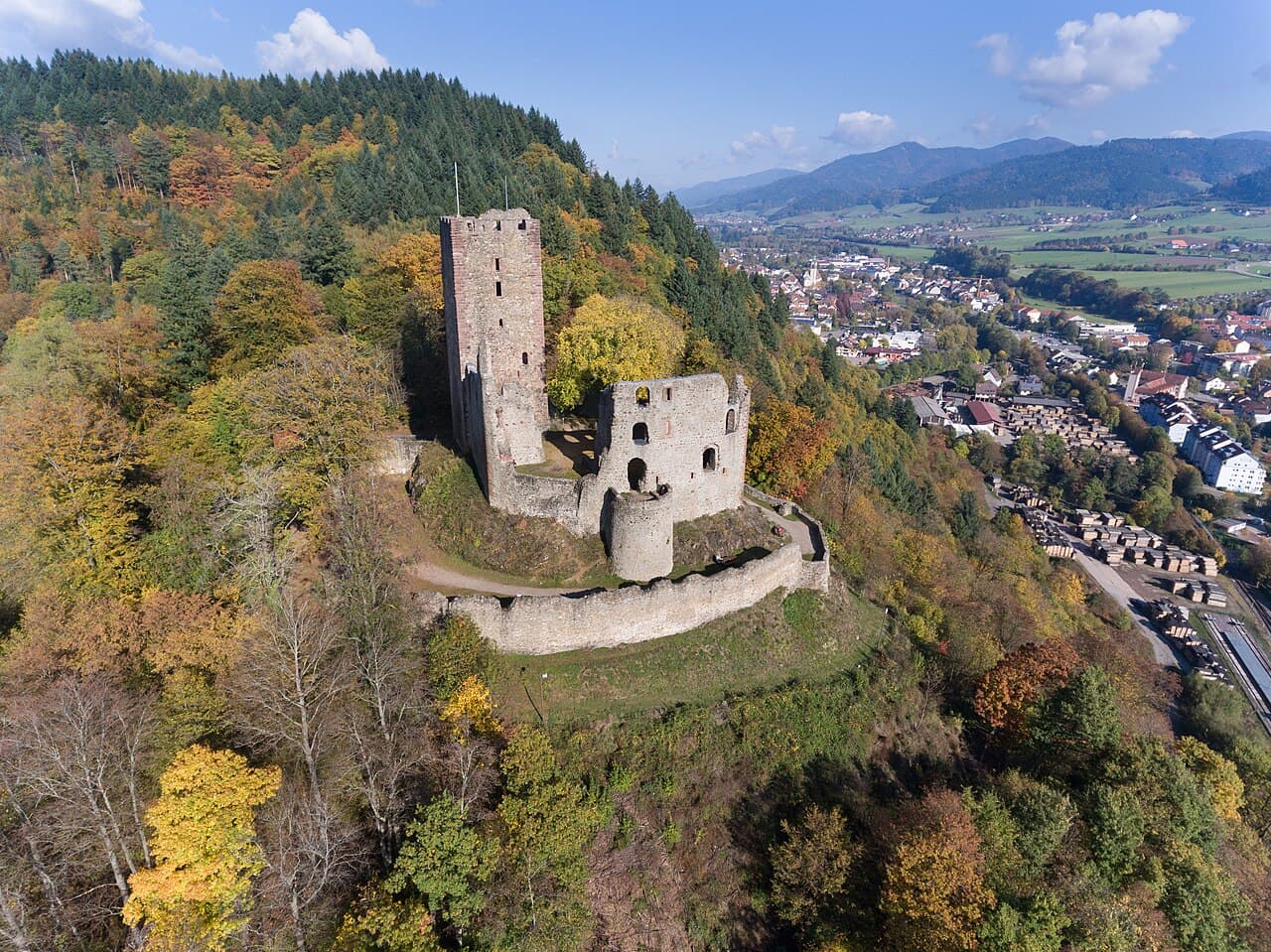
Kastelburg castle is a notable high medieval hill castle ruin located above the town of Waldkirch in the district of Emmendingen, Baden-Württemberg, Germany. Constructed between 1260 and 1270 by the Lords of Schwarzenberg, this fortress was strategically positioned on a hill approximately 100 meters above the historic center of Waldkirch. Its primary purpose was to defend the town and to exert control over the vital trade route through the Elz valley, a significant commercial artery during the medieval period.
Historical background and ownership
The castle was initially inhabited by Johann I of Schwarzenberg, the first lord to reside within its walls. The Schwarzenberg family, however, became extinct in 1345, leading to a change in ownership. Subsequently, Kastelburg castle was sold to Martin Malterer from Freiburg, a prominent figure who tragically died in 1386 at the Battle of Sempach. The castle later passed into the hands of Berthold of Staufen in 1429, marking another chapter in its storied history.
Architectural features and strategic significance
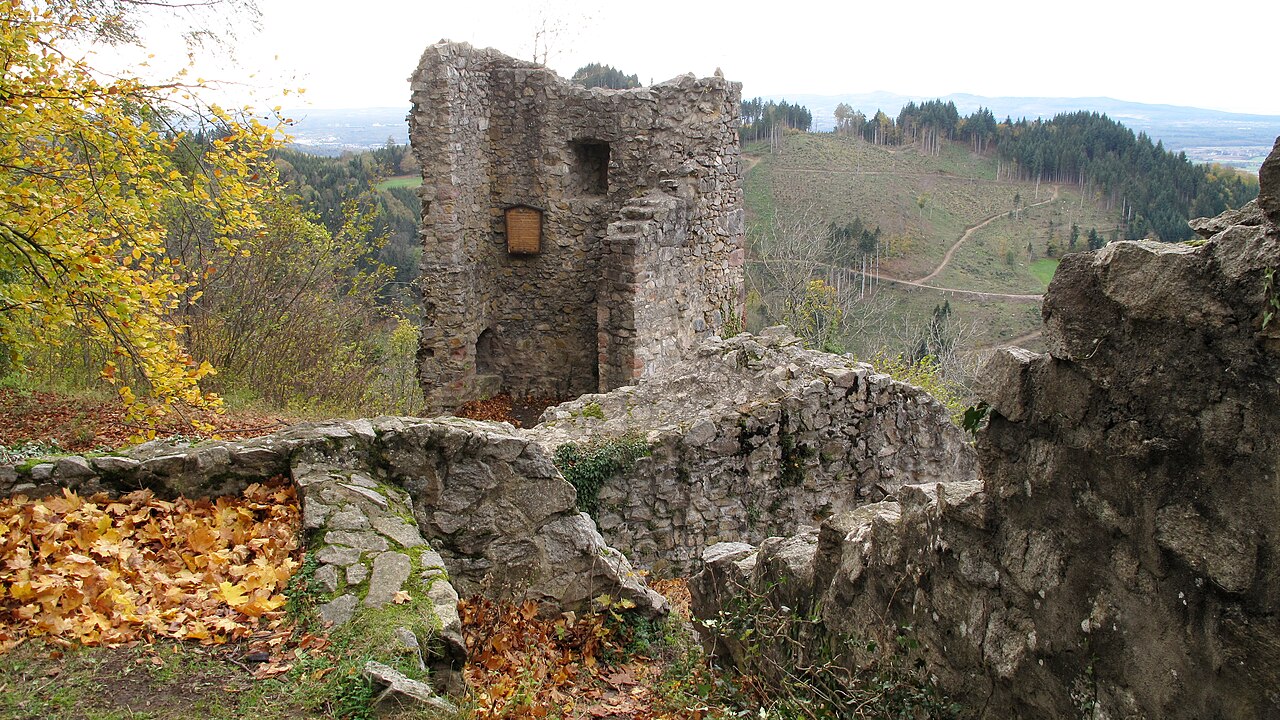
Kastelburg castle was built in the high medieval period with typical defensive features of hill castles of that era. Its elevated position provided commanding views of the surrounding landscape, especially the Elz valley, allowing the occupants to monitor and control trade and military movements effectively. The castle's design included fortified walls, battlements, and towers that enhanced its defensive capabilities. Although now in ruins, the remaining structures still convey the castle's original imposing presence.
Relation to Schwarzenburg castle
Interestingly, Kastelburg castle served in conjunction with the nearby Schwarzenburg castle, situated on the opposite side of the valley. Both castles functioned as complementary fortifications to protect Waldkirch and oversee the trade route, creating a defensive network that secured the region against potential invaders and rival factions.
Destruction and preservation efforts
The castle met its demise during the Thirty Years' War, a devastating conflict that engulfed much of Europe in the 17th century. On 14 March 1634, Kastelburg was deliberately destroyed by the forces of the Holy Roman Emperor (the Kaiser) to prevent it from falling into the hands of advancing Swedish troops. This scorched-earth tactic was common during the war to deny strategic positions to the enemy.
Today, Kastelburg stands as a ruined castle but remains a significant cultural and historical landmark. The ruins overlook Waldkirch romantically, offering visitors a glimpse into medieval fortification architecture and regional history. In recent years, dedicated conservation efforts have been undertaken to stabilize the remaining structures, ensuring that the castle's legacy endures for future generations.
Location and visitor experience
Situated in the Breisgau region, Kastelburg castle's elevated site provides spectacular views of the Black Forest and the surrounding valley. Visitors to the ruins can explore the remnants of the castle's walls and towers while enjoying the natural beauty of the area. The castle's proximity to Waldkirch makes it accessible for day trips and historical tours.
Access and tourism
While the castle is in a ruined condition, pathways and signage guide visitors safely around the site. The romantic setting of the ruins above the town attracts history enthusiasts, hikers, and photographers. The site is open to the public year-round, with no entrance fee, allowing free access to this remarkable piece of medieval heritage.
Architectural legacy and cultural significance
Kastelburg castle is an important example of high medieval military architecture in southwestern Germany. Its construction reflects the strategic priorities of the period, emphasizing control over trade routes and territorial defense. The castle's remains contribute valuable insights into the feudal system, noble families like the Schwarzenbergs, and the turbulent history of the region during the Middle Ages and the early modern period.
Despite its ruined state, Kastelburg continues to inspire interest in medieval history and architecture. It stands as a testament to the complex interplay of power, commerce, and warfare that shaped the landscape of Baden-Württemberg for centuries.
Frequently asked questions (FAQ)
- How do I get to Kastelburg Castle Ruins?
- Kastelburg Castle Ruins is located in Waldkirch, Germany, and can be easily accessed by public transportation or car. If you're traveling by train, the nearest station is Waldkirch, from where you can take a short walk or a local bus to the castle site.
- What is the historical significance of Kastelburg Castle Ruins?
- Kastelburg Castle, originally built in the 12th century, played a crucial role in the defense of the region and the surrounding area. It is a testament to medieval architecture and the strategic importance of castles during that time, showcasing the history of Waldkirch and its surroundings.
- When was Kastelburg Castle constructed?
- The construction of Kastelburg Castle began in the late 12th century, with its first historical mentions dating back to 1180. Over the centuries, it underwent various modifications and expansions, reflecting the architectural styles of different eras.
- Can I visit the castle ruins year-round?
- Yes, Kastelburg Castle Ruins are open to visitors year-round, though certain areas may be restricted during adverse weather conditions. It's advisable to check local resources for any specific closures or seasonal events that may affect access.
- Why is Kastelburg Castle a popular tourist attraction?
- Kastelburg Castle is popular due to its rich history, stunning views of the surrounding Black Forest, and the remnants of its impressive architecture. Visitors are drawn to its scenic hiking trails, historical insights, and the chance to explore one of the region's most iconic landmarks.
- Is it possible to tour the castle and learn about its history?
- While there are no guided tours available at the ruins, informational signs are placed throughout the site to educate visitors about its history and architecture. Additionally, local visitor centers often provide brochures and maps to enhance your exploration of Kastelburg Castle.
- What are the opening hours for Kastelburg Castle Ruins?
- Kastelburg Castle Ruins are generally open from sunrise to sunset, allowing ample time for exploration. However, it's always a good idea to check for any seasonal changes in hours before your visit.
- What are the ticket prices for visiting Kastelburg Castle?
- Visiting Kastelburg Castle Ruins is free of charge, making it an accessible destination for all. However, certain events or guided tours, if offered, may have a fee, so it's worth checking for any special programs during your visit.
- What is the best time to visit Kastelburg Castle Ruins?
- The best time to visit Kastelburg Castle Ruins is during the spring and fall when the weather is mild and the surrounding nature is at its most beautiful. Summer can be busy with tourists, while winter may present challenges due to snow, but each season offers a unique experience.
- Are there any nearby attractions to explore after visiting the castle?
- Yes, after visiting Kastelburg Castle Ruins, you can explore the charming town of Waldkirch, known for its picturesque streets and local shops. Additionally, the Black Forest region offers numerous hiking opportunities and other historical sites to enhance your adventure.
Photo gallery

Information
Loading map...
Visitor reviews
No reviews yet. Been here? Write the first review and help other travelers!
Write the first reviewVisited this castle? Share your experience
Your review helps other travelers and adds first-hand knowledge to our encyclopedia.