Schwarzenburg (Breisgau) — Germany castle

Schwarzenburg (Breisgau)

Schwarzenburg castle near Waldkirch, Germany
Waldkirch, Germany
Ruins

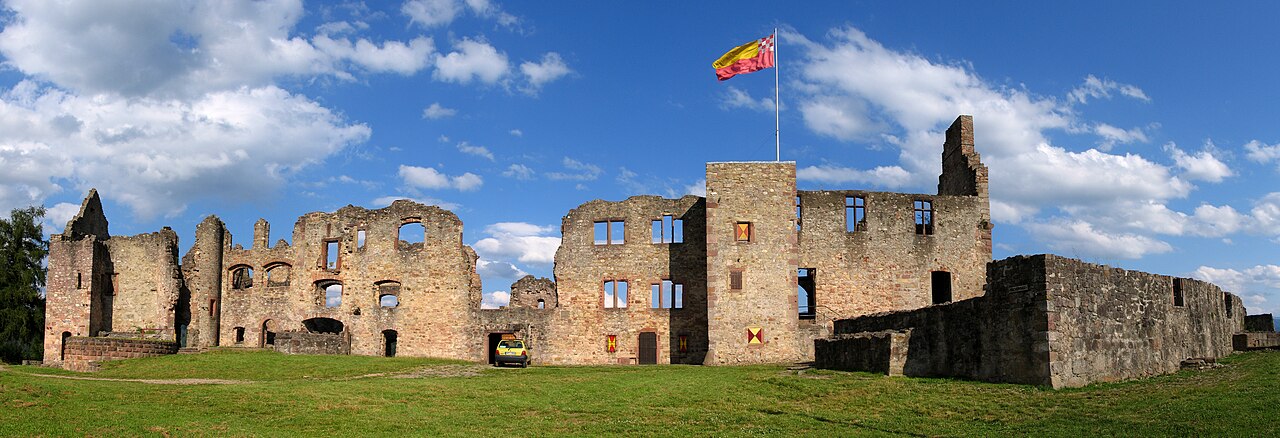
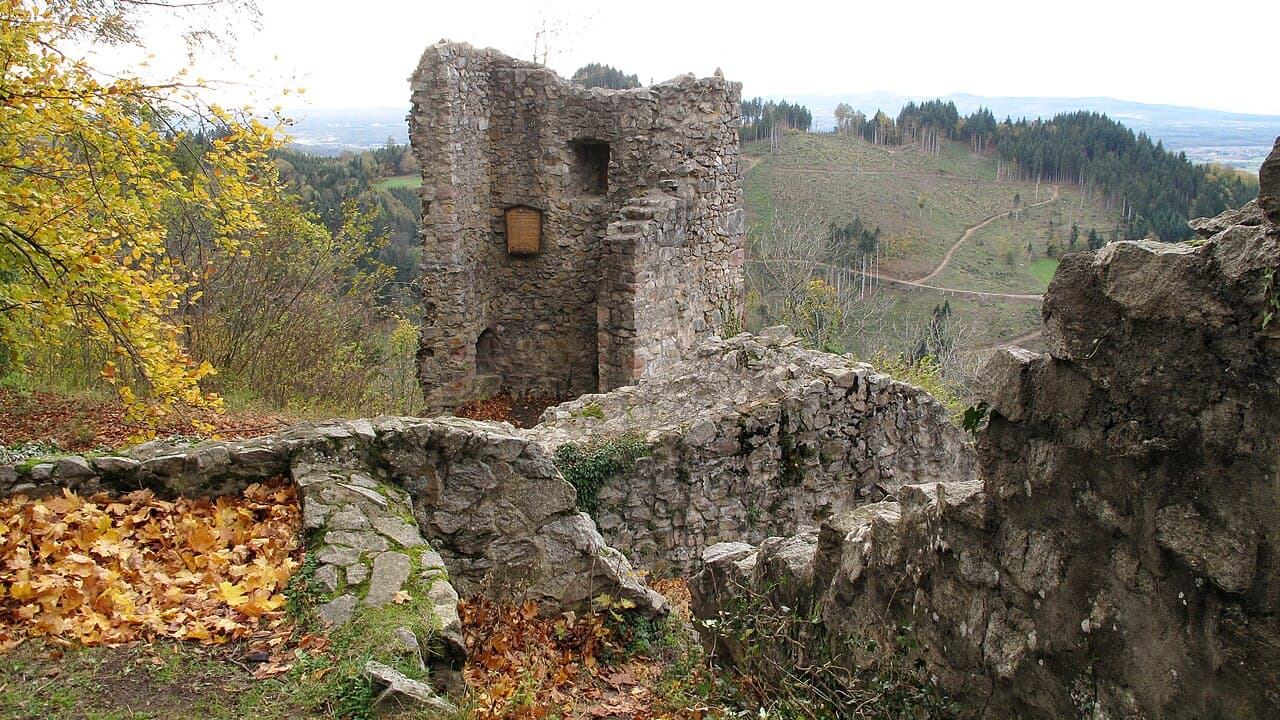
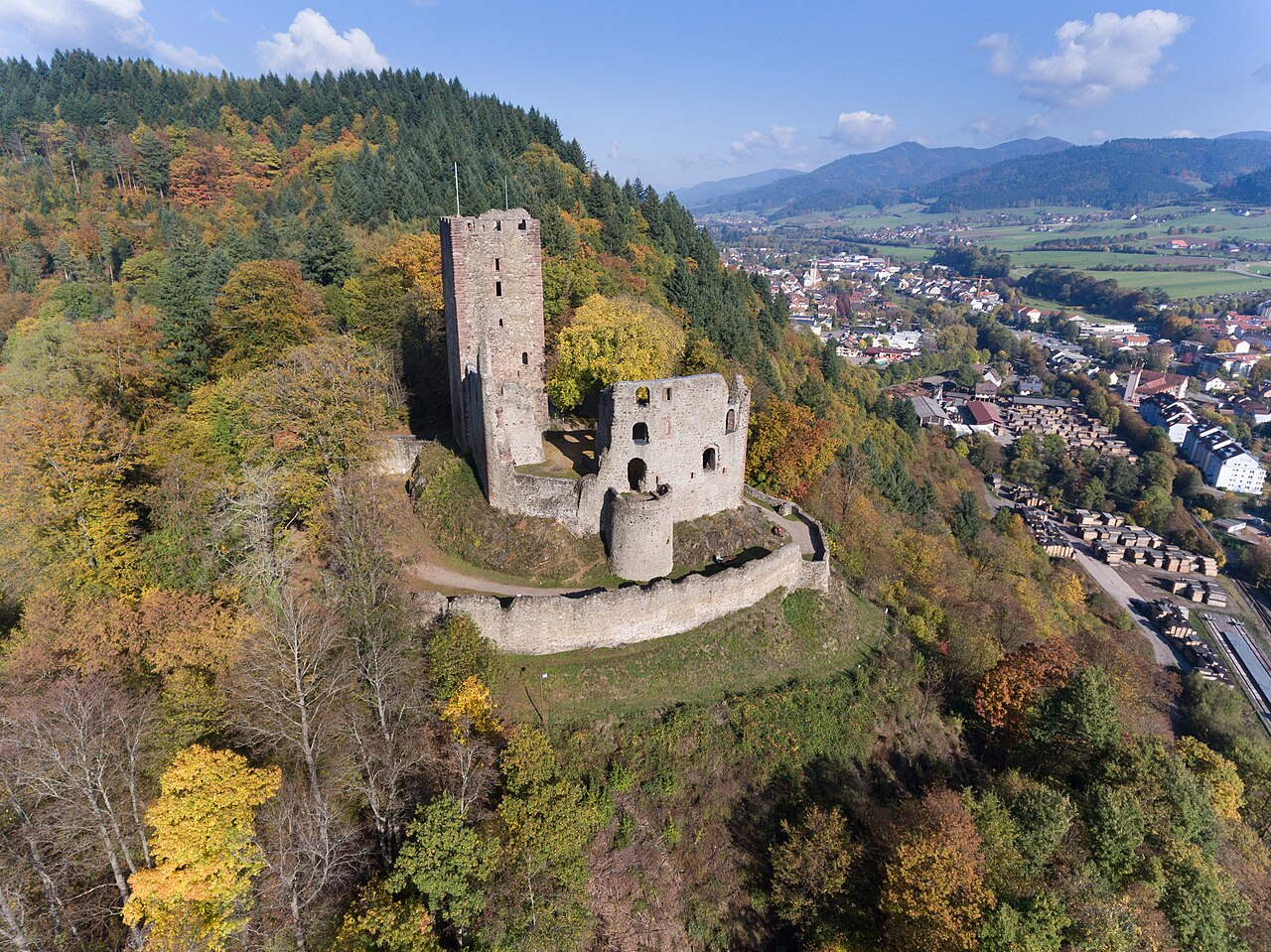
The Schwarzenburg castle, historically known as Schwarzenberg, is a medieval fortress ruin situated near the town of Waldkirch in the district of Emmendingen, in the southwestern German state of Baden-Württemberg. This castle occupies a prominent hilltop position, characteristic of many hill castles built during the medieval period for strategic defense and territorial control.

Historical background and significance

The origins of Schwarzenburg trace back to the High Medieval period, likely constructed in the 11th or 12th century. It served as a stronghold for local nobility and played a role in the regional power struggles of the Breisgau area. The castle's name, meaning "Black Castle" or "Black Mountain," reflects either the dark stone used in its construction or the dense forested hill on which it stands.

Throughout the centuries, Schwarzenburg was involved in various conflicts and ownership changes, typical of castles in the fragmented political landscape of medieval Germany. Its strategic location allowed control over important trade routes and local settlements.

Architectural features and layout

Though now in ruins, Schwarzenburg's remains reveal typical features of a medieval hill castle. The site includes remnants of stone curtain walls that once enclosed the castle's inner ward, defensive towers positioned to oversee approaches, and traces of a gatehouse complex. The castle was designed to utilize the natural topography for defense, with steep slopes enhancing its protection.

Excavations have uncovered foundations of residential buildings, a keep or donjon that would have served as a last refuge during sieges, and a courtyard where daily activities took place. The use of local sandstone is evident in the surviving masonry fragments.

Defensive structures

The castle's defensive system included a combination of thick walls and natural barriers. The steep hillside and possible moats or ditches enhanced its impregnability. Arrow slits and battlements would have allowed defenders to repel attackers effectively.

Residential and functional spaces

The castle contained living quarters for the lord and his retinue, storage areas, and possibly a chapel. The layout reflects the dual military and domestic functions that such castles fulfilled during the medieval era.

Decline and current condition

By the late medieval period, Schwarzenburg lost its military importance and was eventually abandoned. Over time, it fell into ruin, with much of its stone reused in local buildings or eroded by weather. Today, it is classified as archaeological ruins and ruins, with only partial remains visible.

The site is accessible to visitors who can explore the remains and enjoy panoramic views of the surrounding Breisgau landscape. Interpretive signs provide historical context, and ongoing archaeological work has helped preserve the site.

Visiting Schwarzenburg castle

Visitors to Schwarzenburg can hike to the castle ruins via marked trails from Waldkirch. The site offers a glimpse into medieval fortification architecture and regional history. While facilities are limited due to its ruinous state, the castle's scenic location and historical significance attract history enthusiasts and hikers alike.

Nearby attractions

The town of Waldkirch itself is known for its traditional crafts and cultural heritage. The wider Breisgau region offers numerous other castles, vineyards, and natural parks for visitors to explore.

Frequently asked questions

  • When was Schwarzenburg castle built? The castle dates back to the High Medieval period, likely the 11th or 12th century.
  • What is the current condition of Schwarzenburg? It remains as archaeological ruins with partial stone walls and foundations visible.
  • Can visitors access the castle ruins? Yes, the ruins are accessible via hiking trails from Waldkirch.
  • What type of castle is Schwarzenburg? It is a hill castle, typical of medieval fortifications built on elevated terrain.
  • Are there guided tours available? There are no regular guided tours, but local historical societies occasionally organize events.
  • What architectural features remain? Remnants include curtain walls, towers, a gatehouse, and foundations of the keep and residential buildings.
  • Why is the castle called Schwarzenburg? The name means "Black Castle" or "Black Mountain," possibly referring to the dark stone or the wooded hill.
  • What is the best time to visit? Spring through autumn offers the best weather for hiking and exploring the ruins.
  • Are there other castles nearby? The Breisgau region has several castles and historic sites within short driving distance.

Frequently asked questions (FAQ)

How do I get to Schwarzenburg from Waldkirch?
Schwarzenburg is easily accessible from Waldkirch by foot or by a short drive. If you choose to walk, there are well-marked hiking trails that lead directly to the castle, offering scenic views along the way.
What is the historical significance of Schwarzenburg?
Schwarzenburg, built in the 12th century, played a vital role in the region's defense and governance during the Middle Ages. It has witnessed numerous historical events and changes in ownership, contributing to its rich cultural heritage.
When was Schwarzenburg last restored?
Schwarzenburg underwent significant restoration in the 20th century, particularly in the 1960s, to preserve its architectural features and historical integrity. Ongoing maintenance ensures that visitors can appreciate its historical beauty.
Can I enter the castle grounds?
Yes, visitors can access the castle grounds, which provide stunning views of the surrounding area. However, the interior of the castle may have restricted access, so it's best to check ahead for any guided tours or special openings.
Why is Schwarzenburg a popular tourist destination?
Schwarzenburg is popular for its picturesque location and well-preserved medieval architecture, making it a favorite among history enthusiasts and photographers alike. The castle's scenic surroundings and hiking opportunities also attract nature lovers.
Is it possible to visit Schwarzenburg year-round?
Yes, Schwarzenburg is generally open to visitors throughout the year, although opening hours may vary by season. It's advisable to check the official website for the latest information on accessibility and any seasonal events.
What are the ticket prices for visiting Schwarzenburg?
Access to the castle grounds is typically free, but there may be a fee for guided tours or special exhibits. It's best to consult the official site for current pricing and any discounts that may be available.
What are the best times to visit Schwarzenburg?
The best times to visit Schwarzenburg are during the spring and fall when the weather is mild, and the surrounding nature is at its most beautiful. Summer can also be a great time, though it may be busier with tourists.
Are there any nearby attractions to visit while at Schwarzenburg?
Yes, nearby attractions include the charming town of Waldkirch, known for its historic buildings and local museums. Additionally, the beautiful hiking trails in the Black Forest make for an excellent outdoor experience after visiting the castle.

Photo gallery

Schwarzenburg (Breisgau)
Click to view

Photo by Joachim Haller•CC BY 3.0

1 photo • Click any image to view in full screen

Information

Archaeological Site / Ruins

Loading map...

Visitor reviews

No reviews yet. Been here? Write the first review and help other travelers!

Write the first review

Visited this castle? Share your experience

Your review helps other travelers and adds first-hand knowledge to our encyclopedia.
Write a review

(5/5)

0/2000 characters

Your review will be visible after admin approval

Nearby castles

3 km
Kastelburg Castle Ruins — Germany castle

Kastelburg Castle Ruins

Waldkirch, Germany

Kastelburg castle is a notable high medieval hill castle ruin located above the town of Waldkirch in the district of Emmendingen, Baden-Württemberg, Germany. Constructed between 1260 and 1270 by the Lords of Schwarzenberg, this fortress was strategically positioned on a hill approximately 100 meters above the historic center of Waldkirch. Its primary purpose was to defend the town and to exert control over the vital trade route through the Elz valley, a significant commercial artery during the medieval period. Historical background and ownership The castle was initially inhabited by Johann I of Schwarzenberg, the first lord to reside within its walls. The Schwarzenberg family, however, became extinct in 1345, leading to a change in ownership. Subsequently, Kastelburg castle was sold to Martin Malterer from Freiburg, a prominent figure who tragically died in 1386 at the Battle of Sempach. The castle later passed into the hands of Berthold of Staufen in 1429, marking another chapter in its storied history. Architectural features and strategic significance Kastelburg castle was built in the high medieval period with typical defensive features of hill castles of that era. Its elevated position provided commanding views of the surrounding landscape, especially the Elz valley, allowing the occupants to monitor and control trade and military movements effectively. The castle's design included fortified walls, battlements, and towers that enhanced its defensive capabilities. Although now in ruins, the remaining structures still convey the castle's original imposing presence. Relation to Schwarzenburg castle Interestingly, Kastelburg castle served in conjunction with the nearby Schwarzenburg castle, situated on the opposite side of the valley. Both castles functioned as complementary fortifications to protect Waldkirch and oversee the trade route, creating a defensive network that secured the region against potential invaders and rival factions. Destruction and preservation efforts The castle met its demise during the Thirty Years' War, a devastating conflict that engulfed much of Europe in the 17th century. On 14 March 1634, Kastelburg was deliberately destroyed by the forces of the Holy Roman Emperor (the Kaiser) to prevent it from falling into the hands of advancing Swedish troops. This scorched-earth tactic was common during the war to deny strategic positions to the enemy. Today, Kastelburg stands as a ruined castle but remains a significant cultural and historical landmark. The ruins overlook Waldkirch romantically, offering visitors a glimpse into medieval fortification architecture and regional history. In recent years, dedicated conservation efforts have been undertaken to stabilize the remaining structures, ensuring that the castle's legacy endures for future generations. Location and visitor experience Situated in the Breisgau region, Kastelburg castle's elevated site provides spectacular views of the Black Forest and the surrounding valley. Visitors to the ruins can explore the remnants of the castle's walls and towers while enjoying the natural beauty of the area. The castle's proximity to Waldkirch makes it accessible for day trips and historical tours. Access and tourism While the castle is in a ruined condition, pathways and signage guide visitors safely around the site. The romantic setting of the ruins above the town attracts history enthusiasts, hikers, and photographers. The site is open to the public year-round, with no entrance fee, allowing free access to this remarkable piece of medieval heritage. Architectural legacy and cultural significance Kastelburg castle is an important example of high medieval military architecture in southwestern Germany. Its construction reflects the strategic priorities of the period, emphasizing control over trade routes and territorial defense. The castle's remains contribute valuable insights into the feudal system, noble families like the Schwarzenbergs, and the turbulent history of the region during the Middle Ages and the early modern period. Despite its ruined state, Kastelburg continues to inspire interest in medieval history and architecture. It stands as a testament to the complex interplay of power, commerce, and warfare that shaped the landscape of Baden-Württemberg for centuries.

High Medieval (11th–13th c.)
Details
7 km
Hochburg Castle Ruins — Germany castle

Hochburg Castle Ruins

Emmendingen, Germany

Hochburg castle ruins stand as a testament to the complex history and architectural evolution of medieval fortifications in southwestern Germany. Located near Emmendingen on a mountain spur at approximately 344 meters above sea level, the castle occupies a strategic hilltop position that dominated the surrounding landscape. Founded probably in the 11th century by Dietrich von Hachberg, the castle’s earliest documented mention dates from 1127, marking it as an important stronghold of the German nobility during the High Medieval period. The castle’s history intertwines with the rise and fall of noble families such as the von Hachbergs and the Margraves of Baden. Over centuries, Hochburg evolved from a medieval hill castle into a formidable Renaissance fortress with extensive fortifications designed to withstand the increasing threat of artillery warfare. Despite its military significance, the castle endured multiple sieges, deliberate demolitions, and destruction, especially during the Thirty Years’ War and the wars of Louis XIV, leaving it today as evocative ruins preserved through ongoing conservation efforts. Founding and early history of hochburg castle The origins of Hochburg castle trace back to the early 11th century, attributed to Dietrich von Hachberg, who established the castle as a clearing castle amid the dense forests of the region. Dietrich adopted the name “von Hachberg” following the castle’s construction, founding a noble lineage connected to the fortress. The first written record from 1127 confirms the castle’s existence and importance during this period. Ownership of the castle shifted over time, notably passing to the Margrave Hermann IV of Baden by 1161. This transition is documented in relation to the founding of Tennenbach Monastery, which highlights the castle’s integration into the broader political and religious landscape of the region. Around 1212, the castle became the seat of the Baden-Hachberg line after the division of the margraviate between Hermann IV’s sons, marking Hochburg as a key noble residence. Medieval resilience and renaissance transformation Hochburg castle demonstrated remarkable resilience during the turbulent medieval period. It withstood a siege in 1424 amid conflicts with the Upper Rhenish City League, a testament to its defensive capabilities. The castle also survived the widespread Peasants’ War of 1525 intact, reflecting its robust construction and strategic importance. In the mid-16th century, under Margrave Karl II of Baden-Durlach, the castle underwent a significant transformation from a medieval fortress into a Renaissance-style stronghold. This period saw the expansion and modernization of the castle’s defenses to adapt to the evolving nature of warfare, particularly the increasing use of gunpowder artillery. Subsequently, Margrave Georg Friedrich reinforced the castle by adding seven bastions in the early 1600s. These bastions were named after sister castles in the Baden region, such as Rötteln, Sausenberg, and Badenweiler, integrating regional heritage into the fortress’s design. The bastions and corner towers were constructed to provide overlapping fields of fire and improved protection against artillery assaults. Sieges, destruction, and decline in the 17th century The Thirty Years’ War (1618–1648) marked a period of intense conflict for Hochburg castle. Between 1634 and 1636, the fortress endured a prolonged siege by Catholic forces. After its surrender, the castle was deliberately slighted—intentionally damaged to prevent its future military use. Reconstruction and modernization efforts began around 1660 under Margrave Friedrich VI, restoring parts of the fortress. However, the castle’s strategic value waned following the Treaty of Nijmegen in 1681, which altered territorial control in the region. In a strategic move to prevent the castle from falling into French hands, German volunteers demolished the fortifications in 1681. A fire in 1684 further damaged the site, and in 1688, troops of Louis XIV destroyed the remaining structures, including towers, walls, and cellar vaults, to ensure the castle could not be reoccupied or restored. Architectural features and fortifications Hochburg castle’s architecture reflects its long history of adaptation and military innovation. Initially a simple medieval hill castle, it expanded into one of the largest castle complexes in the Baden region, alongside Heidelberg and Rötteln. The castle’s fortifications included massive stone walls, multiple corner towers, and a series of seven bastions added in the 16th and early 17th centuries. These bastions were designed to withstand cannon fire and provide effective defensive coverage, a hallmark of Renaissance military architecture. The naming of bastions after related castles in the region symbolized the interconnected noble heritage and strategic alliances. Despite the extensive destruction, remnants of the bastions, curtain walls, and towers remain visible today, offering insight into the castle’s defensive layout and construction techniques. The cellar vaults and some habitable building remains also survive, providing a glimpse into the living conditions within the fortress. Preservation and modern significance Following centuries of ruin, preservation efforts for Hochburg castle began in the late 19th century. These initiatives aimed to stabilize the remaining masonry and protect the site from further decay. The castle ruins have since become a cultural landmark and a symbol of regional history. Since 1971, a dedicated volunteer association has managed the site, maintaining the ruins and promoting public engagement. In 1991, a small museum was established within the upper castle’s cellar, showcasing artifacts and the history of the fortress. Today, Hochburg castle ruins attract visitors interested in medieval history, military architecture, and the heritage of the Baden region. The site offers panoramic views from its hilltop location and serves as a tangible connection to the complex feudal and military history of southwestern Germany.

High Medieval (11th–13th c.)
Details
10.3 km

Freiburg Charterhouse

Freiburg im Breisgau, Germany

Freiburg Charterhouse, also known as Kartause Freiburg, is a former Carthusian monastery established in 1345 or 1346 by Johannes Schnewlin, a knight and Bürgermeister of Freiburg. Dedicated to Saint John the Baptist, it was inspired by the Grande Chartreuse near Grenoble, the motherhouse of the Carthusian Order. The monastery stands as a significant example of late medieval monastic architecture in the region, reflecting both religious and academic influences over several centuries. Foundation and early history The charterhouse was founded during the late medieval period as a contemplative monastery following the strict Carthusian rule. Its initial construction began around 1345, establishing a secluded religious community dedicated to prayer and study. The location in Freiburg im Breisgau placed it near the growing University of Freiburg, fostering close ties between the monks and academic scholars. Architectural development and style Gothic church and expansions In the early 16th century, the charterhouse underwent significant expansion, notably with the addition of a Late Gothic church and a refectory. The church is distinguished by its ribbed vaulting and flying buttresses, hallmark features of Gothic architecture that allowed for higher ceilings and large windows. These windows were adorned with magnificent stained glass designed by the renowned Swabian painter Hans Baldung Grien, adding vibrant color and religious iconography to the interior. Baroque courtyard and later modifications Between 1753 and 1756, the monastery was further enlarged with the construction of a grand Baroque courtyard consisting of three wings. This addition was designed to accommodate prelates and guests, reflecting the monastery's elevated status and changing functions. The prior's lodging was expanded into a stately residence, which later became the main house after the monastery's dissolution. Intellectual and cultural significance The charterhouse played a notable role in the intellectual life of Freiburg, maintaining close contact with the university. From 1502 to 1525, the prior was Gregor Reisch, a prominent late Scholastic thinker and university professor. The monastery supported impoverished students and received donations and novices from academic circles, fostering a symbiotic relationship. The monastery amassed a significant library through gifts from new monks and legacies from university staff and local clergy. In 1537, it inherited an important collection of about 390 books and an estate from Otmar Nachtgall. This collection made the charterhouse a center of learning and scholarship in the region. Challenges and decline The Thirty Years' War brought turmoil to the monastery, with the Swedish army's incursions causing disruption. The monks sought refuge in the Ittingen Charterhouse in Switzerland during this period. A serious fire in 1780 further damaged the buildings, and internal conflicts arose over the prior's ambition to become a prelate. In 1782, Emperor Joseph II decreed the dissolution of all Carthusian monasteries, including Freiburg Charterhouse. The property was confiscated by the state and sold to the Baron von Baden in 1783. The monastic library was dispersed, with only a few incunabula surviving in the University of Freiburg's library. Post-monastic use and preservation After the dissolution, the buildings were converted into a country house for nobility. The cloisters and monks' cells were demolished to create a park, though the church was preserved. The stained glass windows were sold to various villages, dispersing key artistic elements. In 1894, the charitable foundation of Freiburg acquired the property and repurposed it as a nursing home. More recently, since fall 2014, the site has housed the Robert Bosch College, part of the United World Colleges network, continuing the site's educational legacy. Architectural features and layout The original monastic complex included the typical Carthusian elements: individual cells arranged around cloisters, a church, refectory, and communal spaces. The Late Gothic church remains a highlight, showcasing ribbed vaults and flying buttresses that exemplify the architectural advances of the period. The later Baroque courtyard contrasts with the medieval structures, illustrating the evolution of monastic architecture over centuries. Legacy and cultural importance Freiburg Charterhouse stands as a testament to the religious, intellectual, and architectural history of the region. Its connections to the University of Freiburg and notable figures like Gregor Reisch highlight its role beyond a mere monastic retreat. The site's transformation over time reflects broader historical shifts, from medieval spirituality to modern education and care.

Late Medieval (14th–15th c.)
Details