Kars Castle
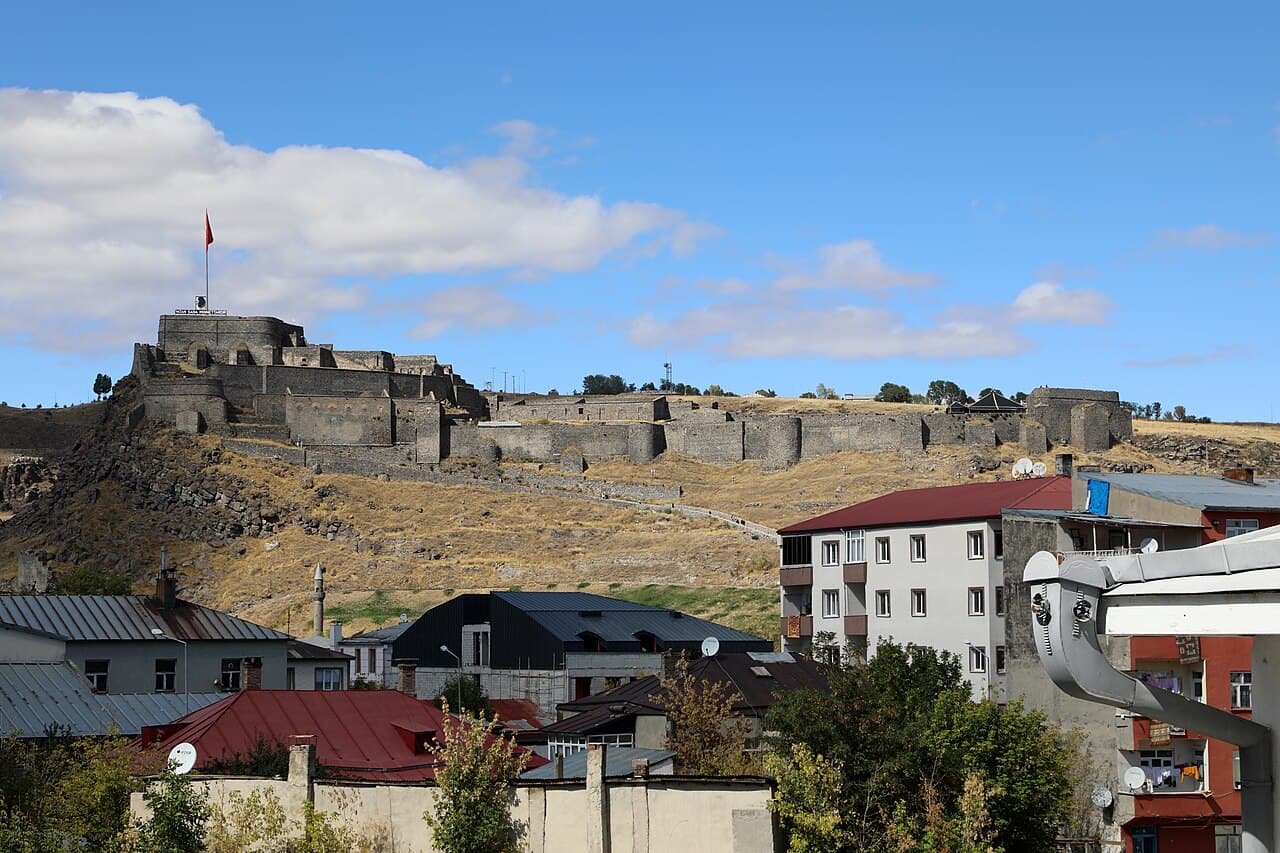
Kars Castle, locally known as Kars Kalesi, is a prominent historic fortress located in the city of Kars in eastern Turkey. Perched strategically on a hill overlooking the city and the Kars River, the castle commands a panoramic view that once served vital military and administrative functions. This hill castle is a remarkable example of medieval fortification architecture, with a history that spans over eight centuries and reflects the complex cultural and political shifts in the region.
Early foundations and medieval reconstruction
The origins of Kars Castle trace back to the early medieval period, when it was initially established by the Armenian Bagratid dynasty. This early fortification underscored the strategic importance of Kars as a regional stronghold in controlling trade routes and defending territorial boundaries. The castle as it is largely known today was extensively rebuilt in 1153 under the direction of Vizier Firuz Akay, commissioned by Saltuk Sultan Malik Izzeddin, a ruler of the Saltukids, a dynasty that governed the area during the high medieval period. This reconstruction likely incorporated elements of the earlier Armenian fortress, blending architectural influences.
Alongside the castle's reconstruction, the city walls of Kars were built around the same time, creating a fortified urban perimeter that enhanced the city's defense. The castle's position on a hill within a bend of the Kars River provided natural defensive advantages, augmented by man-made fortifications.
Destruction and rebuilding through the centuries
The castle's resilience was tested multiple times throughout its history. In 1386, the fortress was destroyed by the forces of Timur (Tamerlane), a conqueror whose campaigns devastated many cities across the region. Despite this destruction, the castle was rebuilt in 1579 by the Ottoman general Lala Mustafa Pasha under orders from Sultan Murad III. This reconstruction was a monumental effort, reportedly involving around 100,000 soldiers and workers, emphasizing the strategic importance the Ottomans placed on Kars as a frontier fortress.
Further damage occurred in 1606 when the castle was attacked and destroyed by forces of the Persian Shah Abbas I. The fortress was subsequently repaired in 1616 and again in 1636, with restorations that added architectural details and reinforced its defenses. These cycles of destruction and rebuilding illustrate the castle's central role in the ongoing conflicts between the Ottoman and Persian empires.
19th-century military changes and russian occupation
By the early 19th century, Kars Castle had diminished in military significance as new forts were constructed around the city to better serve modern defensive needs. During the Russo-Turkish War of 1877–1878, Kars was occupied by Russian forces, who controlled the castle for nearly four decades. The Russian occupation led to significant damage and structural alterations to the fortress. When the Russians eventually withdrew, the castle was left in a badly damaged state, reflecting the toll of warfare and changing military technologies.
Architectural features and current condition
Kars Castle is primarily constructed from basalt masonry, a durable volcanic stone that has contributed to the fortress's longevity. The castle originally featured 22 towers, designed for lookout and defense, but today only 7 towers remain. The fortress is enclosed by massive walls extending approximately 3,500 meters, irregular in shape to conform to the hill's topography rather than forming a perfect rectangle. These walls were complemented by deep trenches or moats that served as additional defensive barriers.
The castle has four main gates, each oriented toward different directions: the Water Gate (Su Kapısı or Çeribaşı Kapısı) to the west, the Kagizman Gate (Orta Kapı) to the south, the Behram Gate to the east, and the main northern gate opening onto a steep chasm. Of these, two gates remain functional today, allowing access to the inner areas.
Inside the fortress, the inner castle covers an area roughly 250 meters east to west and 90 meters north to south. This core section housed critical military and religious structures, including the remains of Janissary barracks, an ammunition depot, and a small mosque that was reconstructed in the 1990s, reflecting the site's Ottoman heritage.
A notable feature within the castle is the tomb of Jelal Baba, a figure who died in 1239 during the Mongol invasions. This shrine adds a layer of cultural and religious significance to the fortress, linking it to the region's turbulent history of invasions and spiritual traditions.
Visitor experience and cultural significance
Today, Kars Castle is freely accessible to visitors during daylight hours, offering a tangible connection to the rich history of eastern Anatolia. The castle's imposing basalt walls and surviving towers provide a vivid impression of medieval military architecture. Visitors can explore the ramparts via staircases and paved stone roads, gaining insight into the defensive strategies employed over centuries.
The castle is not only a symbol of Kars's historical resilience but also serves as a cultural landmark that reflects the diverse influences of Armenian, Seljuk, Ottoman, and Russian periods. Its preservation under the care of the Turkish Ministry of Culture and Tourism ensures that this heritage site continues to educate and inspire future generations.
For those interested in military architecture, medieval history, or the complex history of Anatolia, Kars Castle offers a compelling and well-preserved example of a high medieval hill castle that has witnessed numerous reconstructions, battles, and cultural transformations.
Frequently asked questions (FAQ)
- What is the historical significance of Kars Castle?
- Kars Castle, dating back to the 10th century, has played a crucial role in the defense of the region through various historical periods, including Byzantine and Ottoman eras. Its strategic location has made it a focal point in many historical conflicts, symbolizing the rich cultural tapestry of Eastern Anatolia.
- When is the best time to visit Kars Castle?
- The best time to visit Kars Castle is during the spring and early autumn months, from April to June and September to October. During these periods, the weather is mild and pleasant, making it ideal for exploring the castle's impressive architecture and surrounding landscape.
- Can I access Kars Castle with limited mobility?
- Kars Castle is situated on a hill, and while there are pathways leading to the entrance, they can be steep and uneven. Visitors with limited mobility may find it challenging to explore the castle fully, but there are viewing areas nearby that offer beautiful views of the structure.
- What are the opening hours for Kars Castle?
- Kars Castle is open to visitors year-round, with operating hours typically from 8:00 AM to 7:00 PM. However, these hours may change seasonally, so it's advisable to check local sources or official websites before planning your visit.
- Is there an entrance fee to visit Kars Castle?
- Yes, there is a nominal entrance fee to visit Kars Castle, which helps maintain the site. The fee is affordable, providing access to the castle grounds and allowing visitors to enjoy its historical significance and breathtaking views.
- What nearby attractions should I visit when at Kars Castle?
- While visiting Kars Castle, consider exploring the nearby Ani Ruins, a UNESCO World Heritage Site known for its stunning medieval architecture. Additionally, the Kars Archaeological Museum offers insights into the region's history and artifacts, making it a great complement to your castle visit.
- How do I get to Kars Castle from the city center?
- Kars Castle is conveniently located just a short distance from the city center, making it easily accessible by foot or a quick taxi ride. Walking to the castle offers a chance to enjoy the local scenery and atmosphere, while taxis provide a more direct route for those preferring not to walk.
Photo gallery

Information
Sources & official resources
Verify the information above using these authoritative references.
Loading map...
Visitor reviews
No reviews yet. Been here? Write the first review and help other travelers!
Write the first reviewVisited this castle? Share your experience
Your review helps other travelers and adds first-hand knowledge to our encyclopedia.