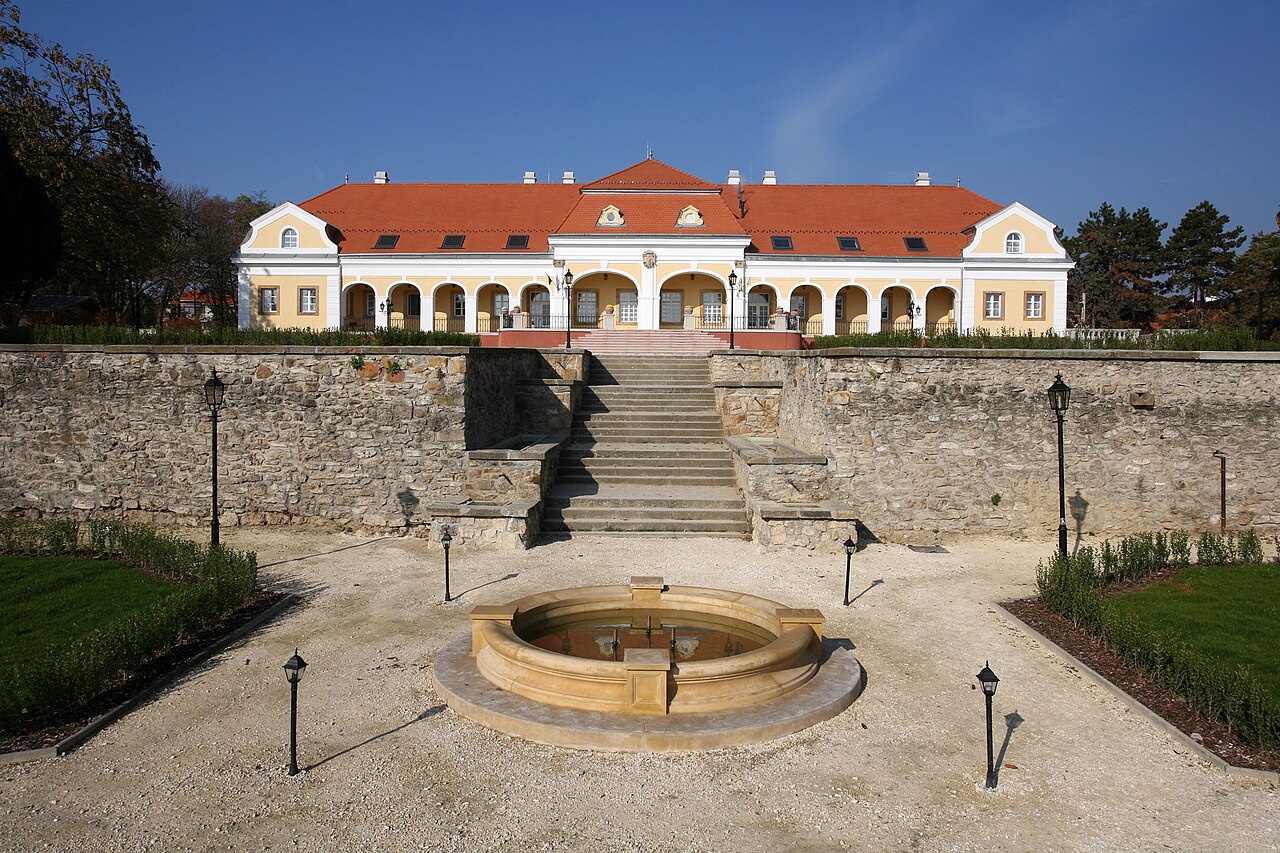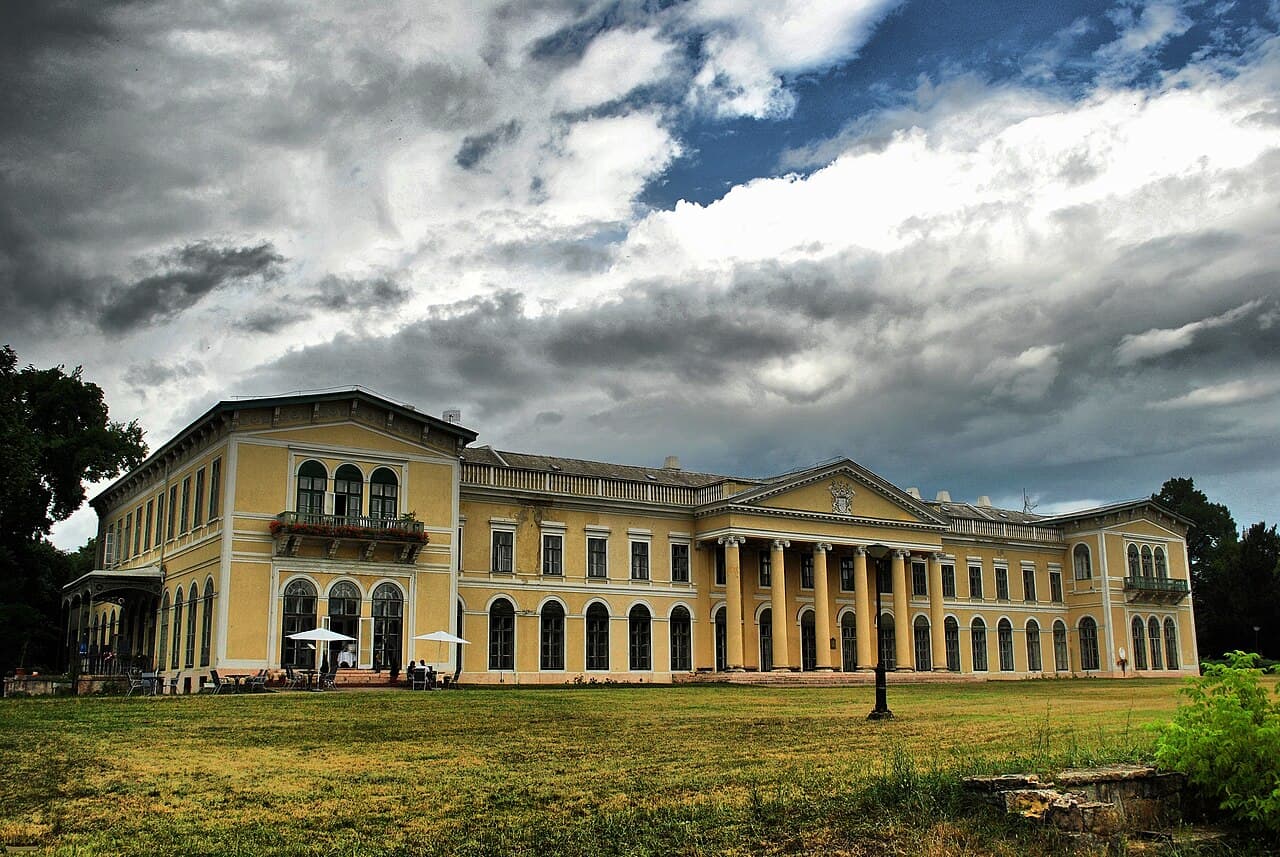
Károlyi Mansion, Fót — Hungary castle

Károlyi Mansion, Fót

Károlyi mansion, fóthungary
Fót, Hungary
Post-Renaissance (17th–18th c.)
Well Preserved

The Károlyi Mansion in Fót, Hungary, is a notable example of an 18th-century post-Renaissance aristocratic residence. Originally constructed during the 18th century, this mansion served as the country seat for the influential Károlyi family, one of Hungary's prominent noble lineages. The estate is situated in the Dunakeszi District within Pest County, surrounded by a large, historically landscaped park and a collection of various outbuildings that supported the estate's operations.

Architectural characteristics and style

The mansion exemplifies post-Renaissance architectural features typical of Hungarian noble estates of the period. Its design reflects a transition from the earlier Baroque influences toward a more restrained and elegant aesthetic, emphasizing symmetry and classical proportions. The building's facade is characterized by balanced window arrangements and subtle decorative elements that highlight its aristocratic origins.

The estate includes multiple outbuildings such as stables, servant quarters, and storage facilities, which were integral to the functioning of the mansion as a self-sufficient noble residence. The surrounding parkland was designed to complement the mansion's grandeur, featuring formal gardens and tree-lined avenues that enhance the visual appeal and provide a serene environment.

Historical context and ownership

The Károlyi family played a significant role in Hungarian history, with members involved in politics, military affairs, and cultural patronage. The mansion in Fót was part of their extensive landholdings and served as a symbol of their status and influence. While the exact details of the mansion's construction and subsequent modifications are not extensively documented, it is understood that the estate underwent various changes reflecting the tastes and needs of its owners over time.

Estate grounds and parkland

The large park surrounding the mansion is one of its defining features. Designed in the style of noble Hungarian estates, the park includes a mix of formal garden layouts and naturalistic landscaping. This combination created a picturesque setting that was both functional and aesthetically pleasing, offering spaces for leisure, hunting, and social gatherings.

The park's mature trees, pathways, and water features contribute to the estate's historic ambiance. It remains an important green space within the region, reflecting the landscaping trends of the 18th and 19th centuries.

Current condition and cultural significance

Today, the Károlyi Mansion stands as a well-preserved example of post-Renaissance aristocratic architecture in Hungary. While it no longer functions as a noble residence, the mansion and its grounds continue to attract interest for their historical and architectural value. Preservation efforts have maintained much of the estate's original character, making it a valuable cultural heritage site within Pest County.

The mansion is occasionally used for cultural events, exhibitions, and public visits, helping to keep the history of the Károlyi family and their estate alive for contemporary audiences. Its combination of architectural refinement and extensive parkland offers insight into the lifestyle and social structures of Hungarian nobility in the post-Renaissance period.

Frequently asked questions (FAQ)

What is the historical significance of Károlyi Mansion?
Károlyi Mansion, built in the 18th century, is an important example of Hungarian Baroque architecture. It served as the residence of the Károlyi family and played a significant role in the region's history, particularly during the 19th century. The mansion is also notable for its beautiful gardens and cultural events that highlight Hungary's rich heritage.
When was Károlyi Mansion built?
The Károlyi Mansion was originally constructed in the early 18th century, with significant renovations occurring in the 19th century. The architectural style reflects the Baroque influences of that period, making it a fascinating site for history and architecture enthusiasts. Its design has evolved over the years, showcasing the changes in taste and style.
Can I visit Károlyi Mansion?
Yes, Károlyi Mansion is open to visitors who wish to explore its stunning architecture and lush gardens. Guided tours are available, providing insights into the mansion's history and the Károlyi family's legacy. It's advisable to check the official website for any special events or restrictions before your visit.
What are the opening hours for Károlyi Mansion?
Károlyi Mansion typically opens its doors to visitors from Tuesday to Sunday, with specific hours varying by season. Generally, it is open from 10 AM to 6 PM, but it’s best to verify the current hours on their official website before planning your visit. Special events may alter these hours, so checking in advance is recommended.
Is it possible to host events at Károlyi Mansion?
Yes, Károlyi Mansion offers facilities for various events, including weddings, corporate meetings, and cultural gatherings. The picturesque setting and elegant architecture provide a unique backdrop for any occasion. Interested parties should contact the mansion directly for more details on availability and services.
What are the ticket prices for visiting Károlyi Mansion?
Ticket prices for Károlyi Mansion are generally affordable, with discounts available for students and seniors. Admission fees contribute to the maintenance and preservation of this historic site. It's advisable to check the official website for the most current pricing information and any special offers.
When is the best time to visit Károlyi Mansion?
The best time to visit Károlyi Mansion is during the spring and early autumn when the garden is in full bloom and the weather is pleasant. These seasons also host various cultural events and exhibitions, enhancing the visitor experience. Visiting during weekdays may offer a quieter atmosphere to enjoy the surroundings.
How do I get to Károlyi Mansion from Budapest?
To reach Károlyi Mansion from Budapest, you can take a train from Nyugati Railway Station to Fót, which is a convenient and scenic route. The journey takes about 30 minutes, and the mansion is a short walk from the train station. Alternatively, buses and taxis are available for direct access.
Is Károlyi Mansion accessible for individuals with disabilities?
Károlyi Mansion strives to be accessible for all visitors, including those with disabilities. The main areas of the mansion and gardens are designed to accommodate wheelchairs, although some historical sections may present challenges. It's recommended to inquire in advance for specific accessibility options and assistance.

Photo gallery

Károlyi Mansion, Fót
Click to view

Photo by Puffancs•CC BY-SA 2.5 hu

1 photo • Click any image to view in full screen

Information

Hill Castle

Loading map...

Visitor reviews

No reviews yet. Been here? Write the first review and help other travelers!

Write the first review

Visited this castle? Share your experience

Your review helps other travelers and adds first-hand knowledge to our encyclopedia.
Write a review

(5/5)

0/2000 characters

Your review will be visible after admin approval

Nearby castles

11.9 km
Aquincum — Hungary castle

Aquincum

Budapest, Hungary

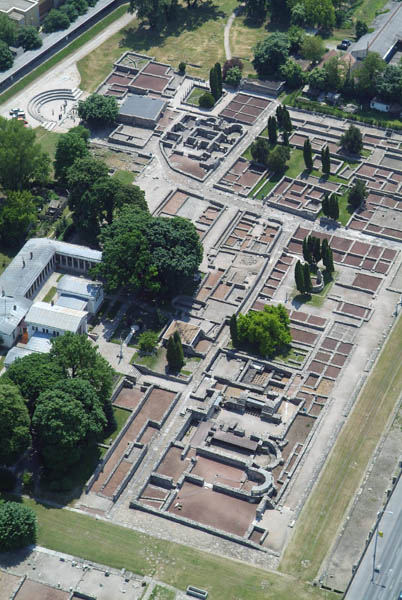
Aquincum was a significant Roman city and military fortress located on the northeastern borders of the Roman province of Pannonia. Today, its ruins lie within the Óbuda district of Budapest, Hungary, offering a unique glimpse into Roman urban and military architecture. Aquincum served as a vital military base and civilian settlement during the Roman Empire, reflecting the empire's strategic presence in Central Europe. Historical background and significance The site of Aquincum was initially established as a military camp (castrum) in the 1st century AD, designed to secure the empire's frontier along the Danube River. Over time, it evolved into a flourishing city, becoming the capital of the Roman province of Pannonia Inferior. The city reached its zenith in the 2nd and 3rd centuries AD, serving both as a military stronghold and a center of civilian life. Aquincum's strategic location on the Danube made it a key point for controlling trade and military movements. The city was home to a legionary fortress, which was fortified with bastioned defensive walls and towers typical of Roman military architecture. These fortifications were designed to withstand invasions and protect the empire's northern boundaries. The site is also historically notable for its cultural contributions. It is believed that Marcus Aurelius, the Roman emperor and philosopher, wrote parts of his famous work Meditations while stationed at Aquincum, highlighting the city's importance as a place of military and intellectual activity. Architectural features and layout The remains of Aquincum reveal a complex urban plan combining military and civilian elements. The fortress was characterized by thick bastioned walls with projecting towers that allowed defenders to cover all approaches with overlapping fields of fire. These walls enclosed barracks, administrative buildings, and storage facilities essential for sustaining the legion stationed there. Outside the fortress walls, the civilian city developed with typical Roman features such as a forum, baths, amphitheater, and residential quarters. The ruins include well-preserved mosaics, public baths with hypocaust heating systems, and remnants of temples, showcasing the city's cultural and architectural sophistication. The urban design reflects Roman engineering prowess, with paved streets, aqueducts supplying fresh water, and sewer systems. These infrastructures supported a population that at its peak numbered in the tens of thousands. Archaeological discoveries and preservation Excavations at Aquincum began in the late 19th century and have continued intermittently, uncovering extensive remains of the fortress and city. Archaeologists have revealed detailed insights into Roman military life, urban planning, and daily activities through artifacts such as coins, pottery, inscriptions, and tools. The site is now a protected archaeological park and museum complex within Budapest, allowing visitors to explore the ruins and learn about Roman history in Hungary. The preservation efforts focus on maintaining the structural remains and displaying artifacts in situ, providing an immersive historical experience. Cultural and heritage importance Aquincum stands as one of the most important Roman archaeological sites in Central Europe. It illustrates the extent of Roman influence beyond Italy and into the provinces along the Danube frontier. The site contributes significantly to understanding Roman military architecture, urban development, and provincial life. Today, Aquincum is a key tourist attraction in Budapest, drawing scholars, history enthusiasts, and visitors interested in Roman civilization. The site also hosts educational programs and events that highlight its historical legacy and architectural achievements. Visiting Aquincum The archaeological park is accessible to the public and includes a museum displaying artifacts excavated from the site. Visitors can walk among the ruins of the fortress walls, explore the remains of baths and the amphitheater, and view reconstructions of Roman buildings. Information panels and guided tours provide context about the city's history, military significance, and daily life during the Roman era. The site is an essential destination for those interested in Roman history and ancient architecture.

High Medieval (11th–13th c.)
Details
13.3 km
Vajdahunyad Castle — Hungary castle

Vajdahunyad Castle

Budapest, Hungary

Vajdahunyad Castle, located in the heart of Budapest's City Park (Városliget), stands as a remarkable architectural ensemble and cultural landmark. Unlike traditional castles with medieval origins, Vajdahunyad Castle was conceived as a monumental tribute to Hungary's rich architectural heritage and its millennium of statehood. Originally built in 1896 for the Millennial Exhibition commemorating the 1000th anniversary of the Magyar conquest of the Carpathian Basin, the castle is a composite of several historical architectural styles and iconic buildings from across Hungary and Transylvania. Designed by the prominent Hungarian architect Ignác Alpár, the castle was initially erected as a temporary structure made of wood and cardboard. Its immense popularity led to a permanent reconstruction in stone and brick, completed by 1908. Today, Vajdahunyad Castle is a well-preserved monument showcasing a blend of Romanesque, Gothic, Renaissance, and Baroque architectural styles. It houses the Hungarian Agricultural Museum, the largest of its kind in Europe, which offers extensive exhibits on the country's agricultural history and rural traditions. Architectural composition and stylistic diversity Vajdahunyad Castle is unique in that it combines twenty-one smaller buildings into a single complex, each a faithful replica of significant historical structures from the medieval Kingdom of Hungary and Transylvania. The castle is divided into four main sections, each representing a different architectural style: Romanesque section This part includes the Ják Chapel, inspired by the Romanesque church of Lébény, featuring a detailed portal modeled after the entrance of Ják Abbey. The cloister and pillars reflect the Árpád dynasty era, Hungary's early medieval period. The Romanesque section also features an auditorium and a stone bridge adorned with lion sculptures. The gatehouse here is notable for its imitation of a portcullis and battlements inspired by the Diakovár episcopal castle. Gothic section The Gothic wing is dominated by the Nyebojsza Tower, a replica of the original Vajdahunyad Castle tower in Transylvania, historically linked to the Hunyadi family. This section includes the Hunyadi loggias, a knights’ hall, a chapel from the Zápolya family estate, and a cathedral-like facade. The Hunyadi courtyard is adorned with relief portraits of Árpád dynasty kings and sculptures of King Matthias Corvinus and Beatrix of Aragon. The Apostles’ Tower completes this group, modeled after the citadel tower from Segesvár (Sighișoara). Renaissance and baroque sections The main entrance building showcases Baroque and Renaissance elements, with a dome inspired by the Charles Gate in Gyulafehérvár (modern Alba Iulia). The Katalin Bastion tower recalls the Catherine Gate of Brassó (Brașov), featuring a balcony inspired by the Bártfa town hall. German Renaissance influences appear in facades decorated with sgraffito, and a 50-meter-high tower capped with an onion dome exemplifies Baroque style. A smaller French Renaissance tower is adorned with dolphin motifs. Historical background and cultural significance The castle's name and Gothic wing pay homage to the medieval Vajdahunyad Castle in Transylvania, associated with the legendary 15th-century Hungarian military leader János Hunyadi and his wife Elizabeth Szilágyi. The original temporary pavilion was dismantled due to fragile materials, but the permanent stone and brick reconstruction was inaugurated in 1907 by Emperor Franz Joseph I. Since then, the castle has been a symbol of Hungarian national identity and architectural heritage. Throughout the 20th century, Vajdahunyad Castle endured damage during World War II and the 1956 Hungarian uprising, necessitating restorations completed by 1985. It has been protected as a historic monument since 1991. The castle also houses a Roman Catholic chapel modeled on the medieval Ják Chapel, consecrated in 1915 and still active today. Statues of notable Hungarians, including architect Ignác Alpár, the medieval chronicler Anonymus, and actor Béla Lugosi, adorn the grounds, reinforcing the castle's role in celebrating Hungarian culture and history. A bust of Béla Lugosi was clandestinely installed in 2003, adding a modern cultural layer to the site. The hungarian agricultural museum Since its reopening in 1907, Vajdahunyad Castle has been home to the Hungarian Agricultural Museum, the largest agricultural museum in Europe. The museum's exhibits cover a broad spectrum of Hungary's agricultural history, from Neolithic farming tools to 20th-century machinery. It includes interactive displays for children and comprehensive collections related to animal husbandry, hunting, fishing, and forestry. The museum's hall of hunting is particularly notable for its extensive collection of antlers, horns, mounted animals, and hunting artifacts displayed under vaulted ceilings and stained glass windows. This evocative space resembles a sacred hall dedicated to hunting traditions and natural heritage. Architectural details and visitor experience The castle's interior is equally impressive, featuring a grand marble staircase, intricately carved columns, crystal chandeliers, and stained glass windows that enhance the historic atmosphere. The furnishings, designed by Dénes Györgyi and completed in 1912, consist of heavily carved wooden pieces in simple cubic forms, blending artistic elegance with monumental historicity. Visitors can explore the castle's four bridges connecting it to the surrounding City Park, with the main entrance facing the iconic Heroes’ Square. Since 2015, access to the gatehouse tower and Apostles’ Tower has been possible, offering elevated views of the castle grounds and the park. Vajdahunyad Castle serves not only as a museum but also as a venue for festivals, concerts, and cultural events, making it a vibrant part of Budapest's cultural life. Its picturesque setting among trees, ponds, and pebbled paths in City Park adds to its charm and appeal. Visiting information and cultural events Open to the public, Vajdahunyad Castle offers visitors a chance to immerse themselves in Hungary's architectural legacy and agricultural history. The museum hosts rotating exhibitions and educational programs suitable for all ages. Its location in City Park makes it easily accessible from Budapest's city center, with nearby attractions including the Széchenyi Thermal Baths and Heroes’ Square. The castle's unique blend of styles and its rich collections make it a must-see destination for those interested in history, architecture, and Hungarian culture.

Modern (19th–20th c.)
Details
14.1 km
Hungarian Choral Castle — Hungary castle

Hungarian Choral Castle

, Hungary

The Hungarian Choral Castle is a notable hill castle located in Hungary, representing a significant example of medieval fortification architecture in the region. Although the exact city location is not specified, this castle exemplifies the defensive and residential structures typical of Hungarian castles built on elevated terrain to maximize strategic advantage.Historical significance and originsThe castle dates back to the High Medieval period, a time when fortifications were crucial for regional defense and control. Castles like this were often constructed between the 11th and 13th centuries, serving as military strongholds, noble residences, and administrative centers. The Hungarian Choral Castle played a role in local power dynamics, reflecting the feudal system and the need for protection against invasions and raids common during the medieval era.Architectural features and styleAs a hill castle, the structure is strategically positioned on elevated ground to provide commanding views of the surrounding landscape. This location allowed defenders to spot approaching enemies from a distance and made direct assaults more difficult. The castle's architecture likely incorporates Romanesque and Gothic elements, common styles in Hungarian medieval castles, characterized by thick stone walls, narrow slit windows for archers, and robust towers.Defensive structuresThe castle's fortifications would traditionally include curtain walls surrounding the inner courtyard, battlements for archers, and possibly a keep or donjon serving as the last line of defense. Moats or ditches might have been part of the defensive system, although specific details for this castle are not documented. Gatehouses with portcullises and drawbridges were typical features to control access.Residential and functional spacesInside the castle walls, there would be a variety of chambers and halls for living quarters, storage, and administrative functions. Chapels or small churches were often part of such castles, reflecting the importance of religion in medieval life. The name "Choral" may indicate a connection to religious or musical functions, suggesting the presence of a chapel with a choir or a religious community associated with the castle.Current condition and cultural importanceThe Hungarian Choral Castle today may exist as ruins or a partially preserved site, typical of many medieval castles in Hungary that have suffered from centuries of conflict and neglect. Preservation efforts, if any, focus on stabilizing the remaining structures and promoting the castle as a cultural heritage site. It stands as a testament to Hungary's medieval history and architectural traditions.Visiting and accessibilityWhile specific visitor information is not available, hill castles in Hungary are often accessible to tourists interested in history and architecture. Visitors can explore the castle grounds, enjoy panoramic views, and learn about medieval fortifications through onsite information or guided tours if provided. The castle's location on a hill makes it a rewarding destination for hiking and sightseeing.

High Medieval (11th–13th c.)
Details