Kärnäkoski Fortress
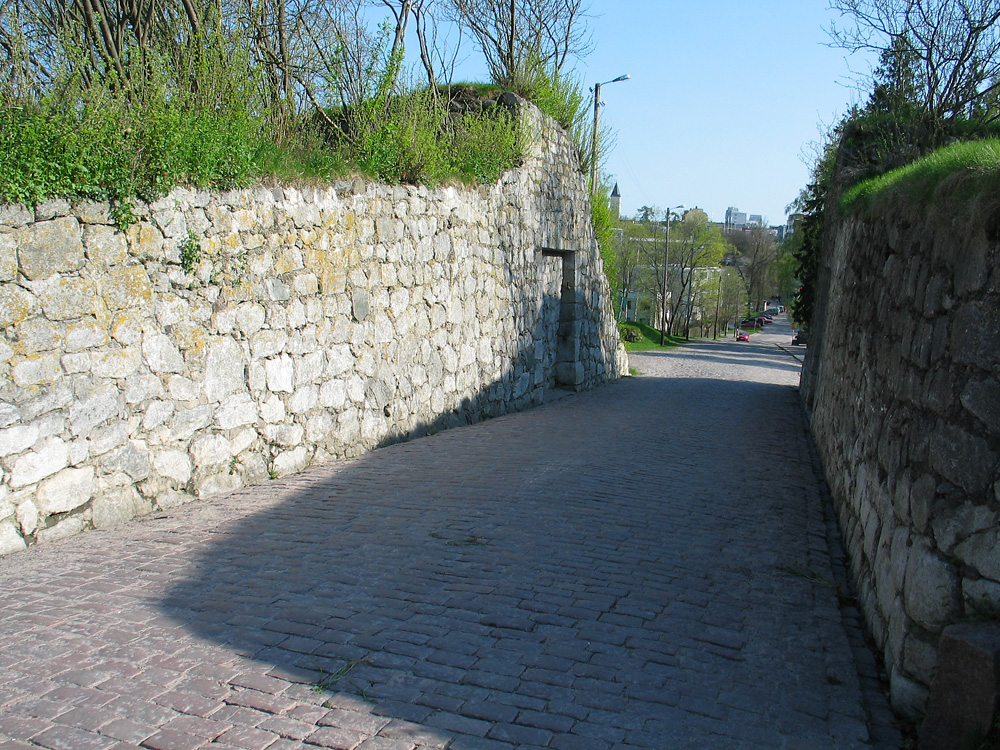
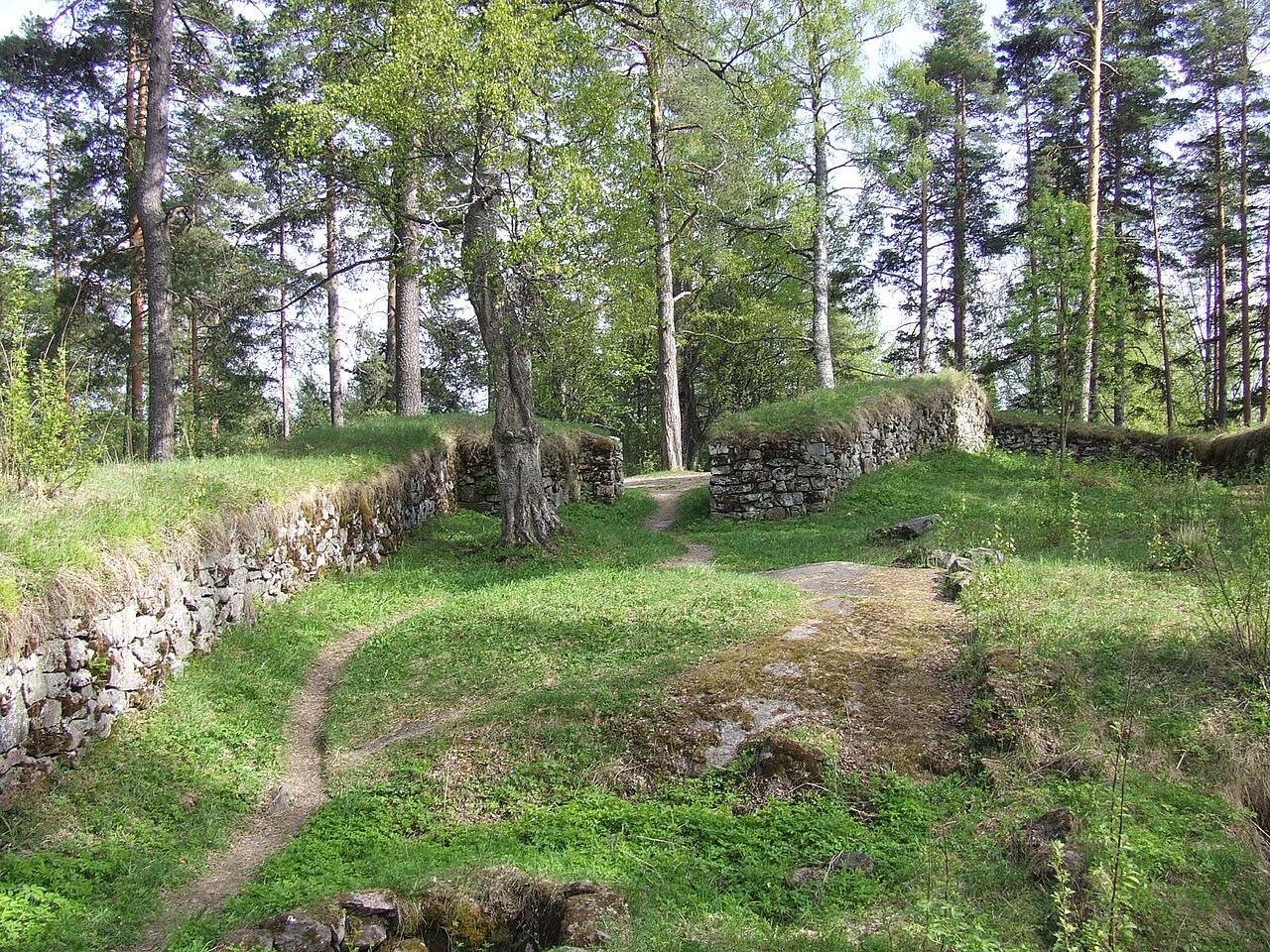
Kärnäkoski Fortress is a historically significant bastioned fortress located in Savitaipale, Finland. Constructed between 1790 and 1793 by Russian military engineers, it formed a crucial part of the South-Eastern Finland fortification system. This strategic defensive complex was designed to protect the vital road leading to St. Petersburg and to guard the Russian fleet operating in the Saimaa lake region against potential incursions by Swedish forces from the west.
Construction and design
The fortress's construction began in 1790 under the supervision of French engineer officers employed by the Russian Empire. Kärnäkoski exemplifies the traditional French bastion system, a military architectural style characterized by angular bastions projecting outward from the main walls, designed to maximize defensive fire coverage and eliminate blind spots. The fortress's star-shaped layout and robust stone walls were typical of late post-Renaissance military architecture, emphasizing both strength and strategic positioning.
The construction workforce comprised approximately 1400 Russian soldiers and local peasants, many of whom endured harsh conditions that led to numerous deaths from illness and exhaustion. Despite these challenges, the fortress was completed within a few years, reflecting the urgency of securing Russia's western borders during this period of geopolitical tension.
Military role and historical context
Kärnäkoski Fortress served as a defensive stronghold for only about 15 years. Its primary role was to protect the strategic land route to St. Petersburg and to secure the Russian fleet's operations in the Saimaa region. However, following the Finnish War of 1808-1809, the fortress lost much of its military significance. The war resulted in Finland becoming an autonomous Grand Duchy under Russian control, shifting the geopolitical landscape and reducing the fortress's strategic value.
In 1835, the fortress was officially disbanded by Tsar Nicholas I. Subsequently, Kärnäkoski was disarmed, and its buildings and remaining military equipment were auctioned off. Over time, the fortress's walls and fortifications were neglected, leading to a gradual decline in their condition. Notably, Kärnäkoski never engaged in active combat during its operational period, although the surrounding area witnessed several battles during the Finnish Civil War of 1918.
Architectural features and layout
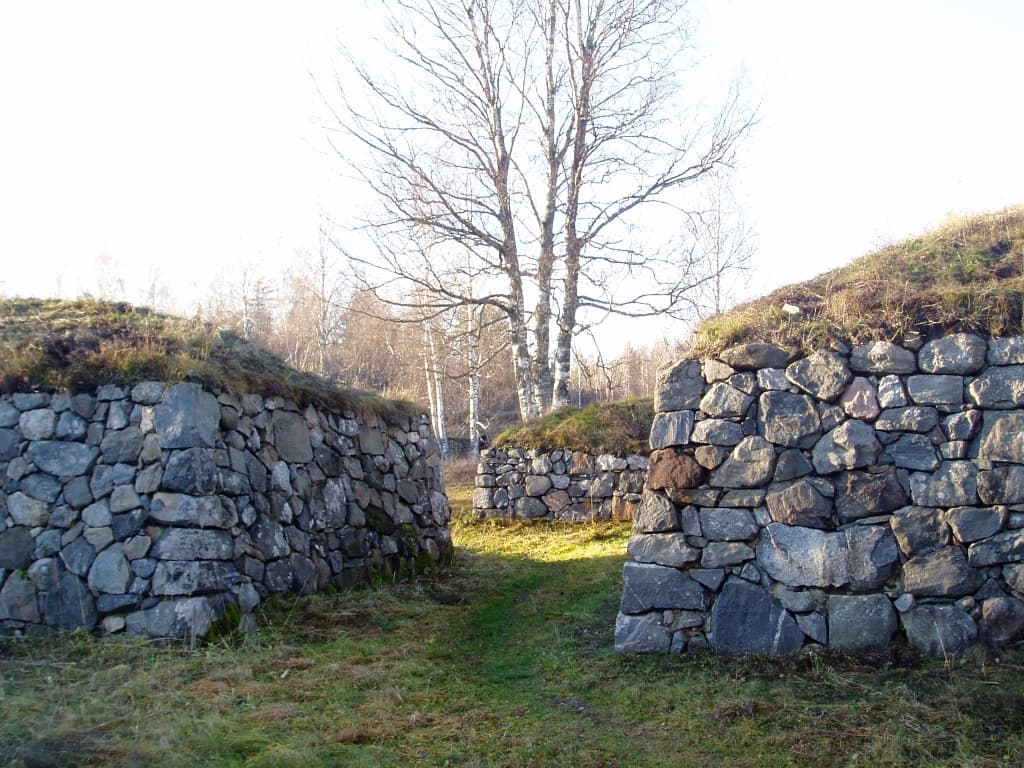
The fortress's design showcases key elements of the bastioned fortress typology, including angled bastions that provided overlapping fields of fire. The walls were constructed with thick stone masonry, intended to withstand artillery bombardment. The fortress included various internal structures such as barracks, storage buildings, and defensive ditches, though many of these have not survived intact to the present day.
Adjacent to the fortress are several historical structures that contribute to the site's cultural heritage. Among these are an old barge harbor, a mill and sawmill dating from the 1830s, and a distinctive double-arch stone bridge constructed in 1886. The mill, although out of operation since the 1950s, was restored in 2002 by a local village organization, preserving an important aspect of the area's industrial history.
Modern preservation and cultural significance
Today, Kärnäkoski Fortress is recognized as a nationally significant cultural and historic landmark by the Finnish National Board of Antiquities and the Finnish Ministry of the Environment. Restoration efforts have been undertaken to repair the fortress walls and clear the surrounding area, returning the site closer to its original form. These efforts are part of a broader initiative to preserve the fortresses of southeastern Finland.
While the fortress is accessible to visitors, it lacks formal guided tours or extensive tourist facilities. Instead, visitors can explore the site independently, aided by informational signage that provides context about the fortress's history and architecture. The site offers a tangible connection to Finland's military past and the complex history of Russo-Swedish conflicts in the region.
Historical legacy and regional impact
Kärnäkoski Fortress stands as a testament to the military strategies and architectural practices of the late 18th century in Northern Europe. Its construction reflects the geopolitical tensions between Russia and Sweden and the importance of controlling key transportation routes and waterways. Although its active military use was brief, the fortress's presence influenced the development of the surrounding region and remains a point of interest for historians and visitors alike.
The fortress's preservation contributes to understanding the evolution of bastioned fortifications and their role in early modern warfare. It also highlights the human cost of such large-scale military projects, given the forced labor and hardships endured by those who built it.
Frequently asked questions (FAQ)
- How do I get to kärnäkoski fortress in savitaipale?
- Kärnäkoski Fortress is located near the town of Savitaipale in South Karelia, Finland. It is accessible by car via local roads, with parking available nearby. Public transportation options are limited, so driving is recommended for visitors.
- What is the historical significance of kärnäkoski fortress?
- Kärnäkoski Fortress was built by Russia in the late 18th century to protect the strategic road to St. Petersburg and the Russian fleet in Saimaa from Swedish attacks. It played a defensive role during a tense period but never saw active combat.
- When was kärnäkoski fortress built and by whom?
- The fortress was constructed between 1790 and 1793 by Russian forces under the guidance of French military engineers. Its design follows the traditional French bastion system.
- Can I visit kärnäkoski fortress year-round?
- The fortress is open to visitors year-round as an outdoor historical site. However, there are no formal guided tours or visitor services, so it is best to visit during daylight hours for safety and visibility.
- Are there any guided tours available at kärnäkoski fortress?
- Currently, there are no official guided tours at Kärnäkoski Fortress. Visitors can explore the site independently using informational signs placed around the fortress area.
- What other historical sites are near kärnäkoski fortress?
- Nearby historical sites include an old barge harbor, a mill and sawmill from the 1830s, and a double-arch stone bridge built in 1886. These sites provide additional context to the region's industrial and transportation history.
Photo gallery

Information
Sources & official resources
Verify the information above using these authoritative references.
Loading map...
Visitor reviews
No reviews yet. Been here? Write the first review and help other travelers!
Write the first reviewVisited this castle? Share your experience
Your review helps other travelers and adds first-hand knowledge to our encyclopedia.