Brahelinna
Brahelinna, also known as Braheslott or the Brahe Castle, is a notable castle ruin situated in the municipality of Ristiina, in the southern part of Mikkeli, South Savo, Finland. Established in the 17th century by the Finnish-Swedish nobleman Count Per Brahe the Younger, the castle served primarily as an administrative manor rather than a military fortress. Its historical significance is tied to the governance and development of the region during the Renaissance period.
Founding and historical context
The origins of Brahelinna trace back to the spring of 1646, when Count Per Brahe initiated construction following his earlier visit to the village of Pyrhölä in 1639 during his extensive travels in Savonia. The castle was intended to function as the administrative center of Brahe's fief in Ristiina, reflecting its role in regional governance rather than military defense. This administrative purpose was further emphasized by the establishment of the Ristiina parish in 1649, an initiative supported and financed by the Brahe family, who also contributed to the construction of the local church.
Architectural design and construction features
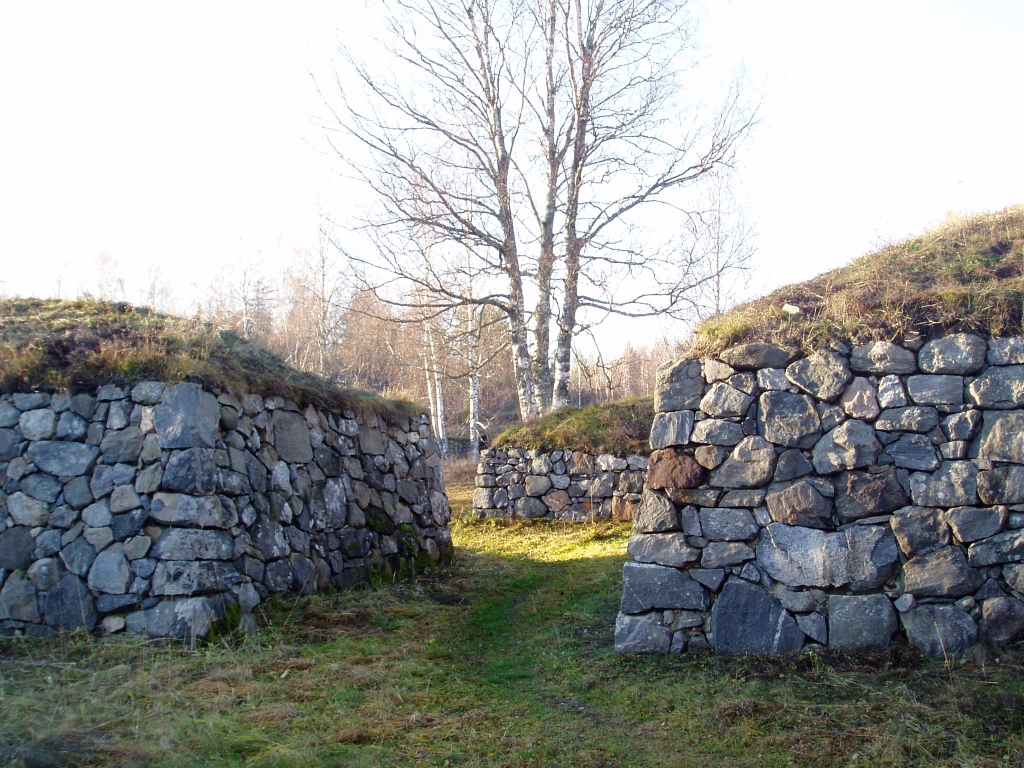
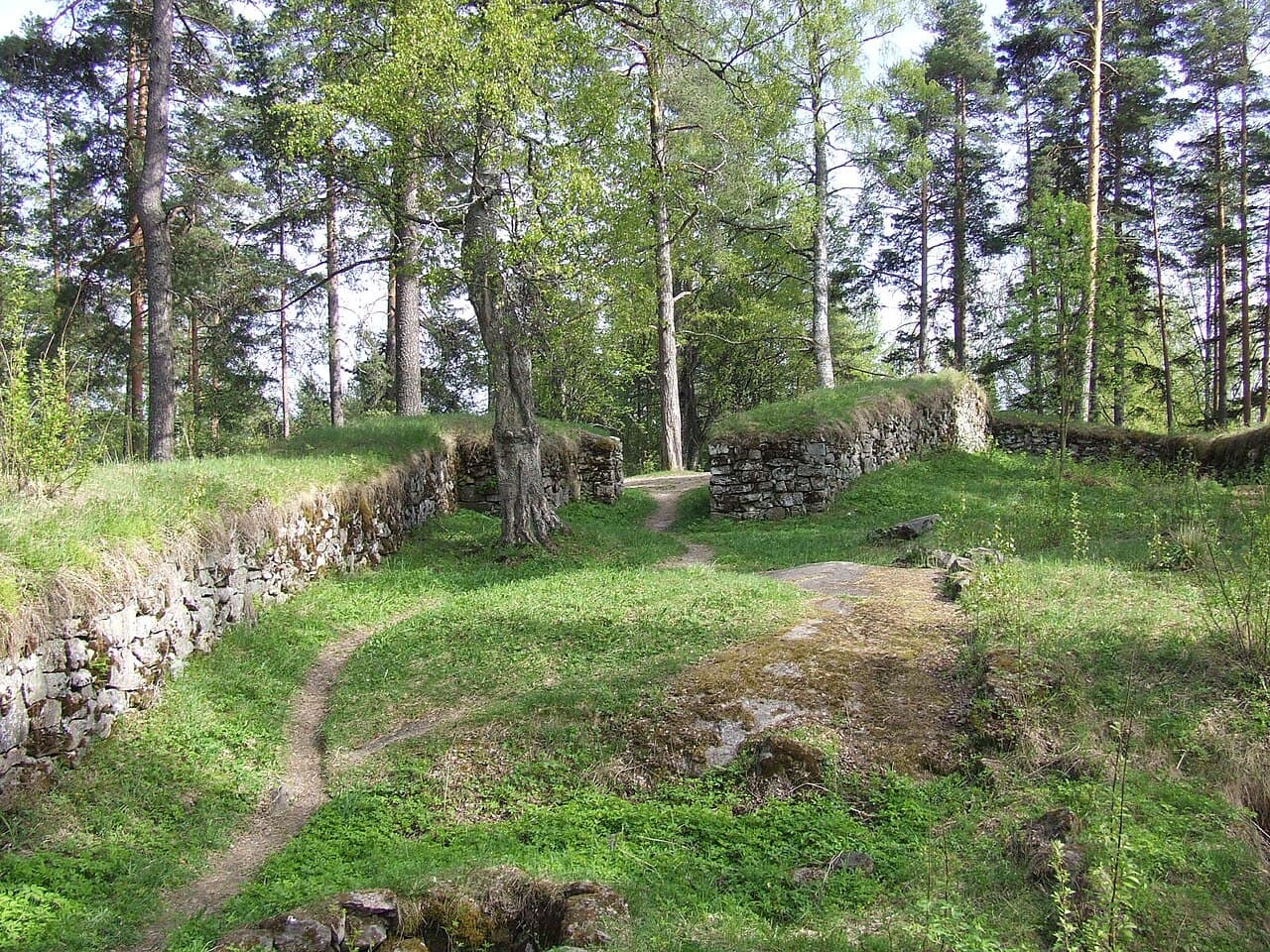
Brahelinna was constructed as a hill castle with a roughly rectangular layout, enclosed by a substantial stone perimeter wall. The wall was built using stone blocks combined with layers of birch bark and turf serving as sealing materials, showcasing the careful construction techniques of the period. Some sections incorporated log structures, blending stone masonry with traditional wooden building methods common in Finland. The perimeter wall measured between 1.5 and 2 meters thick and rose to about four meters in height.
The castle featured three gates, with the principal entrance located on the eastern side. This entrance included a vaulted arch approximately six meters in length, indicating its formal and important status. Two smaller gates were positioned on the northern side at the corners of the enclosure, while a projecting section of the southern wall extended eastward to oversee the main gate area, enhancing security and control over access.
Within the courtyard stood the main manor house, a two-story building approximately 10 meters wide and 20 meters long, containing between 16 and 20 rooms. The lower level was constructed of stone, providing a durable foundation, while the upper story was built with logs, reflecting local architectural traditions. The manor housed key personnel such as the bailiff, gardener, and a guard detachment sent from Olavinlinna castle to maintain security.
A small armory was part of the complex, with inventory records from 1670 listing two iron cannons, four hunting rifles, and 22 muskets. These weapons were not intended for defense against sieges but rather for training local peasants as militia, underscoring the castle's administrative and local security functions.
Later history and military use
Construction of Brahelinna proceeded slowly, and by around 1656, the manor's walls, window openings, and chimney were completed, though the roof remained unfinished. Maintenance challenges emerged by 1664, when the stone perimeter wall showed signs of deterioration. Repairs were undertaken with the assistance of a detachment of ten soldiers. Despite these efforts, construction and upkeep ceased by the late 1660s.
In the 1680s, the fief passed to state control, and Brahelinna was repurposed as the residence of the colonel commanding the Savonian infantry regiment. This marked a shift to a military function. During the early 18th century, the manor was destroyed amidst the turmoil of the Great Northern War, known in Finnish history as the "Great Wrath."
Following the war, proposals to restore Brahelinna emerged. In the 1730s, renovation demands led to the construction of a new house half a kilometer away in 1739, which was relocated in 1770. Plans from the 1740s to convert the ruins into a prison were rejected. Over time, stones from Brahelinna were salvaged for use in other local buildings, including the colonel's manor and the nearby Ristiina church.
From the mid-1770s, Brahelinna resumed its military role as the residence of the colonel of the Savonian infantry. It hosted a military school founded by Göran Magnus Sprengtporten, which trained notable Finnish officers before relocating in 1781. During the Russo-Swedish War (1788–1790), the nearby waters of Lake Saimaa served as a base for the Swedish cannon sloop flotilla.
Preservation and current status
Interest in preserving Brahelinna's remains reemerged in the late 19th century, with initial repairs conducted in 1902. More structured restoration efforts began in the 1940s, including work on the western sections of the surviving walls in 1949. Today, the ruins stand as a testament to the castle's layered history as both an administrative manor and a military residence.
The surviving remains chiefly consist of the stone perimeter wall enclosing the courtyard. Although portions of the walls have been quarried for building materials over the centuries, the remaining structure still provides insight into 17th-century construction methods and the castle's original layout.
Architectural significance
Brahelinna exemplifies a Renaissance-era hill castle in Finland, combining traditional Finnish building materials and techniques with the stone fortification styles of the period. The use of birch bark and turf as sealing materials in the stone walls is distinctive, reflecting local adaptations to construction. The blend of stone and log construction in the manor house demonstrates the integration of durable and vernacular architectural elements.
Historical legacy
The castle's association with Count Per Brahe the Younger links it to a prominent figure in Finnish-Swedish history, known for his administrative reforms and development efforts in Finland during the 17th century. Brahelinna's role as an administrative center and later as a military residence illustrates the evolving functions of such estates in the region's history.
Visitor information
Today, Brahelinna is accessible as a historic ruin site, offering visitors a glimpse into 17th-century Finnish noble architecture and regional history. The site provides an educational experience about the castle's administrative and military roles, as well as its architectural features.
Frequently asked questions (FAQ)
- How do I get to Brahelinna castle ruins?
- Brahelinna castle ruins are located in Ristiina, South Savo, Finland. Visitors can reach the site by car or local transport from Mikkeli, the nearest city.
- What is the historical significance of Brahelinna?
- Brahelinna was founded by Count Per Brahe the Younger in the 17th century as an administrative manor and later served military functions. It reflects Finnish Renaissance-era architecture and regional governance.
- Can I explore the castle ruins freely?
- Yes, Brahelinna is open to the public as a historic ruin site. Visitors can walk around the perimeter walls and the courtyard remains, but should respect preservation efforts and avoid climbing on fragile structures.
- When was Brahelinna destroyed?
- Brahelinna was destroyed during the early 18th century amid the Great Northern War, also known as the Great Wrath in Finnish history.
- Are there any restoration efforts ongoing at Brahelinna?
- Restoration efforts began in the early 20th century and continued in the 1940s, focusing on stabilizing the remaining walls. Preservation work aims to maintain the ruins for educational and cultural purposes.
Photo gallery

Information
Loading map...
Visitor reviews
No reviews yet. Been here? Write the first review and help other travelers!
Write the first reviewVisited this castle? Share your experience
Your review helps other travelers and adds first-hand knowledge to our encyclopedia.