Karlstein Castle Replica

Karlstein castle replica in batchelor, australia
Batchelor, Northern Territory, Australia
Well Preserved

Karlstein Castle Replica in Batchelor, Northern Territory, Australia, is a remarkable example of personal dedication and cultural homage, standing out as a unique architectural landmark far from its European inspiration. This Bohemian-style gothic castle is an unusual sight in the Australian outback, modeled closely on the famous Karlstein Castle in Czechia. It was constructed by Bernie Havlik, a retired mineworker and Czech immigrant, who devoted much of his retirement years to building this distinctive structure.

Havlik, who worked at the nearby Rum Jungle Uranium Mine, began the castle project after the mine's closure in 1971. His vision was to transform a stubborn rock outcrop in the town center into a charming and evocative castle, serving both as a personal tribute to his heritage and as a gift to the local community. Over nearly two decades, Havlik tirelessly worked on the castle until his death in 1990, demonstrating extraordinary commitment to his craft and community spirit.

Architectural inspiration and design

The replica draws heavily from the original Karlstein Castle, a Gothic castle built in the 14th century near Prague, Czechia. While the Australian version is much smaller and adapted to local conditions, it faithfully incorporates key gothic architectural features such as pointed arches, battlements, and narrow windows that evoke the medieval fortress style. The castle's construction on an exposed rock outcrop enhances its imposing silhouette and adds to its authenticity as a gothic castle.

Unlike traditional castles built for defense or residence, this replica serves primarily as a cultural landmark. Its detailed stonework and design elements reflect Havlik's dedication to preserving his Bohemian roots and sharing them with the Australian community. The castle's location in Havlik Park places it at the heart of Batchelor, making it a focal point for visitors and locals alike.

Bernard havlik: the creator and his legacy

Bernie Havlik was a Czech immigrant who arrived in Australia and worked in the mining industry, specifically at the Rum Jungle Uranium Mine. After the mine's closure, he chose to remain in Batchelor and contribute to the community by volunteering as a gardener. His passion for his heritage and his community inspired him to undertake the ambitious project of building the castle.

Havlik's work on the castle was a labor of love and a testament to his craftsmanship and perseverance. The castle stands today not only as an architectural curiosity but also as a symbol of his dedication and the multicultural fabric of the Northern Territory. His legacy is preserved in the castle's continued presence and in the park that bears his name.

Historical context of batchelor and surrounding landmarks

Batchelor itself is a town rich in history, particularly linked to mining and military activities. The Rum Jungle Uranium Mine was a significant source of uranium during the mid-20th century, contributing to Australia's mining heritage. The mine's closure in 1971 marked a turning point for the town and its residents.

Nearby, the remains of the uranium mine and its distinctive radioactive crater serve as a reminder of the area's industrial past. Additionally, the town is close to a historic wartime airfield that remains operational. This airfield is notable for being the site where General Douglas Macarthur first set foot on Australian soil in March 1942 after the fall of Corregidor in the Philippines during World War II.

During the war, Batchelor's airfield was a strategic base for the U.S., Australian, and Dutch air forces, which launched bombing missions against Japanese targets in Indonesia and beyond. This military heritage adds depth to the town's historical significance, complementing the cultural narrative embodied by the Karlstein Castle Replica.

Visitor experience and cultural significance

Today, the Karlstein Castle Replica is a beloved local landmark and a point of interest for visitors exploring the Northern Territory. Situated in Havlik Park, the castle offers a unique glimpse into the personal story of an immigrant's contribution to his adopted community and the blending of European heritage with Australian history.

Visitors can appreciate the castle's architectural details and its setting amidst the rugged landscape of Batchelor. The juxtaposition of this gothic-style structure against the Australian outback creates a striking visual and cultural contrast. The castle serves as a reminder of the diverse influences that shape Australia's cultural landscape.

While the castle is not a large-scale tourist attraction, it holds significant value for those interested in architecture, history, and multicultural stories. It also highlights the importance of individual initiative in preserving cultural identity and enriching community life.

Nearby attractions

  • Rum Jungle Uranium Mine remnants and crater
  • Batchelor wartime airfield with historical significance
  • Local heritage sites and natural parks in the Northern Territory

Preservation and current status

The castle remains well preserved as a tribute to Bernie Havlik's vision and effort. It is maintained as part of the public park and continues to be a symbol of community pride. Its preservation ensures that future generations can appreciate this unique blend of Bohemian gothic architecture and Australian history.

Frequently asked questions (FAQ)

How do I visit Karlstein Castle Replica in Batchelor?
Karlstein Castle Replica is located in Havlik Park in Batchelor, Northern Territory. It is accessible to the public year-round, and visitors can explore the exterior and surrounding park area at their leisure.
What is the historical significance of Karlstein Castle Replica?
The castle is a cultural tribute built by Czech immigrant Bernie Havlik, reflecting Bohemian gothic architecture and commemorating his community spirit in Batchelor.
Is the castle open for interior tours?
The castle is primarily an exterior landmark and does not offer interior tours, but visitors can enjoy viewing the detailed gothic architectural features from outside.
What other historical sites are near Karlstein Castle Replica?
Nearby attractions include the Rum Jungle Uranium Mine remnants and crater, as well as the Batchelor wartime airfield, significant for its World War II history.
When was Karlstein Castle Replica built?
Construction began after the closure of the Rum Jungle Uranium Mine in 1971 and continued until Bernie Havlik's death in 1990.

Information

Mixed / Complex

Current owner

Municipality

Loading map...

Visitor reviews

No reviews yet. Been here? Write the first review and help other travelers!

Write the first review

Visited this castle? Share your experience

Your review helps other travelers and adds first-hand knowledge to our encyclopedia.
Write a review

(5/5)

0/2000 characters

Your review will be visible after admin approval

Nearby castles

872.4 km
Fort Concordia — Indonesia castle

Fort Concordia

, Indonesia

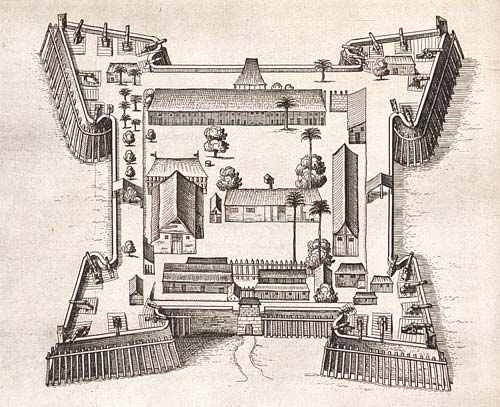
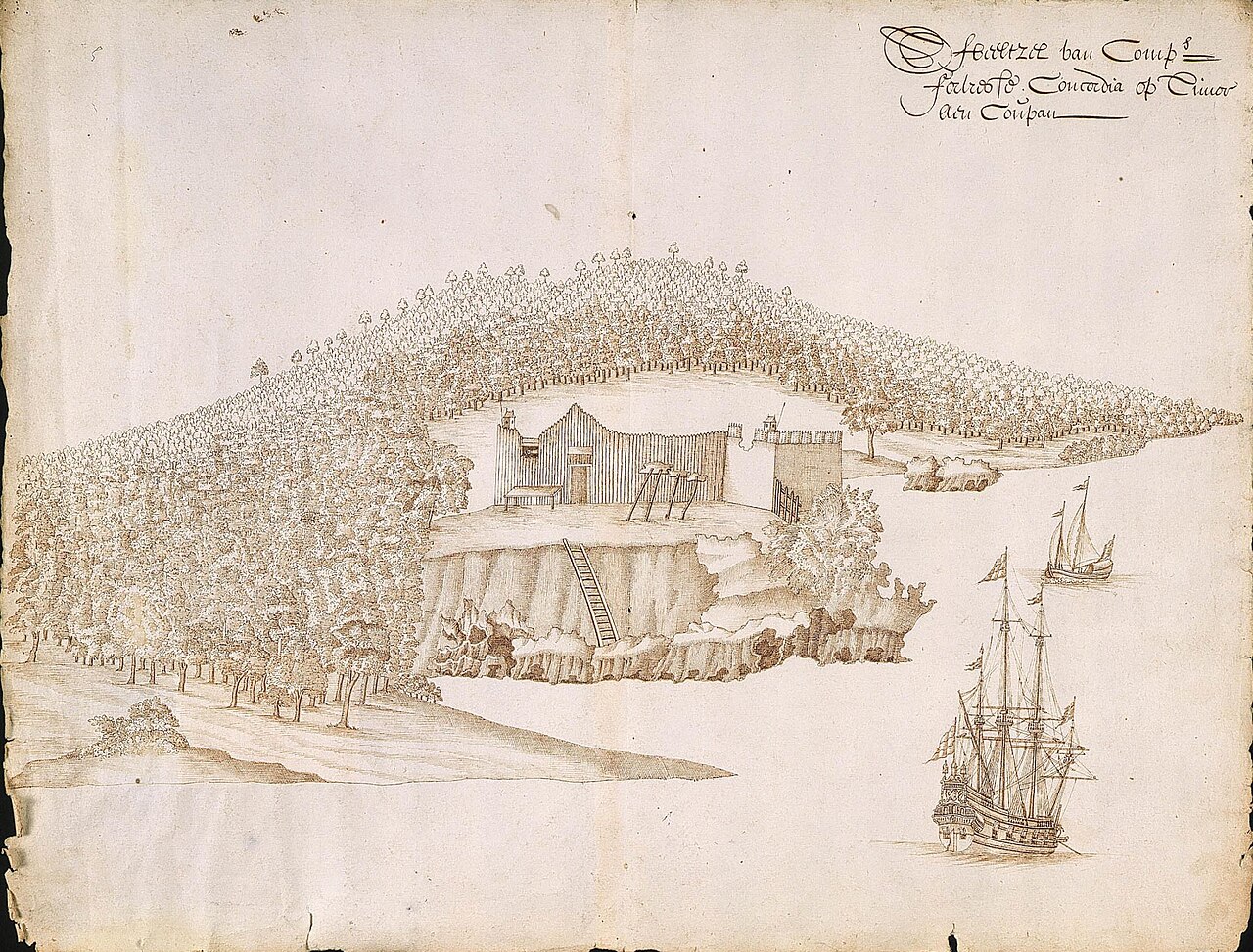
Fort Concordia is a notable example of a bastioned fortress located in Indonesia, reflecting the strategic military architecture introduced during the colonial period. Although the exact city location is not specified, the fortress represents an important part of Indonesia's colonial heritage, illustrating the defensive needs and architectural styles adapted by European powers in Southeast Asia. Historical context and significance Constructed during the era when European colonial powers sought to establish and defend their trading posts and territories in the Indonesian archipelago, Fort Concordia served as a critical military installation. Bastioned fortresses were designed to withstand artillery sieges and provide overlapping fields of fire, a significant advancement over earlier medieval castles. This type of fortification became widespread in the 16th to 18th centuries, coinciding with the rise of gunpowder warfare. The fortress likely played a role in controlling local trade routes and protecting colonial interests from rival European powers as well as local resistance. Its construction reflects the adaptation of European military engineering principles to the tropical environment of Indonesia, incorporating thick walls and bastions to maximize defense capabilities. Architectural features of a bastioned fortress Bastioned fortresses are characterized by angular bastions projecting from the main walls, allowing defenders to cover adjacent walls with gunfire and eliminate blind spots. This design was a response to the increasing effectiveness of cannon fire, which rendered traditional high-walled castles vulnerable. Fort Concordia would have included: Thick, sloped walls constructed to absorb and deflect cannonballs. Angular bastions positioned at corners for optimal defensive coverage. Moats or ditches surrounding the fortress to hinder attackers. Internal courtyards and barracks to accommodate troops. Gun platforms and embrasures for artillery placement. The fortress's layout was likely designed to maximize defensive strength while allowing for efficient troop movement and supply storage within the walls. Construction period and style While the exact construction date of Fort Concordia is not specified, bastioned fortresses in Indonesia typically date from the 16th to 18th centuries, aligning with the period of European colonial expansion in the region. The architectural style is primarily functional, focusing on military engineering principles rather than ornamental design. It reflects the post-medieval evolution of fortifications, emphasizing the use of gunpowder artillery and the need for angled bastions to counter artillery attacks. Current condition and preservation The current condition of Fort Concordia is not detailed, but many such colonial-era fortresses in Indonesia vary from well-preserved to ruins. Preservation efforts often depend on local and national heritage initiatives. If accessible, Fort Concordia would offer valuable insights into the colonial military architecture and historical conflicts in the region. Visiting Fort Concordia Information on visiting hours, ticket prices, and accessibility is not available. Visitors interested in colonial military history or Indonesian heritage may find Fort Concordia a significant site, if accessible. It is advisable to consult local tourism authorities for up-to-date visitor information. Frequently asked questions about Fort Concordia What is Fort Concordia?Fort Concordia is a bastioned fortress in Indonesia built during the colonial period to protect strategic interests. When was Fort Concordia built?It likely dates from the 16th to 18th centuries, during European colonial expansion in Indonesia. What architectural style does Fort Concordia represent?It exemplifies the bastioned fortress style, designed for defense against artillery. Can I visit Fort Concordia?Visitor information is limited; checking with local tourism offices is recommended. Why was a bastioned fortress design used?The design allowed defenders to cover all approaches with cannon fire, improving defense against sieges.

Post-Renaissance (17th–18th c.)
Details
955.1 km
Fort Nassau (Banda Islands) — Indonesia castle

Fort Nassau (Banda Islands)

Banda Neira, Indonesia

Fort Nassau stands as a significant historical monument on Banda Neira Island, the main island of the Banda Islands in Indonesia's Maluku province. Completed in 1609, it was the first Dutch fortification in the region, erected to secure control over the lucrative nutmeg trade which was exclusive to the Banda Islands at the time. This Renaissance-period bastioned fortress marked the beginning of Dutch colonial dominance in the Spice Islands and played a critical role in shaping the geopolitical landscape of Southeast Asia during the early 17th century. Historical context and early attempts at fortification The Banda Islands were highly coveted by European powers due to their unique production of nutmeg and mace, spices that commanded exorbitant prices in Europe. Before the Dutch arrival, the Portuguese had attempted to establish a fort at the same site in 1529. However, their efforts were thwarted by strong resistance from the indigenous Bandanese people, who opposed foreign control over their islands and trade. The Portuguese abandoned the construction after laying the foundations, leaving the site vulnerable to future occupiers. The Dutch conquest and construction of Fort Nassau On 25 April 1609, the Dutch East India Company dispatched a fleet under Admiral Verhoeven to Banda Neira. Landing with 750 soldiers, the Dutch chose the abandoned Portuguese foundations to build their fortification. The Bandanese resistance was fierce; they opposed the Dutch monopoly over the nutmeg trade and launched a surprise attack, killing Admiral Verhoeven and 40 soldiers. Despite this setback, the Dutch rapidly completed the fort, establishing it as their main administrative and military base in the Banda Islands. Architectural features of Fort Nassau Fort Nassau was designed as a large quadrilateral bastioned fortress with four bastions at each corner, a typical design of the Renaissance military architecture adapted to the tropical environment. The bastions allowed defenders to cover all approaches with cannon fire, providing a strong defensive perimeter against both naval and land attacks. The fort's walls were thick and constructed from local stone and coral, materials chosen for their durability and resistance to tropical weathering. The fort was strategically positioned by the channel between Banda Neira and Banda Besar Islands, controlling maritime access and trade routes. Inside, the fort housed barracks, storage facilities for spices and ammunition, and administrative buildings. Its layout reflected Dutch military engineering principles, emphasizing both defense and functionality. Role and legacy in the Banda Islands Fort Nassau served as the principal Dutch stronghold in the Banda Islands for much of the 17th century. It was central to the Dutch strategy of monopolizing the nutmeg trade, which involved not only military control but also the suppression of local populations and rival European powers. Over time, the fort's role was supplemented by additional fortifications on nearby islands, including Forts Hollandia and Concordia on Banda Besar, and Fort Revenge on Ai Island. Despite its initial prominence, Fort Nassau was eventually overshadowed by the construction of the more imposing Fort Belgica on Banda Neira in the late 17th century. Fort Belgica's advanced design and larger scale reflected evolving military needs and technologies. Current condition and preservation status Today, Fort Nassau remains a partially preserved ruin. While much of the structure has suffered from tropical weathering and neglect, two bastions and substantial portions of the defensive walls are still visible. The fort's dilapidated state contrasts with the better-preserved Fort Belgica, which overlooks the site. Fort Nassau stands as an important cultural heritage site, offering insight into early Dutch colonial military architecture and the turbulent history of the Banda Islands. Visiting Fort Nassau Visitors to Banda Neira can explore the remnants of Fort Nassau to gain a deeper understanding of the island's colonial past. The site is accessible and provides panoramic views of the surrounding sea channels. While the fort itself is in ruins, it remains a poignant historical landmark reflecting the complex interactions between European colonizers and indigenous populations during the spice trade era.

Renaissance (15th–17th c.)
Details
955.2 km
Fort Belgica — Indonesia castle

Fort Belgica

Banda Neira, Indonesia

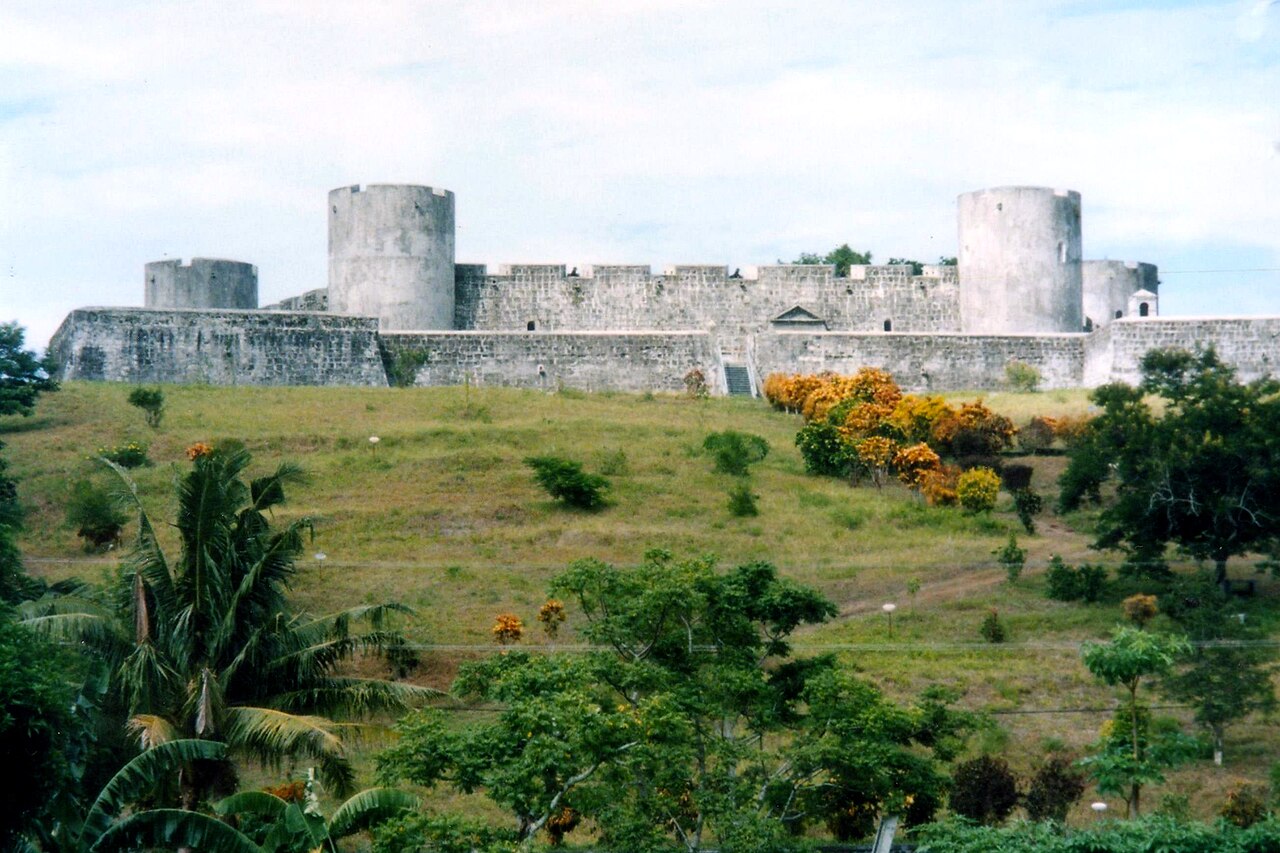
Fort Belgica is a prominent 17th-century bastioned fortress located on the island of Banda Neira in the Banda Islands, part of the Maluku Islands (the Moluccas) in Indonesia. This fortification played a critical role in the defense and control of the Banda Islands, which were historically the world's only source of nutmeg during the early modern period. The strategic importance of nutmeg made the Banda Islands a coveted possession for colonial powers, and Fort Belgica was central to the Dutch East India Company's efforts to maintain dominance in the spice trade.Historical context and significanceThe Banda Islands were the exclusive producers of nutmeg and mace, spices that commanded high value in Europe from the 16th to 18th centuries. The Dutch East India Company (VOC) established control over the islands in the early 17th century, seeking to monopolize the lucrative spice trade. Fort Belgica was constructed as part of a broader fortification system designed to protect Dutch interests from rival European powers and local resistance.The fort's construction began in the mid-1600s, replacing earlier fortifications on the site. Its location on a hill overlooking the harbor provided a commanding view of the surrounding sea and islands, enabling effective defense against naval attacks.Architectural design and featuresFort Belgica exemplifies the bastioned fortress style characteristic of the Renaissance military architecture introduced by European powers in the East Indies. The fort's design incorporates star-shaped bastions that allowed defenders to cover all approaches with overlapping fields of fire, minimizing blind spots and enhancing defensive capabilities against cannon fire and siege warfare.The fort's walls are thick and angled, constructed from local stone and coral materials, designed to absorb and deflect artillery fire. The interior contains barracks, storage rooms, and powder magazines arranged around a central courtyard. The fortification also includes a well to provide water during sieges.Defensive layoutThe bastions are connected by curtain walls with embrasures for cannons. The fort's entrance is heavily fortified with a gatehouse and drawbridge, emphasizing security. The elevated position of the fort allowed for early spotting of enemy ships and coordinated artillery defense.Role in colonial conflicts and legacyThroughout the 17th and 18th centuries, Fort Belgica was a focal point in conflicts between the Dutch and other colonial powers, including the English and Portuguese, as well as local resistance from the indigenous Banda population. The fort helped the Dutch maintain their monopoly on nutmeg until the late 18th century when nutmeg cultivation spread to other parts of the world.Despite its military importance, the fort eventually fell into disuse as the spice trade declined and geopolitical dynamics shifted. Today, Fort Belgica stands as a significant historical monument, reflecting the complex colonial history of Indonesia and the global spice trade.Current condition and tourismFort Belgica is currently partially preserved and accessible to visitors. Restoration efforts have been undertaken to stabilize the structure and improve visitor facilities. Tourists can explore the fort's bastions, walls, and interior chambers, gaining insight into 17th-century military architecture and colonial history.The fort offers panoramic views of Banda Neira's harbor and surrounding islands, making it a popular destination for history enthusiasts and travelers interested in Indonesia's cultural heritage.

Renaissance (15th–17th c.)
Details