Fort Belgica
Fort Belgica is a prominent 17th-century bastioned fortress located on the island of Banda Neira in the Banda Islands, part of the Maluku Islands (the Moluccas) in Indonesia. This fortification played a critical role in the defense and control of the Banda Islands, which were historically the world's only source of nutmeg during the early modern period. The strategic importance of nutmeg made the Banda Islands a coveted possession for colonial powers, and Fort Belgica was central to the Dutch East India Company's efforts to maintain dominance in the spice trade.
Historical context and significance
The Banda Islands were the exclusive producers of nutmeg and mace, spices that commanded high value in Europe from the 16th to 18th centuries. The Dutch East India Company (VOC) established control over the islands in the early 17th century, seeking to monopolize the lucrative spice trade. Fort Belgica was constructed as part of a broader fortification system designed to protect Dutch interests from rival European powers and local resistance.
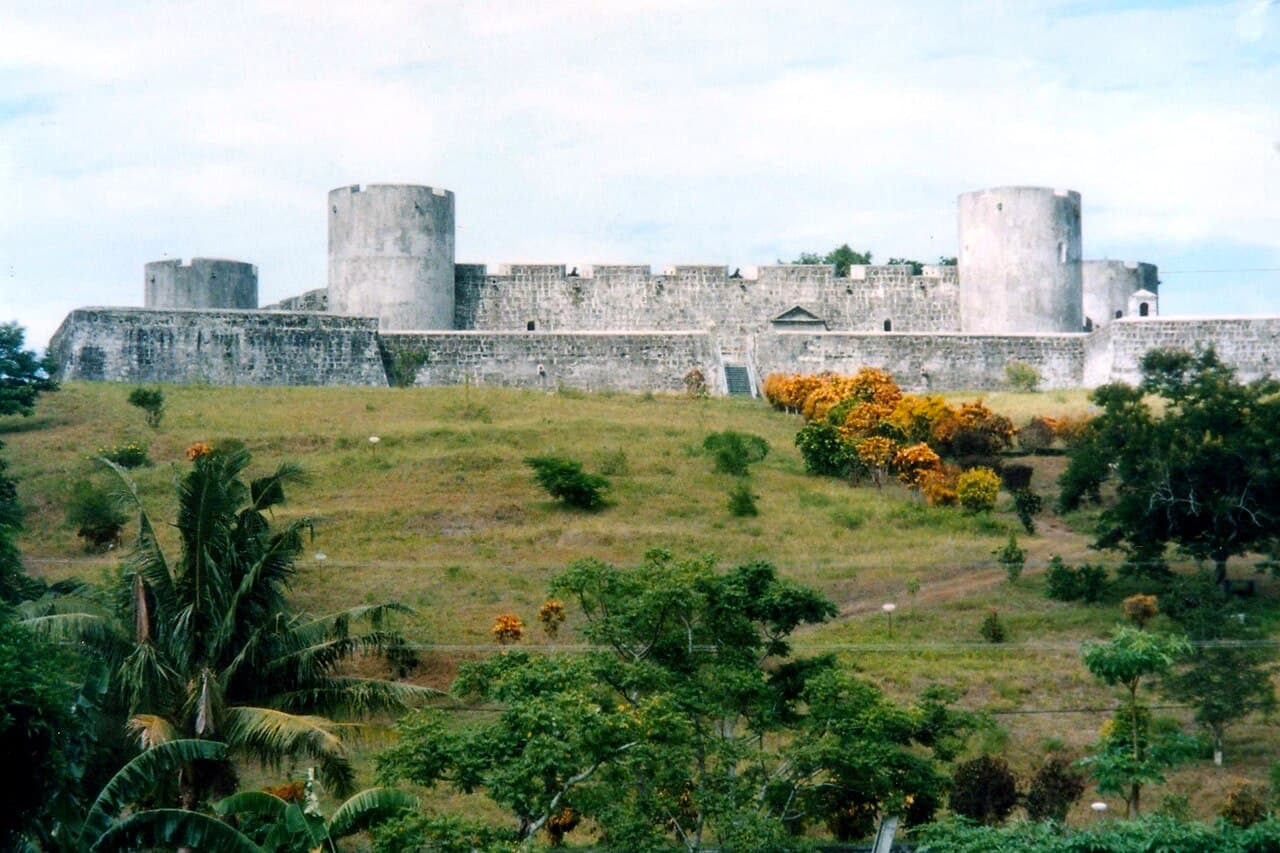
The fort's construction began in the mid-1600s, replacing earlier fortifications on the site. Its location on a hill overlooking the harbor provided a commanding view of the surrounding sea and islands, enabling effective defense against naval attacks.
Architectural design and features
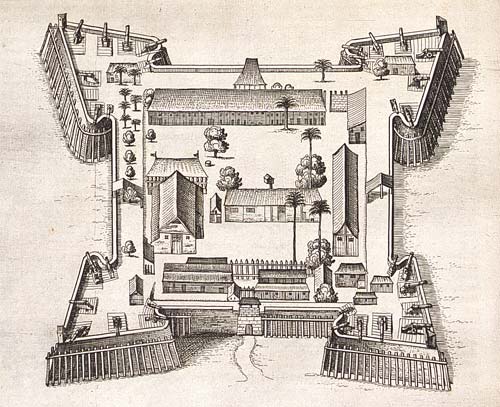
Fort Belgica exemplifies the bastioned fortress style characteristic of the Renaissance military architecture introduced by European powers in the East Indies. The fort's design incorporates star-shaped bastions that allowed defenders to cover all approaches with overlapping fields of fire, minimizing blind spots and enhancing defensive capabilities against cannon fire and siege warfare.
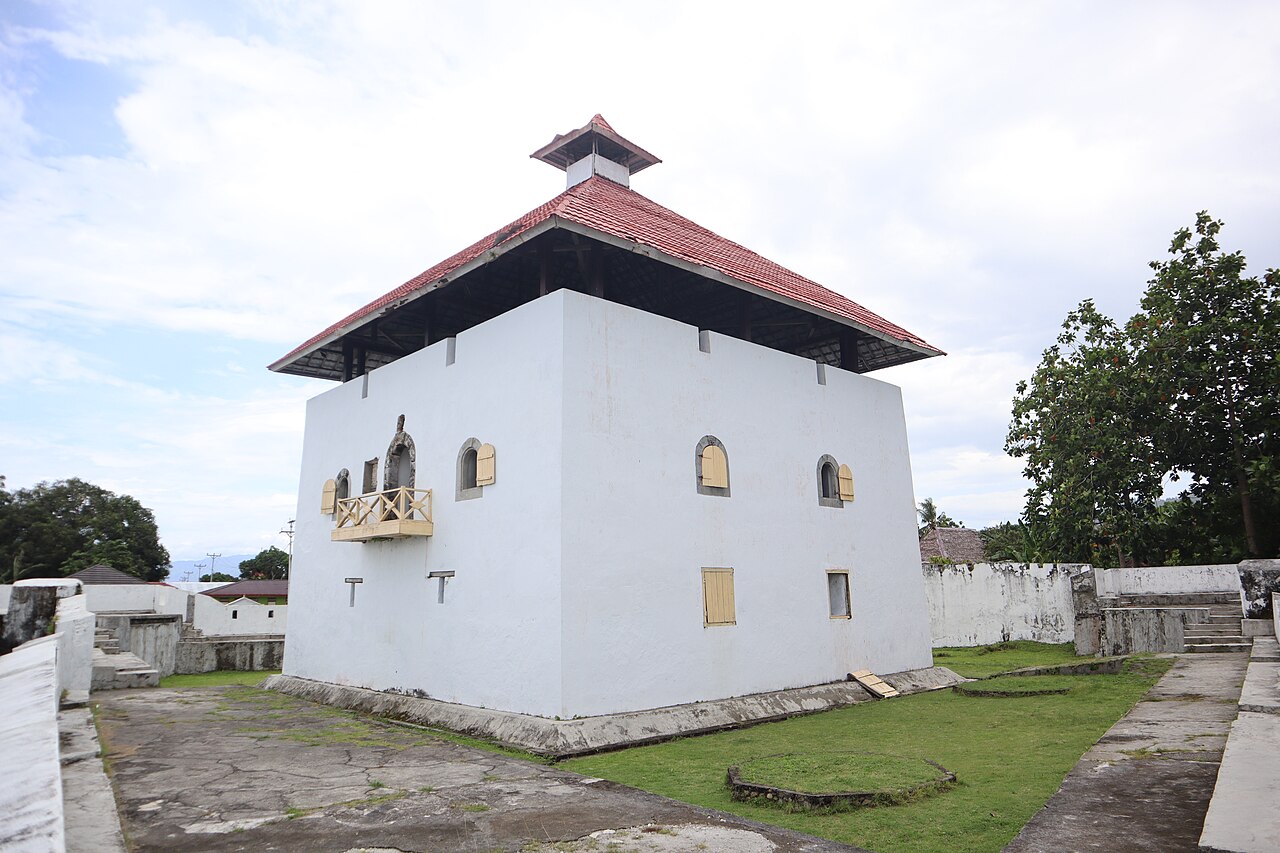
The fort's walls are thick and angled, constructed from local stone and coral materials, designed to absorb and deflect artillery fire. The interior contains barracks, storage rooms, and powder magazines arranged around a central courtyard. The fortification also includes a well to provide water during sieges.
Defensive layout
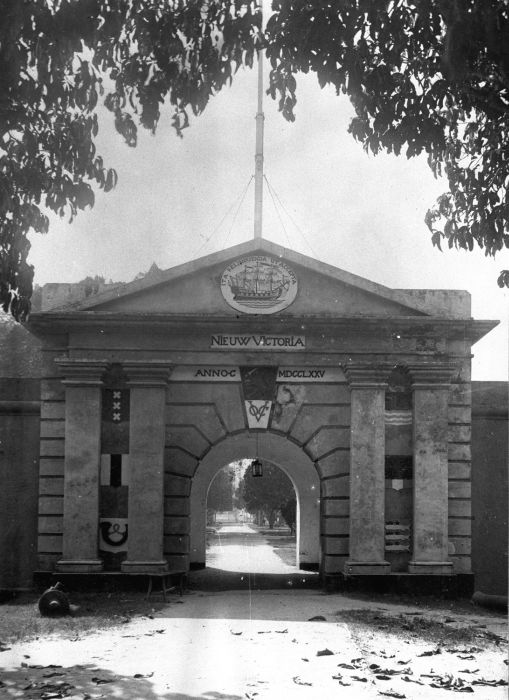
The bastions are connected by curtain walls with embrasures for cannons. The fort's entrance is heavily fortified with a gatehouse and drawbridge, emphasizing security. The elevated position of the fort allowed for early spotting of enemy ships and coordinated artillery defense.
Role in colonial conflicts and legacy
Throughout the 17th and 18th centuries, Fort Belgica was a focal point in conflicts between the Dutch and other colonial powers, including the English and Portuguese, as well as local resistance from the indigenous Banda population. The fort helped the Dutch maintain their monopoly on nutmeg until the late 18th century when nutmeg cultivation spread to other parts of the world.
Despite its military importance, the fort eventually fell into disuse as the spice trade declined and geopolitical dynamics shifted. Today, Fort Belgica stands as a significant historical monument, reflecting the complex colonial history of Indonesia and the global spice trade.
Current condition and tourism
Fort Belgica is currently partially preserved and accessible to visitors. Restoration efforts have been undertaken to stabilize the structure and improve visitor facilities. Tourists can explore the fort's bastions, walls, and interior chambers, gaining insight into 17th-century military architecture and colonial history.
The fort offers panoramic views of Banda Neira's harbor and surrounding islands, making it a popular destination for history enthusiasts and travelers interested in Indonesia's cultural heritage.
Frequently asked questions (FAQ)
- How do I get to Fort Belgica?
- Fort Belgica is located on Banda Neira Island in the Maluku Islands. Visitors typically reach the island by boat from Ambon, the provincial capital, followed by local transport to the fort.
- What is the historical significance of Fort Belgica?
- Fort Belgica was built by the Dutch East India Company in the 17th century to protect their monopoly over the nutmeg trade in the Banda Islands, the world's only source of nutmeg at the time.
- Can I explore the interior of Fort Belgica?
- Yes, visitors can explore many parts of the fort including its bastions, walls, and interior chambers, which provide a tangible experience of 17th-century military architecture.
- When is the best time to visit Fort Belgica?
- The best time to visit is during the dry season from April to October when weather conditions are favorable for exploring the fort and the surrounding islands.
- Is Fort Belgica accessible for people with mobility issues?
- Due to its historic structure and uneven terrain, accessibility can be challenging for visitors with mobility issues. Some areas may require climbing steep steps or walking on uneven surfaces.
Photo gallery

Information
Opening hours
08:00-17:00, daily
Ticket prices
IDR 20,000
Current owner
State museum
Loading map...
Visitor reviews
No reviews yet. Been here? Write the first review and help other travelers!
Write the first reviewVisited this castle? Share your experience
Your review helps other travelers and adds first-hand knowledge to our encyclopedia.