Fort Nassau (Banda Islands)
Fort Nassau stands as a significant historical monument on Banda Neira Island, the main island of the Banda Islands in Indonesia's Maluku province. Completed in 1609, it was the first Dutch fortification in the region, erected to secure control over the lucrative nutmeg trade which was exclusive to the Banda Islands at the time. This Renaissance-period bastioned fortress marked the beginning of Dutch colonial dominance in the Spice Islands and played a critical role in shaping the geopolitical landscape of Southeast Asia during the early 17th century.
Historical context and early attempts at fortification
The Banda Islands were highly coveted by European powers due to their unique production of nutmeg and mace, spices that commanded exorbitant prices in Europe. Before the Dutch arrival, the Portuguese had attempted to establish a fort at the same site in 1529. However, their efforts were thwarted by strong resistance from the indigenous Bandanese people, who opposed foreign control over their islands and trade. The Portuguese abandoned the construction after laying the foundations, leaving the site vulnerable to future occupiers.
The Dutch conquest and construction of Fort Nassau
On 25 April 1609, the Dutch East India Company dispatched a fleet under Admiral Verhoeven to Banda Neira. Landing with 750 soldiers, the Dutch chose the abandoned Portuguese foundations to build their fortification. The Bandanese resistance was fierce; they opposed the Dutch monopoly over the nutmeg trade and launched a surprise attack, killing Admiral Verhoeven and 40 soldiers. Despite this setback, the Dutch rapidly completed the fort, establishing it as their main administrative and military base in the Banda Islands.
Architectural features of Fort Nassau
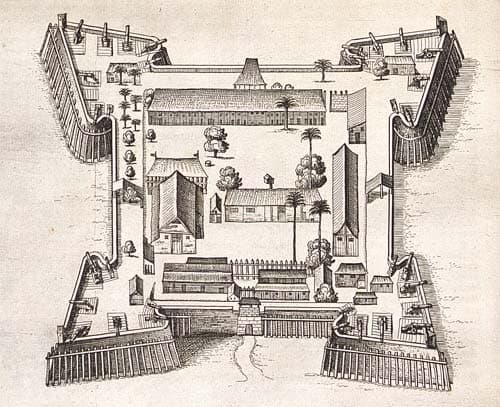
Fort Nassau was designed as a large quadrilateral bastioned fortress with four bastions at each corner, a typical design of the Renaissance military architecture adapted to the tropical environment. The bastions allowed defenders to cover all approaches with cannon fire, providing a strong defensive perimeter against both naval and land attacks. The fort's walls were thick and constructed from local stone and coral, materials chosen for their durability and resistance to tropical weathering.
The fort was strategically positioned by the channel between Banda Neira and Banda Besar Islands, controlling maritime access and trade routes. Inside, the fort housed barracks, storage facilities for spices and ammunition, and administrative buildings. Its layout reflected Dutch military engineering principles, emphasizing both defense and functionality.
Role and legacy in the Banda Islands
Fort Nassau served as the principal Dutch stronghold in the Banda Islands for much of the 17th century. It was central to the Dutch strategy of monopolizing the nutmeg trade, which involved not only military control but also the suppression of local populations and rival European powers. Over time, the fort's role was supplemented by additional fortifications on nearby islands, including Forts Hollandia and Concordia on Banda Besar, and Fort Revenge on Ai Island.
Despite its initial prominence, Fort Nassau was eventually overshadowed by the construction of the more imposing Fort Belgica on Banda Neira in the late 17th century. Fort Belgica's advanced design and larger scale reflected evolving military needs and technologies.
Current condition and preservation status
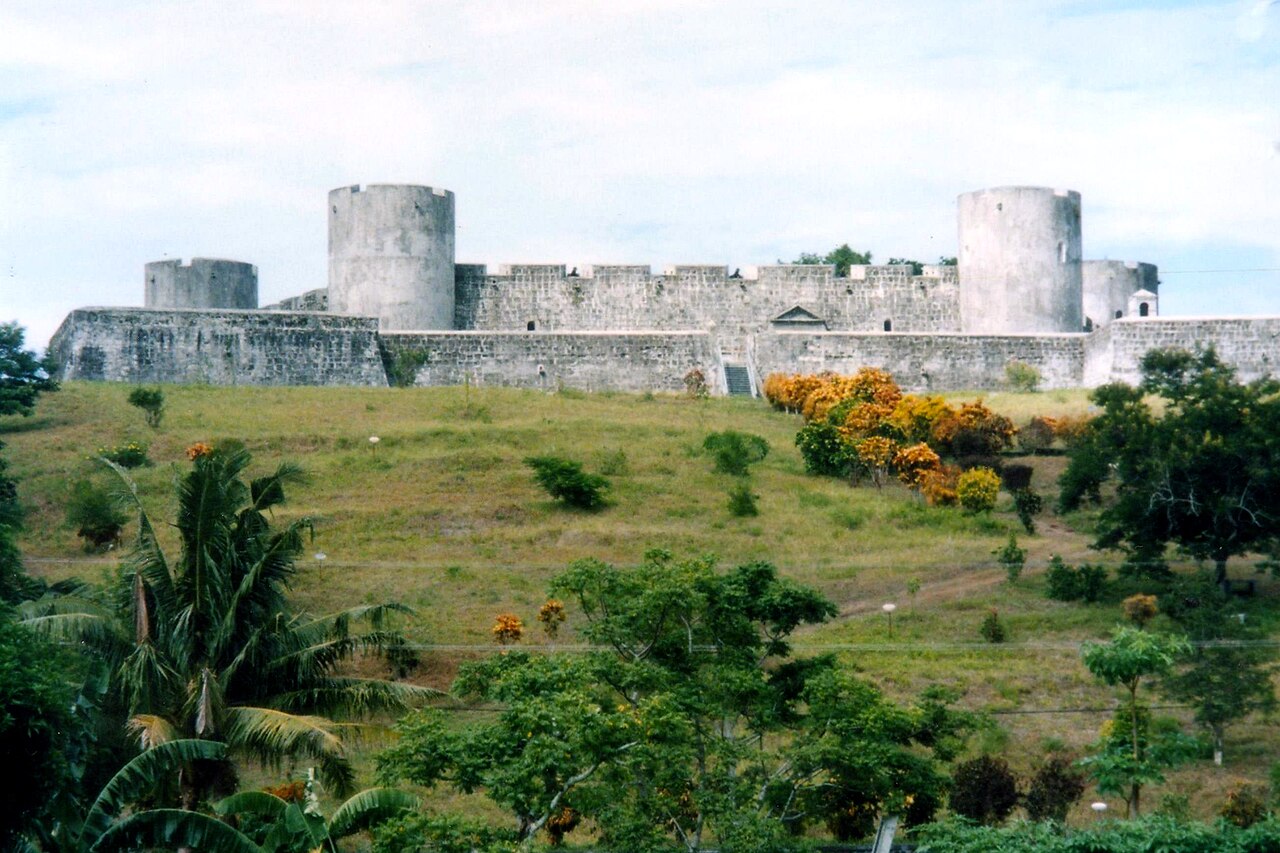
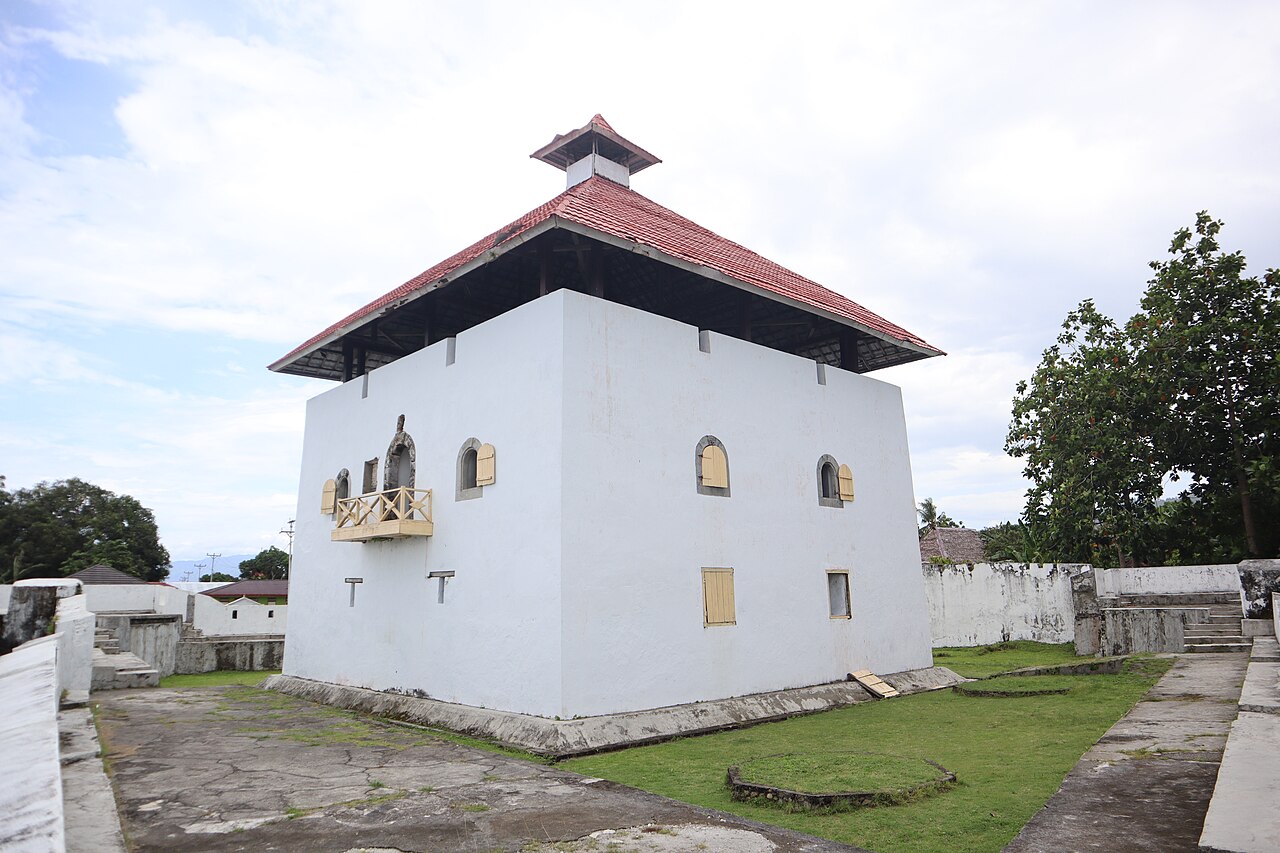
Today, Fort Nassau remains a partially preserved ruin. While much of the structure has suffered from tropical weathering and neglect, two bastions and substantial portions of the defensive walls are still visible. The fort's dilapidated state contrasts with the better-preserved Fort Belgica, which overlooks the site. Fort Nassau stands as an important cultural heritage site, offering insight into early Dutch colonial military architecture and the turbulent history of the Banda Islands.
Visiting Fort Nassau
Visitors to Banda Neira can explore the remnants of Fort Nassau to gain a deeper understanding of the island's colonial past. The site is accessible and provides panoramic views of the surrounding sea channels. While the fort itself is in ruins, it remains a poignant historical landmark reflecting the complex interactions between European colonizers and indigenous populations during the spice trade era.
Frequently asked questions (FAQ)
- How do I get to Fort Nassau on Banda Neira Island?
- Fort Nassau is located on Banda Neira Island, accessible by boat from Ambon or other nearby islands. Visitors typically travel to Banda Neira via Ambon, the provincial capital of Maluku, and then take a local boat to the island.
- What is the historical significance of Fort Nassau?
- Fort Nassau was the first Dutch fort in the Banda Islands, built to control the nutmeg trade. It marks the beginning of Dutch colonial influence in the region and played a key role in the 17th-century spice trade.
- Can I visit Fort Nassau year-round?
- Yes, Fort Nassau can be visited throughout the year. The Banda Islands have a tropical climate, so visitors should prepare for warm weather and occasional rain.
- Is Fort Nassau accessible for people with limited mobility?
- Due to its age and condition, Fort Nassau has uneven terrain and ruins that may be challenging for visitors with limited mobility. Caution is advised when exploring the site.
- Are there guided tours available at Fort Nassau?
- Guided tours may be available through local operators on Banda Neira Island. These tours provide historical context and detailed information about the fort and the spice trade era.
Photo gallery

Public domain
Information
Current owner
Indonesian government
Loading map...
Visitor reviews
No reviews yet. Been here? Write the first review and help other travelers!
Write the first reviewVisited this castle? Share your experience
Your review helps other travelers and adds first-hand knowledge to our encyclopedia.