Karim Khan Citadel
The Arg of Karim Khan, also known as the Karim Khan Citadel, is a prominent historical fortress situated in the heart of Shiraz, Iran. Constructed during the 18th century under the Zand dynasty, it served as the residential palace of Karim Khan Zand, the dynasty's founder and ruler. The citadel's architectural design reflects the characteristics of a bastioned fortress, showcasing defensive features typical of the post-Renaissance period in Persian military architecture.
Architectural design and features
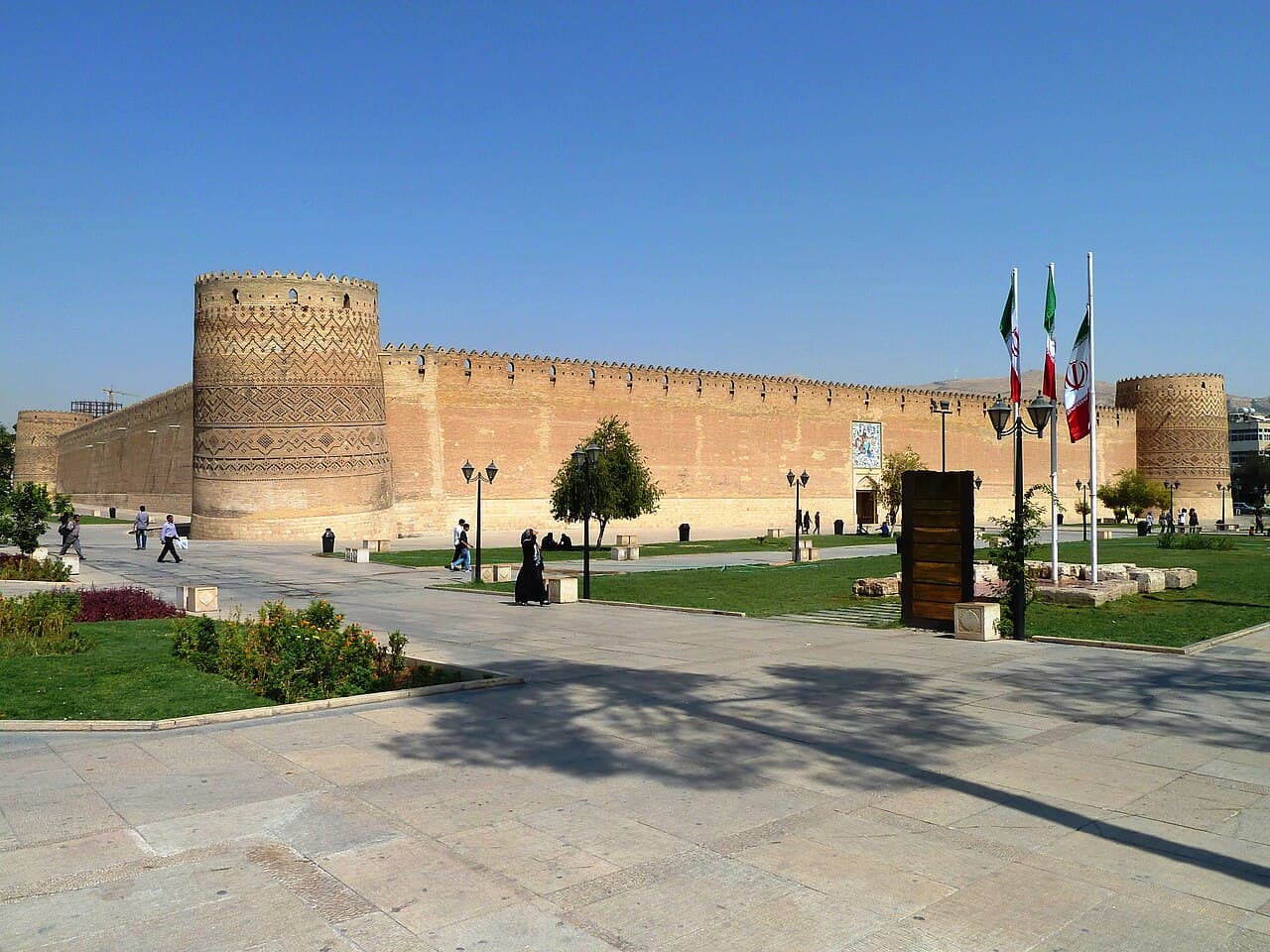
The citadel is notable for its rectangular layout surrounded by thick bastioned walls that provide formidable defense. The walls rise to a considerable height and are punctuated by four large circular towers at each corner, which were designed to enhance the fortress's defensive capabilities. These towers, along with the massive walls, create a strong visual impression reminiscent of a medieval fortress, although the structure dates to a much later period.
Within the walls, the citadel contains a central courtyard, around which the various living quarters and administrative rooms are arranged. The design incorporates elements of traditional Persian residential architecture, including arched entrances, vaulted halls, and decorative tile work that reflect the aesthetic sensibilities of the Zand era. The fortress also includes moats and gates that further fortified the structure against potential attacks.
Historical context and significance
The Karim Khan Citadel was constructed as part of a larger complex commissioned by Karim Khan Zand, who ruled from 1751 to 1779. Unlike many other rulers who built grand palaces purely for display, Karim Khan used the citadel as his official residence and seat of government, emphasizing its functional role in governance and defense. The fortress symbolizes the political stability and architectural innovation of the Zand dynasty during a turbulent period in Iranian history.
After Karim Khan's death, the citadel's role evolved, and it was repurposed as a prison during later periods. This change in function reflects the shifting political and social dynamics in Iran over the centuries. Despite these changes, the citadel has retained much of its original structure and continues to be a significant cultural landmark.
Preservation and current use
Today, the Karim Khan Citadel is well preserved and operates as a museum under the management of Iran's Cultural Heritage Organization. The museum offers visitors insight into the architectural ingenuity of the Zand period and the historical narrative of Karim Khan Zand's rule. Exhibits include artifacts from the era, architectural models, and detailed information about the fortress's construction and uses over time.
The citadel's location in central Shiraz makes it accessible to tourists and locals alike, serving as a key attraction that connects visitors with Iran's rich historical and architectural heritage. Restoration efforts have focused on maintaining the structural integrity of the walls and towers, as well as preserving the decorative elements that highlight the artistic achievements of the period.
Architectural style and influences
The design of the Karim Khan Citadel reflects a blend of traditional Persian architectural motifs with the practical military features of a bastioned fortress. Its robust walls and corner towers are typical of fortifications designed to withstand artillery attacks, a characteristic of post-medieval military architecture. The incorporation of residential and administrative spaces within the fortress walls demonstrates the multifunctional nature of Persian citadels during the post-Renaissance era.
Decorative elements such as tile work and stucco reliefs exhibit the artistic trends of the Zand period, emphasizing geometric patterns and floral motifs. These features contribute to the citadel's aesthetic appeal and highlight the cultural importance of ornamentation in Persian architecture.
Visitor information and cultural importance
Visitors to the Karim Khan Citadel can explore its extensive courtyards, towers, and halls, gaining a comprehensive understanding of its architectural and historical significance. The museum provides guided tours and educational materials that enhance the visitor experience. The citadel is also a focal point for cultural events and heritage celebrations in Shiraz.
As a well-preserved example of an 18th-century bastioned fortress in Iran, the citadel holds a special place in the study of Persian military and residential architecture. Its continued preservation ensures that future generations can appreciate the legacy of Karim Khan Zand and the architectural innovations of his era.
Frequently asked questions (FAQ)
- What is the historical significance of Karim Khan Citadel?
- Karim Khan Citadel was the residence and seat of government for Karim Khan Zand during the 18th century, reflecting the political and architectural developments of the Zand dynasty.
- Can visitors explore the interior of the citadel?
- Yes, the citadel operates as a museum where visitors can explore the courtyards, towers, and halls, gaining insight into its historical and architectural importance.
- When was the citadel constructed?
- The citadel was built in the 18th century during the Zand dynasty, specifically under the rule of Karim Khan Zand.
- What architectural features distinguish Karim Khan Citadel?
- The citadel features a rectangular bastioned design with thick defensive walls, large circular corner towers, arched entrances, vaulted halls, and decorative tile work typical of the Zand era.
- Is the citadel well preserved?
- Yes, the citadel is well preserved and maintained as a museum by Iran's Cultural Heritage Organization, showcasing its original structure and decorative elements.
Photo gallery

Information
Current owner
Iran's Cultural Heritage Organization
Loading map...
Visitor reviews
No reviews yet. Been here? Write the first review and help other travelers!
Write the first reviewVisited this castle? Share your experience
Your review helps other travelers and adds first-hand knowledge to our encyclopedia.