Karaman Castle
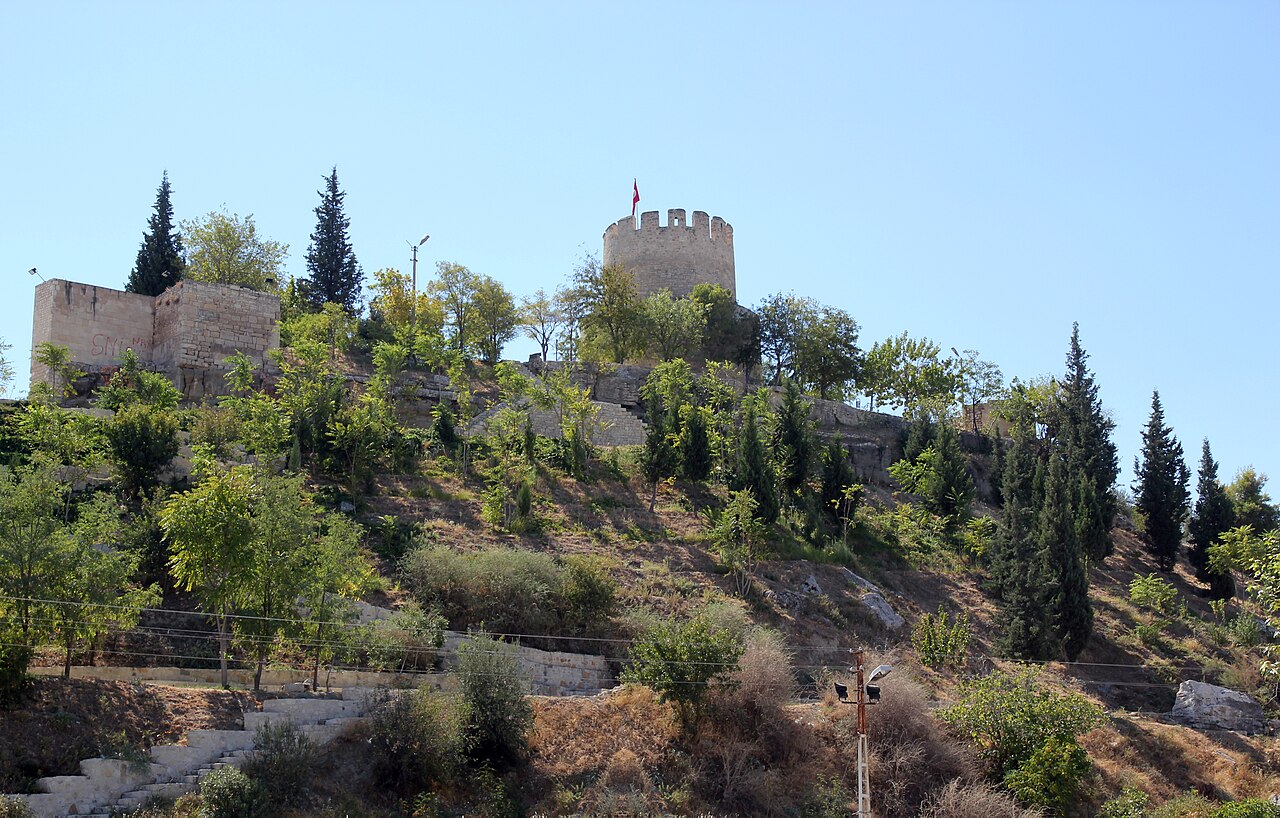
Karaman Castle, locally known as Karaman Kalesi, is a prominent hill castle located in the city of Karaman, within the Karaman Province of Turkey. This fortress stands on an ancient mound that has witnessed layers of history spanning from the Bronze Age through the Roman, Byzantine, Seljuk, and Karamanid periods, reflecting its enduring strategic and administrative importance in the region.
The exact founding date of Karaman Castle remains uncertain. It is commonly believed that the Byzantine Empire initially constructed the fortress in the late 11th or early 12th century, though the site itself had been inhabited much earlier. The city of Karaman was known as Lānda during the Hittite era, indicating the possibility of a predecessor fortification before the medieval castle.
During the High Medieval period, the castle came under the control of the Seljuk Turks in the late 12th century, specifically under the reign of Sultan Kilij Arslan II. The castle briefly fell into the hands of the Third Crusade forces led by Holy Roman Emperor Frederick Barbarossa in 1190 before returning to Seljuk control. Between 1211 and 1216, it was occupied by the Armenian Kingdom of Cilicia, highlighting the castle's contested status during this turbulent era.
In 1256, the Turkic leader Kerîmeddin Karaman Bey captured the castle and the surrounding town, then known as Laranda, renaming it Karaman after himself. The castle subsequently became the capital and residence of the Karamanid Beylik, a powerful Turkish principality that governed the region until the mid-15th century. Under the Karamanids, the castle underwent significant rebuilding and expansion, transforming it into a fortified administrative center with extensive residential quarters and ceremonial halls.
Following the Ottoman conquest around 1465, Karaman Castle was found in a dilapidated state. The Ottoman governor Gedik Ahmed Pasha ordered the demolition of several town buildings to reuse their stones for restoring the fortress, resulting in the incorporation of various Islamic spolia into the castle walls. This reuse of materials reflects the layered architectural history evident in the structure today.
Fortifications and architectural features
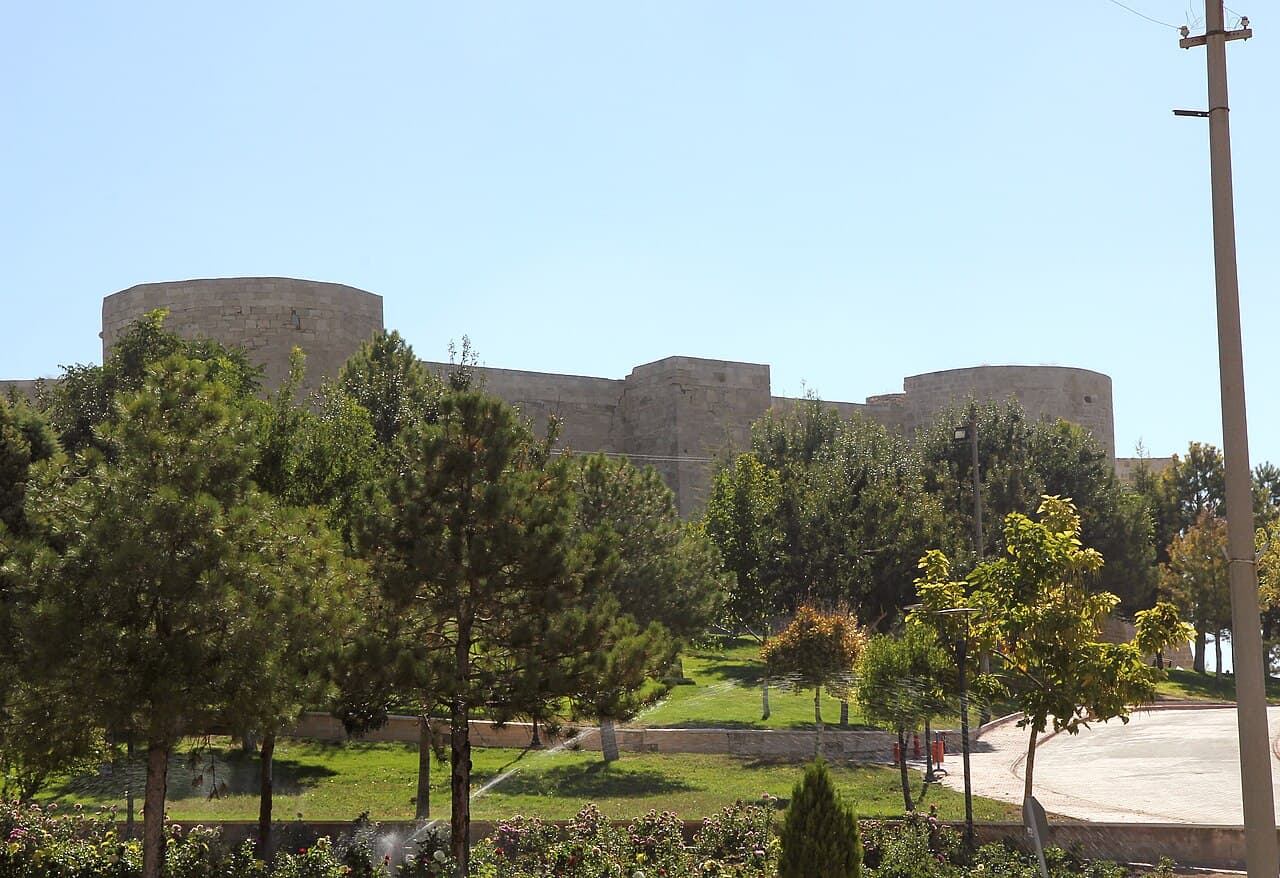
Karaman Castle is characterized by a complex system of concentric walls that once enclosed the town. Historical accounts from the 17th century Ottoman traveler Evliya Çelebi describe the inner walls as having 40 towers and 2 gates, while the extensive outer walls boasted 140 towers and 9 gates. Unfortunately, the outer fortifications have not survived, but a substantial section of the inner walls remains on the south side of the mound, including one of the original gates.
The castle's layout is roughly rectangular, with three main defensive walls arranged concentrically: the outer rampart (Dışkale), the middle wall (Ortakale), and the inner core fortress (İçkale). The inner fortress served as the residence of the Karamanid rulers and housed administrative buildings, reception halls, and living quarters. The castle features nine bastions of varying shapes—four circular and five rectangular—with prismatic and cylindrical towers marking the corners. These bastions were strategically designed to provide robust defensive coverage, with lower sections built from darker, wider-set stone blocks indicative of earlier construction phases.
The main entrance gate, located on the south side, is a notable architectural highlight. It is a two-story rectangular bastion featuring a low-arched doorway surmounted by a pointed arch. Decorative elements include a marble panel framed by a rectangular border, carved rumi motifs, pointed arches, and rosette reliefs, blending Islamic artistic styles with regional influences. Inside the courtyard, a second main gate dating from the 15th-century Karamanid period displays half-star motifs framed by concave moldings and cylindrical pilasters, with arrow slits designed for defense.
Historical significance and use
Throughout its history, Karaman Castle functioned as a strategic military fortress and an administrative center. During the Karamanid period, it was the seat of power for the beylik's rulers, who used the castle to govern the surrounding territories. Archaeological excavations have uncovered evidence of extensive administrative complexes, including halls for receptions and throne ceremonies, as well as living quarters that accommodated both the ruling elite and their retinues.
After the Ottoman conquest, the castle's military importance declined, and it gradually fell into disrepair. The Ottomans repurposed parts of the fortress for provincial governance, but the defensive role diminished as the empire consolidated control over Anatolia. Over time, many of the outer fortifications were lost, and the castle became more of a symbolic and administrative site rather than a frontline fortress.
Modern restoration and preservation efforts
In the 20th century, Karaman Castle underwent several restoration campaigns aimed at preserving its historical and architectural heritage. Major conservation efforts took place in 1961 and 1975, followed by extensive archaeological excavations between 2013 and 2018. These projects revealed important insights into the castle's layered history and helped stabilize the remaining structures.
Today, the castle mound serves as a public park, offering free access to visitors who can explore the outer areas and remaining walls. Restoration work has included the removal of modern additions such as theater seating installed in the inner courtyard, returning parts of the site to open green space. Night lighting has been installed to highlight the castle's architectural features, enhancing its visibility and appeal as a cultural landmark.
While the castle's interior is currently not accessible to the public, ongoing preservation efforts aim to maintain the site as a museum and cultural venue that celebrates its rich history. Karaman Castle stands as a testament to the region's complex past, reflecting the influences of Byzantine, Seljuk, Karamanid, and Ottoman civilizations.
Archaeological layers and cultural heritage
The castle is built upon a tumulus containing archaeological strata from the Bronze Age, Roman, and Byzantine periods, making it a site of considerable archaeological significance. Excavations have uncovered artifacts and structural remains that illustrate the continuous occupation and strategic importance of this location over millennia.
The integration of Islamic spolia and decorative motifs within the castle walls highlights the cultural syncretism that characterizes Karaman Castle. This blending of artistic and architectural elements from different eras and rulers enriches the site's historical narrative and provides valuable insights into the region's evolving identity.
Visitor information
Currently, the castle mound is open to the public as a park, allowing visitors to appreciate its exterior fortifications and historic setting. However, access to the castle's interior is restricted, and there is no regular visiting schedule or ticketing system in place. Visitors interested in the castle's history can explore the surrounding area and nearby cultural attractions in the city of Karaman.
Frequently asked questions (FAQ)
- When was Karaman Castle originally built?
- Karaman Castle was likely first constructed by the Byzantine Empire in the late 11th or early 12th century, with significant expansions during the Seljuk and Karamanid periods.
- What architectural features make Karaman Castle unique?
- The castle features a complex system of concentric walls, nine bastions of various shapes, and decorative Islamic motifs such as rumi patterns and rosette reliefs, reflecting its layered history.
- Is Karaman Castle open to visitors?
- The castle mound is open as a public park with free access, but the interior of the castle is currently not accessible to visitors.
- Who ruled Karaman Castle during the medieval period?
- Karaman Castle was ruled by the Seljuks, briefly by Crusaders, the Armenian Kingdom of Cilicia, and later became the capital of the Karamanid Beylik until the Ottoman conquest.
- What restoration efforts have been undertaken at Karaman Castle?
- Major restoration campaigns occurred in 1961, 1975, and from 2013 to 2018, focusing on archaeological excavation, structural stabilization, and removal of modern additions to preserve the site's heritage.
Photo gallery

Information
Website
Visit websiteSources & official resources
Verify the information above using these authoritative references.
Loading map...
Visitor reviews
No reviews yet. Been here? Write the first review and help other travelers!
Write the first reviewVisited this castle? Share your experience
Your review helps other travelers and adds first-hand knowledge to our encyclopedia.