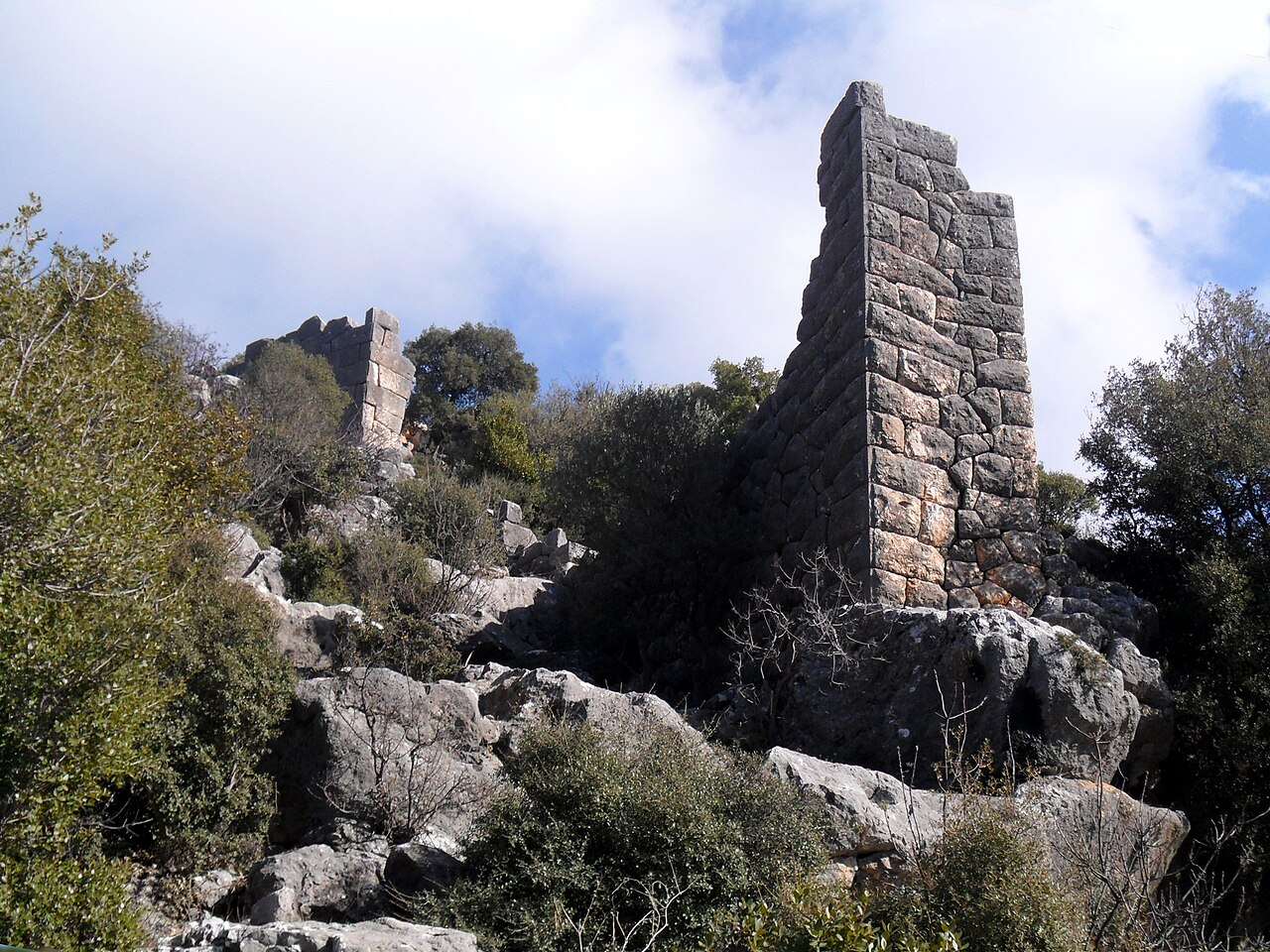
Meydan Castle, also known locally as Meydankale or Meydan Kalesi, is a historic fortress located on a spur north of the village of İmamlı in the province of Mersin, Turkey. This castle should not be confused with another similarly named Armenian castle located in the Taurus Mountains to the northeast. Meydan Castle stands as a significant example of ancient military architecture in the region, primarily dating back to the Seleucid Empire period (312 BC–63 BC).
The castle was likely more of a fortified settlement or fortress rather than a traditional residential castle. Its strategic position on the corner of a gently sloping plateau, bordered by a canyon to the north and northeast and a slope to the west, allowed it to control an important ancient road. This road connected the Mediterranean Sea with the ancient sister cities of Dioceasarea and Olba (modern-day Uzuncaburç), making Meydan Castle a critical military and trade vantage point.
Architecture and layout
The castle's construction is notable for its use of polygonal masonry, a technique characteristic of Seleucid architecture. This style involves carefully fitted stone blocks with irregular shapes that interlock without the use of mortar. Later repairs and additions to the castle employed bossage masonry, which features stones with a roughened surface projecting beyond the wall face.
The site features several important architectural elements, including the ruins of an observation tower at the highest point of the spur, which would have provided extensive views over the surrounding landscape and the vital road beneath. Defensive bastions reinforce the corners and vulnerable points along the walls, while numerous rooms and cisterns indicate the castle's capacity to support a garrison and inhabitants during sieges or extended occupation.
Additionally, a necropolis on the site suggests the presence of a settled community or a military garrison with burial grounds nearby. The castle's layout is stretched out along the plateau, adapting to the natural topography to maximize defensive advantages.
Historical context and significance
While the exact historical records and original names of Meydan Castle during the Hellenistic and Roman periods remain unknown, its architectural style and strategic location provide clues to its importance. The castle's control over a key route between the Mediterranean and inland cities would have made it a valuable military asset during the turbulent times of the Seleucid Empire and subsequent eras.
Its continued use and rebuilding in later periods indicate that Meydan Castle retained its strategic value well beyond its initial construction. However, the lack of detailed historical documentation means much of its story remains a mystery, inviting further archaeological investigation.
Visiting meydan castle
The castle is freely accessible to visitors, though reaching it requires some effort. Visitors must travel along a small unpaved road to reach the barnyard entrance of a local farm. It is customary and respectful to ask the farmer for permission to cross the yard to access a small gate adjacent to the property. From this gate, the ruins are just a few minutes' walk away, although no formal paths or signage guide the way.
The site is heavily overgrown with small trees and prickly bushes, which can obscure many features, including the numerous cistern openings. Caution is advised when exploring the area to avoid injury. Despite the challenges, the well-preserved polygonal masonry and the castle's commanding position offer a rewarding experience for visitors interested in ancient military architecture and history.
Natural setting and strategic location
Meydan Castle's location on a plateau corner with natural defenses provided by a canyon and slopes made it a formidable fortress. The adjacent ancient road was a vital artery for trade and military movements, linking coastal and inland regions. This setting highlights the castle's role in controlling movement and protecting regional interests during the Seleucid and later periods.
Architectural features and construction techniques
The use of polygonal masonry is a hallmark of Hellenistic fortifications, allowing for strong, durable walls capable of withstanding attacks and natural erosion. The later incorporation of bossage stones suggests ongoing maintenance and adaptation of the fortress to evolving defensive needs.
The presence of cisterns reflects the importance of water storage for sustaining inhabitants during sieges. These cisterns, often hidden by vegetation, demonstrate advanced engineering to ensure survival in a potentially hostile environment.
Archaeological potential and preservation
Meydan Castle remains partially preserved, with much of its structure still identifiable despite overgrowth and the passage of time. The site offers significant archaeological potential to uncover more about the region's military history and settlement patterns during the Hellenistic and Roman periods.
Visitors and researchers alike benefit from the castle's relatively undisturbed condition, though care must be taken due to the natural hazards posed by dense vegetation and uneven terrain.
Frequently asked questions (FAQ)
- What is the historical significance of Meydan Castle?
- Meydan Castle is a remarkable example of medieval military architecture in Turkey, reflecting the strategic importance of the region during its time. Built to protect the trade routes and local settlements, the castle offers a glimpse into the historical conflicts and governance of the area.
- When was Meydan Castle built?
- Meydan Castle dates back to the 12th century, during the period of the Crusades when fortifications were crucial for defense. Its construction represents the military advancements of the time and the necessity for protection against invasions.
- Can I visit Meydan Castle year-round?
- Yes, Meydan Castle is open to visitors throughout the year, but it is advisable to check local conditions that may affect access. The castle's elevated position offers stunning views, making it a great destination in various seasons.
- What are the opening hours for Meydan Castle?
- Meydan Castle typically opens at 9 AM and closes at 6 PM daily, though these hours may vary seasonally. It is recommended to verify the current hours before planning your visit for the best experience.
- Is there an entrance fee to visit Meydan Castle?
- Yes, there is a modest entrance fee to access Meydan Castle, which helps with its maintenance and preservation. The fee is quite affordable, making it an excellent value for the historical experience it offers.
- What is the best time to visit Meydan Castle?
- The best time to visit Meydan Castle is during the spring and fall months when the weather is mild and pleasant for exploring. These seasons also provide beautiful scenery, enhancing your visit to the historical site.
- How accessible is Meydan Castle for visitors with mobility challenges?
- Meydan Castle has some steep pathways and uneven terrain, which may pose challenges for visitors with mobility issues. It is advisable to prepare accordingly and consider bringing assistance if needed for a more comfortable visit.
- Are there any nearby attractions to visit along with Meydan Castle?
- Yes, there are several attractions near Meydan Castle, including the stunning coastal views of Silifke and historical sites like the ancient city of Korykos. These nearby destinations can enrich your experience of the area's rich history and natural beauty.
Loading map...
Visitor reviews
No reviews yet. Been here? Write the first review and help other travelers!
Write the first reviewVisited this castle? Share your experience
Your review helps other travelers and adds first-hand knowledge to our encyclopedia.