Kaprun Castle
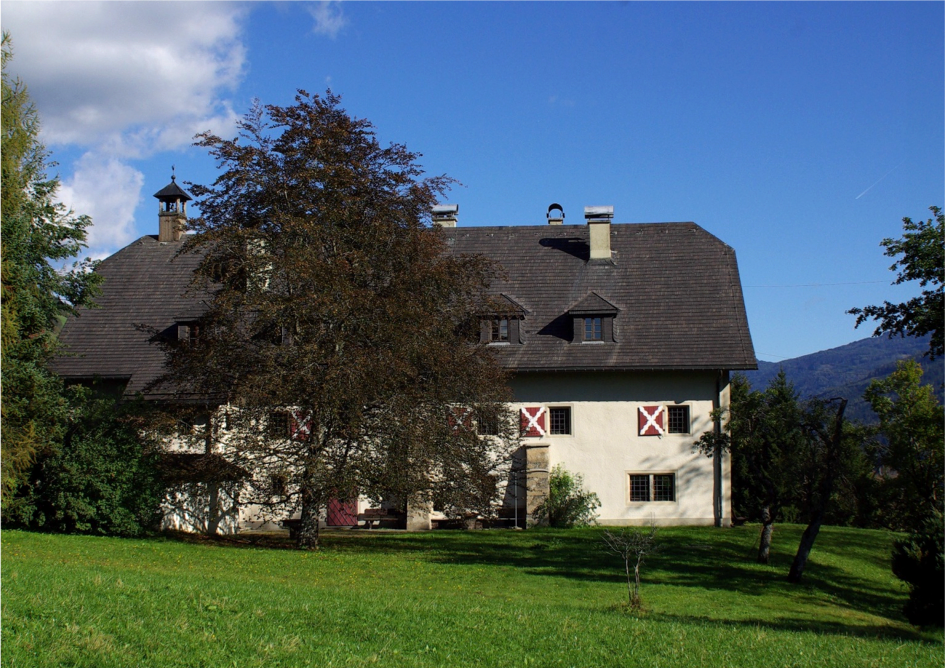
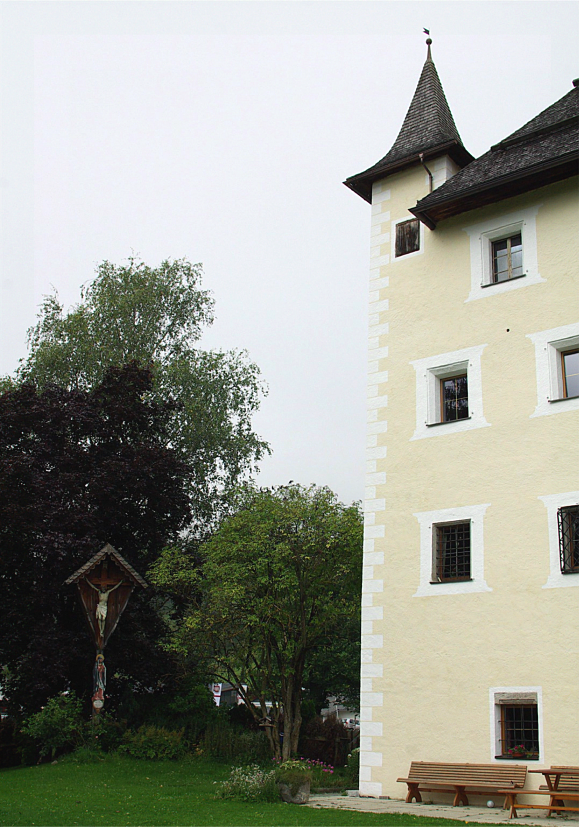
Kaprun Castle stands as a significant medieval fortress located in the municipality of Kaprun, within the Austrian region of Salzburg. Its origins trace back to the 12th century, with architectural elements that reveal its Romanesque heritage, particularly evident in the east tower. The castle's strategic position on a hill overlooking the southern slopes of the Salzach valley afforded it natural defensive advantages, complemented by man-made fortifications such as thick walls and a moat.
Historical background and ownership
The earliest recorded mention of the Kaprun area dates to February 9, 931, under the name "Chataprunnin," a term derived from Celtic meaning "wild water," reflecting the natural environment surrounding the site. The castle itself appears in historical documents from 1166 as part of the possessions of the Bavarian lords of Falkenstein-Neuburg. By 1280, the castle is referenced as "Chaprunne Tower," during a period marked by conflicts involving local lords known as the Felber. Ownership shifted multiple times, with Archbishop Rudolf von Hoheneck of Salzburg acquiring it by 1287, and the Felben family regaining control by 1338.
From 1480, Kaprun Castle served as the seat of the archiepiscopal administrative court, the Pflegegericht, highlighting its judicial and administrative importance. The castle endured significant damage during the Salzburg Peasants’ War in 1526 but was reconstructed between 1580 and 1600 under caretaker Josef Hundt von Ainetperg, who restored it according to its original layout. The early 17th century brought further turmoil, including the execution of caretaker Caspar Vogl in 1601 on orders from Archbishop Wolf Dietrich von Raitenau due to his sympathies with rebellious peasants.
Throughout the 17th and 18th centuries, the castle's role diminished as administrative functions moved to nearby towns. It also served military purposes, including housing Salzburg musketeers during the 1645 Zillertal uprising. Ownership changed hands several times, eventually passing to local foresters in 1811 and later to nobility such as Princess Sophie Löwenstein in 1893. In the 20th century, the castle was owned by the Gildemeister family, who faced dispossession during the Nazi era but regained it after World War II.
Architectural features and layout
Kaprun Castle is an irregular rectangular hill castle with three sides enclosed by robust defensive walls and the fourth side protected by steep natural cliffs. Originally surrounded by a moat, now partially transformed into a pond, the castle’s main entrance is located on the southern side through a gate with a segmental arch dated 1574, corresponding with significant remodeling efforts.
The bell tower on the southeast corner is a prominent feature, rising six floors high. Its lower levels showcase Romanesque architectural elements such as biforium windows, angular grooves, and herringbone masonry patterns. The tower’s uppermost floor served as a prison, situated beneath the residential quarters above. Large cornerstones with protruding bosses emphasize the tower’s structural strength.
The castle walls are constructed of carefully laid broken stones in horizontal layers, finished with plaster. The courtyard-facing side features two unusually high entrances on the third floor, likely designed for defensive purposes. The northeastern section contains a substantial residential building dating back to the 12th century, with remnants of colorful wall paintings and vaulted ground floors. Fireplaces and window ledges in the upper floors indicate living quarters, enhanced in the late 16th century with more comfortable residential spaces.
A historically significant freestanding staircase on the western side reflects the castle’s divided ownership between the Walchen and Felben families. The northern façade overlooks the Salzach valley and contains twelve window openings arranged over three floors, offering expansive views.
Structural reinforcements were added in the early 18th century, including tie rods installed in 1714 and further maintenance in 1726 to address wall weakening.
The chapel of saint james
Adjacent to the main castle complex, northeast and at a lower elevation, stands the chapel of Saint James, built in 1562 by caretaker Diether zu Urstein. This chapel replaced an earlier one located on the third floor of the northeastern residential building. Architecturally, it features a small oriel window, a bell tower with rounded sound openings, and a late Gothic portal with round arches.
The chapel’s interior is notable for its Baroque furnishings, including three altars. The main altar painting depicting Saint James was created in 1736 by Franz Xaver Kurz. The nave is covered by a flat barrel vault, a simple yet elegant curved ceiling design. Damaged during World War II in 1943, the chapel was restored in 1960, preserving its historical and artistic significance.
Restoration and modern use
Following damage sustained during World War II, including the removal of the castle roofs and the collapse of the northern ring wall in 1949, Kaprun Castle underwent limited stabilization in the 1970s. In 1984, the Burgverein Kaprun, a non-profit organization founded by local entrepreneurs, acquired the castle and initiated extensive restoration efforts. The restoration aimed to preserve the castle’s authenticity, with careful stone-by-stone rebuilding guided by district architect iR Dipl. Ing. Hans Waltl, whose dedication shaped the castle’s current appearance.
Today, Kaprun Castle serves as a cultural venue hosting events and private functions, maintaining its role as a landmark of regional heritage. While the castle property is owned by the Burgverein Kaprun, the surrounding lands and access roads remain under the ownership of the Gildemeister family, reflecting the complex history of property rights associated with the site.
Frequently asked questions (FAQ)
- What is the historical significance of Kaprun Castle?
- Kaprun Castle, dating back to the 12th century, is a remarkable example of medieval architecture in Austria. It has served various purposes over the centuries, from a noble residence to a fortified structure, playing a crucial role in the region's history.
- When was Kaprun Castle built?
- Construction of Kaprun Castle began in the early 12th century, with its strategic location chosen for defense against potential invasions. The castle has undergone several renovations and expansions throughout its long history, reflecting the architectural styles of different eras.
- What are the opening hours for visiting Kaprun Castle?
- Kaprun Castle is typically open to visitors from April to October, with daily hours varying by season. It is advisable to check the official website for the most current opening times before planning your visit.
- Can I take a guided tour of Kaprun Castle?
- Yes, guided tours are available at Kaprun Castle, providing visitors with in-depth knowledge about its history and architecture. These tours are led by knowledgeable guides who can enhance your experience with interesting anecdotes and facts.
- Is Kaprun Castle accessible for visitors with disabilities?
- While efforts have been made to improve accessibility, some areas of Kaprun Castle may be challenging for visitors with mobility impairments due to its historical structure. It is recommended to contact the castle administration in advance to inquire about specific access options.
- What ticket prices can I expect for visiting Kaprun Castle?
- Ticket prices for Kaprun Castle are generally affordable, with discounts available for students, seniors, and children. Special family tickets may also be offered, so it's best to check the official website for the latest pricing information.
- When is the best time to visit Kaprun Castle?
- The best time to visit Kaprun Castle is during the late spring and early fall, when the weather is mild and the surrounding scenery is particularly beautiful. Visiting during these seasons allows you to enjoy both the castle and its picturesque surroundings at their finest.
- What nearby attractions are there to explore while visiting Kaprun Castle?
- Visitors to Kaprun Castle can explore several nearby attractions, including the stunning Kaprun High Mountain Reservoirs and the scenic Zell am See lake. Additionally, the region offers numerous hiking and skiing opportunities, making it a perfect destination for outdoor enthusiasts.
Information
Website
Visit websiteSources & official resources
Verify the information above using these authoritative references.
Loading map...
Visitor reviews
No reviews yet. Been here? Write the first review and help other travelers!
Write the first reviewVisited this castle? Share your experience
Your review helps other travelers and adds first-hand knowledge to our encyclopedia.