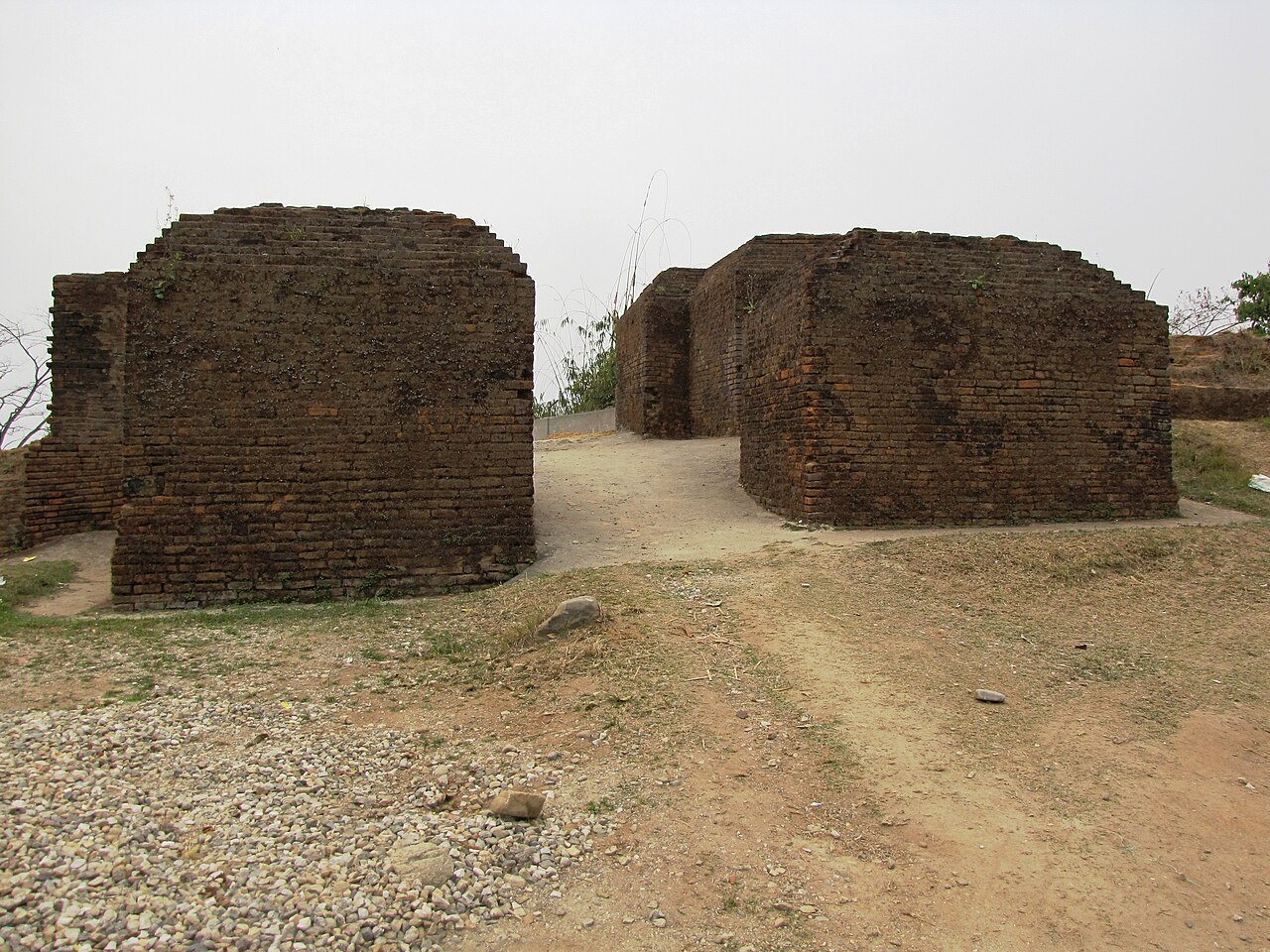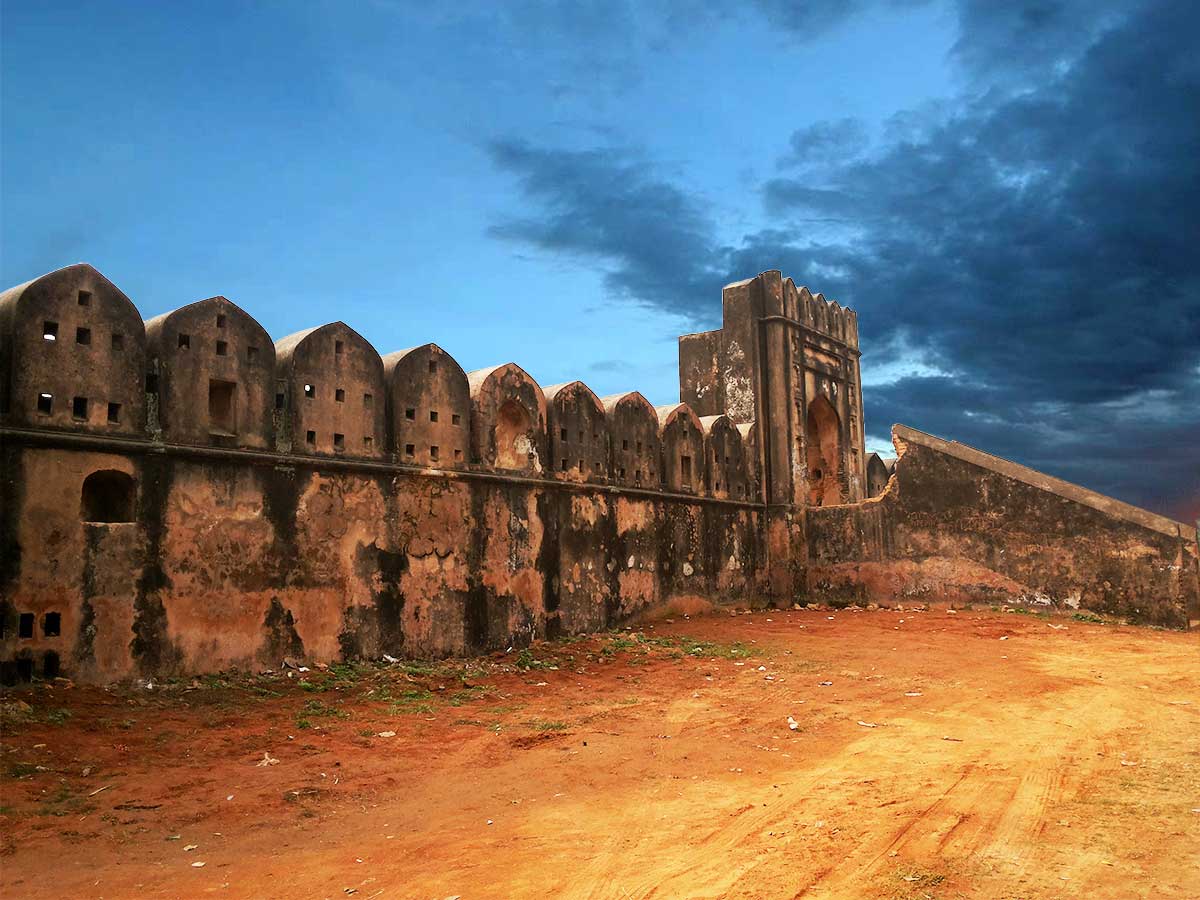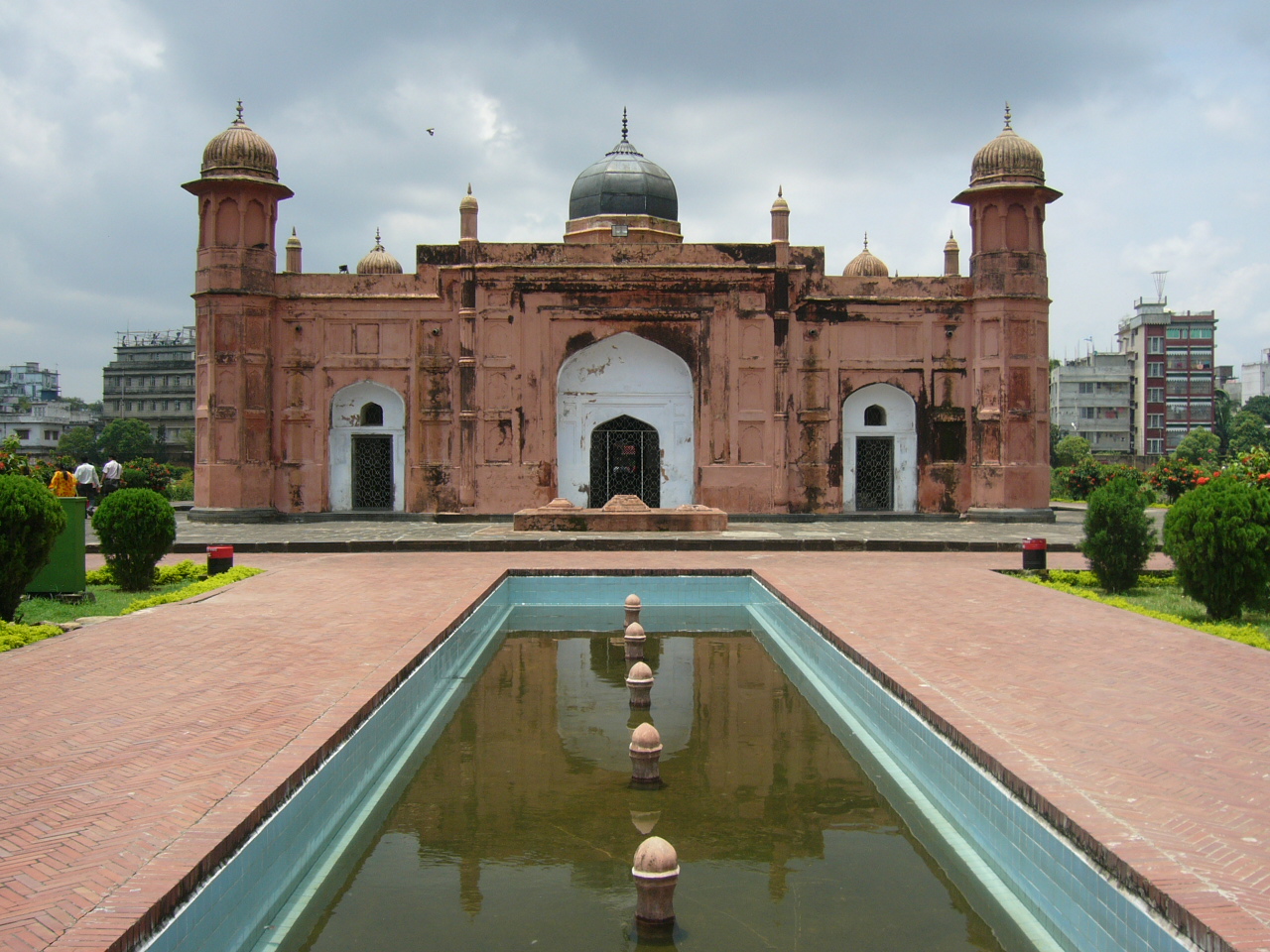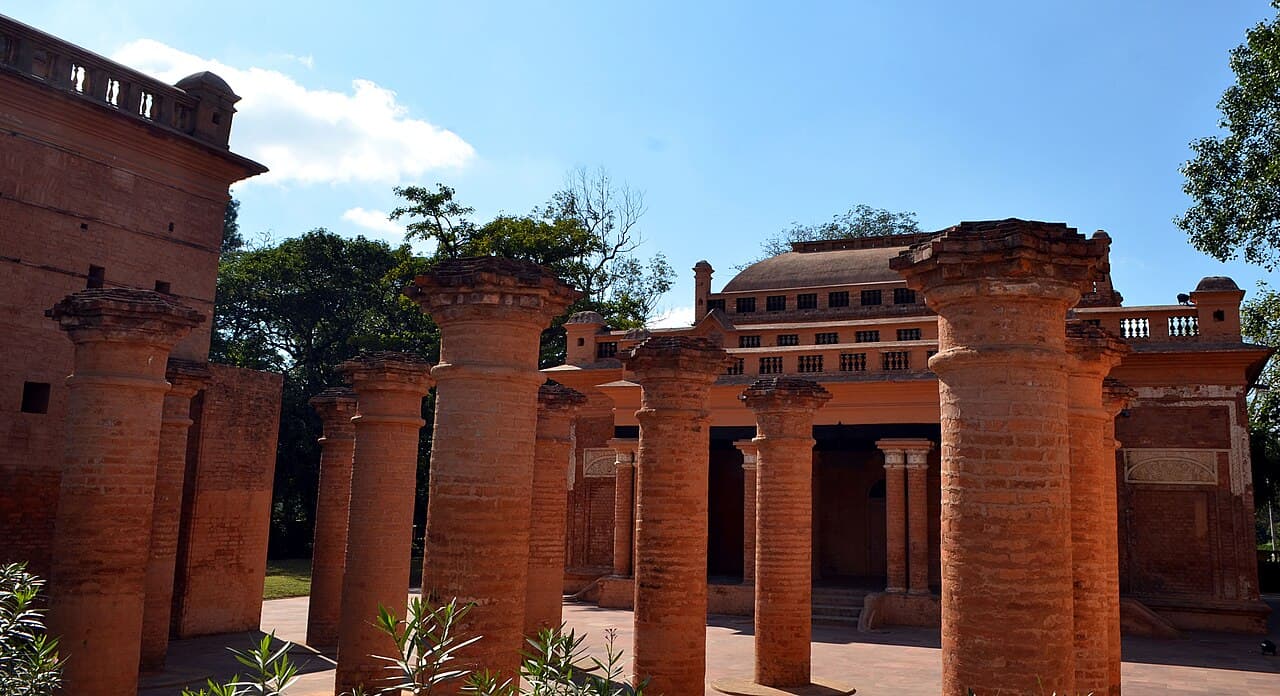
Kangla Fort, located in Imphal, the capital city of Manipur in northeastern India, is a historically significant fortified palace complex that served as the traditional seat of the Meetei rulers. The name "Kangla" translates to "the prominent part of the dry land" in the old Meetei language, reflecting its strategic and cultural importance. Situated along the banks of the Imphal River, the fort originally extended on both the western and eastern sides of the river, though today only the western portion remains, largely in a state of ruins.
The Kangla Fort holds immense cultural and historical value for the people of Manipur. It was the ancient capital of the kingdom of Manipur before modern times and is deeply revered as a symbol of the region's sovereignty and heritage. The site is considered sacred by the Meitei community, who view it as a spiritual and cultural heartland. This reverence is reflected in the ongoing efforts to preserve and restore the fort, as well as proposals to declare it a UNESCO World Heritage Site, a recognition that would acknowledge its global cultural significance.
Historical significance of kangla fort
The origins of Kangla Fort trace back to ancient times, with its foundations linked to the early history of the Manipur kingdom. It served as the royal palace and administrative center for the Meetei dynasty, which governed the region for centuries. The fort was not only a seat of political power but also a cultural hub where traditional rituals, ceremonies, and governance took place. Over time, it witnessed numerous historical events, including battles, regime changes, and colonial encounters.
During the British colonial period, Kangla Fort experienced significant changes. The British forces occupied the fort in the 19th century, altering its structure and using it as a military garrison. This period marked a shift from its original role as a royal palace to a strategic military outpost. Despite these changes, the fort retained its symbolic importance for the local population, who continued to regard it as a representation of their identity and history.
Architectural features and layout
Kangla Fort was originally a sprawling complex featuring fortified walls, gates, palatial buildings, courtyards, and religious structures. The fortifications included thick walls constructed from stone and earth, designed to protect against invasions. The layout was carefully planned to accommodate the needs of the royal family, administrative officials, and the military.
Key architectural elements included the main entrance gates, which were often elaborately decorated and served as ceremonial thresholds. Inside the fort, there were royal halls used for court assemblies and state functions. The complex also housed temples and sacred spaces, underscoring the fort's dual role as a political and spiritual center.
Though much of the fort is now in ruins, archaeological excavations and preservation efforts have revealed the foundations and remnants of these structures, providing valuable insights into the construction techniques and cultural practices of the Meetei civilization.
The fort's strategic location
The fort's position on the banks of the Imphal River was a strategic choice, offering natural defense advantages and access to water resources. The river acted as a natural moat on one side, making it difficult for enemies to mount a direct assault. The surrounding terrain provided elevated ground, enhancing visibility and defense capabilities.
Cultural and spiritual importance
Kangla Fort is more than a historical monument; it is a living symbol of the Meitei people's identity and their connection to their ancestral past. The site hosts traditional festivals, rituals, and cultural events that celebrate the heritage of Manipur. It is considered a sacred place where the spiritual and temporal worlds intersect.
The fort's significance extends to its role in contemporary Manipur society, where it serves as a reminder of the region's independence before colonial rule and as a focal point for cultural revival and education.
Conservation and current status
Today, Kangla Fort exists primarily as archaeological ruins, with ongoing efforts to preserve and restore its remaining structures. The Government of Manipur, along with various cultural organizations, is actively involved in conservation projects aimed at safeguarding the fort's heritage. These projects include archaeological excavations, structural stabilization, and the development of visitor facilities.
The proposal to designate Kangla Fort as a UNESCO World Heritage Site reflects its outstanding universal value and the commitment to protect it for future generations. Visitors to the site can explore the ruins, learn about the history of the Meetei dynasty, and experience the cultural richness of Manipur through guided tours and interpretive displays.
Frequently asked questions (FAQ)
- What is the historical significance of Kangla Fort?
- Kangla Fort is a symbol of the rich history and culture of Manipur, India. It served as the royal palace of the kings of Manipur and played a pivotal role in the state's tumultuous history, including its resistance against colonial forces.
- When was Kangla Fort built?
- Kangla Fort dates back to the 15th century and has undergone various renovations and modifications over the centuries. Its construction reflects the architectural style of the period, showcasing the heritage of the Manipuri people.
- How do I get to Kangla Fort?
- Kangla Fort is located in Imphal and is easily accessible by road. Visitors can reach the fort by hiring a taxi or using local transport options available in the city.
- What are the opening hours of Kangla Fort?
- Kangla Fort is open to visitors from 9:00 AM to 4:30 PM daily. It is advisable to check for any changes in timings, especially during public holidays or special events.
- Can I take photographs inside Kangla Fort?
- Yes, visitors are allowed to take photographs inside Kangla Fort, as long as it is respectful of the site and its significance. However, certain areas may have restrictions, so it's best to inquire upon arrival.
- Is it possible to explore Kangla Fort on my own?
- Yes, visitors can explore Kangla Fort on their own, but guided tours are also available for those who wish to learn more about its history and architecture. A guide can provide valuable insights and enhance your visit.
- What is the best time to visit Kangla Fort?
- The best time to visit Kangla Fort is between October and March when the weather in Imphal is pleasant and ideal for sightseeing. During these months, you can enjoy the outdoor spaces and the scenic beauty surrounding the fort.
- Are there any nearby attractions to Kangla Fort?
- Yes, there are several attractions near Kangla Fort, including the Ima Keithel (women's market) and the Manipur State Museum. These sites can enhance your visit by providing a deeper understanding of Manipuri culture and history.
- What are the ticket prices for Kangla Fort?
- Admission to Kangla Fort is generally free for visitors, which makes it an accessible destination for everyone. However, there might be nominal fees for certain guided tours or special exhibitions within the fort complex.
Photo gallery

Information
Loading map...
Visitor reviews
No reviews yet. Been here? Write the first review and help other travelers!
Write the first reviewVisited this castle? Share your experience
Your review helps other travelers and adds first-hand knowledge to our encyclopedia.