Kanayama Castle
Kanayama Castle stands as a prominent example of a late medieval hill castle in Japan, located in the city of Ota within Gunma Prefecture. Constructed in 1469 by Iwamatsu Iezumi, the castle was strategically positioned on a hill to maximize its defensive capabilities, a common practice in Japanese castle design during the Muromachi period. Its elevated location provided natural fortification and commanding views of the surrounding area, crucial for monitoring enemy movements.
Founding and early ownership
The castle's initial lord, Iwamatsu Iezumi, established Kanayama as a stronghold in the region. In 1528, control passed to Yokose Narishige, a loyal retainer of the Iwamatsu family. The Yokose family later adopted the name Yura around 1565, marking a significant transition in the castle's lineage. This period was marked by frequent regional conflicts, which tested the castle's defenses and strategic importance.
Military significance and sieges
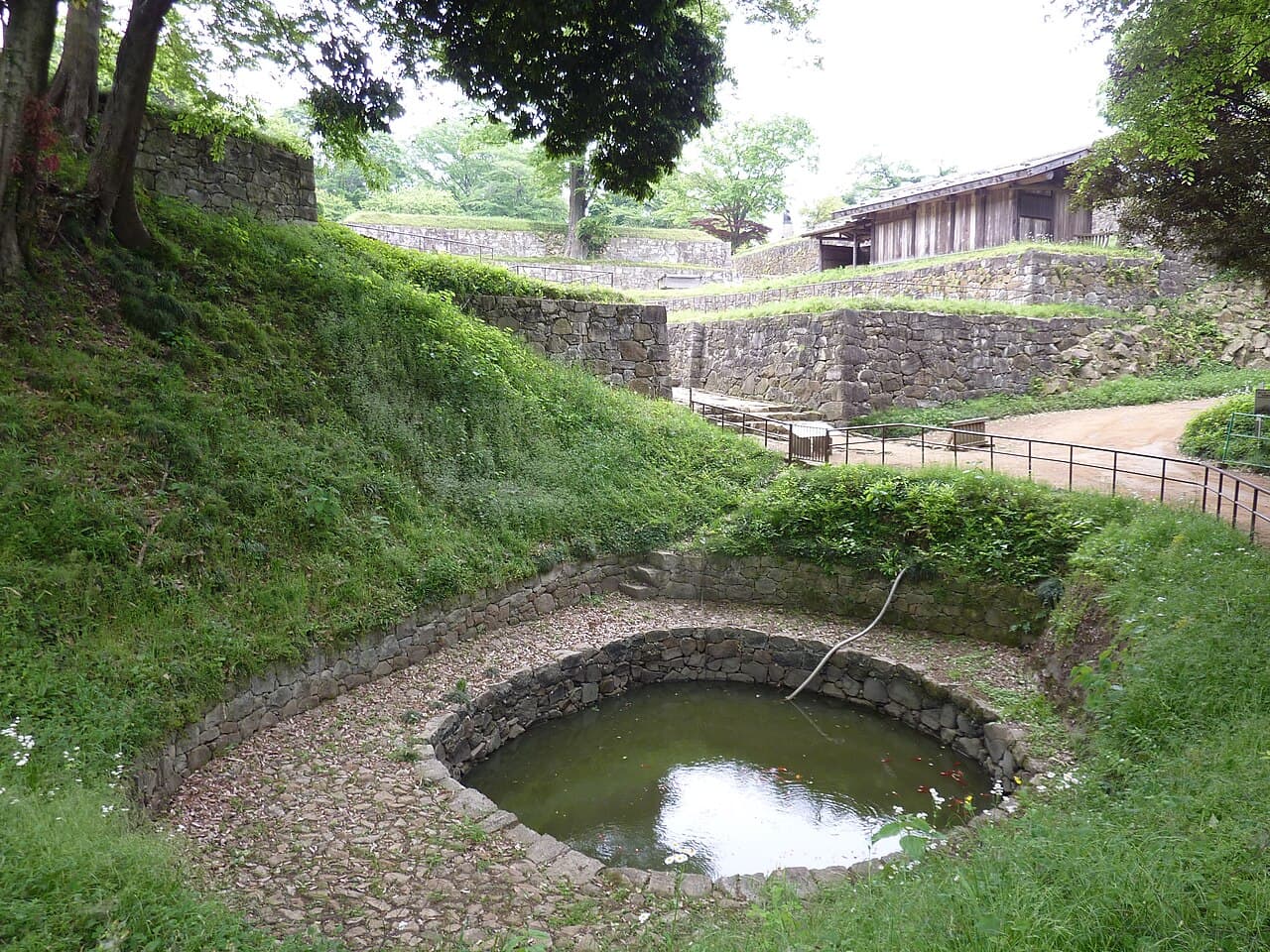
Kanayama Castle gained renown for its resilience during multiple sieges by some of the most powerful warlords of the time. It faced assaults from Uesugi Kenshin in 1574, Takeda Katsuyori in 1580, and Satake Yoshishige in 1583. Despite these formidable attacks, the castle's robust construction, including its stone walls and defensive baileys, allowed it to withstand sieges and maintain control over the area. The castle's fortifications, especially the Ote Koguchi—the main entrance—are noted for their strength and elaborate design, featuring stone walls flanking the entrance road and multiple baileys that enhanced its defensive depth.
Architectural features
The Ote Koguchi gate is a key highlight of Kanayama Castle's architecture. This gate, combined with the entrance road bordered by stone walls and defensive baileys, exemplifies the sophisticated military engineering of the period. Such well-preserved gate structures are rare in Japan, making Kanayama Castle a valuable site for understanding castle defense mechanisms in the late medieval era.
Political changes and later history
In 1584, the castle's lords, Yura Kunishige and his brother Nagao Akinaga (lord of Tatebayashi Castle), were captured by the Hojo clan based in Odawara. Their release was secured through the surrender of Kanayama Castle to the Hojo, signifying a shift in regional power. Later, during Toyotomi Hideyoshi's campaign against the Hojo in 1590, the castle was seized by Maeda Toshiie, a prominent general under Hideyoshi. Following this takeover, Kanayama Castle was decommissioned and ceased to be used as a military fortress.
Cultural significance and preservation
Today, Kanayama Castle is recognized as one of the Top 100 Castles of Japan and is celebrated as one of the Seven Famous Kanto Castles. It holds the status of a National Historical Site, reflecting its importance in Japanese cultural heritage and history. The castle ruins are well-maintained by Ota City, which has invested in preserving the site and enhancing visitor experience. The ruins feature informative signage that highlights key points of interest, and the recently established Information Center provides detailed historical context and educational resources.
Visitor experience and site features
Visitors to Kanayama Castle can explore the extensive ruins, including the remains of stone walls, baileys, and the impressive main gate. The castle's layout offers insight into late medieval Japanese fortification techniques. The site is accessible and well-signposted, making it suitable for both casual tourists and history enthusiasts. Ota City's efforts ensure that the castle's legacy is preserved and appreciated, contributing to the broader understanding of Japan's feudal past.
Frequently asked questions (FAQ)
- When was Kanayama Castle built and by whom?
- Kanayama Castle was built in 1469 by Iwamatsu Iezumi, establishing it as a strategic hill castle in the region.
- What notable sieges did Kanayama Castle withstand?
- The castle withstood multiple attacks from powerful warlords including Uesugi Kenshin in 1574, Takeda Katsuyori in 1580, and Satake Yoshishige in 1583, demonstrating its strong defenses.
- Is Kanayama Castle open to visitors today?
- Yes, the ruins of Kanayama Castle are open to the public and are well-maintained by Ota City, featuring informative signage and an Information Center to enhance the visitor experience.
- What makes the Ote Koguchi gate significant?
- The Ote Koguchi gate is notable for its strong and elaborate construction, with stone walls and defensive baileys flanking the entrance road, a rare feature among Japanese castles.
- Why was Kanayama Castle decommissioned?
- After being taken over by Maeda Toshiie during Toyotomi Hideyoshi's campaign against the Hojo in 1590, Kanayama Castle was decommissioned and ceased to be used as a military fortress.
Photo gallery

Photo by Mocchy•Public domain
Information
Opening hours
The park is open year round. The Guidance Center is open 9am-5pm, closed Mondays except holidays, and the day following a Monday holiday.
Current owner
Municipality
Website
Visit websiteSources & official resources
Verify the information above using these authoritative references.
Loading map...
Visitor reviews
No reviews yet. Been here? Write the first review and help other travelers!
Write the first reviewVisited this castle? Share your experience
Your review helps other travelers and adds first-hand knowledge to our encyclopedia.