Kamienna Góra Castle
Kamienna Góra Castle is a historically significant late medieval hill castle located north of the town of Kamienna Góra in Poland. Established in the 14th century under the rule of Duke Bolko I of Świdnica, the castle originally served as a fortified manor near the border with the Kingdom of Bohemia. This strategic location underscored its military importance during the Middle Ages. The initial settlement included German colonists from the Franconian region, part of the eastward expansion movement in Central Europe during the late 13th and early 14th centuries.
Medieval origins and early history
The castle's earliest phase centered on a defensive tower that formed the core of the complex. This tower was constructed to assert ducal authority and protect the frontier region. Over time, the site came under the ownership of various noble families, beginning with the von Kreppel family. Their name is linked to one of the castle's historical designations, Schloss Kreppelhof, reflecting the castle's evolving identity through the centuries.
Renaissance transformation under the von schaffgotsch family
In the mid-16th century, the castle underwent a significant transformation when it passed to the von Schaffgotsch family. Between approximately 1560 and 1588, they converted the medieval defensive tower and surrounding structures into a refined Renaissance residence. This marked a shift from a purely military fortress to a palatial estate, emphasizing comfort and status alongside defense.
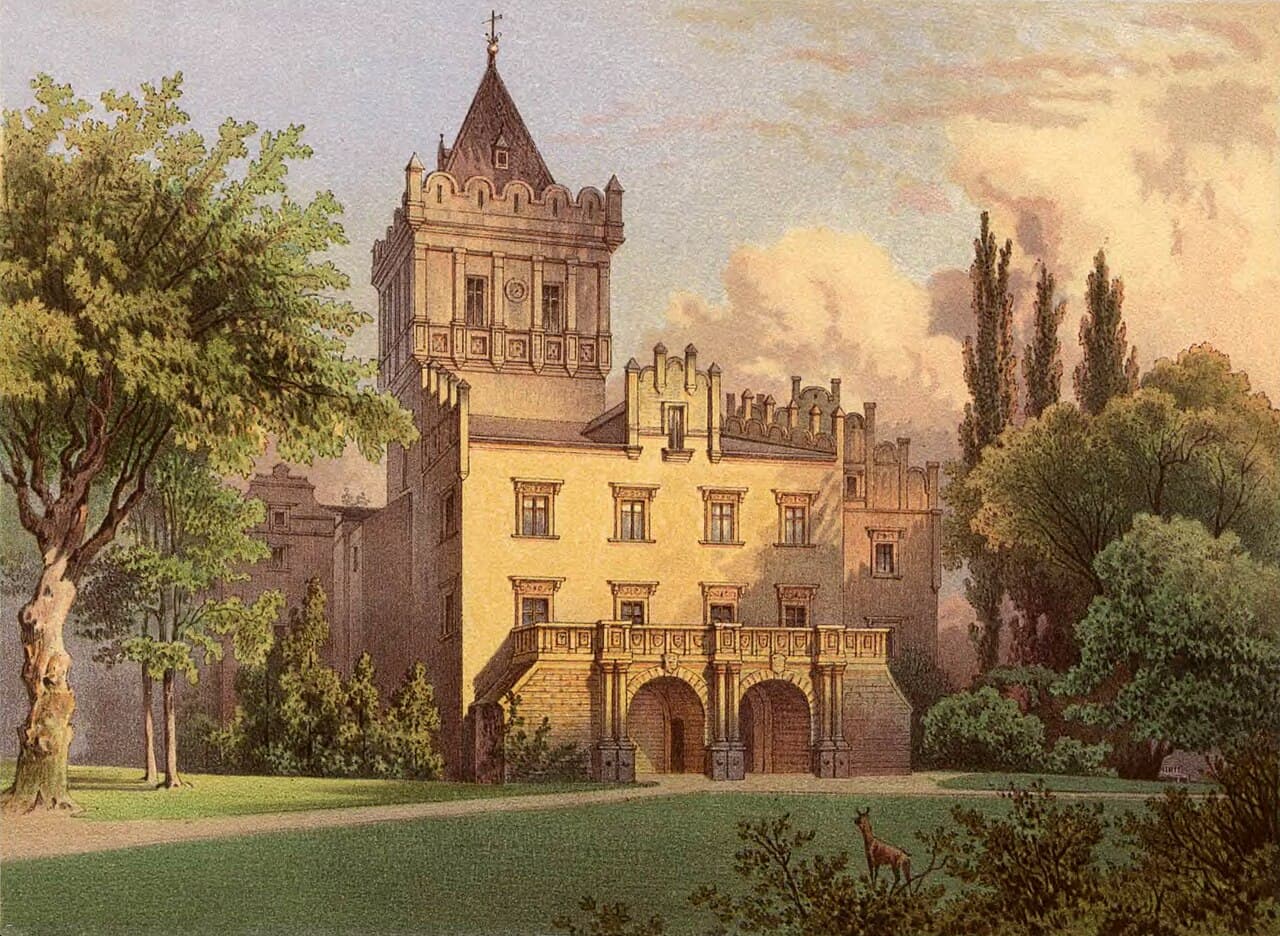
The reconstruction included the construction of a long southern wing along the site’s southern boundary and a perpendicular eastern wing, creating a three-sided courtyard with the original tower forming the western side. By the 1580s, a northern wing was added to fully enclose the courtyard. The complex was surrounded by a curtain wall, enhancing its fortification while defining the estate's limits. A prominent entrance portal bearing the von Schaffgotsch family’s heraldic coat of arms symbolized their prestige and ownership.
Architectural features and style
The castle's Renaissance style is evident in its symmetrical layout and ornamental details. The integration of the medieval tower into the palace complex illustrates a blending of defensive and residential architecture. The curtain walls and enclosed courtyard reflect typical Renaissance design principles adapted to a fortified manor setting.
Later ownership and 19th-century additions
Following the von Schaffgotsch era, the castle changed hands several times, passing to the von Dyhrn family and later to the counts of Promnitz. In 1765, Count Erdmann II von Promnitz transferred ownership to his nephew, Count Christian Friedrich zu Stolberg-Wernigerode, establishing a long-lasting family connection that persisted until 1945.
During the 19th century, the castle's function shifted further towards a noble residence. Count Eberhard zu Stolberg-Wernigerode added a large tower to the complex, enhancing its silhouette and reflecting contemporary tastes. This addition underscored the castle’s evolution from a medieval fortress to a symbol of aristocratic prestige.
Historical events and cultural significance
Kamienna Góra Castle was a site of notable historical events. In 1813, during the Napoleonic Wars, a military parade took place here, attended by Russian Tsar Alexander I and Prussian King Frederick William III. This event highlighted the castle's strategic and symbolic importance in European military history.
In 1904, the castle hosted the wedding of Countess Armgard zu Stolberg-Wernigerode, an occasion graced by the presence of German Emperor Wilhelm II. Such events underscore the castle’s role as a venue for high-profile aristocratic and political gatherings.
Decline, fire, and preservation efforts
After World War II, the castle was seized by the Polish state. Its condition deteriorated significantly over the following decades. A catastrophic fire in 1964 caused severe damage, reducing much of the complex to ruins. Despite this, the site was recognized for its cultural value and was officially protected as a monument in 1951.
Preservation efforts have included safeguarding the remaining structural fragments and the surrounding park, which was designated for protection starting in 1979. These measures ensure that the castle’s historical footprint remains visible and accessible, offering insight into its architectural evolution and noble heritage.
Current state and visitor experience
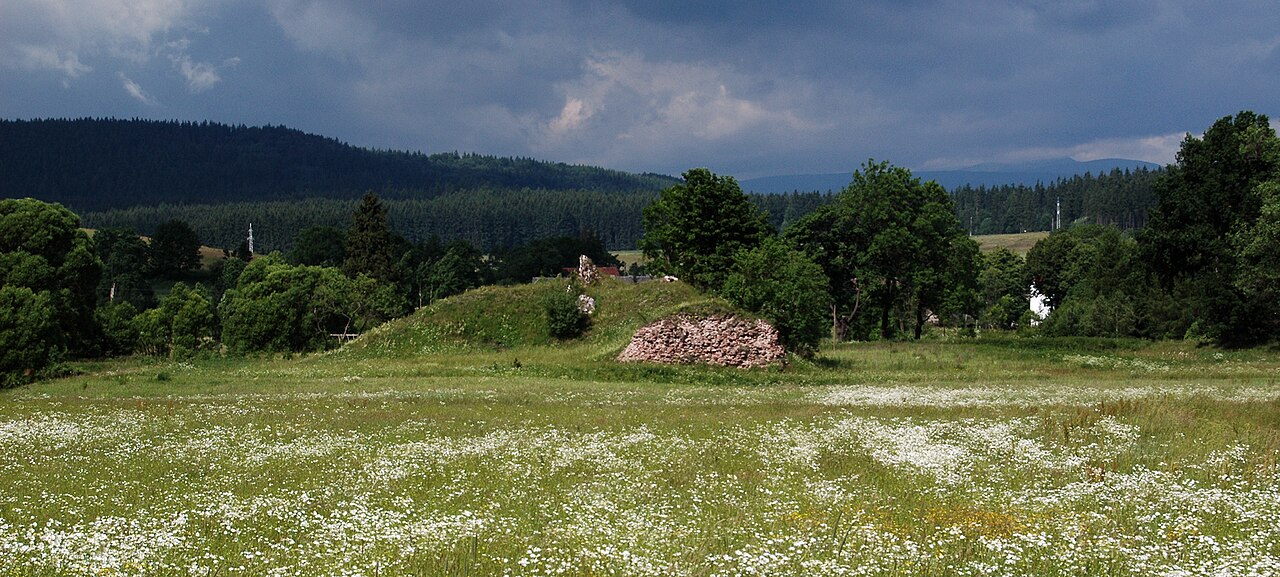
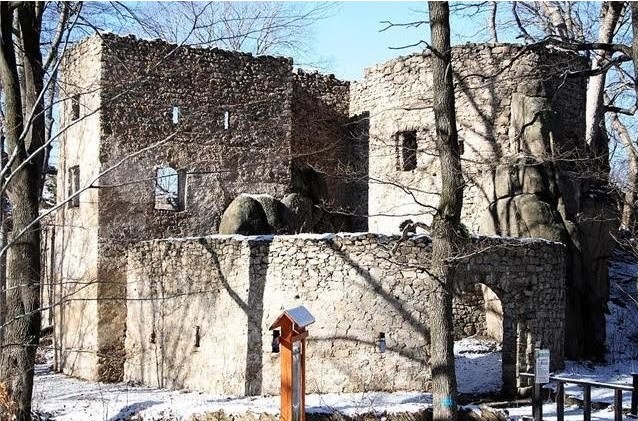
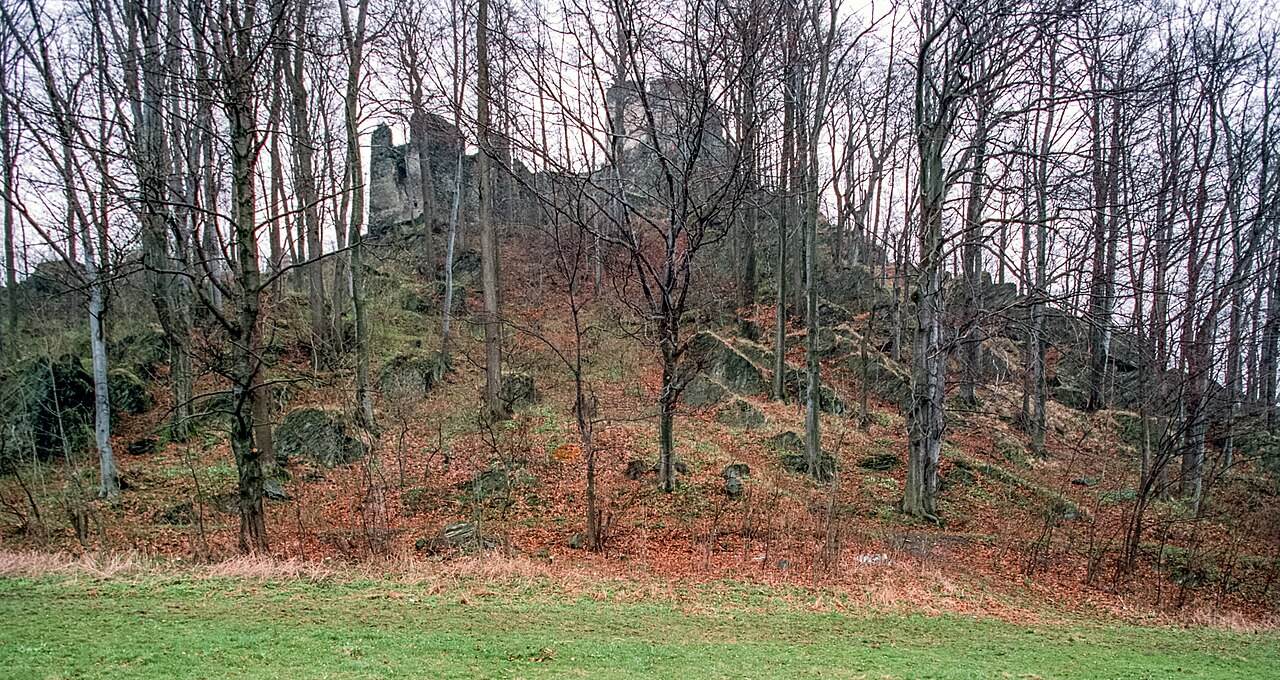
Today, Kamienna Góra Castle exists primarily as a ruined complex. Visitors can explore the surviving walls, the remnants of the courtyard, and the parkland that once surrounded the estate. The site offers a tangible connection to the region's medieval and Renaissance history, reflecting the transformations from a defensive stronghold to a noble residence.
While much of the original structure has been lost, the castle’s remains continue to attract interest for their historical and architectural significance. The surviving elements provide valuable evidence of the castle’s Renaissance reconstruction and its role in the political and social life of Lower Silesia over several centuries.
Frequently asked questions (FAQ)
- How do I get to Kamienna Góra Castle?
- Kamienna Góra Castle is located just north of Kamienna Góra town in Lower Silesia, Poland. It is accessible by local roads and is a short drive from the town center. Visitors can reach it by car or local bus services.
- What are the opening hours of Kamienna Góra Castle?
- As the castle is primarily in ruins, there are no formal opening hours. Visitors can explore the site during daylight hours, but it is advisable to check local tourist information for any access restrictions or guided tours.
- Is there an entrance fee to visit Kamienna Góra Castle?
- Visiting Kamienna Góra Castle is generally free of charge, as it is a protected historic site with open access to the ruins and surrounding parkland.
- What architectural styles are visible at Kamienna Góra Castle?
- The castle exhibits a blend of medieval defensive architecture and Renaissance residential design, particularly evident in the courtyard layout and the Renaissance entrance portal with the von Schaffgotsch coat of arms.
- Can I explore the castle ruins safely?
- While the ruins are accessible to visitors, some areas may be unstable due to the castle's ruined condition. It is recommended to stay on marked paths and follow any safety guidelines provided on-site.
Photo gallery

Photo by Theodor Albert (Magdeburg 1822-1867, Theodor Blätterbauer, Alexander Duncker (1813-1897)•Public domain
Information
Current owner
Polish state
Loading map...
Visitor reviews
No reviews yet. Been here? Write the first review and help other travelers!
Write the first reviewVisited this castle? Share your experience
Your review helps other travelers and adds first-hand knowledge to our encyclopedia.