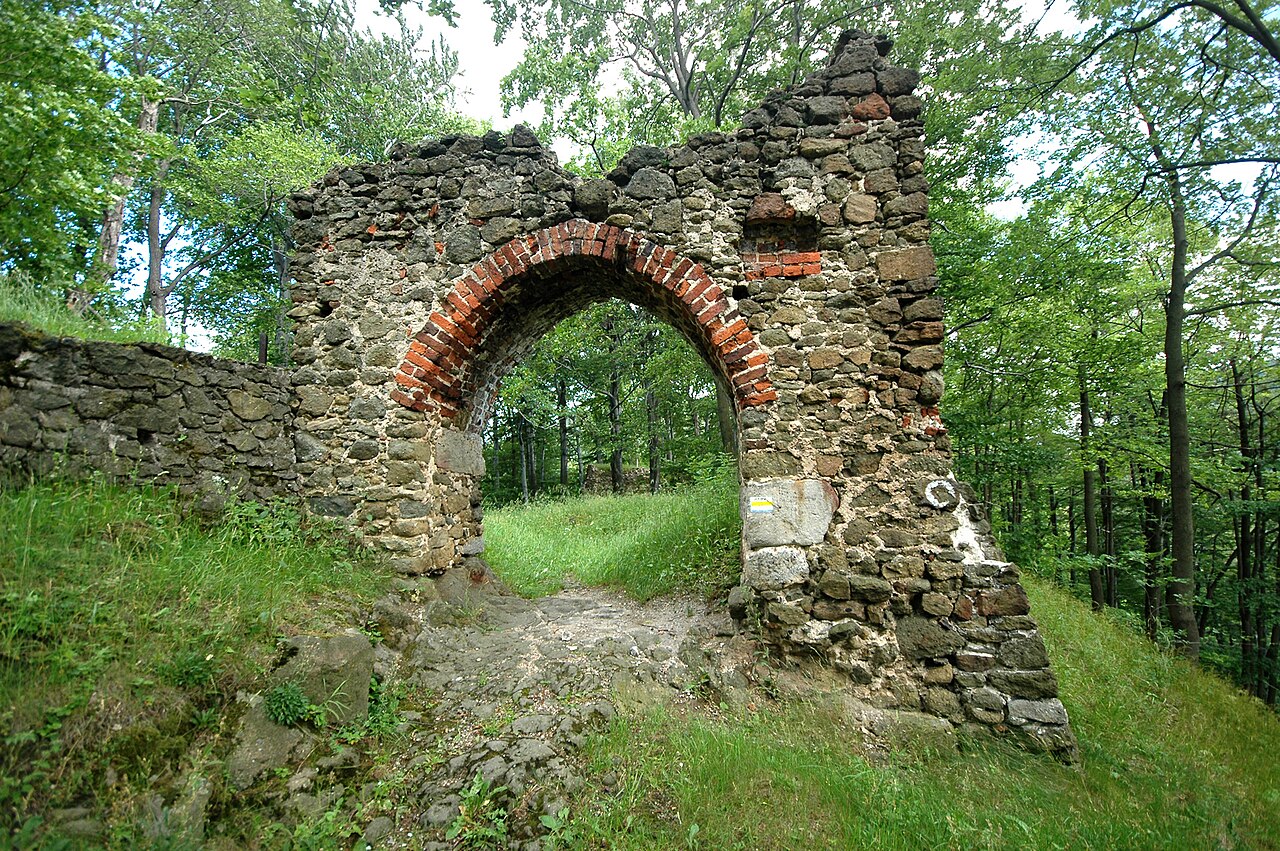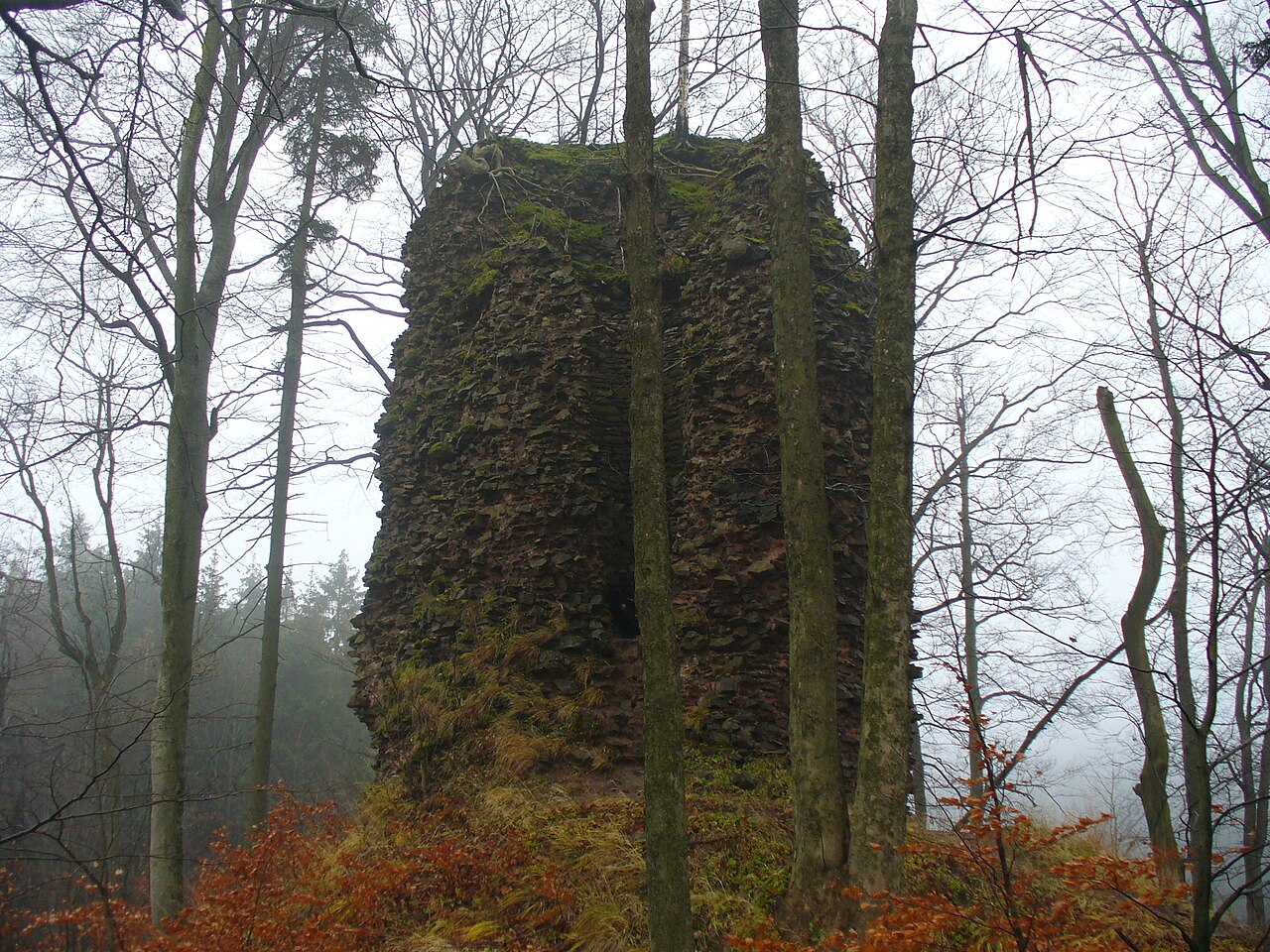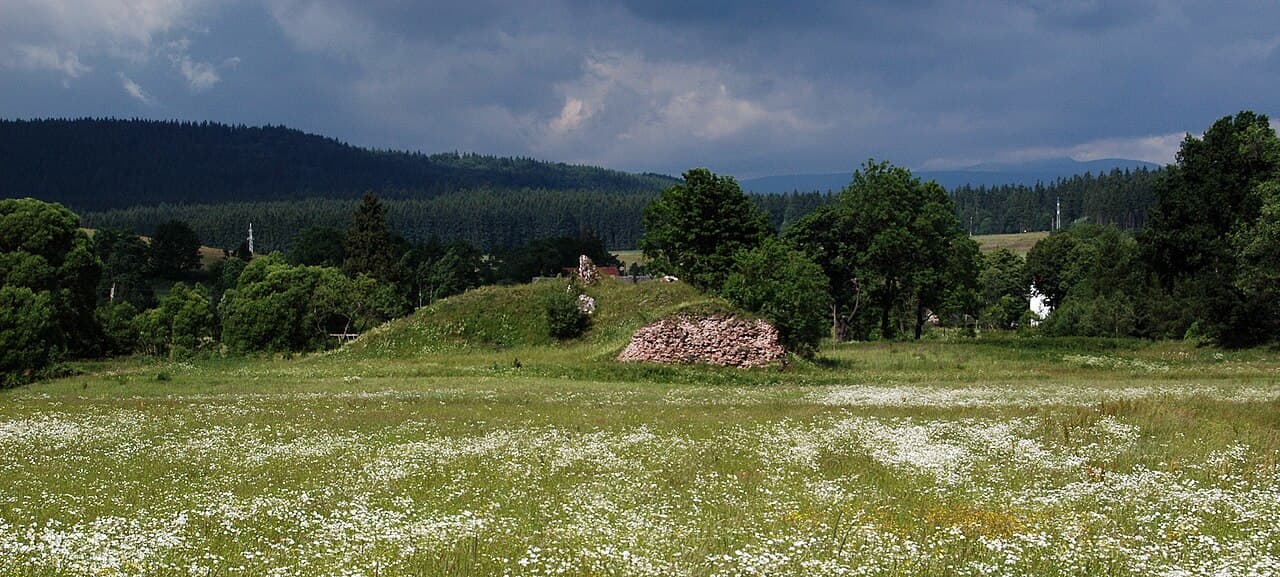
Wojaczów Castle — Poland castle

Wojaczów Castle

Wojaczów castle: late medieval ruins in poland
Late Medieval (14th–15th c.)
Ruins

Wojaczów Castle is a notable example of a late medieval fortress located in Poland, dating back to the 14th century. Although today it remains in a state of ruins, the site holds significant archaeological value and provides insight into medieval defensive architecture in the region.

Historical context and significance

Constructed during the late medieval period, Wojaczów Castle was part of a network of fortifications designed to protect the region from invasions and local conflicts. The 14th century was a time of considerable political and military upheaval in Poland, marked by territorial disputes and the consolidation of power by the Polish crown. Castles like Wojaczów served both as military strongholds and administrative centers.

The castle's strategic location, although not precisely documented in modern records, would have been chosen to oversee important trade routes or border areas, typical of medieval fortresses designed for both defense and control.

Architectural features and layout

While much of Wojaczów Castle has not survived intact, archaeological studies have revealed the basic layout typical of late medieval castles in Poland. The castle likely featured a central keep or donjon surrounded by defensive walls and possibly a moat or natural water defenses, common in the period to deter attackers.

The construction would have utilized local stone and timber, with thick walls designed to withstand siege weaponry of the time. The ruins suggest a compact fortress, prioritizing defense over residential comfort, with limited space for extensive living quarters.

Defensive structures

Key defensive elements probably included battlements for archers, narrow windows or arrow slits, and a fortified gatehouse to control access. The castle's position on elevated ground or near natural barriers would have enhanced its defensive capabilities.

Archaeological importance and preservation

Today, Wojaczów Castle is classified as archaeological ruins, reflecting its state of partial destruction and the ongoing efforts to study and preserve what remains. Excavations have uncovered foundations, fragments of walls, and artifacts that provide valuable information about medieval construction techniques and daily life within the castle.

Preservation efforts focus on stabilizing the ruins to prevent further decay and facilitating public access for educational and cultural purposes. The site offers a tangible connection to Poland's medieval past and serves as a resource for historians and archaeologists.

Visiting wojaczów castle

Although the castle is in ruins, it remains accessible to visitors interested in medieval history and archaeology. The site provides a quiet, contemplative environment where one can explore the remnants of the fortress and imagine its historical role.

Visitors should prepare for uneven terrain and limited facilities, as the site is primarily an open archaeological area without extensive tourist infrastructure.

Frequently asked questions (FAQ)

What is the historical significance of Wojaczów Castle?
Wojaczów Castle, dating back to the 14th century, is an important example of medieval architecture in Poland. It served as a defensive stronghold and a residence for local nobility, reflecting the region's rich history and cultural heritage.
When was Wojaczów Castle built?
Wojaczów Castle was constructed in the late 14th century, specifically around 1370. It has undergone various renovations over the centuries, preserving its historical character while adapting to the needs of its times.
How do I get to Wojaczów Castle?
Wojaczów Castle is located in the village of Wojaczów, easily accessible by car or public transport from nearby cities. Visitors can use GPS navigation for the most convenient route or consult local transport schedules for buses and trains.
What are the opening hours of Wojaczów Castle?
Wojaczów Castle is typically open to visitors from 10 AM to 6 PM on weekdays and 10 AM to 7 PM on weekends. However, it is advisable to check the official website or contact the castle administration for any seasonal changes in opening hours.
Can I take guided tours of Wojaczów Castle?
Yes, guided tours are available at Wojaczów Castle, providing visitors with in-depth knowledge about its history, architecture, and significant events. Tours are usually conducted in Polish, but there may be options for other languages upon request.
Is it possible to visit Wojaczów Castle with children?
Absolutely! Wojaczów Castle is family-friendly and offers activities that can engage children, including interactive exhibits and storytelling sessions. Parents should ensure to supervise their children as they explore the castle grounds.
What is the best time to visit Wojaczów Castle?
The best time to visit Wojaczów Castle is during the spring and early autumn months, when the weather is mild and the surrounding landscape is particularly beautiful. Visiting during these seasons also allows you to enjoy local festivals and events held nearby.
Are there any nearby attractions to explore after visiting Wojaczów Castle?
Yes, several attractions are located near Wojaczów Castle, including picturesque hiking trails and other historical sites. Visitors can also explore local villages that showcase traditional Polish culture and cuisine.
What are the ticket prices for visiting Wojaczów Castle?
Ticket prices for Wojaczów Castle are generally affordable, with discounts available for students, seniors, and families. It's best to check the official website for current pricing and any special promotions that may be offered.

Photo gallery

Wojaczów Castle
Click to view

Photo by ZeroJeden•CC BY-SA 3.0 pl

1 photo • Click any image to view in full screen

Information

Archaeological Site / Ruins

Loading map...

Visitor reviews

No reviews yet. Been here? Write the first review and help other travelers!

Write the first review

Visited this castle? Share your experience

Your review helps other travelers and adds first-hand knowledge to our encyclopedia.
Write a review

(5/5)

0/2000 characters

Your review will be visible after admin approval

Nearby castles

8.8 km
Kamienna Góra Castle — Poland castle

Kamienna Góra Castle

Kamienna Góra, Poland

Kamienna Góra Castle is a historically significant late medieval hill castle located north of the town of Kamienna Góra in Poland. Established in the 14th century under the rule of Duke Bolko I of Świdnica, the castle originally served as a fortified manor near the border with the Kingdom of Bohemia. This strategic location underscored its military importance during the Middle Ages. The initial settlement included German colonists from the Franconian region, part of the eastward expansion movement in Central Europe during the late 13th and early 14th centuries. Medieval origins and early history The castle's earliest phase centered on a defensive tower that formed the core of the complex. This tower was constructed to assert ducal authority and protect the frontier region. Over time, the site came under the ownership of various noble families, beginning with the von Kreppel family. Their name is linked to one of the castle's historical designations, Schloss Kreppelhof, reflecting the castle's evolving identity through the centuries. Renaissance transformation under the von schaffgotsch family In the mid-16th century, the castle underwent a significant transformation when it passed to the von Schaffgotsch family. Between approximately 1560 and 1588, they converted the medieval defensive tower and surrounding structures into a refined Renaissance residence. This marked a shift from a purely military fortress to a palatial estate, emphasizing comfort and status alongside defense. The reconstruction included the construction of a long southern wing along the site’s southern boundary and a perpendicular eastern wing, creating a three-sided courtyard with the original tower forming the western side. By the 1580s, a northern wing was added to fully enclose the courtyard. The complex was surrounded by a curtain wall, enhancing its fortification while defining the estate's limits. A prominent entrance portal bearing the von Schaffgotsch family’s heraldic coat of arms symbolized their prestige and ownership. Architectural features and style The castle's Renaissance style is evident in its symmetrical layout and ornamental details. The integration of the medieval tower into the palace complex illustrates a blending of defensive and residential architecture. The curtain walls and enclosed courtyard reflect typical Renaissance design principles adapted to a fortified manor setting. Later ownership and 19th-century additions Following the von Schaffgotsch era, the castle changed hands several times, passing to the von Dyhrn family and later to the counts of Promnitz. In 1765, Count Erdmann II von Promnitz transferred ownership to his nephew, Count Christian Friedrich zu Stolberg-Wernigerode, establishing a long-lasting family connection that persisted until 1945. During the 19th century, the castle's function shifted further towards a noble residence. Count Eberhard zu Stolberg-Wernigerode added a large tower to the complex, enhancing its silhouette and reflecting contemporary tastes. This addition underscored the castle’s evolution from a medieval fortress to a symbol of aristocratic prestige. Historical events and cultural significance Kamienna Góra Castle was a site of notable historical events. In 1813, during the Napoleonic Wars, a military parade took place here, attended by Russian Tsar Alexander I and Prussian King Frederick William III. This event highlighted the castle's strategic and symbolic importance in European military history. In 1904, the castle hosted the wedding of Countess Armgard zu Stolberg-Wernigerode, an occasion graced by the presence of German Emperor Wilhelm II. Such events underscore the castle’s role as a venue for high-profile aristocratic and political gatherings. Decline, fire, and preservation efforts After World War II, the castle was seized by the Polish state. Its condition deteriorated significantly over the following decades. A catastrophic fire in 1964 caused severe damage, reducing much of the complex to ruins. Despite this, the site was recognized for its cultural value and was officially protected as a monument in 1951. Preservation efforts have included safeguarding the remaining structural fragments and the surrounding park, which was designated for protection starting in 1979. These measures ensure that the castle’s historical footprint remains visible and accessible, offering insight into its architectural evolution and noble heritage. Current state and visitor experience Today, Kamienna Góra Castle exists primarily as a ruined complex. Visitors can explore the surviving walls, the remnants of the courtyard, and the parkland that once surrounded the estate. The site offers a tangible connection to the region's medieval and Renaissance history, reflecting the transformations from a defensive stronghold to a noble residence. While much of the original structure has been lost, the castle’s remains continue to attract interest for their historical and architectural significance. The surviving elements provide valuable evidence of the castle’s Renaissance reconstruction and its role in the political and social life of Lower Silesia over several centuries.

Late Medieval (14th–15th c.)
Details
11 km
Nowy Dwór Castle in Wałbrzych — Poland castle

Nowy Dwór Castle in Wałbrzych

Wałbrzych, Poland

Nowy Dwór Castle is a historic hill castle located in the city of Wałbrzych, in southwestern Poland. Constructed in the 14th century, it represents a significant example of late medieval military architecture in the region. The castle was originally built for defensive purposes, strategically positioned on elevated terrain to oversee and control the surrounding landscape. Historical context and construction The castle's foundation dates back to the late medieval period, a time when fortifications were essential for territorial defense and asserting noble power. Built primarily in the 14th century, Nowy Dwór Castle was part of a network of fortresses in the Lower Silesia region, which was then a contested borderland between various duchies and kingdoms. The castle's location on a hill provided a commanding view, allowing defenders to spot approaching enemies from a distance. The original builders likely belonged to the local nobility or ruling authorities who sought to establish a fortified residence and stronghold. The architectural style reflects typical late medieval design elements, focusing on functionality and defense, with thick stone walls and limited openings. Architectural features Nowy Dwór Castle is classified as a hill castle due to its elevated position. The castle's layout includes a central keep or donjon, which served as the last line of defense and the residence of the lord. Surrounding the keep, there are remnants of curtain walls that once enclosed the castle courtyard, providing protection against invaders. The defensive structures likely included battlements, arrow slits, and possibly a moat or ditch carved into the hillside to enhance security. Although much of the castle is now in ruins, archaeological studies and remaining walls reveal the robust construction techniques typical of the period. Materials and construction techniques The castle was primarily built using locally sourced stone, which provided durability and resistance to siege weaponry. The masonry work demonstrates the craftsmanship of medieval stonemasons, with thick walls designed to withstand battering and fire. Timber may have been used for floors, roofs, and internal structures, though these elements have not survived. Historical significance and ownership Throughout its history, Nowy Dwór Castle played a role in regional defense and administration. It was likely owned by noble families who governed the surrounding lands and used the castle as a seat of power. The castle's strategic position made it a valuable asset during conflicts in the region, including local skirmishes and broader territorial disputes in Silesia. Over the centuries, the castle experienced periods of occupation, damage, and neglect, which contributed to its current state as a ruin. Despite this, it remains an important cultural and historical landmark, reflecting the medieval heritage of Wałbrzych and Lower Silesia. Current condition and preservation Today, Nowy Dwór Castle stands as partially preserved ruins. The surviving walls and structural elements provide valuable insights into medieval fortification architecture. Preservation efforts focus on stabilizing the ruins and making the site accessible to visitors interested in history and archaeology. The castle is a popular destination for tourists and history enthusiasts, offering scenic views of the surrounding countryside and a tangible connection to Poland's medieval past. Interpretive signage and guided tours help visitors understand the castle's historical context and architectural features. Visiting Nowy Dwór Castle The castle is accessible to the public, with pathways leading up the hill to the ruins. Visitors can explore the remains of the keep, courtyard, and defensive walls while enjoying panoramic views of Wałbrzych and its environs. The site is especially attractive during spring and summer months when the natural surroundings are lush and inviting. While the castle does not have extensive visitor facilities, its historical ambiance and scenic location make it an appealing stop for those interested in medieval architecture and Polish history. Nearby attractions Wałbrzych itself offers several other historical sites and cultural attractions, including the well-known Książ Castle, which is one of the largest castles in Poland. Visitors to Nowy Dwór Castle often combine their visit with trips to these nearby landmarks to gain a broader appreciation of the region's rich heritage.

Late Medieval (14th–15th c.)
Details
11 km
Radosno Castle — Poland castle

Radosno Castle

Rybnica Leśna, Poland

Radosno Castle stands as a notable example of a medieval hill castle located in the municipality of Rybnica Leśna, Poland. Constructed in the late 13th century, it was originally part of the Duchy of Świdnica-Jawor, a significant territorial entity in the Silesian region. The castle's position on a strategic border facing Bohemia underscored its importance in controlling and protecting a vital medieval trade route, which linked regional economic centers and facilitated commerce. Historical background and political significance The castle's early history is closely tied to prominent regional rulers such as Duke Bolko I of Świdnica-Jawor and his successor Duke Bolko II the Small. These rulers played critical roles in shaping the political landscape of Silesia during the late medieval period. By the mid-14th century, Radosno Castle was documented as a royal fief under Bohemian sovereignty, reflecting the shifting allegiances and power dynamics within Central Europe. Ownership of the castle changed hands multiple times, passing through noble families including the Swenkinvalds, Hersko of Rozkowice, and later the bishops of Wrocław. The Seidlitz and Rechenberg families also held control over the fortress, illustrating its continued importance as a noble residence and administrative center. The castle was not only a military stronghold but also served as the administrative hub for the surrounding domain, which included the nearby town of Mieroszów and various villages. Strategic role and military history Radosno Castle was part of a defensive network that included other nearby fortresses such as Rogowiec, Grodno, and Nowy Dwór. This chain of castles guarded the borderlands and trade routes against external threats, particularly from Bohemia. During the Hussite Wars in the early 15th century, the castle endured two recorded sieges in 1427 and 1434. Although records do not confirm its capture, these attacks highlight the fortress's military significance during a turbulent period of religious and territorial conflict. In the mid-15th century, Radosno Castle gained notoriety as a refuge for robber knights, who disrupted local peace and security. This criminal activity provoked a military response, culminating in a partial destruction of the castle in 1443 when forces from the city of Wrocław attacked it. Despite this setback, the castle was rebuilt in 1466 by the Schellendorf brothers, who continued the practice of banditry from the stronghold. The castle's contested status persisted into the late 15th century, evidenced by its seizure by troops under Hungarian king Matthias Corvinus in 1483. Ultimately, the fortress was decisively destroyed in 1497 by order of King Vladislaus II Jagiellon, ending its active military and administrative role. After this final assault, Radosno Castle was abandoned and fell into ruin. Architectural features and layout The castle was constructed predominantly from local stone materials, including durable melaphyre rock quarried nearby. Its most prominent feature was a large cylindrical tower, approximately 7.2 meters in diameter. This tower was strategically placed on the highest point of the castle's southeastern side, guarding the most vulnerable approach. The entrance to this tower was raised about four meters above ground level, a defensive design intended to hinder attackers. Originally, the castle's defenses included wooden and earthen structures, but these were replaced during the 14th century by substantial stone curtain walls enclosing a roughly rectangular courtyard of about 300 square meters. The main castle section measured approximately 17 by 30 meters, with residential buildings located in the northern corner and the main cylindrical tower in the southeastern corner. In addition to the round tower, a quadrangular tower measuring around 6 by 6 meters was integrated into the defensive wall on the northwestern side. This tower contained the main gate, controlling access to the stronghold. Adjacent to the southern side of the castle was a smaller rectangular outer bailey measuring about 14 by 18 meters, which likely served as an additional defensive layer or space for auxiliary functions. The fortress was further protected by defensive ditches carved into the rock, varying from 3.5 to 7 meters wide and up to 4 meters deep. These ditches significantly impeded any assault on the walls. Today, the most visible surviving element is the 12-meter-high lower section of the principal cylindrical tower. Archaeological excavations have also uncovered fragments of the residential building near the northwestern edge of the complex. Geographical setting and surrounding fortifications Radosno Castle occupies a spur projecting into a small side valley known as Freudengraben. A medieval road passed roughly 50 meters south of the summit, providing access from the east. The nearby fortress of Rogowiec, located about four kilometers to the east, was part of the same defensive system. This network of fortifications was designed to secure the border and trade routes in a contested and strategically important region. Legacy and present condition Although now in ruins, Radosno Castle remains an important archaeological site that offers valuable insights into medieval military architecture and the turbulent history of Silesia. The surviving structural elements, including the cylindrical tower and remnants of the curtain walls, allow historians and visitors to appreciate the castle's original defensive capabilities and layout. The castle's history as a defensive fortress, administrative center, and even a refuge for outlaw knights illustrates the complex social and political dynamics of the region during the late medieval period. Its strategic placement and architectural features reflect the evolving nature of fortification design in response to military and political challenges.

Late Medieval (14th–15th c.)
Details