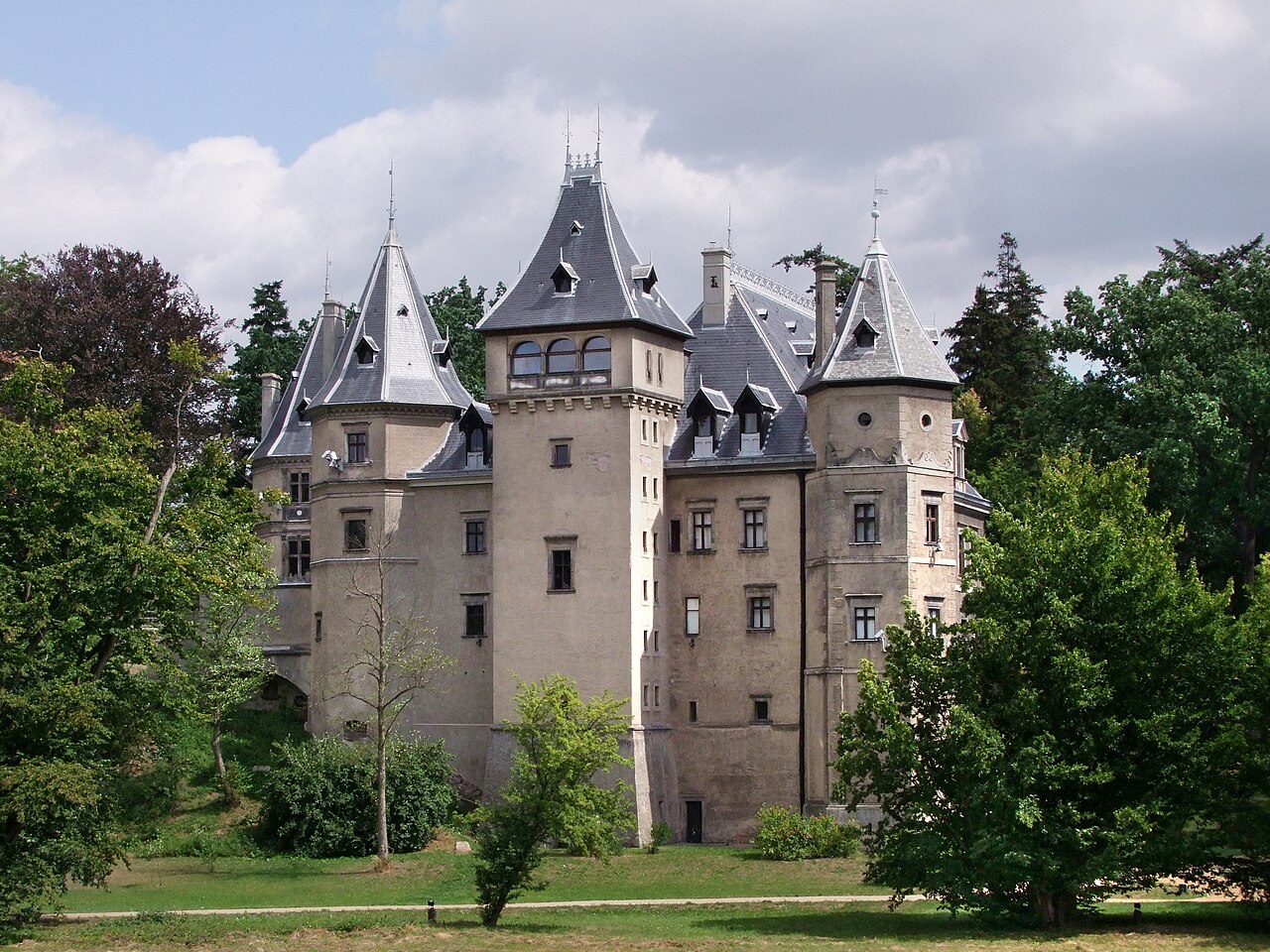
Chocz
Chocz castle stands on an island in the Prosną river in Greater Poland, a region rich in medieval history. The site has witnessed continuous human activity since the early medieval period, originally hosting a ringwork fortification surrounded by a wooden and earth rampart approximately 90 meters in diameter. This early defensive structure capitalized on the strategic location of a river crossing, which was crucial for controlling local trade and movement.
Medieval origins and castle construction
By the second half of the 14th century, the original wooden fort was replaced by a stone castle, one of the few in Wielkopolska built on an island. The precise origins of this castle are not definitively documented, but it is believed that construction may have been initiated by King Casimir III the Great or alternatively by Bartosz Wezenborg, the starost of Odolanów. The castle's location on an island provided natural defense, making it a formidable stronghold despite its modest size.
Architectural features of the medieval castle
Due to a lack of detailed archaeological research, the exact appearance of the medieval castle remains uncertain. However, historical records and surviving foundations suggest a three-story rectangular brick building resting on a stone foundation, measuring approximately 11 by 30 meters. The structure was reinforced at the corners with buttresses, a typical feature of late medieval fortifications. The castle was likely surrounded by a wooden palisade rather than massive stone walls, reflecting its relatively small scale and the limitations imposed by the island setting.
Decline and loss of the medieval castle
The castle's prominence was short-lived, lasting only about a century in its original form. The decline of the river crossing's importance, combined with a lack of significant modernization or maintenance, led to the castle's gradual deterioration and eventual ruin. By the 17th century, the medieval castle had fallen into disrepair and was no longer a functional fortress.
The post-medieval palace and later developments
In the 17th century, the estate passed into the hands of the Lipski family, a noble lineage that retained ownership until the late 18th century. In 1720, Kazimierz Lipski constructed a palatial residence on the ruins of the medieval castle, marking a significant transformation from a defensive fortress to a stately home. This new building exemplified post-Renaissance architectural trends and reflected the changing functions of such estates in the early modern period.
Architectural and landscape features of the palace
The palace was situated on the island, which by then had experienced a shift in the river's course. This natural change led to the palace and the adjacent church being surrounded by a broad moat, enhancing the picturesque and defensive qualities of the site. While the exact details of the palace's design are limited, it likely incorporated elements typical of early 18th-century Polish manor houses, emphasizing comfort and status over military utility.
Current condition and remnants
Unfortunately, the original medieval castle has not survived to the present day. The palace built by the Lipski family also no longer stands intact, but some traces of its foundations and layout may remain. It is speculated that the nearby rectory building could contain fragments of the castle's walls, offering a tangible connection to the site's layered history. Today, the location is primarily recognized for its historical significance rather than for extant architectural monuments.
Historical significance and cultural heritage
Chocz castle exemplifies the evolution of fortified sites in Greater Poland from early medieval ringworks to post-Renaissance palaces. Its strategic position on an island in the Prosną river highlights the importance of river crossings in medieval military and economic networks. Although physical remains are sparse, the site's documented history provides valuable insights into regional defensive architecture and noble estate development over several centuries.
The transition from a medieval fortress to a palatial residence reflects broader socio-political changes in Poland, where fortified castles gradually gave way to more comfortable and representative noble homes. The Lipski family's role in reshaping the site underscores the influence of noble families in the architectural and cultural landscape of the Polish-Lithuanian Commonwealth during the early modern era.
Visiting chocz today
Visitors to Chocz can explore the island and its surroundings, appreciating the natural setting that once made the site strategically important. While no substantial castle structures remain, the historical context enriches the experience. Nearby, the church and rectory offer glimpses into the architectural heritage linked to the former castle grounds.
Chocz remains a point of interest for those fascinated by medieval and post-medieval Polish history, castle architecture, and the transformation of defensive sites into noble residences. It is recommended to visit during warmer months when the landscape is accessible and the river environment is at its most scenic.
Frequently asked questions (FAQ)
- What is the historical significance of Chocz castle?
- Chocz castle illustrates the transition from a medieval ringwork fortification to a post-Renaissance palace, reflecting regional defensive and noble estate development in Greater Poland.
- When was the original castle in Chocz built?
- The original wooden ringwork fortification dates back to the early medieval period, with a stone castle constructed in the second half of the 14th century.
- Can I visit any remains of the castle today?
- The medieval castle no longer stands, but visitors can explore the island site and nearby buildings that may contain remnants of the original structure.
- Who built the post-Renaissance palace in Chocz?
- Kazimierz Lipski built the post-Renaissance palace in 1720 on the ruins of the medieval castle.
- What architectural style characterizes the palace built in Chocz?
- The palace reflects post-Renaissance architectural trends typical of early 18th-century Polish noble residences.
Information
Loading map...
Visitor reviews
No reviews yet. Been here? Write the first review and help other travelers!
Write the first reviewVisited this castle? Share your experience
Your review helps other travelers and adds first-hand knowledge to our encyclopedia.