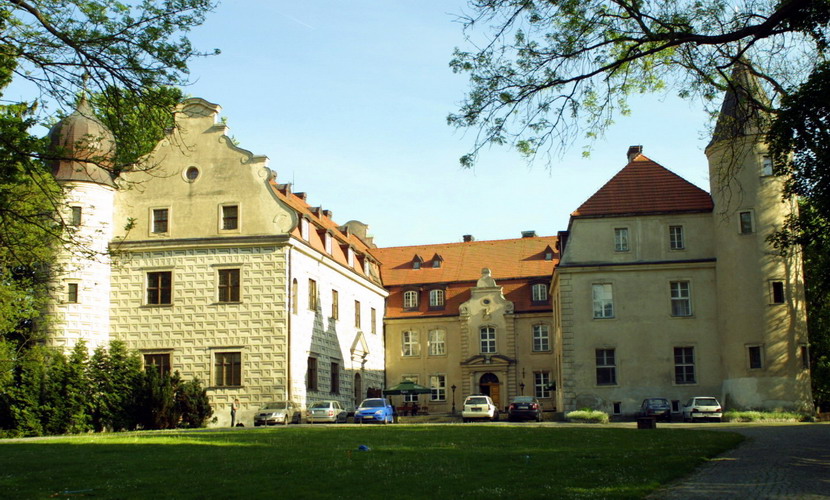
Kalisz Pomorski
Kalisz Pomorski Castle stands as a testament to the rich and turbulent history of the region now known as Poland. Originating as a defensive stronghold in the early medieval period, the site has witnessed centuries of conflict, architectural transformation, and cultural shifts. This castle complex, located in the town of Kalisz Pomorski, reflects the layered history of territorial disputes between Polish rulers, the Margraviate of Brandenburg, and the Teutonic Knights.
Initially, the area hosted an early medieval fortified settlement, seized by Bolesław Krzywousty and incorporated into the Greater Poland duchy. The first documented mention of "Nova Calis" dates to 1251 in a charter by Duke Przemysł I of Poznań. The 13th century saw the establishment of a new town about 1.5 kilometers from the original stronghold. By 1303, following the death of Duke Przemysł II, the territory was annexed by Brandenburg and integrated into the New March (Neumark).
The foundation of the castle and medieval fortifications
To consolidate control over the newly acquired lands, the Brandenburg margraves granted estates to noble families from the Old March. Among these, the Wedel family was notably prominent. In 1336, Henryk von Wedel received a privilege to construct a castle in Kalisz Pomorski. By 1352, the town was fortified with brick and stone walls, reinforced by open rectangular towers, and protected by two main gates: the western Reck Gate and the eastern Stone Gate.
Strategically positioned on a steep escarpment overlooking the valley of the Drawica River, the Wedel castle was erected within the southwestern corner of the town walls. The castle’s footprint was a rectangular plan measuring approximately 15 by 25 meters. Constructed primarily of brick on a stone foundation, it was likely a one-story, vaulted structure with a basement. The basement, accessible only from inside the castle, served utilitarian purposes, while the ground floor housed the most important chambers.
Architectural features of the medieval castle
The ground floor included a knights' hall in the southern section and a winter hall in the northern part. Beneath the winter hall was a kitchen equipped with its own well, an unusual feature that ensured a reliable water supply during sieges. The castle's design emphasized defense, with limited access points and robust masonry walls characteristic of Gothic military architecture.
Political upheaval and the Teutonic period
On September 2, 1350, Margrave Ludwig enfeoffed Kalisz to Henning von Wedel. The Wedel family maintained control until 1408. However, the growing power of the Teutonic Order led to the conquest of the New March in 1402, bringing Kalisz Pomorski under their rule. The castle became the seat of the Teutonic vogt Henryk von Güntersberg, who received feudal rights to the town from the Grand Master Ulrich von Jungingen.
In 1409, the castle suffered destruction at the hands of Greater Poland militia during a retaliatory raid for a Teutonic incursion on Wałcz. The ensuing Polish–Teutonic conflicts between 1411 and 1435 saw the castle repeatedly captured and damaged. In 1433, Polish and Hussite forces occupied the town, maintaining a garrison until 1435 when political agreements led to their withdrawal.
Reconstruction and Renaissance transformation
Following the devastation of the wars, the castle was rebuilt around 1450. In 1454, Kalisz was redeemed from the Teutonic Order and returned to Brandenburg control. The late 16th century brought further calamity when a major fire in 1577 destroyed much of the town and the castle. The Güntersberg family, then owners, undertook a significant reconstruction, transforming the medieval fortress into a Renaissance residence.
This renovation included adding an additional storey and reducing the castle's defensive features in favor of comfort and style. The castle's function shifted from a military stronghold to a noble residence, reflecting broader changes in architectural trends and social structures during the Renaissance period.
Baroque modifications and later history
The castle endured further hardship during the Thirty Years' War, particularly in 1639 when Swedish troops plundered the site. Subsequent fires in 1659 and 1683 caused extensive damage. Restoration efforts in the late 17th century converted the residence into a Baroque palace, adding two lateral wings that created a grand courtyard emblematic of the period's architectural style.
Ownership passed to the von Goltz family in 1731. After a devastating fire in 1771, the damaged castle was sold in 1775 to Ludwig von Beansorbe, who began restoration work focused on the main building and the surviving southern wing. The renovation embraced Neoclassical design principles, signaling another stylistic evolution of the complex.
20th-century destruction and preservation efforts
The castle's final chapter of destruction came in 1945 when it was burned and heavily vandalized during the upheavals of World War II. In the 1960s, the southern wing was dismantled, further reducing the structure to its present ruined state. Attempts to restore the castle in the 1980s were limited, but significant reconstruction began in 2006.
By February 2010, the renovated castle was ceremoniously reopened. Restoration work highlighted the medieval origins of the site, exposing fragments of the original Wedel castle walls and preserving Gothic cellar vaults. Today, visitors can explore these relics, gaining insight into the castle's layered history from its medieval fortress beginnings through Renaissance and Baroque transformations to its current status as a preserved ruin.
Architectural and cultural significance
Kalisz Pomorski Castle exemplifies the evolution of a medieval fortress into a Renaissance and Baroque noble residence, mirroring the political and cultural changes of Central Europe over six centuries. Its strategic location on the Drawica River valley and its successive reconstructions reflect the shifting tides of regional power between Polish, Brandenburgian, and Teutonic authorities.
The castle's surviving elements, including the Gothic cellars and Renaissance and Baroque structural modifications, offer valuable insights into the architectural styles and defensive needs of their respective periods. As a ruin and partially restored monument, it serves as a cultural landmark and a symbol of the region's complex history.
Visiting the castle today
Today, the site is accessible to visitors interested in medieval and Renaissance architecture as well as the history of Pomerania and Brandenburg. The castle's ruins and exhibition spaces reveal the stratified history of the building, making it a significant destination for historians, architects, and tourists alike.
Frequently asked questions (FAQ)
- What is the historical significance of Kalisz Pomorski Castle?
- Kalisz Pomorski Castle is a significant landmark in Poland, known for its medieval architecture and rich history. Originally built in the 14th century, it served as a defensive stronghold and has witnessed many historical events throughout the centuries.
- When was Kalisz Pomorski Castle built?
- The construction of Kalisz Pomorski Castle began in the early 14th century, around 1300, during the reign of the Teutonic Knights. Over the years, it has undergone various renovations, reflecting different architectural styles that have emerged in the region.
- How do I get to Kalisz Pomorski Castle?
- Kalisz Pomorski Castle is easily accessible by car or public transportation. It is located in the town of Kalisz Pomorski, which is well-connected by bus services from nearby cities, making it convenient for visitors.
- What are the opening hours of Kalisz Pomorski Castle?
- Kalisz Pomorski Castle is open to visitors from 10 AM to 6 PM during the summer months. In the off-season, the hours may vary, so it's advisable to check the castle's official website for the most current information before planning your visit.
- Can I take guided tours of Kalisz Pomorski Castle?
- Yes, guided tours are available at Kalisz Pomorski Castle, providing visitors with in-depth knowledge about its history and architecture. Tours typically last about an hour and are led by knowledgeable guides who share fascinating stories about the castle.
- Is it possible to visit Kalisz Pomorski Castle year-round?
- Yes, Kalisz Pomorski Castle is open to visitors year-round, although certain areas may be restricted during the winter months. It's best to check ahead for any seasonal schedules or special events that may affect accessibility.
- What are the ticket prices for Kalisz Pomorski Castle?
- Ticket prices for Kalisz Pomorski Castle are generally affordable, with discounts available for students and seniors. It is recommended to check the official website for the latest pricing information and any special promotions.
- When is the best time to visit Kalisz Pomorski Castle?
- The best time to visit Kalisz Pomorski Castle is during the late spring and summer months when the weather is pleasant, and the castle grounds are in full bloom. Additionally, many events and cultural activities take place during this period, enhancing the visitor experience.
- Are there any nearby attractions to Kalisz Pomorski Castle?
- Yes, there are several nearby attractions, including beautiful parks, historical sites, and local museums that showcase the region's rich heritage. Exploring the surrounding area can provide a more comprehensive understanding of the history and culture of Kalisz Pomorski.
Information
Loading map...
Visitor reviews
No reviews yet. Been here? Write the first review and help other travelers!
Write the first reviewVisited this castle? Share your experience
Your review helps other travelers and adds first-hand knowledge to our encyclopedia.