Kagoshima Castle
Kagoshima Castle, also known as Tsurumaru Castle, is a historic lowland castle located in Kagoshima City, Japan. Construction began in 1601 and was completed over a decade, reflecting the architectural and political circumstances of early Edo period Japan. The castle served as the seat of power for the powerful Shimazu clan, who governed the Satsuma Domain for twelve generations until the castle's decommissioning in 1873.
Historical context and significance
The castle was built during a period of relative peace following the unification of Japan under Tokugawa Ieyasu. The Shimazu clan, one of the most influential daimyo families, sought to establish a strong administrative center in Kagoshima, the capital of their domain. Despite its strategic importance, Kagoshima Castle's design was notably modest compared to other Japanese castles of the era.
This modesty is attributed to financial constraints and internal disagreements within the Shimazu family. Specifically, a conflict between Shimazu Iehisa, who advocated for the castle's construction, and his father, who opposed the expenditure, resulted in a simplified layout with limited fortifications. This pragmatic approach prioritized administrative functionality over military defense.
Architectural features and layout
Kagoshima Castle is classified as a lowland castle, situated at the foot of a mountain rather than on elevated terrain. The castle's layout consists primarily of two baileys: the honmaru (main bailey) and the ninomaru (secondary bailey). Unlike many contemporaneous castles, Kagoshima Castle lacked a main keep (tenshu) and yagura (turrets), which are typically prominent defensive and symbolic features.
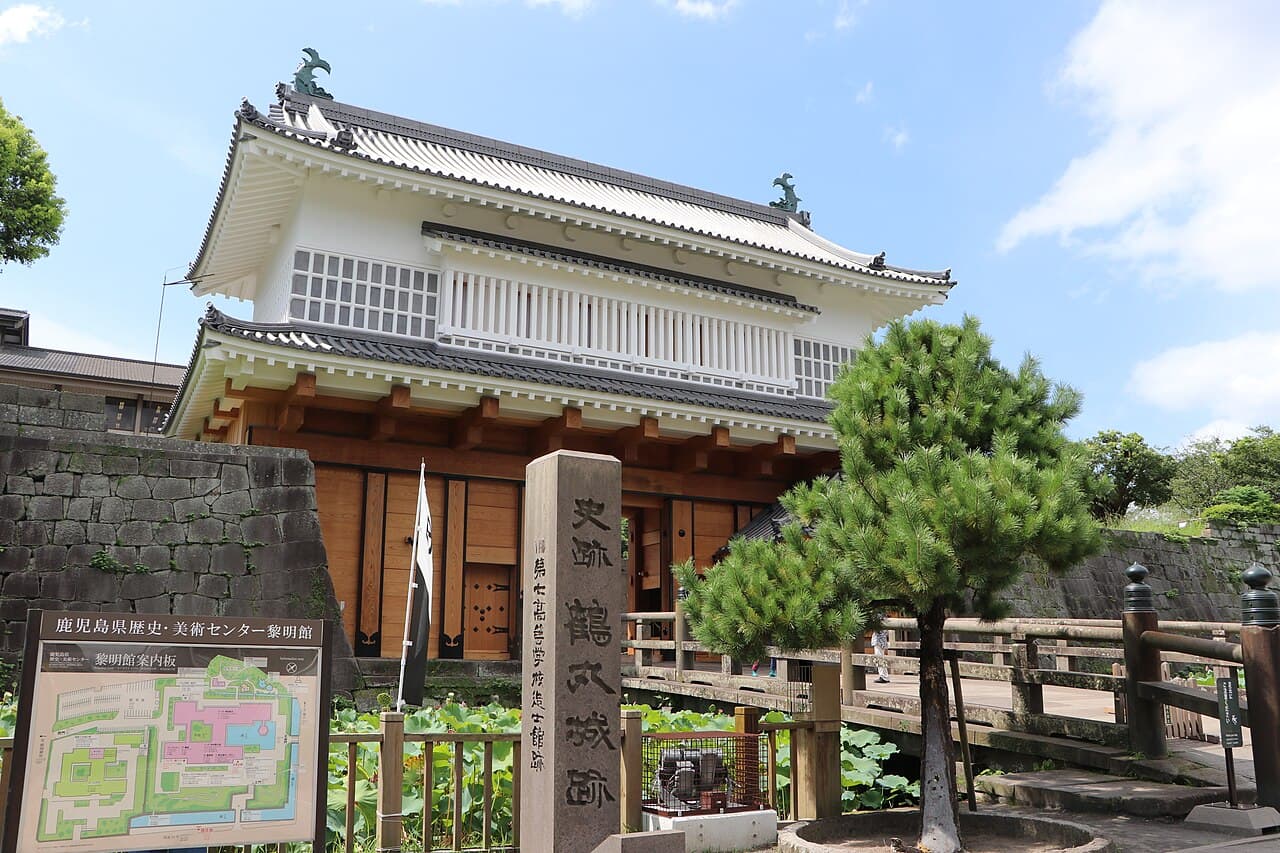
The castle featured a single main gate, known as the Ohtemon, which has been reconstructed in modern times. The presence of a palace and government offices within the castle grounds underscores its role as an administrative hub rather than a military fortress. The simplicity of the design reflects the Shimazu clan's focus on governance and resource management during the early 17th century.
Defensive aspects
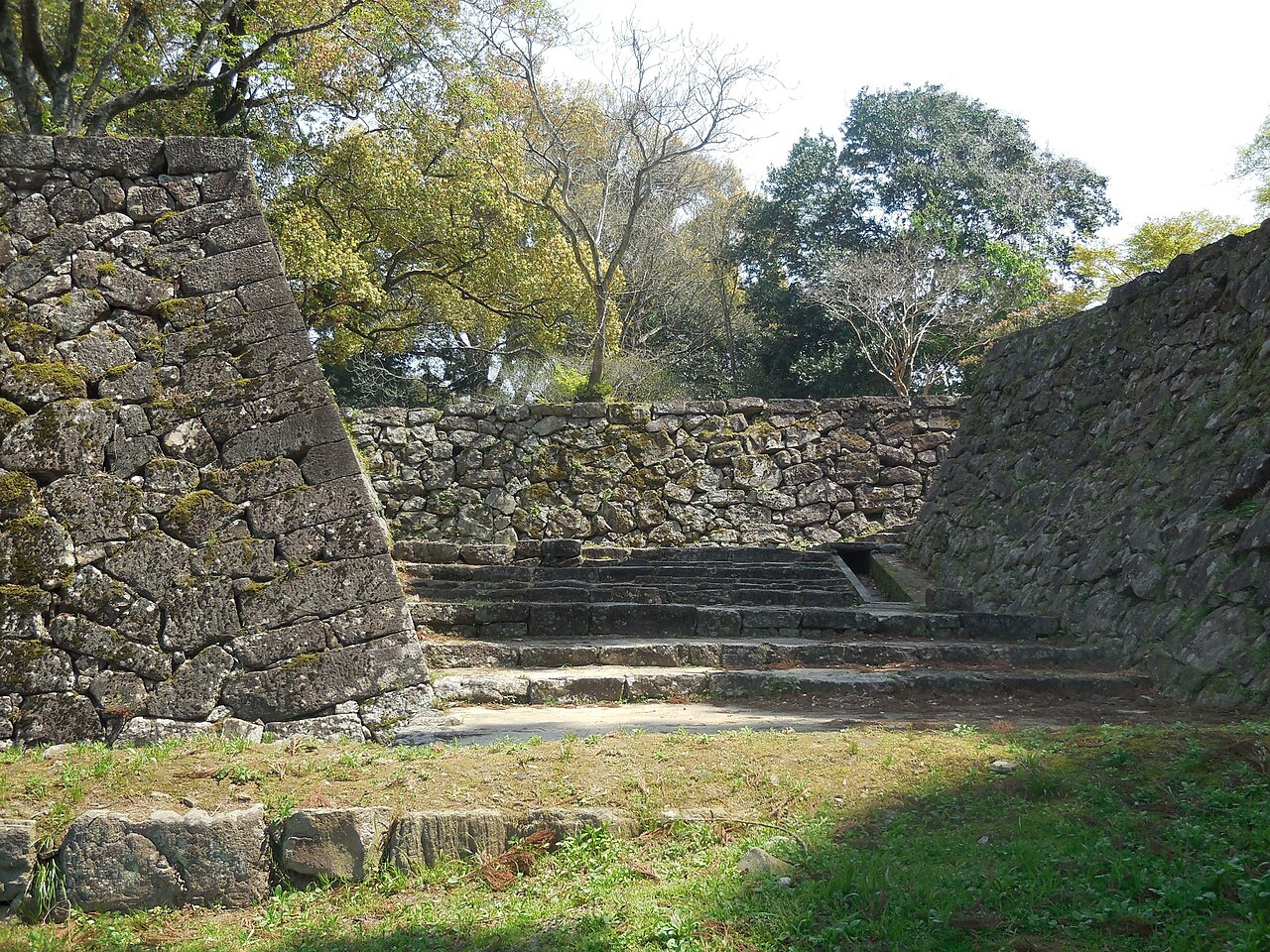
Although Kagoshima Castle's fortifications were minimal, its location near the mountain provided natural defense advantages. The castle grounds were protected by stone walls and moats, typical of Japanese castles, but the absence of multiple gates and turrets suggests a lesser emphasis on withstanding prolonged sieges.
Later history and current status
The Shimazu clan maintained control of the castle and the surrounding domain through the Edo period, a time marked by stability and isolationist policies under the Tokugawa shogunate. The castle remained the political center of the Satsuma Domain until the Meiji Restoration, which led to the abolition of the feudal system.
In 1873, Kagoshima Castle was officially decommissioned as part of the Meiji government's efforts to modernize and centralize Japan. Many of the original structures were dismantled or fell into disrepair over the following decades. Today, the castle is partially preserved, with some reconstructed elements such as the main gate.
Modern use and cultural significance
The castle grounds now host the Kagoshima History Museum, which educates visitors about the region's rich heritage and the legacy of the Shimazu clan. The site is a popular destination for tourists and history enthusiasts interested in Japan's feudal past and castle architecture.
Visiting Kagoshima Castle
Visitors to Kagoshima Castle can explore the reconstructed Ohtemon gate and the surrounding park area. The museum provides detailed exhibits on the castle's history and the broader cultural context of Kagoshima. The site offers insight into the unique characteristics of a lowland castle adapted to administrative needs rather than military dominance.
Accessibility and visitor information
- The castle is located in Kagoshima City, easily accessible by public transportation.
- The grounds are open to the public, with the museum operating regular hours.
- Visitors are encouraged to explore the surrounding area, which includes other historic sites related to the Shimazu clan.
Architectural legacy
Kagoshima Castle represents a distinctive example of early Edo period castle architecture that balances simplicity with functionality. Its design reflects the political realities and financial limitations faced by the Shimazu clan, offering a contrast to the more elaborate castles built elsewhere in Japan during the same period.
The castle's preservation and partial reconstruction efforts contribute to ongoing appreciation of Japan's feudal history and architectural heritage, making it a valuable cultural asset for Kagoshima and the nation.
Frequently asked questions (FAQ)
- How do I get to Kagoshima Castle?
- Kagoshima Castle is located in Kagoshima City and is easily accessible by public transportation, including buses and trains. It is within walking distance from major city landmarks.
- What is the historical significance of Kagoshima Castle?
- Kagoshima Castle served as the seat of the Shimazu clan, rulers of the Satsuma Domain, for twelve generations. It played a key role in the administration and governance of the region during the Edo period.
- Can I visit the reconstructed Ohtemon gate?
- Yes, the Ohtemon gate has been reconstructed and is open to visitors. It provides insight into the castle's original entrance and architectural style.
- When is the best time to visit Kagoshima Castle?
- The castle grounds are pleasant to visit year-round, but spring and autumn offer the most comfortable weather and scenic views of the surrounding park.
- Is there an admission fee to enter Kagoshima Castle?
- Admission to the castle grounds and the Kagoshima History Museum is free, making it an accessible destination for all visitors.
Photo gallery

Information
Opening hours
9:00-17:00, daily
Ticket prices
Free
Current owner
Municipality
Website
Visit websiteSources & official resources
Verify the information above using these authoritative references.
Loading map...
Visitor reviews
No reviews yet. Been here? Write the first review and help other travelers!
Write the first reviewVisited this castle? Share your experience
Your review helps other travelers and adds first-hand knowledge to our encyclopedia.