Dreistein Castle
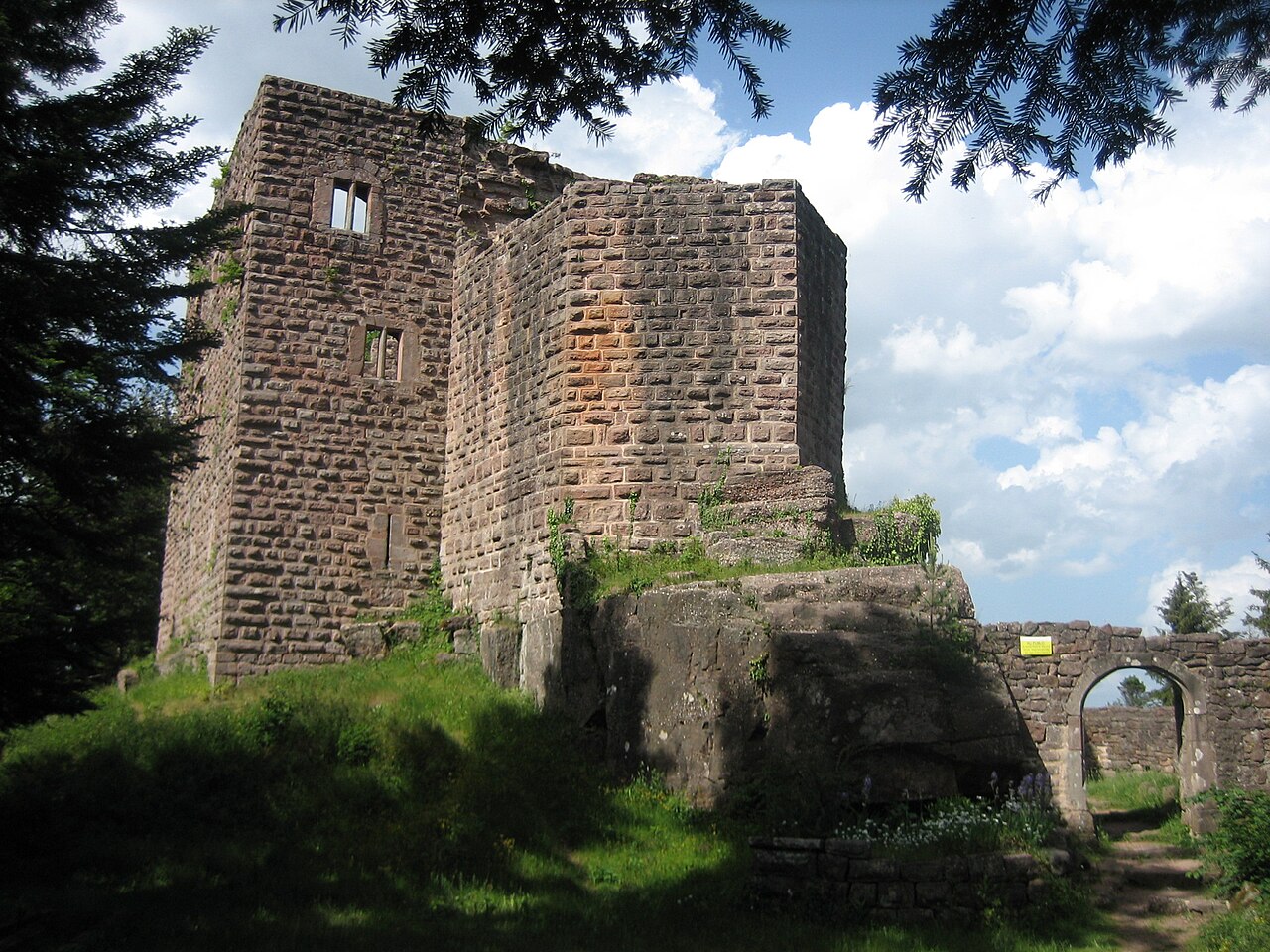
Dreistein Castle, also known as Château de Dreistein or Burg Dreistein, is a fascinating medieval ruin located in the commune of Ottrott in the Bas-Rhin department of France. Nestled on a rocky spur at an altitude of 628 meters on the western flank of Mont Sainte-Odile, this castle complex is a notable example of high medieval fortification architecture in the Hauts-de-France region, historically part of Northern Alsace and the Middle Vosges. The castle's name, meaning "three stones" in medieval German, aptly describes its unique structure comprising three separate castles built upon adjacent rocky outcrops.
Strategic location and historical context
Dreistein Castle occupies a commanding position overlooking the valley of the Ehn, controlling key routes alongside neighboring fortresses such as Koepfel, Rathsamhausen, Lutzelbourg, and the Château du Hagelschloss. Its proximity to the mysterious Pagan Wall of Mont Sainte-Odile highlights the castle's integration into a broader defensive network designed to monitor and secure the region. The castle's location on a rocky outcrop separated from the mountain slope by a deep ditch cut into the rock demonstrates typical medieval defensive ingenuity, enhancing its natural fortifications.
Architectural composition and layout
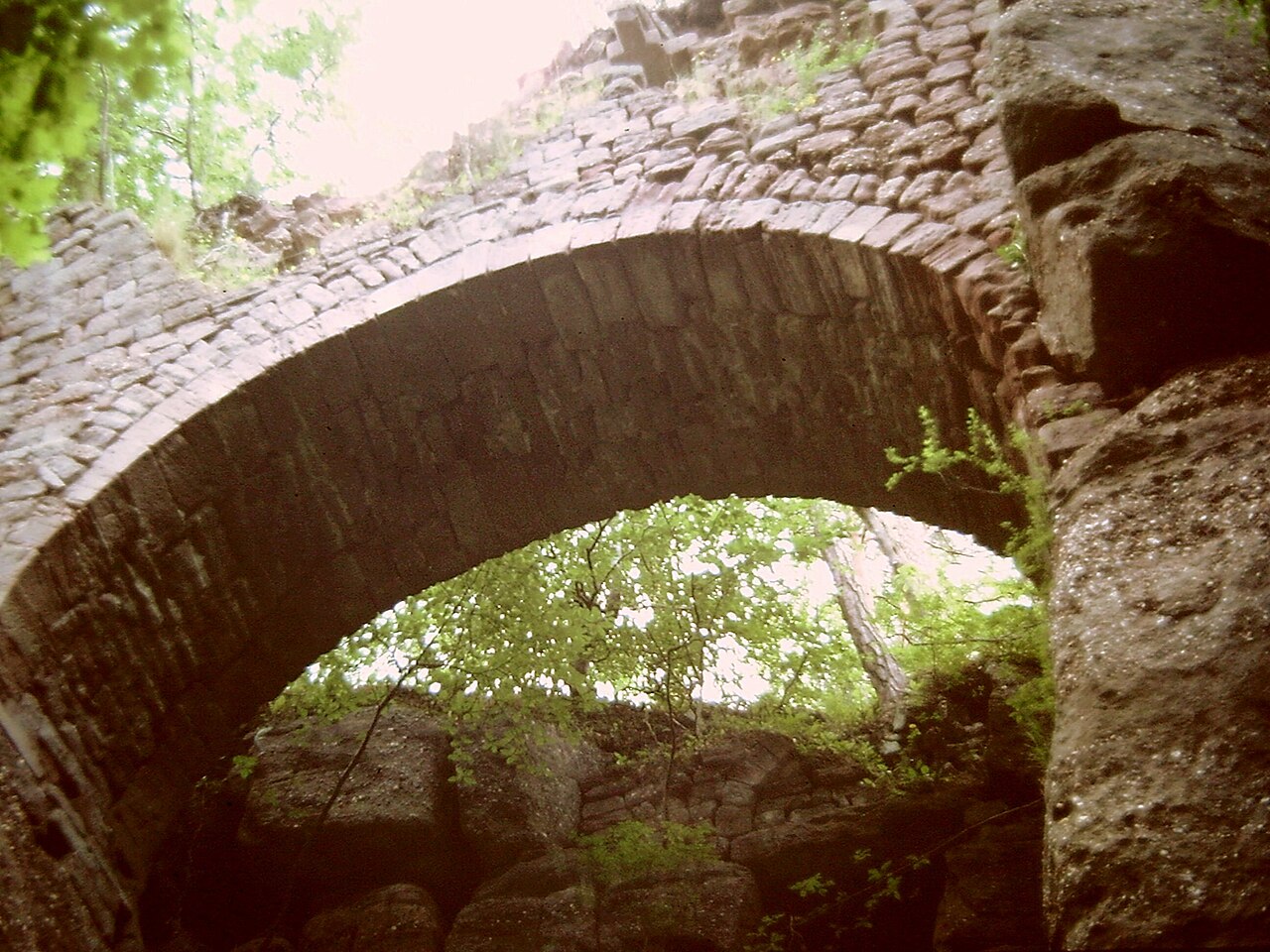
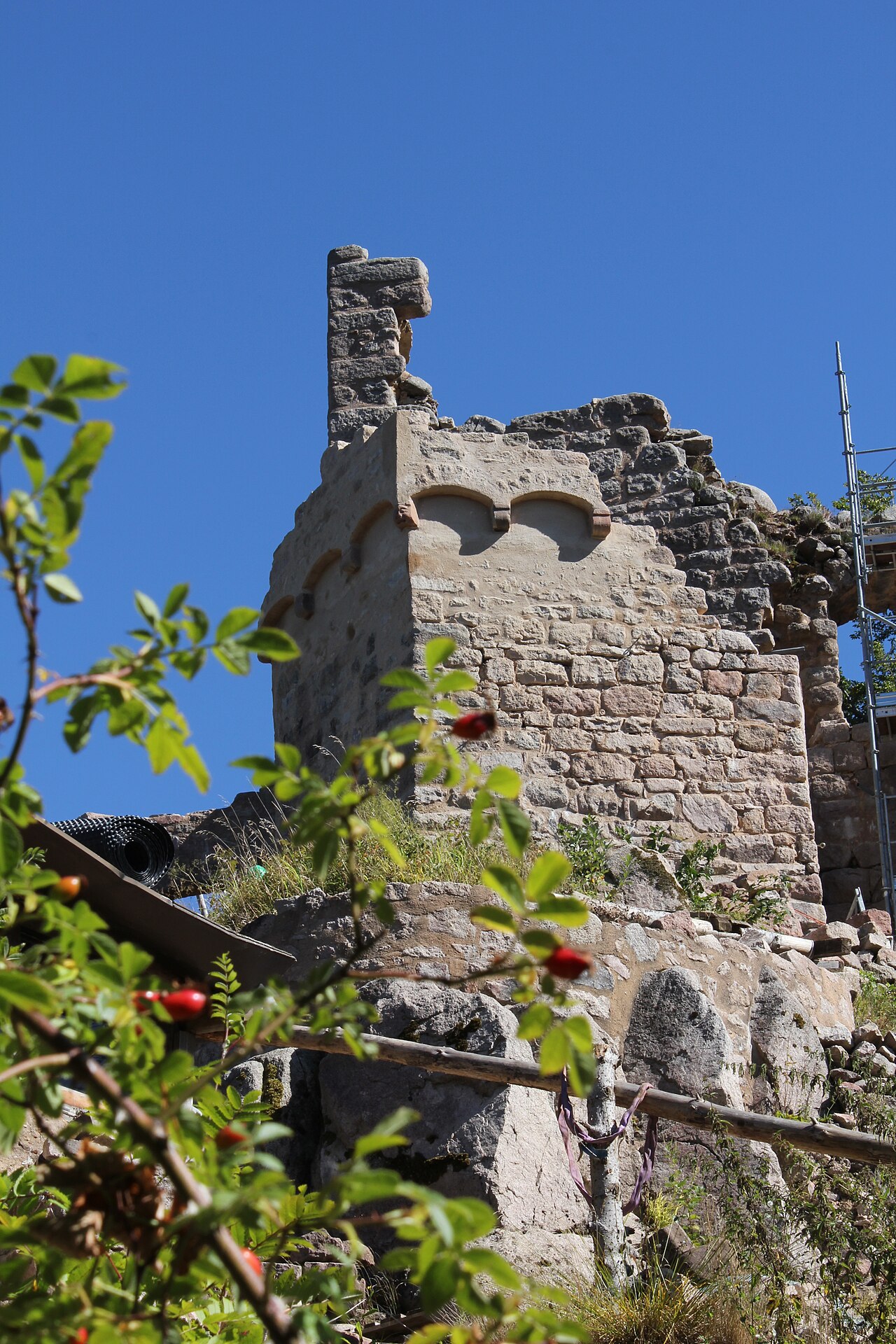
The castle complex is divided into three main sections, each occupying distinct rocky promontories. The westernmost section, Grand-Dreistein or Westburg, appears as two separate castles divided by a blind wall and a tower, contributing to the "three stones" epithet. This section retains impressive remains including multi-story residential buildings, massive eastern shield walls with no openings, and a round tower featuring a spiral staircase leading to a former domed upper floor. The tower once supported wooden oriels and latrine facilities, showcasing advanced medieval architectural features.
Adjacent to Grand-Dreistein lies Mittelburg, connected by a small courtyard. This 13th-century section features a high shield wall faced with bossage stones bearing numerous mason's marks, indicative of skilled craftsmanship. The two-level layout includes remnants of residential quarters and defensive oriel structures with latrines, emphasizing the castle's dual residential and military functions.
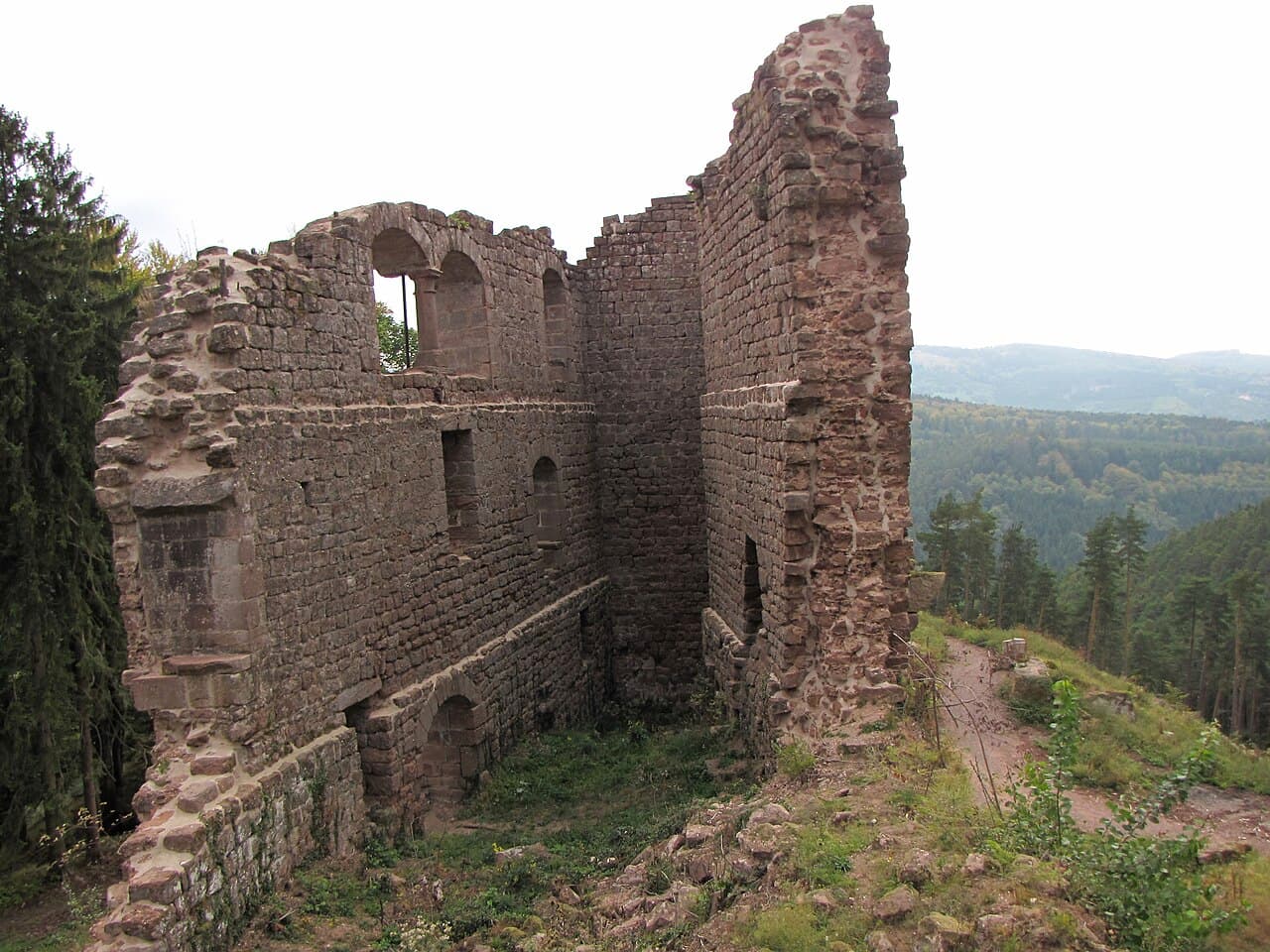
Further east is Petit-Dreistein or Ostburg, a slender three-story residential building with a notably thick west wall designed for defense. The interior includes a great hall with pointed arch niches and trefoil ornamentation, fireplaces on multiple floors, and latrine facilities. A partly rounded bergfried or keep once stood here, its foundations still visible despite probable destruction. Access to this section was originally from the south, guarded by a now mostly vanished lower castle, and includes a deep cistern with a well-preserved water shaft reflecting sophisticated water management.
Historical development and ownership
The origins of Dreistein Castle are uncertain, but architectural analysis places its construction in the 13th century. It is believed to have been commissioned by the Lords of Rathsamhausen under the auspices of the Bishop of Strasbourg to protect the nearby Hohenburg Abbey. The first documented mention of the castle dates to 1442, with records from 1432 referring to it as "schloss zu den drey Steinen." The castle was granted as a fief by Emperor Frederick III in 1435, a status reaffirmed by Emperor Charles V in 1550, linking it firmly within the Holy Roman Empire's feudal system.
By the early 15th century, the eastern section, Ostburg, may have been abandoned, indicating a gradual decline. The entire complex was likely deserted during the 16th century and was recorded as a ruin by the time of the Thirty Years' War in the 17th century. Despite its ruined state, ownership remained with the von Rathsamhausen family until the French Revolution, when it was confiscated and sold to private individuals.
Conservation and current status
During the 19th century, efforts were made to stabilize the ruins, including the reconstruction of a door frame dated 1866. Recognizing its historical and cultural significance, French authorities designated the castle ruins as a protected historic monument in March 1990. Today, the castle remains privately owned but is freely accessible to visitors willing to undertake a 45-minute hike from the nearest road. The site is maintained by the Vosges Club, which has laid out paths to facilitate access.
Architectural significance and materials
The castle's construction prominently features pink sandstone quarried locally from the Vosges mountains, a characteristic material of regional medieval architecture. The builders ingeniously incorporated blocks from the nearby ancient Pagan Wall into the castle's fabric. The castle's layout, with multiple ditches and separated rocky outcrops, exemplifies medieval defensive design adapted to the natural terrain.
The surviving walls and towers, reaching heights of up to twelve meters in places, reveal a complex interplay of residential comfort and military necessity. Features such as spiral staircases, vaulted stone seats with mason's marks, latrines integrated into oriel towers, and defensive bergfrieds illustrate the castle's sophistication.
Exploring dreistein castle today
Visitors to Dreistein Castle can explore the evocative ruins that tell a story of medieval power, architectural ingenuity, and regional history. The castle's three distinct sections offer a unique opportunity to study medieval fortification strategies and residential arrangements within a single complex. The panoramic views from the rocky outcrops provide stunning vistas of the surrounding Vosges landscape and the Ehn valley.
Access is exclusively on foot, with well-marked hiking trails managed by the Vosges Club guiding visitors through the forested terrain. The site is ideal for enthusiasts of medieval history, architecture, and nature, combining cultural heritage with outdoor adventure.
Frequently asked questions (FAQ)
- How do I get to Dreistein Castle?
- Dreistein Castle is accessible only on foot via hiking trails managed by the Vosges Club. Visitors should prepare for a 45-minute hike from the nearest road through forested terrain.
- What is the historical significance of Dreistein Castle?
- Dreistein Castle was built in the 13th century to protect the Hohenburg Abbey and control the Ehn valley. It was part of a strategic network of castles under the Holy Roman Empire's feudal system.
- Can I explore all three sections of the castle?
- Yes, the castle consists of three distinct sections on rocky outcrops, all accessible to visitors. Each section offers unique architectural features and panoramic views.
- When was Dreistein Castle built and by whom?
- The castle was constructed in the 13th century, likely by the Lords of Rathsamhausen under the Bishop of Strasbourg to defend Hohenburg Abbey.
- Is there an entrance fee to visit Dreistein Castle?
- There is no entrance fee; the castle ruins are freely accessible to the public.
- What materials were used in the construction of Dreistein Castle?
- The castle was built primarily from pink sandstone quarried locally from the Vosges mountains, incorporating blocks from the nearby Pagan Wall.
Photo gallery

Information
Sources & official resources
Verify the information above using these authoritative references.
Loading map...
Visitor reviews
No reviews yet. Been here? Write the first review and help other travelers!
Write the first reviewVisited this castle? Share your experience
Your review helps other travelers and adds first-hand knowledge to our encyclopedia.