Château du Hagelschloss
The Château du Hagelschloss, also referred to as Château de Waldsberg, is a 13th-century medieval castle ruin located in the commune of Ottrott within the Bas-Rhin département of France. This high medieval fortress was strategically positioned to dominate the Hagelthal valley, a factor that likely inspired its name, "Hagelschloss," which translates roughly to "hail castle" in German, reflecting both its commanding location and the region's linguistic heritage.
Constructed during the high medieval period, the castle's remains today stand as archaeological ruins that provide insight into the defensive architecture typical of the 13th century in the Alsace region. Although the castle is mentioned in historical documents from the 19th century under the name Waldberg, it has not been granted official protection as a monument historique by the French Ministry of Culture, despite its recognized cultural significance.
Historical context and significance
The Château du Hagelschloss was built during a period of territorial consolidation and feudal conflicts in the Alsace region. The 13th century saw many castles erected to secure trade routes and assert noble control over valleys and passes. Its location in the Hagelthal valley was a tactical choice, providing surveillance over the surrounding landscape and control of movement along the valley floor.
While detailed records of the castle's ownership and history are limited, the alternative name Château de Waldsberg suggests a connection to local noble families or territorial lords who may have used the castle as a stronghold or administrative center. The castle's decline and eventual ruin likely resulted from changing military technologies and shifting political landscapes over the subsequent centuries.
Architectural features and layout
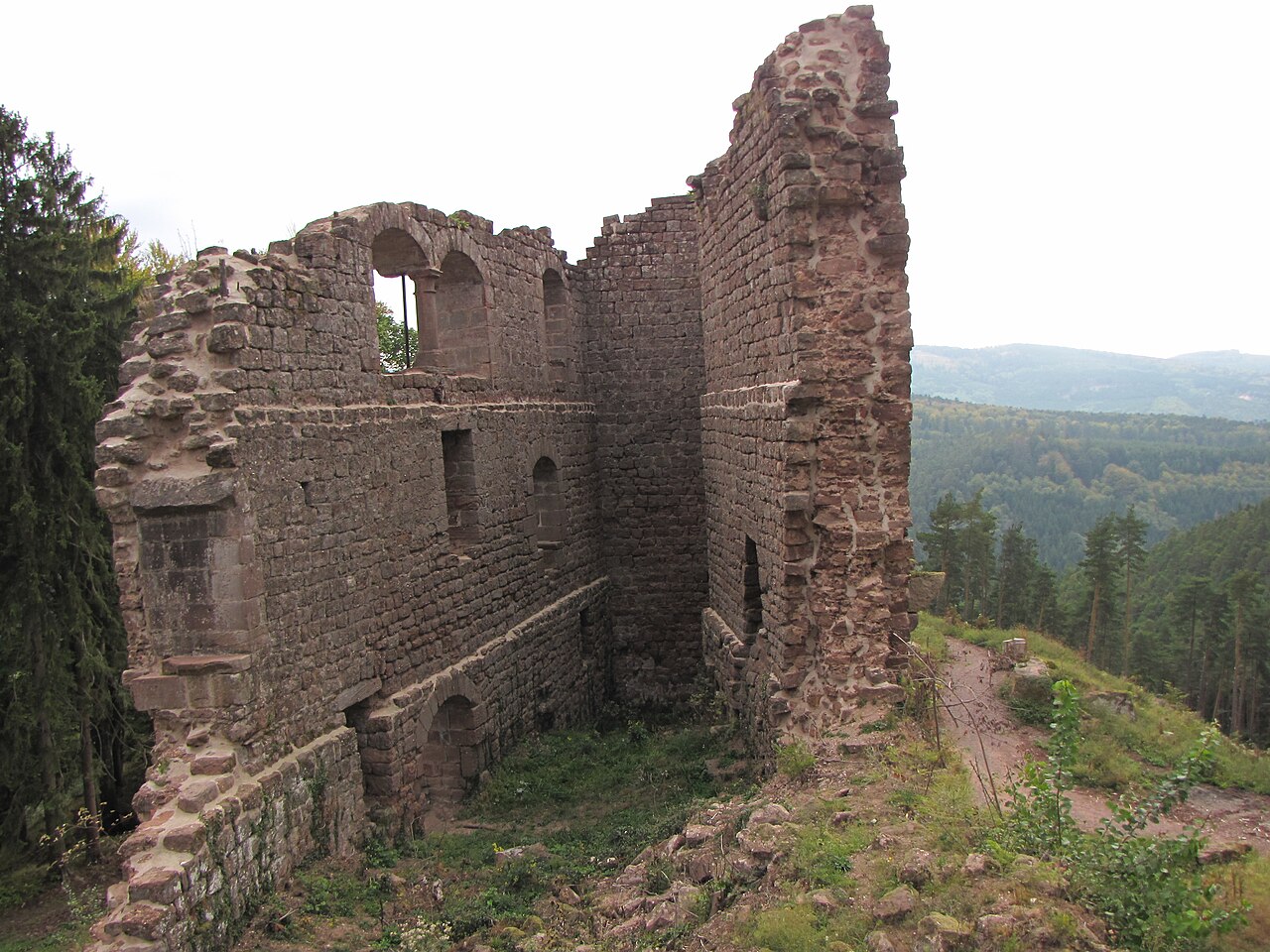
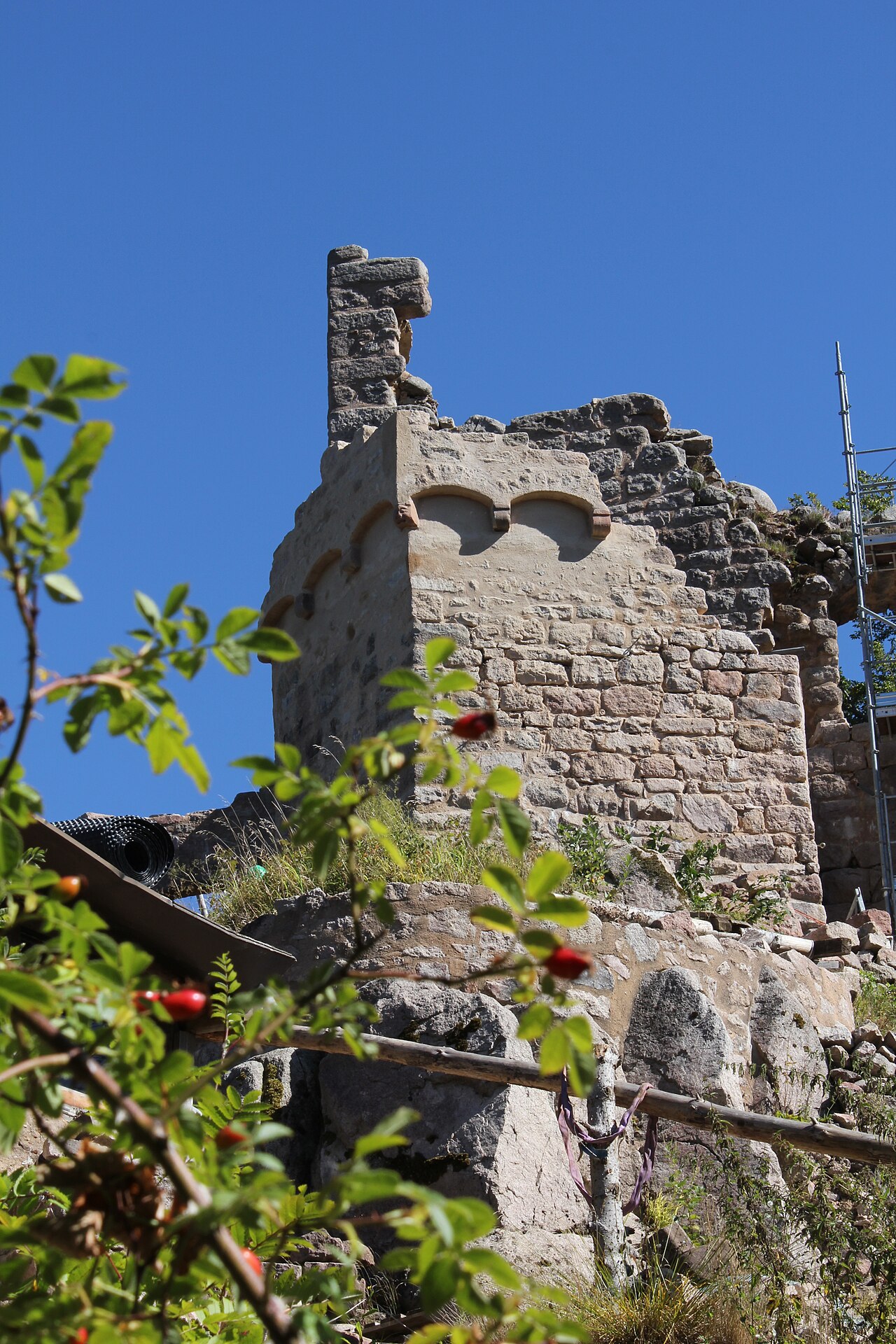
Although only ruins remain, the Château du Hagelschloss exhibits typical characteristics of high medieval military architecture. The castle was presumably constructed using local stone, featuring defensive walls and a keep or donjon that would have served as the last line of defense. The elevated position on a rocky outcrop above the valley would have enhanced its defensive capabilities.
Remnants of curtain walls and foundations indicate a compact layout adapted to the terrain, with possible towers at strategic points to oversee the approaches. The castle's design reflects the practical needs of fortification during the 13th century, focusing on defense rather than residential comfort or aesthetic embellishment.
Defensive structures
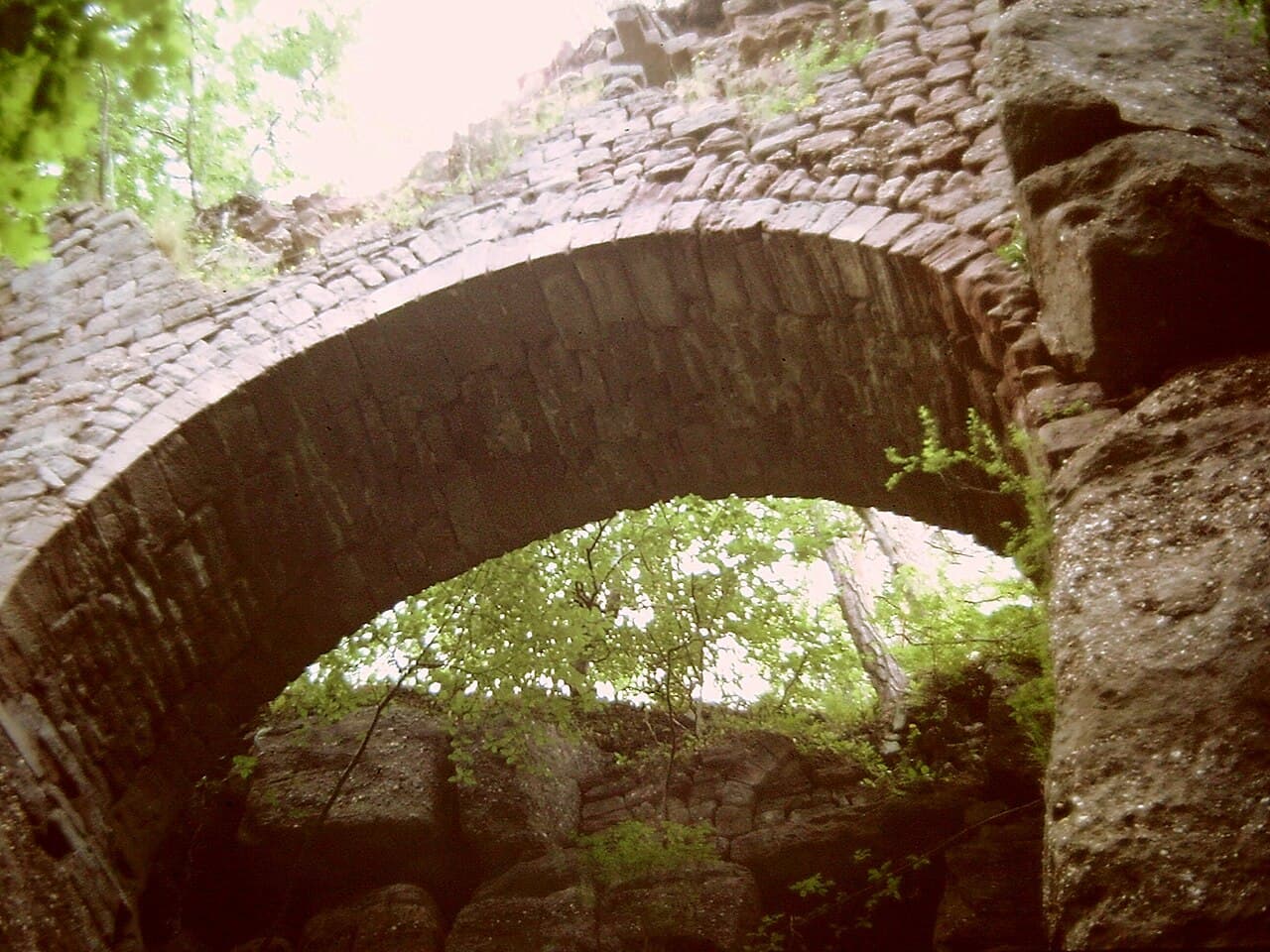
The surviving ruins suggest the presence of a fortified gatehouse, battlements, and possibly a moat or ditch, which were common features in castles of this period. These elements would have been essential for repelling attackers and controlling access.
Living quarters and functional spaces
Within the castle walls, there would have been a great hall for gatherings, storage rooms, and living quarters for the lord and his retainers. While no detailed interior remains are visible today, archaeological studies of similar castles provide clues to the likely arrangement of these spaces.
Preservation and current condition
Today, the Château du Hagelschloss is classified as ruins and is considered an archaeological site. The structure is in a poor state of preservation, with only partial remnants of walls and foundations visible. Despite its historical importance, the castle has not been officially protected under French heritage laws, which leaves it vulnerable to natural decay and human impact.
The site attracts visitors interested in medieval history and archaeology, although facilities and interpretive information may be limited. Efforts to study and preserve the ruins are important for understanding the region's medieval past and the evolution of castle architecture in Alsace.
Visiting the château du Hagelschloss
The castle ruins are accessible to the public, typically requiring a hike or walk through the surrounding forested hills of Ottrott. Visitors should be prepared for uneven terrain and limited signage. The best time to visit is during the warmer months when the weather is favorable for outdoor exploration.
Nearby attractions include other medieval castles and natural landmarks in the Bas-Rhin region, making the area a rich destination for history enthusiasts and hikers alike.
Frequently asked questions (FAQ)
- What is the historical significance of Château du Hagelschloss?
- Château du Hagelschloss was built in the 13th century to control the strategic Hagelthal valley, serving as a medieval fortress in the Alsace region. Its ruins reflect the military architecture and feudal power structures of the high medieval period.
- Can I visit the Château du Hagelschloss ruins?
- Yes, the ruins are accessible to the public, though the site involves walking through uneven, forested terrain. Visitors should wear appropriate footwear and be prepared for limited facilities on site.
- Why is the castle also known as Château de Waldsberg?
- The name Château de Waldsberg appears in 19th-century documents and likely reflects historical ownership or local naming conventions. It is an alternate name for Château du Hagelschloss used in some historical records.
- What architectural features remain at Château du Hagelschloss?
- The castle ruins include remnants of defensive walls, foundations, and possibly a gatehouse or towers typical of 13th-century military architecture. However, much of the structure has deteriorated over time.
- Is Château du Hagelschloss protected as a historic monument?
- No, the castle is not officially protected as a monument historique by the French Ministry of Culture, despite its recognized cultural and historical importance.
Photo gallery

Information
Loading map...
Visitor reviews
No reviews yet. Been here? Write the first review and help other travelers!
Write the first reviewVisited this castle? Share your experience
Your review helps other travelers and adds first-hand knowledge to our encyclopedia.