Kacenstajn Castle
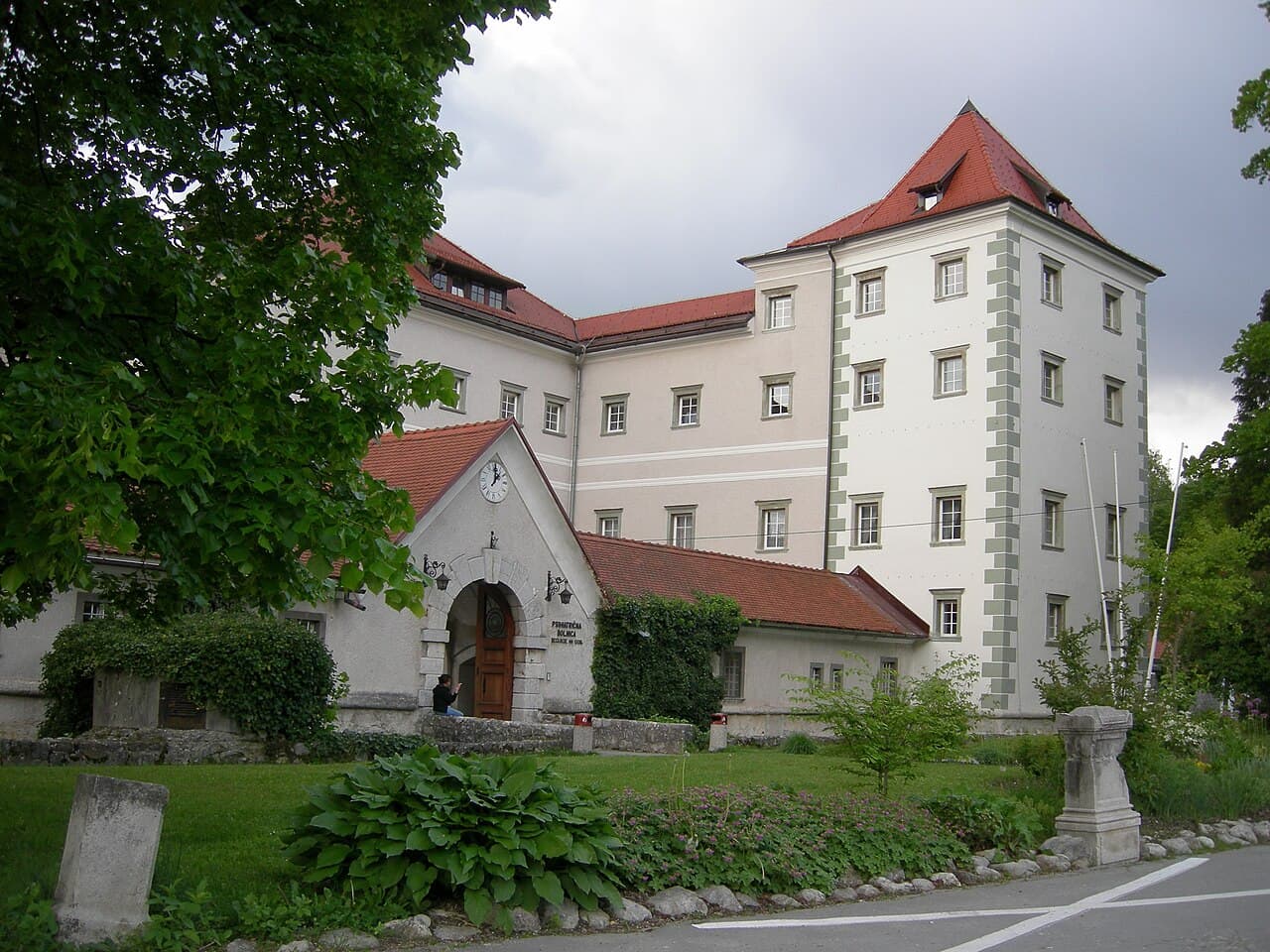
Kacenstajn Castle, located in the village of Begunje in the Upper Carniola region of Slovenia, is a significant hill castle with a rich architectural and historical legacy. First mentioned in 1428, this castle has witnessed numerous transformations that reflect the evolving styles and turbulent history of the region. It stands alongside St. Ursula's Church as the historical heart of Begunje.
Historical background and ownership
The earliest documentary evidence of Kacenstajn Castle dates back to the early 15th century, specifically 1428. Originally owned by the noble house of Katzen, locally known as the Kacijanarji, the castle underwent significant rebuilding in the 16th century. This period marked the transition from medieval fortification to a more residential manor, reflecting broader architectural trends of the Renaissance era.
In the 17th century, the castle took on its final form when the Counts of Lamberg relocated here from nearby Kamen Castle. Their influence is evident in the castle's expanded wings and the incorporation of Baroque elements, which were popular among the European nobility at the time.
Architectural evolution and features
Medieval core and Gothic remnants
The castle's original two-story core survives within later additions, preserving fragments of its Gothic architecture. These remnants provide valuable insight into the castle's medieval defensive and residential functions, including thick stone walls and narrow window openings typical of the period.
Renaissance and Baroque transformations
The majority of the visible structure today dates from extensive Renaissance and Baroque rebuildings. The Renaissance influence is seen in the castle's more symmetrical layout and the incorporation of larger windows, which allowed more light into the living spaces. The Baroque period added decorative flourishes and expanded wings, notably the southeast wing added in the 19th century, which enhanced the castle's grandeur and residential comfort.
Castle grounds and gardens
The castle grounds originally featured a formal Baroque garden, elements of which remain visible despite the current use of the land as a vegetable garden. A notable feature is the 140-meter avenue lined with mature chestnut trees, which leads to the manor and emphasizes the estate's stately presence.
20th-century history and wartime significance
Before the outbreak of the Second World War, the manor served as a women's penitentiary operated by the Sisters of St. Vincent de Paul. This use reflected the castle's adaptation to social needs beyond its aristocratic origins.
In 1940, a pavilion was constructed in the park based on designs by the renowned Slovenian architect Jože Plečnik. This addition is a rare example of modern architectural intervention within the historic castle grounds.
During the war, Kacenstajn Castle was seized by the Gestapo and converted into a prison. Over 11,500 prisoners passed through its walls, many subjected to harsh conditions. The castle grounds contain a mass grave where the majority of the 849 detainees murdered there were buried, marking the site as a place of somber remembrance.
Current use and cultural heritage
Today, part of the castle houses the Hostage Museum, which documents the castle's grim history during World War II and serves as a memorial to the victims. The remainder of the castle functions as a psychiatric hospital, demonstrating the continued adaptation of the historic structure to contemporary needs.
Kacenstajn Castle remains a vital cultural landmark in Slovenia, combining architectural elements from the Late Medieval, Renaissance, and Baroque periods with a poignant modern history. Its preservation allows visitors to explore both its artistic heritage and its role in 20th-century European history.
Frequently asked questions (FAQ)
- How do I get to Kacenstajn Castle?
- Kacenstajn Castle is located in Begunje, Slovenia, and can be reached by car or public transport. The nearest major city is Ljubljana, which is approximately 30 kilometers away. Local buses and taxis are available for visitors who prefer not to drive.
- What is the historical significance of Kacenstajn Castle?
- Kacenstajn Castle dates back to the 12th century and is an important example of medieval architecture in Slovenia. It has served various purposes throughout its history, including as a fortress and a noble residence. The castle is a testament to the region's rich cultural heritage and offers insights into the historical events that shaped Slovenia.
- When was Kacenstajn Castle built?
- Construction of Kacenstajn Castle began in the 12th century, making it one of the oldest castles in Slovenia. Over the centuries, it has undergone several renovations and expansions, reflecting various architectural styles. The castle's long history is evident in its well-preserved structures and design.
- Can I visit Kacenstajn Castle?
- Yes, Kacenstajn Castle is open to visitors, and guided tours are available to help you explore its rich history and architecture. The tours provide an in-depth look at the castle's features and the stories of its past inhabitants. Advance booking is recommended, especially during peak tourist seasons.
- Why is Kacenstajn Castle a popular tourist attraction?
- Kacenstajn Castle attracts visitors due to its stunning architecture, panoramic views of the surrounding landscape, and fascinating history. Many tourists appreciate the opportunity to explore a well-preserved medieval castle and learn about its significance in Slovenian history. Additionally, the castle hosts various cultural events and exhibitions throughout the year.
- Is it possible to host events at Kacenstajn Castle?
- Yes, Kacenstajn Castle offers facilities for hosting private events, including weddings and corporate gatherings. The enchanting setting of the castle provides a unique backdrop for any special occasion. Interested parties should contact the castle management for more details on availability and arrangements.
- What are the opening hours for Kacenstajn Castle?
- Kacenstajn Castle is generally open from 10 AM to 6 PM during the tourist season, which typically runs from April to October. In the off-peak season, opening hours may vary, so it is advisable to check the official website or contact the castle directly for the most current information.
- What are the ticket prices for visiting Kacenstajn Castle?
- Ticket prices for Kacenstajn Castle are quite reasonable, making it accessible to a wide range of visitors. Adult tickets typically cost around 10 EUR, while reduced prices are available for children, students, and seniors. Family packages and group rates may also be offered, so be sure to inquire at the ticket office.
- What nearby attractions can I visit while in Begunje?
- While visiting Kacenstajn Castle, you can also explore other nearby attractions such as the charming village of Begunje, the beautiful Lake Bled, and the historic town of Radovljica. Each of these locations offers its own unique experiences and is easily accessible from the castle. Whether you're interested in nature, history, or local cuisine, there's plenty to discover in the area.
Photo gallery

Information
Loading map...
Visitor reviews
No reviews yet. Been here? Write the first review and help other travelers!
Write the first reviewVisited this castle? Share your experience
Your review helps other travelers and adds first-hand knowledge to our encyclopedia.