Juromenha Fortress
Juromenha Fortress, locally known as Fortaleza de Juromenha, is a remarkable historic site located in the village of Juromenha in the Alentejo Central region of Portugal. This fortress uniquely combines elements from its medieval origins with significant 17th-century bastioned fortifications, reflecting centuries of military evolution on a strategic hill overlooking the Guadiana River. The site’s commanding position on the right bank of the river, overseeing a crucial crossing, has made it a focal point of defense and settlement since Celtiberian and Roman times.
Early history and strategic significance
The site of Juromenha Fortress has been continuously occupied due to its strategic location. Initially settled during the Celtiberian and Roman periods, the natural elevation provided control over the Guadiana River crossing, a vital route for trade and military movements. With the Muslim conquest of the Iberian Peninsula in the early 8th century, the area became part of the Umayyad Caliphate, serving as a forward defense post for the city of Badajoz under the Caliphate of Córdoba.
The fortress and its settlement played a significant role during the Christian Reconquista. In 1167, Christian forces led by Afonso I of Portugal captured Juromenha, appointing Geraldo Sem Pavor as governor. However, the site was retaken by the Almohad caliph Yaqub al-Mansur in 1191 and remained under Muslim control until 1242, when Portuguese forces under Paio Peres Correia secured it definitively.
Medieval fortification and royal patronage
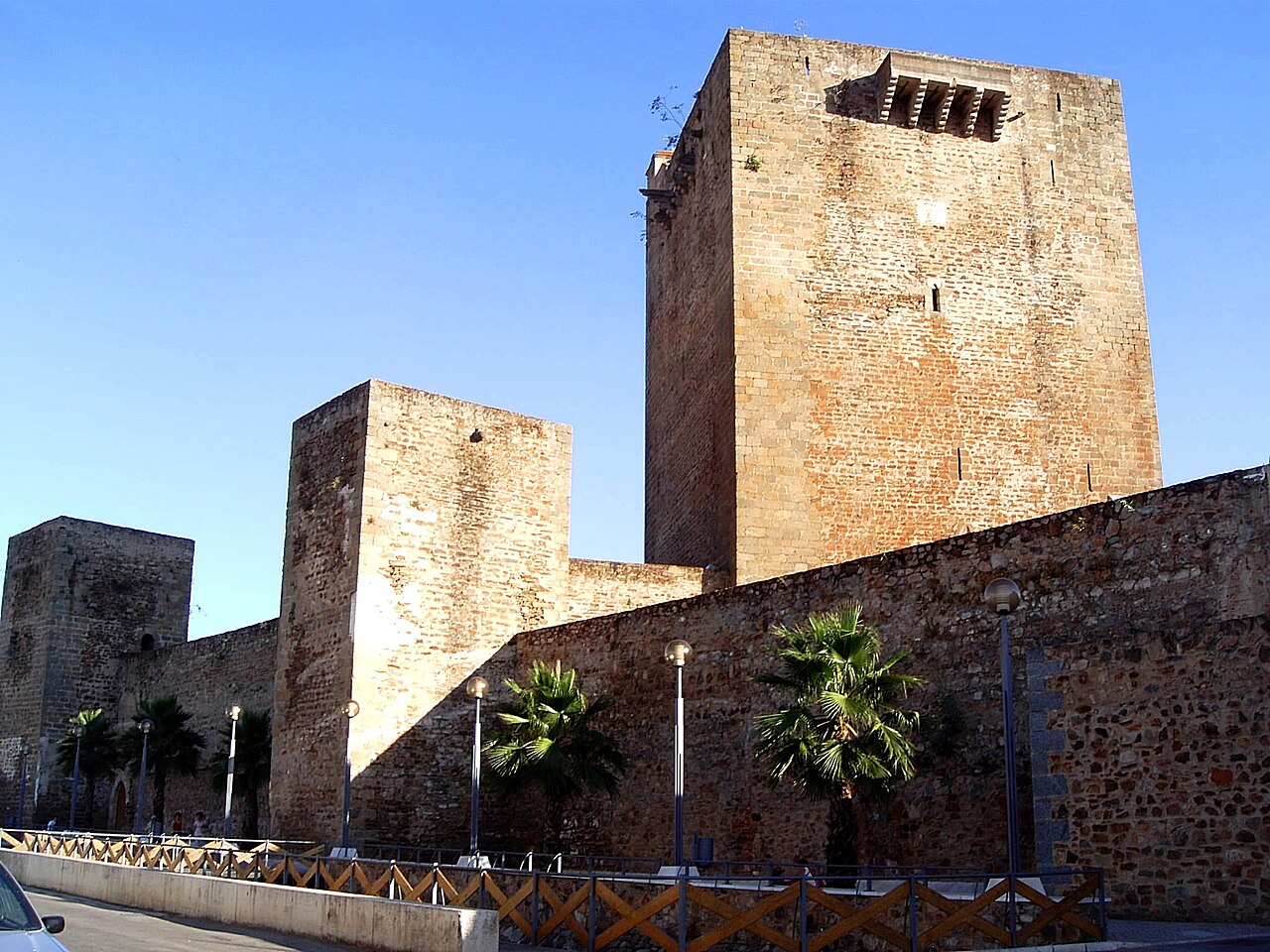
Following its permanent incorporation into the Kingdom of Portugal, King Dinis of Portugal granted Juromenha its first charter in 1312. He initiated substantial fortification works, reinforcing the castle with granite and slate masonry over the original rammed earth (taipa) walls. The medieval fortress featured sixteen quadrangular towers and a commanding 44-meter-high keep tower, which dominated the surrounding landscape and served as a symbol of royal authority.
The castle was not only a military stronghold but also a site of significant royal events. It hosted the weddings of King Afonso IV of Portugal with Beatriz of Castile and Alfonso XI of Castile with Maria of Portugal, underscoring its political and cultural importance. The settlement’s charter was reaffirmed in 1492 by King João II, maintaining Juromenha’s status within the kingdom. Around 1509, the fortress was depicted in the illustrations of Duarte de Armas, offering valuable visual documentation of its medieval configuration.
Adaptation to gunpowder warfare: the bastioned fortress
By the mid-17th century, the original medieval defenses of Juromenha were inadequate against the evolving threat of artillery. During the Portuguese Restoration War (1640-1668), the fortress was strategically vital as the Guadiana River had become the border between Portugal and Spain.
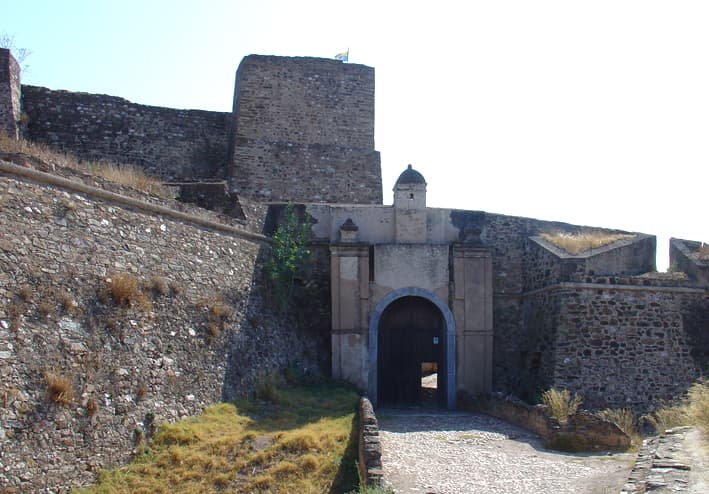
In 1644, three designs were proposed to modernize the fortress: an Italian plan by Pascoeli, a Dutch design by Jesuit engineer Cosmander, and a French plan by Nicolas de Langres. The French plan was adopted, leading to the construction of a bastioned fortification system characterized by polygonal walls, bastions, and ravelins designed to resist artillery attacks.
The fortress’s modernization was marred by tragedy in 1659 when a gunpowder magazine explosion destroyed large parts of the old castle and new bastioned structures, killing about 100 people. Despite this, the fortress remained a key military asset.
In 1662, the fortress was captured by Spanish forces led by Nicolas de Langres, who had defected to Spain. It was returned to Portugal in 1668 following the Treaty of Lisbon.
Later history and decline
The fortress suffered serious damage in the 1755 Lisbon earthquake, which necessitated repairs and the addition of a new bastion on the river side to protect the anchorage. During the War of the Oranges in 1801, the fortress was surrendered to Spanish troops without resistance but was reclaimed by Portugal in 1808.
Throughout the 19th century, Juromenha Fortress gradually lost its military significance and was ultimately abandoned in 1920. Conservation efforts began in the mid-20th century, with the Portuguese Directorate-General of National Buildings and Monuments undertaking repairs and stabilization from 1950 to 1996. The fortress has been classified as a Property of Public Interest since 1957.
Since 2021, a major restoration project has been underway, aiming to preserve the fortress’s three main defensive levels. Plans include converting part of the site into a hotel, although it remains closed to visitors during restoration.
Architectural features and remains
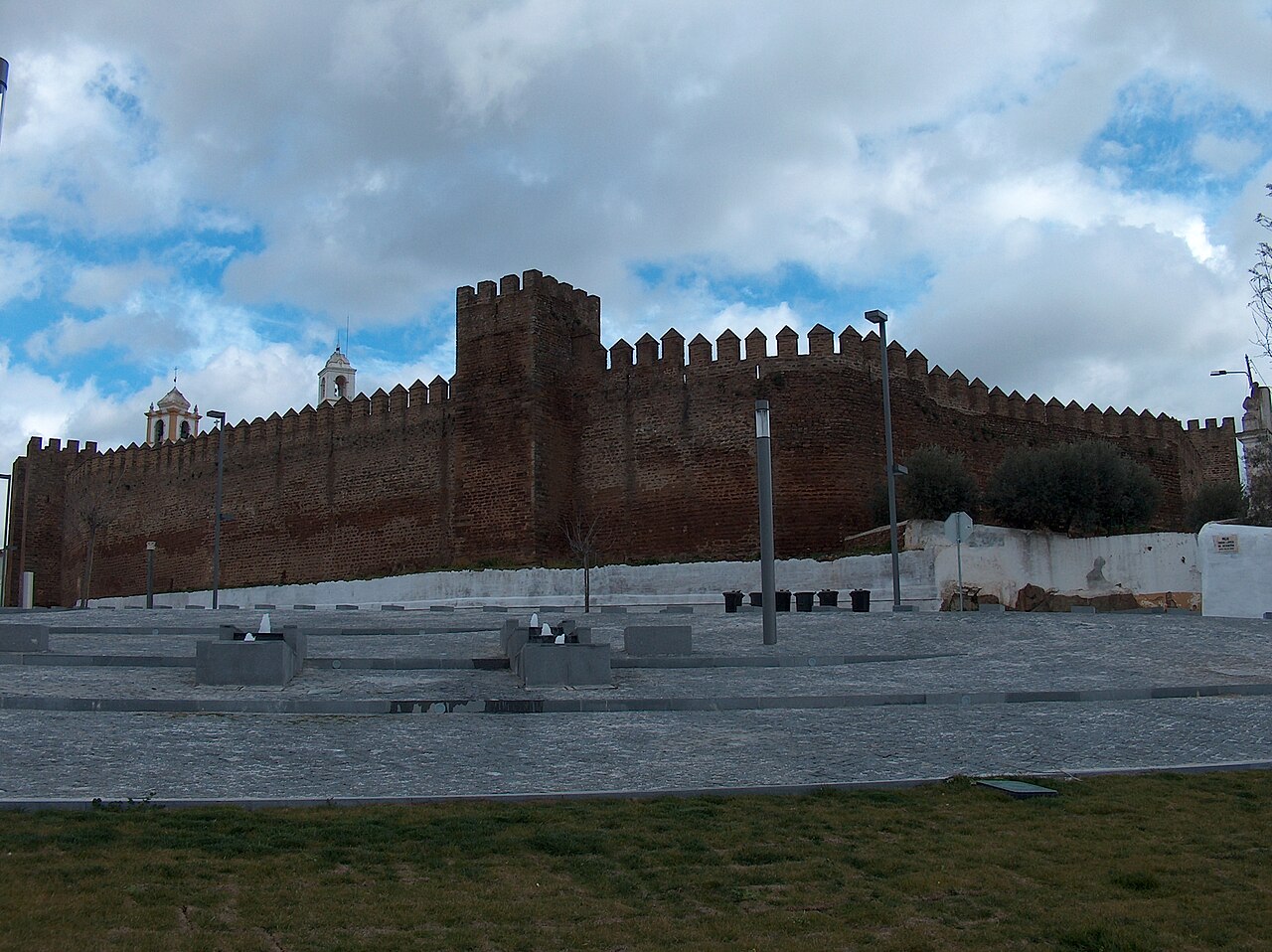
Juromenha Fortress presents a fascinating blend of medieval and early modern military architecture. Its layout is a complex polygonal form with two main defensive lines: an inner medieval circuit surrounding the keep tower and an outer bastioned line adapted for artillery defense.
The original medieval walls were constructed using the taipa technique, a method of compacting earth within wooden frames, later reinforced with granite and slate masonry. Remnants of the sixteen quadrangular towers and the impressive 44-meter keep tower survive, outlining the castle’s original footprint.
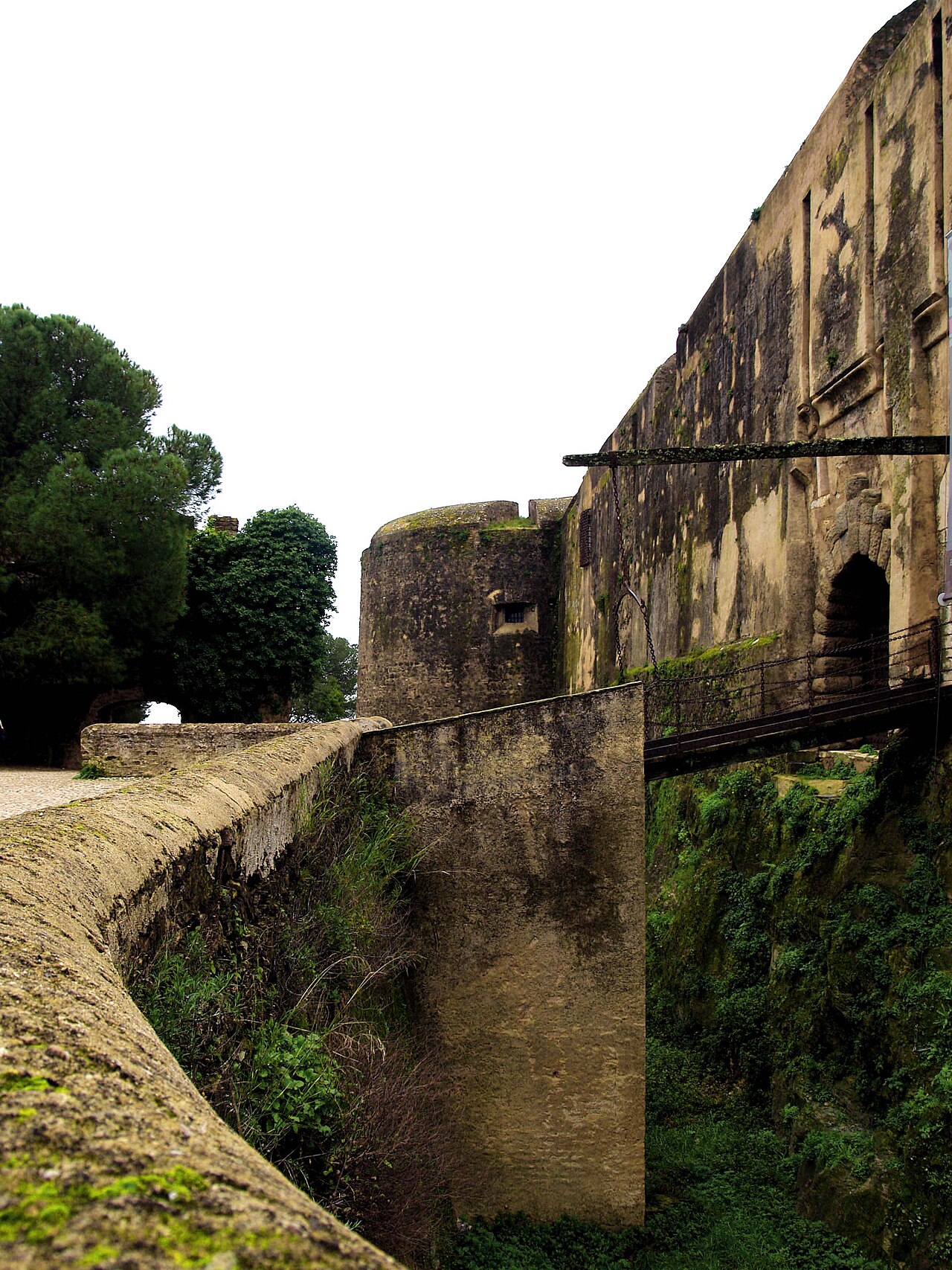
The bastioned fortress features typical elements such as bastions, ravelins, dry moats, and artillery embrasures (cannoniers), illustrating the adaptation to gunpowder warfare. These enhancements reflect the influence of the French military engineer Nicolas de Langres and the Vauban style of fortification.
Within the walls, important civic and religious buildings include the main parish church (Igreja Matriz), the Church of Mercy (Igreja da Misericórdia), and the former municipal palace (Paço do Concelho), which was largely destroyed in the 1659 explosion. A rectangular cistern remains as a testament to the fortress’s self-sufficiency during sieges.
Conservation and future prospects
Ongoing archaeological surveys have revealed the layered history of Juromenha Fortress, contributing valuable insights into its construction phases and military adaptations. The current restoration project, supported by substantial funding, aims to conserve and stabilize the fortress walls and defensive structures.
Plans to integrate parts of the fortress into a hotel facility promise to enhance public engagement with this important cultural heritage site while preserving its historical integrity.
Though currently closed to visitors, Juromenha Fortress remains a compelling destination for those interested in medieval and early modern military architecture, Portuguese history, and borderland heritage.
Frequently asked questions (FAQ)
- What is the historical significance of Juromenha Fortress?
- Juromenha Fortress, built in the 16th century, played a crucial role in the defense of the region against invasions. Its strategic location near the border with Spain made it an important military site during various conflicts, particularly in the Iberian Wars. Today, it stands as a testament to Portuguese military architecture and history.
- When is the best time to visit Juromenha Fortress?
- The best time to visit Juromenha Fortress is during the spring and fall months, when the weather is mild and pleasant. This allows for a comfortable exploration of the fortress and its stunning views over the surrounding landscape. Summer can be quite hot, while winter may bring rain, so planning your visit during these shoulder seasons is ideal.
- Can I access Juromenha Fortress with a wheelchair?
- Juromenha Fortress has some accessibility features, but due to its historical architecture and terrain, certain areas may not be fully wheelchair accessible. Visitors should be prepared for uneven surfaces and steps. It is advisable to contact local tourist information for the latest accessibility updates before your visit.
- What are the opening hours for Juromenha Fortress?
- Juromenha Fortress is generally open to visitors from 9 AM to 6 PM, though hours may vary depending on the season. It's recommended to check their official website or contact local tourist information for the most accurate and up-to-date opening times before your visit. Special events may also affect regular hours.
- Is there an entrance fee to visit Juromenha Fortress?
- Yes, there is a small entrance fee to visit Juromenha Fortress, which helps support its maintenance and preservation. The ticket prices are typically affordable, making it accessible for most visitors. Discounts may be available for students, seniors, and groups, so be sure to inquire about any potential savings.
- What nearby attractions can I visit while at Juromenha Fortress?
- While visiting Juromenha Fortress, you can explore the charming village of Juromenha and enjoy the scenic views of the Guadiana River. Nearby, the historic town of Elvas, known for its well-preserved fortifications, is also worth a visit. The area is rich in cultural and historical sites, making it a perfect stop for a full day of exploration.
- How do I get to Juromenha Fortress?
- Juromenha Fortress is accessible by car, located just a short drive from the main roads connecting major cities in Portugal. There are also public transport options available, including buses from nearby towns. Consider using a GPS or map application for the most convenient route to the fortress.
- Why is Juromenha Fortress a popular destination for tourists?
- Juromenha Fortress attracts tourists due to its unique historical significance and stunning architectural features. Visitors are drawn to its panoramic views and the chance to explore a well-preserved piece of Portugal's military history. The tranquil setting and opportunity for photography also enhance its appeal as a must-visit destination.
Photo gallery

Photo by Aneves•Public domain
Information
Address
R. do Miradouro de São Lazaro, Portugal
Loading map...
Visitor reviews
No reviews yet. Been here? Write the first review and help other travelers!
Write the first reviewVisited this castle? Share your experience
Your review helps other travelers and adds first-hand knowledge to our encyclopedia.