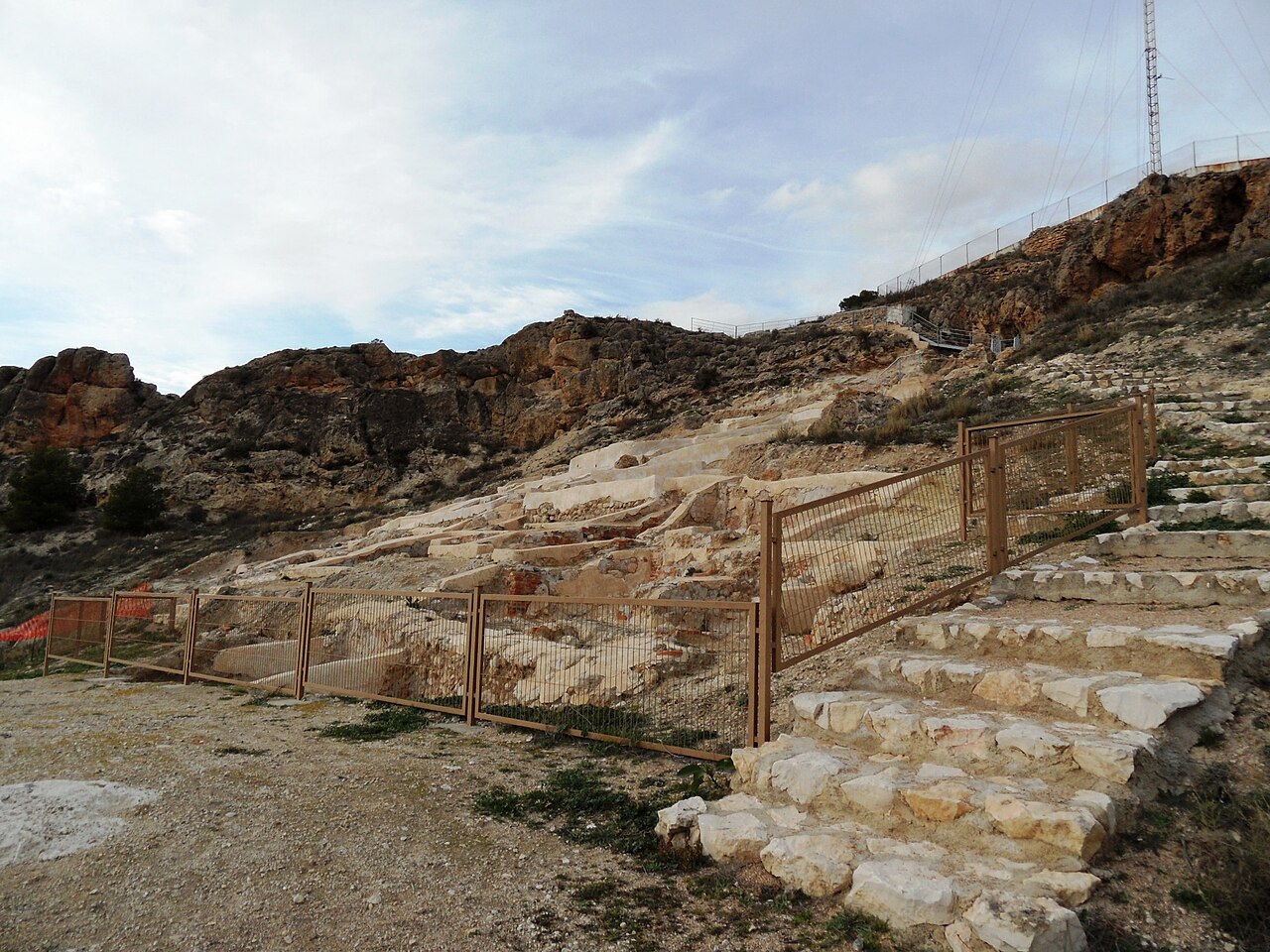
Jumilla Castle
Jumilla Castle, locally known as Castillo de Jumilla, is a commanding hilltop fortress situated above the town of Jumilla in the province of Murcia, Spain. This historic castle stands at an elevation of 626 meters above sea level, occupying a strategic position that has attracted human settlement and fortification for millennia. Its layered history reflects a remarkable succession of cultural influences, from the Bronze Age through the Iberian and Roman periods, followed by Islamic occupation, and culminating in its late medieval reconstruction.
The site of Jumilla Castle has been inhabited since the Bronze Age, when the earliest fortifications were established to protect local communities. These initial defenses laid the foundation for subsequent settlements. During the Iberian period, the hill was developed into a significant fortified settlement, demonstrating the area's long-standing strategic importance. The arrival of the Romans further enhanced the site's military value, as they incorporated it into their defensive network. Archaeological excavations have revealed remnants of Roman walls and fine sigillata pottery dating from the 1st century AD, underscoring the continued use and significance of the location during Roman times.
The Islamic fortress and early medieval history
In 713 AD, the region fell under Muslim control during the early Islamic expansion into the Iberian Peninsula. The Arabs constructed a fortress known as Yumilla on the ruins of the earlier Roman and Iberian structures. This fortress formed the core of the medieval castle and was built using the foundations of ancient stonework, although the initial Muslim construction utilized less durable materials. The Islamic occupation of the site lasted for nearly five centuries, during which the fortress played a key role in regional defense and administration.
Following the Treaty of Alcaraz in 1243, the castle and its surrounding territory were incorporated into the Crown of Castile, marking the end of Muslim rule in the area. This transition was symbolic of the broader Reconquista efforts across Spain. In the wake of the Christian conquest, King Alfonso X of Castile gifted the town with an image of the Virgin of Grace, leading to the construction of a hermitage on the site of the former mosque. Though now in ruins, this hermitage represents the religious and cultural transformation of the castle complex.
Political shifts and military conflicts in the late medieval period
The political landscape of the region was complex and volatile during the 13th and 14th centuries. Around 1290, Jumilla passed to the Kingdom of Aragon, and further territorial adjustments in 1304 assigned the castle to the Kingdom of Valencia. The fortress became a contested site during the War of the Two Peters (1356–1375), a conflict between Castile and Aragon.
On April 27, 1358, Pedro I of Castile captured Jumilla Castle, an event commemorated by the introduction of the town's coat of arms, which remains in use today. The castle changed hands multiple times during this turbulent period, reflecting the shifting allegiances and power struggles between Castilian and Aragonese forces. Notably, Ferdinand of Aragon and Fadrique Alonso, Lord of Haro, played pivotal roles in the castle's military history, each controlling the fortress at different times.
Reconstruction under the marquis of Villena
The castle underwent a significant transformation in 1461 under the direction of Juan Pacheco, Marquess of Villena and Master of the Order of Santiago. This reconstruction reshaped Jumilla Castle into the imposing fortress seen today. The renovation included the addition of multiple floors, a basement, and an upper terrace, enhancing both its defensive capabilities and residential functions.
Architecturally, the castle exhibits characteristics of the Gothic style prevalent in late medieval Spain. The fortress features robust stone walls, battlements, and towers designed to withstand siege warfare. The marquis’s coat of arms was prominently displayed on the castle, symbolizing his authority and the castle's importance as a military and administrative center.
Architectural features and archaeological remains
Jumilla Castle's complex structure integrates elements from various historical periods, making it a valuable site for archaeological and architectural study. The fortress comprises three main stories, a cellar, and an upper terrace dating from the 15th-century remodeling. Portions of the original Roman defensive walls remain visible, constructed from stone and mortar and demonstrating the long-term strategic use of the location.
Excavations have uncovered numerous artifacts, including fragments of Roman sigillata pottery, which provide insight into the daily life and military presence during Roman times. The ruins of the hermitage built after the Christian reconquest remain on the grounds, marking the religious shift from Islamic to Christian dominance.
The castle's hilltop position offers commanding views of the surrounding landscape, which was crucial for surveillance and defense. Its location approximately three-quarters of a kilometer west of the town of Jumilla allowed it to control important routes and exert influence over the region.
Visiting Jumilla Castle today
Today, Jumilla Castle is accessible to visitors for a fee, although opening times may vary seasonally. The castle remains a significant cultural and historical monument, attracting those interested in medieval architecture, Spanish history, and archaeological heritage. Despite some areas being in ruins or partially preserved, the castle offers a tangible connection to the diverse civilizations that shaped the Iberian Peninsula over centuries.
Visitors can explore the castle’s terraces, walls, and remaining towers, gaining insight into the defensive strategies and architectural styles of the late medieval period. The site also provides a picturesque setting for appreciating the natural beauty of the Murcia region.
Overall, Jumilla Castle stands as a testament to the rich and layered history of southeastern Spain, embodying the complex interplay of cultures, conflicts, and architectural evolution from prehistoric times to the late medieval era.
Frequently asked questions (FAQ)
- How do I get to Jumilla Castle?
- Jumilla Castle is located on Camino Castillo in Jumilla, Spain. You can reach it by car or public transport, with local buses available from the town center. Parking is also available near the castle for those driving.
- What is the historical significance of Jumilla Castle?
- Jumilla Castle dates back to the 15th century and played a crucial role in the defense of the region during the medieval period. It is a symbol of Jumilla's rich history and has witnessed numerous historical events. Today, it stands as a testament to the architectural and cultural heritage of the area.
- When was Jumilla Castle built?
- Jumilla Castle was built in the 15th century, during a time when many fortifications were constructed to protect against invasions. Its strategic location allowed it to serve as a lookout point and a defensive structure for the surrounding region. Restoration efforts have preserved its historical features for visitors to enjoy.
- Can I visit Jumilla Castle year-round?
- Yes, Jumilla Castle is open to visitors year-round, although hours may vary by season. It’s best to check the official website or local tourist information for the most current opening times. Visiting during the cooler months can provide a more comfortable experience.
- Why is the architecture of Jumilla Castle noteworthy?
- The architecture of Jumilla Castle reflects a blend of Gothic and Moorish influences, which is typical of many castles in the region. Its robust stone walls and towers offer a glimpse into the defensive strategies of the past. The panoramic views from the castle also highlight its strategic architectural design.
- Is it possible to take guided tours of Jumilla Castle?
- Yes, guided tours are available at Jumilla Castle, providing visitors with in-depth insights into its history and architecture. These tours are led by knowledgeable guides who can share fascinating stories and details that you might miss on a self-guided visit. It's recommended to book in advance, especially during peak tourist seasons.
- What are the ticket prices for Jumilla Castle?
- Entry to Jumilla Castle is quite affordable, with tickets generally priced around €3 for adults and discounted rates for students and seniors. Children under a certain age may enter for free. Always check for any special events or free admission days that might be available.
- What is the best time to visit Jumilla Castle?
- The best time to visit Jumilla Castle is during the spring and fall months when the weather is mild and comfortable for exploring. Summer can be quite hot, so early morning or late afternoon visits are recommended during that time. Additionally, visiting during local festivals can enhance your experience.
- Are there any nearby attractions to visit while in Jumilla?
- Yes, while in Jumilla, you can explore nearby attractions such as the Wine Museum, the Jumilla Archaeological Museum, and local vineyards known for their exquisite wines. The surrounding natural parks also offer beautiful landscapes for hiking and outdoor activities. Combining these visits can make for a delightful day trip.
Information
Website
Visit websiteSources & official resources
Verify the information above using these authoritative references.
Loading map...
Visitor reviews
No reviews yet. Been here? Write the first review and help other travelers!
Write the first reviewVisited this castle? Share your experience
Your review helps other travelers and adds first-hand knowledge to our encyclopedia.