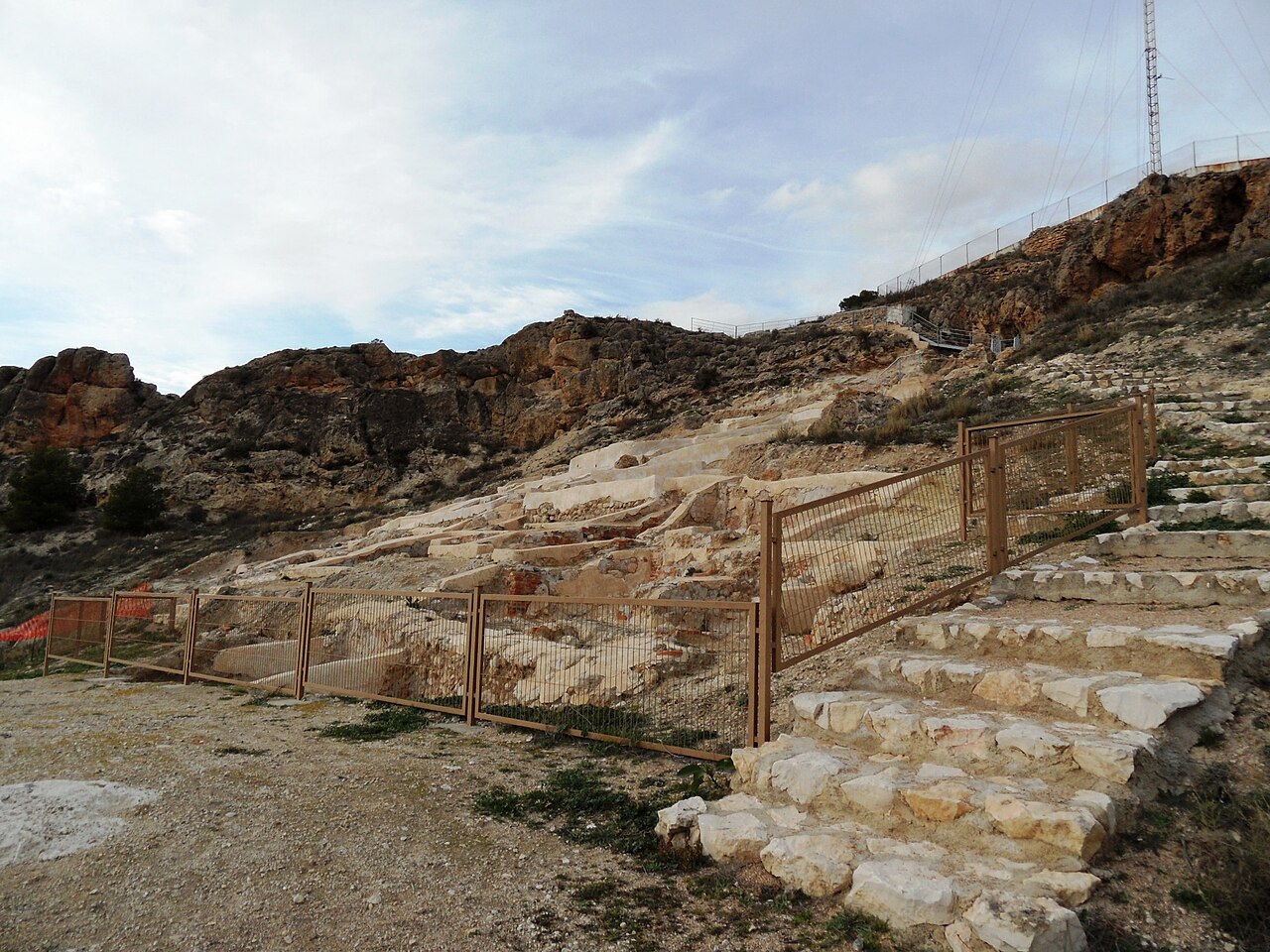
Montealegre del Castillo Castle
Montealegre del Castillo Castle, also known locally as Castillo de Montealegre del Castillo, is a medieval fortress situated on a prominent hill overlooking the town of Montealegre del Castillo in the province of Albacete, Spain. This strategic location provided commanding views of the surrounding landscape, which was essential for defense and control during the turbulent medieval period.
The castle's origins trace back to an earlier Arab fortification known as Eliph. This original fortress was destroyed in 921 AD by Ordoño of León, the King of Galicia, during his campaigns against Muslim-held territories in the Iberian Peninsula. The destruction of Eliph marked a significant shift in control over the region, setting the stage for later Christian reconquest efforts.
Construction and architectural features
The existing remains of Montealegre del Castillo Castle date primarily from the 1330s, when it was constructed by Sancho Manuel. Sancho Manuel, having been granted the depopulated territory by his father, undertook the building of the castle to establish a stronghold in this frontier area. The castle was erected in a single construction phase, showcasing a blend of Mozarabic building techniques and Christian medieval architectural design. This fusion reflects the cultural and technological exchanges occurring in medieval Spain, where Christian and Muslim influences often intertwined.
The castle's layout included two main towers, built on solid foundations, which served both defensive and residential purposes. The use of Mozarabic techniques likely involved distinctive masonry styles and structural solutions adapted from earlier Islamic architecture, while the overall design adhered to the functional needs of a Christian fortress. The castle's walls and towers were designed to withstand sieges and provide a secure refuge for its occupants.
Historical significance and destruction
Montealegre del Castillo Castle had a relatively short lifespan in its medieval form. In 1364, during the civil conflict between Peter of Castile and his half-brother Henry of Trastámara (later Henry II of Castile), the castle was deliberately demolished. Peter of Castile authorized the neighboring town of Chinchilla to annex Montealegre and to destroy the castle as part of his military strategy to weaken Henry's supporters and secure his rule.
The demolition was thorough, leaving only the foundations intact. This act of destruction illustrates the intense political and military struggles in 14th-century Castile, where castles were both symbols of power and strategic military assets that could change hands or be destroyed to shift regional control.
Modern restoration and current condition
In the early 21st century, specifically after the year 2000, efforts were made to partially restore Montealegre del Castillo Castle. The two towers were reconstructed on their original foundations, aiming to preserve the historical footprint and provide a visual representation of the castle's former structure. Despite these restorations, the castle remains largely a ruin.
Currently, the castle site is fenced off and not open to public visitation. The ruins are modest, with the reconstructed towers standing as the most prominent features. The limited access and preservation status reflect ongoing challenges in maintaining and promoting lesser-known medieval sites in rural Spain.
Architectural and cultural context
Montealegre del Castillo Castle exemplifies the transitional period in Spanish castle architecture where Christian military designs incorporated elements from the Mozarabic tradition. This blending highlights the complex cultural interactions on the Iberian frontier during the Reconquista.
The castle's history is intertwined with the broader narrative of medieval Spain's shifting political landscapes, including the fragmentation of power, dynastic conflicts, and the reconquest of territories from Muslim rule. Its destruction during the Castilian civil war underscores the vulnerability of frontier fortifications to the era's violent power struggles.
Strategic location and defensive features
Perched on a hill above the town, the castle's location was chosen for its defensive advantage, allowing surveillance over key routes and the surrounding plains. The design included thick stone walls and towers capable of withstanding assaults. The use of foundations from the earlier Arab fortification demonstrates continuity in the strategic use of the site.
Legacy and historical importance
Though largely in ruins, Montealegre del Castillo Castle remains an important historical site that reflects the medieval military architecture and the complex history of the Castilian frontier. Its story offers insights into the region's cultural and political transformations during the 10th to 14th centuries.
Frequently asked questions (FAQ)
- How do I get to Montealegre del Castillo Castle?
- Montealegre del Castillo Castle is located on a hill above the town of Montealegre del Castillo in Albacete, Spain. Visitors can reach the site by car or local transport to the town, then walk uphill to the castle remains.
- Can I visit the interior of Montealegre del Castillo Castle?
- Currently, the castle remains are fenced off and not open to the public. Visitors can view the ruins from outside the fenced area but cannot enter the towers or grounds.
- When was Montealegre del Castillo Castle built and by whom?
- The current castle was constructed in the 1330s by Sancho Manuel, incorporating Mozarabic techniques with Christian design.
- Why was Montealegre del Castillo Castle destroyed?
- The castle was demolished in 1364 during the civil war between Peter of Castile and Henry of Trastámara. Peter authorized the neighboring town of Chinchilla to destroy the castle to weaken Henry's supporters.
- What architectural styles are present in Montealegre del Castillo Castle?
- The castle features a blend of Mozarabic building techniques and Christian medieval architectural design, reflecting cultural influences during its construction in the 14th century.
Information
Address
Above Calle Cuevas, Montealegre del Castillo, Albacete, Spain
Loading map...
Visitor reviews
No reviews yet. Been here? Write the first review and help other travelers!
Write the first reviewVisited this castle? Share your experience
Your review helps other travelers and adds first-hand knowledge to our encyclopedia.