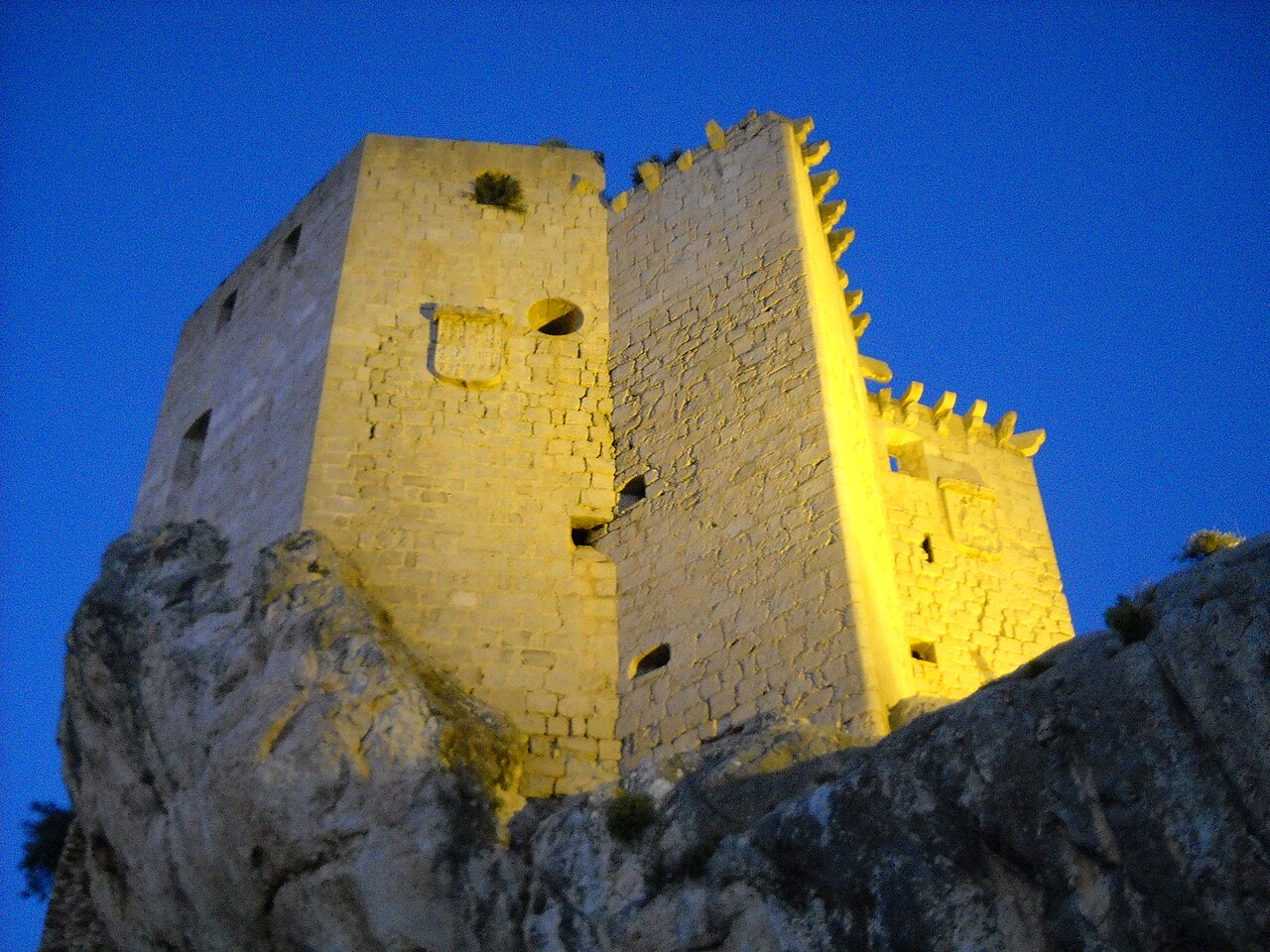
Blanca Castle
Blanca Castle, locally known as Castillo de Blanca, is a remarkable 12th-century fortress perched on a hill above the town of Blanca in the province of Murcia, Spain. This hill castle played a crucial role in controlling the passage through the Ricote Valley, overseeing strategic routes linking key settlements such as Ḥiṣn Mulīna (modern Molina de Segura) and Madinat Siyāsa (present-day Cieza). Its commanding position and robust construction underscore its importance during the High Medieval period.
Historical background and strategic significance
The castle was originally constructed in the 12th century under the direction of the Emir of the Taifa of Murcia, Abu ʿAbd Allāh Muḥammad ibn Mardanis, famously nicknamed "the Wolf King". His reign was marked by efforts to consolidate power and defend his territories against rival forces. Blanca Castle was built as a defensive stronghold to protect the village of Blanca and to exert control over the vital communication and trade routes passing through the Ricote Valley.
During the 13th century, the castle underwent significant expansions amid the political turmoil caused by the rebellion of Ibn Hud against the Almohad dynasty. These enhancements strengthened its defensive capabilities, adapting to the evolving military technologies and threats of the period.
Following the conquest of Murcia by the Crown of Castile in 1281, Blanca Castle came under Christian control. It was subsequently ceded to the Order of Santiago, a military and religious order tasked with defending the frontier and assisting in the Reconquista. The castle's strategic importance continued into the late medieval period, as evidenced by its involvement in regional conflicts.
Sieges and later history
In 1448, Blanca Castle was besieged during a dispute over the Grand Mastership of the Order of Santiago between prominent figures Álvaro de Luna and Rodrigo Manrique. The siege highlighted the castle's military significance, although the defenders ultimately surrendered due to a lack of sufficient water supplies. This event is a testament to the castle's role as a contested fortress in the power struggles of late medieval Spain.
By the 17th century, following the expulsion of the Moriscos in 1609 and the stabilization of the region after the conquest of Granada, the castle's military function diminished. The cost of maintenance outweighed its strategic value, leading to its gradual abandonment and decay. Over time, Blanca Castle fell into ruin, reflecting the broader decline of medieval fortifications in the face of changing political and military landscapes.
Architectural features and construction techniques
The castle is primarily constructed using tapia or rammed earth, a technique involving compacted lime mortar and stone within wooden formwork. This method provided durable and thick walls capable of withstanding sieges and the elements. The fortress occupies a natural spur of a mountain, enhancing its defensive position with steep slopes on several sides.
Originally, Blanca Castle featured three towers connected by two curtain walls that enclosed the defensive perimeter. The towers were approximately 12 meters high and likely contained two internal levels. The upper sections were crowned with crenellated battlements and equipped with arrow slits for archers to defend the castle effectively.
Notably, the towers exhibit putlog holes, small openings used to support scaffolding during construction, which offer insight into medieval building practices. These architectural elements exemplify the military engineering of the period and the adaptation of Islamic fortification techniques to the Christian Reconquista context.
Preservation and current status
Today, Blanca Castle stands as a partially preserved ruin that continues to captivate visitors with its historical ambiance and architectural remnants. Its designation as a Bien de Interés Cultural (Cultural Interest Site) in 1997 underscores its cultural and historical significance within the Murcia region.
The castle is freely accessible to the public, offering panoramic views over the Ricote Valley and the town of Blanca. Recent restoration efforts have aimed to stabilize the remaining structures and protect the site from further deterioration, allowing visitors to appreciate the enduring legacy of this medieval fortress.
Cultural and historical legacy
Blanca Castle embodies the complex history of Murcia during the Middle Ages, reflecting the region's Islamic heritage, the Reconquista, and the shifting political landscape of medieval Spain. Its association with notable figures such as Muhammad ibn Mardanis and the Order of Santiago highlights its role in the broader narrative of Iberian history.
As a military installation, it offers valuable insights into medieval defensive architecture, construction techniques, and the strategic importance of controlling key geographic corridors. Today, it remains a symbol of the region's rich past and a focal point for cultural tourism and historical education.
Frequently asked questions (FAQ)
- How do I get to Blanca Castle?
- Blanca Castle is located in the town of Blanca, Spain, easily accessible by car or public transport. If you're traveling by train, the nearest station is in the city of Murcia, from which you can take a bus or taxi to reach the castle.
- What is the historical significance of Blanca Castle?
- Blanca Castle, built in the 15th century, played a crucial role in the defense of the region during the Reconquista. It offers a fascinating glimpse into the medieval history of Spain, showcasing the architectural styles and military strategies of the time.
- When was Blanca Castle built?
- Construction of Blanca Castle began in the late 15th century, around 1470, and was completed shortly after. It served not only as a fortress but also as a residence for local nobility.
- Can I visit Blanca Castle with my family?
- Yes, Blanca Castle is family-friendly and welcomes visitors of all ages. There are guided tours available that can help enhance your experience and provide educational insights for children and adults alike.
- Why is Blanca Castle a popular tourist attraction?
- Blanca Castle is popular due to its rich history, stunning architecture, and picturesque views of the surrounding landscape. Visitors appreciate the opportunity to explore the castle's well-preserved structures and learn about its significance in Spanish history.
- Is it possible to enter the castle grounds?
- Yes, visitors can enter the castle grounds, where they can explore various areas of the castle and enjoy panoramic views. Some parts of the castle may have restricted access, but guided tours typically cover the most significant areas.
- What are the opening hours of Blanca Castle?
- Blanca Castle is generally open to visitors from 10 AM to 6 PM, with extended hours during the summer months. It's advisable to check the official website or contact local tourism offices for any changes to the schedule before your visit.
- What are the ticket prices for visiting Blanca Castle?
- Entry to Blanca Castle is quite affordable, with tickets typically costing around €5 for adults and discounts available for children and seniors. Group rates may also be available, making it a great option for school trips or larger gatherings.
- What is the best time to visit Blanca Castle?
- The best time to visit Blanca Castle is during the spring and fall when the weather is mild and pleasant for exploring. Additionally, visiting during these seasons allows you to avoid the peak tourist crowds of summer.
- Are there nearby attractions to visit after Blanca Castle?
- Yes, after visiting Blanca Castle, you can explore the charming town of Blanca, which offers a variety of local shops and restaurants. Nearby attractions include the beautiful Segura River and various hiking trails that showcase the natural beauty of the region.
Information
Loading map...
Visitor reviews
No reviews yet. Been here? Write the first review and help other travelers!
Write the first reviewVisited this castle? Share your experience
Your review helps other travelers and adds first-hand knowledge to our encyclopedia.