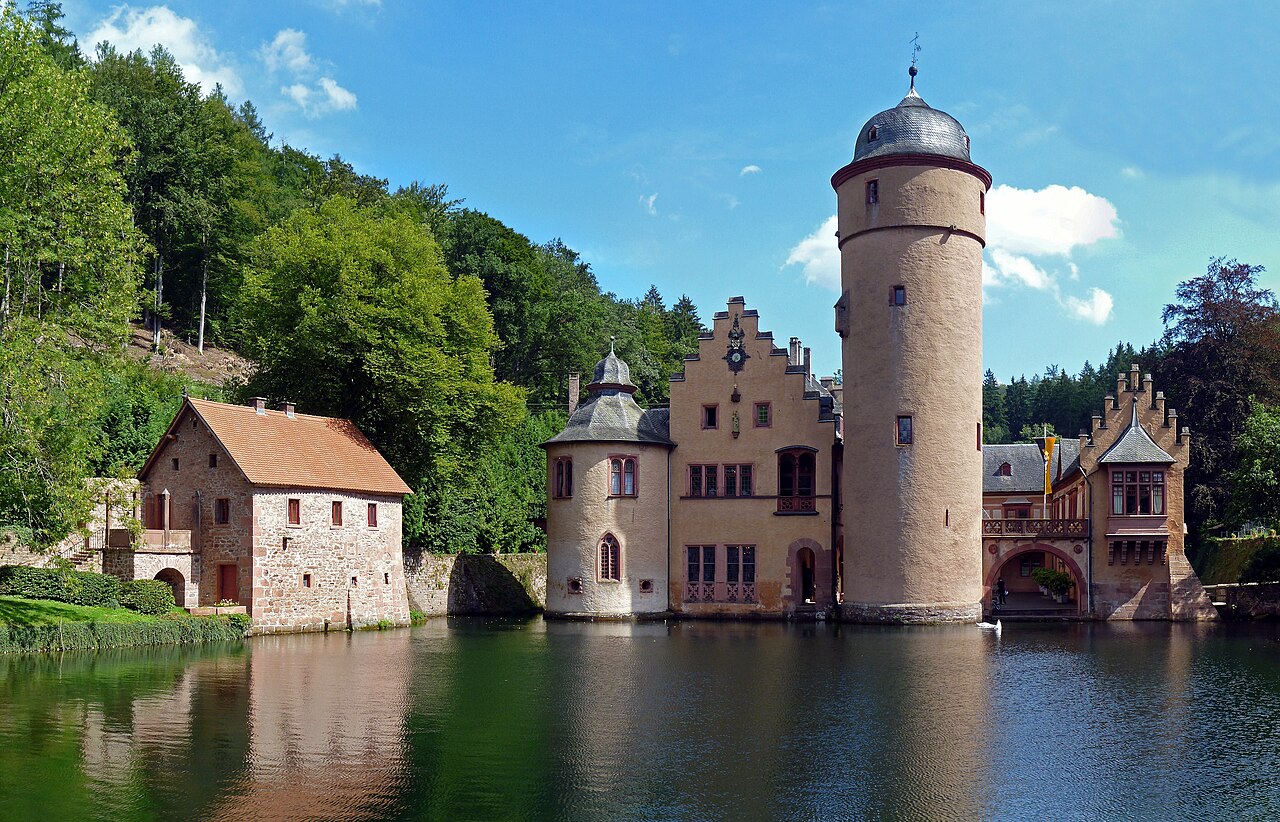
Johannisburg Castle
Johannisburg Castle stands as a prominent Renaissance landmark in Aschaffenburg, Germany, renowned for its distinctive red sandstone construction and symmetrical design. This 17th-century palace is a testament to the architectural ingenuity of the German Renaissance, embodying both aesthetic grandeur and strategic site planning.
Architectural design and materials
The castle is primarily built from red sandstone, a material characteristic of the Spessart hills near Aschaffenburg. This choice not only reflects regional geology but also contributes to the castle's striking visual identity. Notably, Johannisburg Castle is among the few German Renaissance palaces exhibiting a predominantly symmetrical layout, a feature that distinguishes it from many contemporaries.
Its elevated position on a terrace overlooking the Main River was a deliberate architectural decision. The terrace was expanded in both area and height over time, ensuring the castle remained above the highest flood levels, thus protecting its structural integrity and inhabitants from the river's potential inundations.
Historical context and construction
Constructed in the early 17th century, Johannisburg Castle was commissioned by the Archbishop of Mainz, Johann Schweikhard von Kronberg. The building served as a secondary residence and administrative center for the archbishopric. The castle's design reflects the transition from medieval fortress architecture to Renaissance palatial styles, emphasizing comfort, representation, and the display of power.
The castle complex originally included four prominent towers at each corner, a feature typical of Renaissance defensive architecture, blending aesthetic appeal with military functionality. These towers, along with robust curtain walls, provided both defense and a commanding presence overlooking the town and river.
Interior features and cultural significance
Inside, Johannisburg Castle houses several museums that showcase its rich cultural heritage. Among its notable collections is the world's largest assemblage of architectural cork models, crafted by court confectioner Carl May and his son after 1792. These intricate models represent various significant buildings and offer invaluable insights into architectural history and techniques.
The castle's interior also features grand halls, chapels, and residential chambers adorned with period furnishings and artworks that reflect the tastes and lifestyles of its historical occupants. These spaces provide visitors with a vivid experience of Renaissance aristocratic life.
Preservation and public access
Johannisburg Castle has undergone various restoration efforts to preserve its structural and artistic integrity, maintaining its status as a well-preserved Renaissance monument. Today, it is open to the public, serving both as a museum complex and a cultural venue for exhibitions and events.
The castle's location and architectural prominence make it a key attraction in Aschaffenburg, drawing visitors interested in history, architecture, and art. Its accessibility and curated displays enhance educational and tourism opportunities in the region.
Surrounding landscape and strategic importance
Situated on a terrace above the Main River, Johannisburg Castle's site was chosen for strategic defense and flood protection. The elevated position allowed for surveillance of the surrounding area and control over river traffic, which was crucial for the archbishopric's influence and security.
The castle's surroundings include well-maintained gardens and parklands that complement its Renaissance character, offering scenic views and recreational spaces for visitors.
Frequently asked questions (FAQ)
- What is the historical significance of Johannisburg Castle?
- Johannisburg Castle is a significant example of Renaissance architecture in Germany, built in the early 17th century. It served as a residence for the Prince-Bishops of Würzburg and played a vital role in the region's history, showcasing the power and influence of the church during that era.
- When was Johannisburg Castle built?
- Construction of Johannisburg Castle began in 1605 and was completed in 1614. The castle was designed to reflect the wealth and prestige of its occupants, and its architectural style is a prominent example of the Renaissance period.
- Can I visit Johannisburg Castle?
- Yes, visitors are welcome to explore Johannisburg Castle. The castle features guided tours that provide insights into its history and architecture, making it a fascinating destination for history enthusiasts and tourists alike.
- What are the opening hours for Johannisburg Castle?
- Johannisburg Castle is typically open to visitors from Tuesday to Sunday, with varying hours depending on the season. It is advisable to check the official website for the most current information regarding opening hours and any potential holiday closures.
- Is it possible to access Johannisburg Castle with a wheelchair?
- Yes, Johannisburg Castle is accessible for visitors with mobility challenges. There are ramps and designated routes to ensure that everyone can enjoy the castle’s exhibitions and its beautiful surroundings.
- What is the best time to visit Johannisburg Castle?
- The best time to visit Johannisburg Castle is during the spring and early autumn months when the weather is mild and pleasant. This period also allows visitors to enjoy the beautiful gardens surrounding the castle.
- Are there any nearby attractions to visit when at Johannisburg Castle?
- Yes, nearby attractions include the Pompejanum, a Roman villa replica, and the scenic parks along the Main River. Visitors can easily explore these sites, making for a full day of cultural experiences in Aschaffenburg.
- What are the ticket prices for Johannisburg Castle?
- As of the latest information, ticket prices for Johannisburg Castle are quite reasonable, with discounts available for students and seniors. Children under a certain age may enter for free, making it an affordable option for families.
Information
Website
Visit websiteSources & official resources
Verify the information above using these authoritative references.
Loading map...
Visitor reviews
No reviews yet. Been here? Write the first review and help other travelers!
Write the first reviewVisited this castle? Share your experience
Your review helps other travelers and adds first-hand knowledge to our encyclopedia.