Jezdec Castle
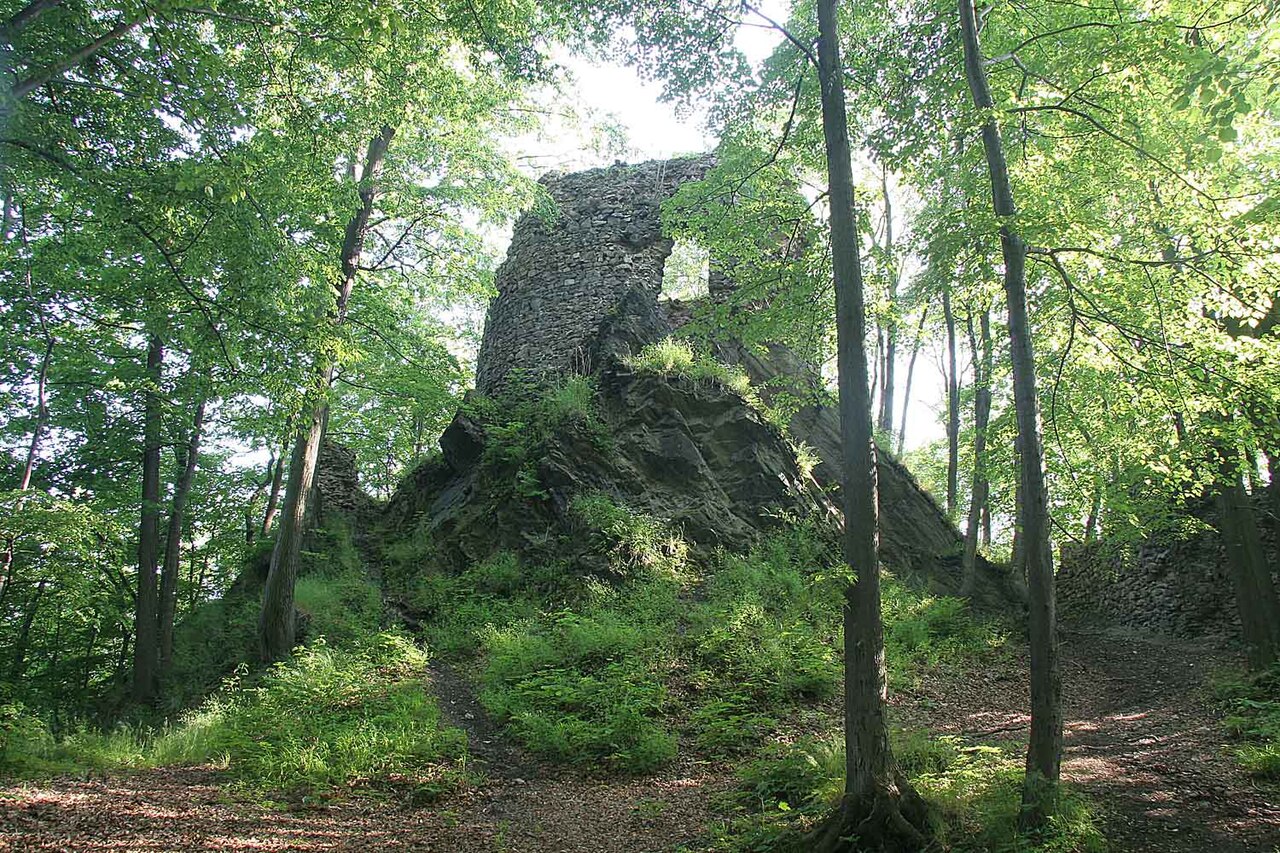
Jezdec Castle stands as a remarkable example of a medieval hill castle in the Czech Republic, specifically near the city of Liberec. This fortress, primarily constructed of wood atop a granite promontory, was strategically positioned to oversee and protect vital land routes between Liberec and Frýdlant during the 14th and 15th centuries. Known also by its German names Reitstein and Reitenštejn, the castle's location on a rocky outcrop with three natural rock ribs provided a formidable natural defense and a commanding vantage point over the Kateřinské valley.
Historical context and early occupation
The site of Jezdec Castle reveals evidence of human activity dating back to the 11th century, as indicated by ceramic fragments discovered during archaeological excavations. Although the castle itself was established in the high medieval period, the presence of these earlier artifacts suggests the area held strategic or settlement significance long before the castle's construction. The castle's primary documented phase spans the 14th and 15th centuries, a period marked by regional conflicts and the need for fortified structures to control trade and military routes.
Despite the absence of detailed historical records naming specific rulers or military engagements associated with Jezdec, its role as a guarding outpost is evident. The castle's function was likely focused on surveillance and protection of the transit corridor through the Kateřinské valley, which was critical for local commerce and defense. This aligns with the broader medieval trend of establishing small fortifications to secure important routes and borders.
Architectural features and construction techniques
Wooden structure on granite foundation
Unlike many medieval castles built predominantly of stone, Jezdec Castle was primarily a wooden fortress adapted ingeniously to its rocky terrain. The builders carved a rectangular hollow and precise cut marks into the granite rock to anchor the timber structure securely. This method highlights the castle's integration with the natural environment and the practical use of available materials.
Defensive earthworks
Access to the castle was carefully controlled by a southern defensive barrier consisting of a rampart and a ditch approximately two meters wide. This earthwork separated the promontory from the adjacent ridge, creating a natural choke point that limited enemy approach. Archaeological investigations revealed that while the rampart has deteriorated over time, it once formed a crucial part of the castle's defenses.
Archaeological findings and material culture
Excavations at Jezdec Castle have uncovered a variety of iron artifacts that shed light on the daily life and defensive capabilities of the fortress. These include horseshoe fragments, a sickle blade, a crossbow bolt tip, and fittings for doors and windows, alongside numerous nails. Such findings indicate that the wooden construction was more than a simple shelter; it was equipped with functional and defensive elements.
Additionally, layers of charcoal and ash found within the site suggest controlled use of fire, possibly for maintenance, heating, or defense purposes. The presence of these layers points to repeated occupation and active management of the castle environment during its operational period.
Decline and current state
Following its active use in the medieval period, Jezdec Castle gradually fell into disrepair. The wooden structures have long since vanished, leaving behind only the carved granite foundation and the earthworks that once protected the site. Today, the castle exists primarily as an archaeological site with visible rock modifications reflecting human craftsmanship.
The promontory remains a prominent natural feature, continuing to offer expansive views over the surrounding landscape, much as it did when it served as a guarded lookout. The castle's Germanic names reflect the region's complex cultural history, linking Czech and German-speaking communities over centuries.
Cultural significance and heritage value
Jezdec Castle represents a distinctive example of a wooden hill castle adapted to a rocky outcrop, showcasing medieval ingenuity in fortification design. Its strategic location and archaeological remains contribute valuable insights into the military and social history of the region during the high and late medieval periods. The site is an important cultural landmark that connects modern visitors with the historical landscape and medieval defensive strategies.
While the castle itself does not survive in standing form, the archaeological evidence and natural setting provide a tangible link to the past, inviting exploration and study by historians, archaeologists, and enthusiasts of medieval architecture.
Frequently asked questions (FAQ)
- How do I get to Jezdec Castle from Liberec?
- Jezdec Castle is located near Liberec in the Liberec Region of Czechia. Visitors can reach the site by car or local hiking trails leading to the granite promontory where the castle once stood.
- What remains can I see at Jezdec Castle today?
- Today, visitors can observe the carved granite rock formations, the rectangular hollow, cut marks, and the earthworks such as the rampart and ditch that once formed the castle's defenses.
- When was Jezdec Castle built and what was its purpose?
- Jezdec Castle was constructed in the 14th century as a wooden hill fortress to guard and monitor key land routes between Liberec and Frýdlant during the high medieval period.
- Is Jezdec Castle accessible for visitors year-round?
- As an archaeological site, Jezdec Castle is generally accessible year-round, though visitors should prepare for outdoor conditions and check local guidelines for access and safety.
- Are there any guided tours available at Jezdec Castle?
- Currently, there are no regular guided tours at Jezdec Castle, but local historical societies occasionally organize educational visits and archaeological presentations.
Information
Website
Visit websiteSources & official resources
Verify the information above using these authoritative references.
Loading map...
Visitor reviews
No reviews yet. Been here? Write the first review and help other travelers!
Write the first reviewVisited this castle? Share your experience
Your review helps other travelers and adds first-hand knowledge to our encyclopedia.