Hamrštejn — Czech Republic castle

Hamrštejn

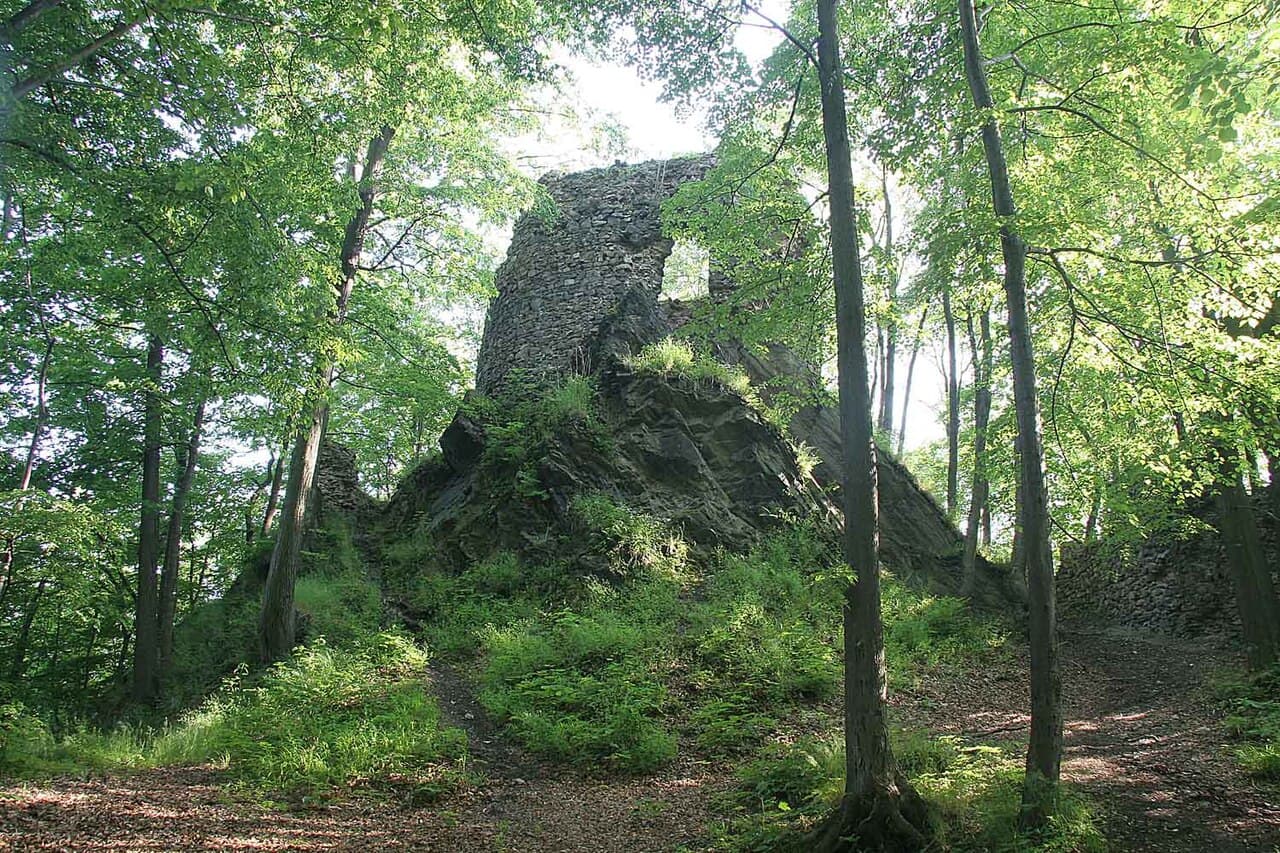
Hamrštejn castle ruin near Liberec, Czechia
Late Medieval (14th–15th c.)
Ruins

Hamrštejn castle, also known by its German name Hammerstein, is a notable late medieval castle ruin situated near the city of Liberec in the northern part of Czechia. Perched on a rocky outcrop overlooking a bend in the Lusatian Neisse river, the castle's strategic location provided natural defensive advantages. Founded likely in the 14th century, Hamrštejn served as a fortification during a period marked by regional conflicts and shifting political powers in the Bohemian lands.

Historical background and significance

The origins of Hamrštejn castle trace back to the 14th century, a time when many castles were constructed across Bohemia to secure trade routes and assert noble control. Its establishment on a rocky promontory was typical for hill castles designed to maximize defensive capabilities. The castle was likely built by a local noble family, aiming to control the surrounding territory and the Lusatian Neisse valley.

Throughout the late medieval period, Hamrštejn played a role in regional defense and administration. However, by the mid-16th century, the castle was abandoned, possibly due to changes in military technology, political shifts, or economic factors that rendered such fortifications less critical.

Architectural features and layout

Although now in ruined condition, archaeological studies and remaining structures reveal that Hamrštejn was a stone castle built with typical medieval defensive elements. The castle was constructed on a rock castle site, utilizing the natural rock formations as part of its fortifications.

The layout likely included a keep or donjon serving as the main stronghold, surrounded by curtain walls adapted to the irregular rocky terrain. Defensive features probably included battlements and narrow windows for archers. The castle's position above the Lusatian Neisse provided a commanding view of the valley, aiding in early warning against approaching enemies.

Defensive advantages

The rocky outcrop on which Hamrštejn was built formed a natural barrier, making direct assaults difficult. The proximity to the river added a natural moat-like defense on one side. These features were typical of hill castles designed to exploit topographical advantages for defense.

Abandonment and current status

By the mid-16th century, Hamrštejn was abandoned, likely due to the obsolescence of medieval castles in the face of evolving military technology such as artillery, as well as political and economic changes in the region.

Today, Hamrštejn remains an archaeological ruin and is a point of interest for historians and visitors interested in medieval fortifications. The site offers insight into late medieval castle construction and the strategic use of natural landscapes in fortification design.

Visiting and cultural importance

Visitors to the Hamrštejn ruins can explore the remains of the castle and enjoy views of the Lusatian Neisse valley. The site is part of the cultural heritage of the Liberec region and contributes to understanding the medieval history of northern Bohemia.

While the ruins are not extensively restored, they provide a tangible connection to the medieval past and the defensive architecture of the 14th century. The castle's location near Liberec makes it accessible for day trips and historical excursions.

Frequently asked questions (FAQ)

How do I get to Hamrštejn Castle?
Hamrštejn Castle is located near Liberec in Czechia, easily accessible by car or public transport. If you're traveling by car, you can follow the D35 highway and take the local roads to reach the castle. For public transport, check the local bus schedules that connect Liberec to nearby villages.
What is the historical significance of Hamrštejn Castle?
Hamrštejn Castle dates back to the 14th century and played a crucial role in the defense of the region. It was built as a strategic fortress and has witnessed many historical events, including conflicts and territorial disputes. Today, it stands as a testament to medieval architecture and history in the Czech Republic.
When was Hamrštejn Castle last renovated?
The last major renovation of Hamrštejn Castle took place in the early 21st century, aimed at preserving its historical integrity while making it accessible for visitors. Ongoing maintenance efforts continue to ensure that the castle remains in good condition for future generations. Visitors can admire both its historical features and the results of modern preservation techniques.
Can I explore the interiors of Hamrštejn Castle?
Yes, visitors can explore several areas of Hamrštejn Castle, including its historic rooms and exhibition spaces. Guided tours are available that provide insights into the castle’s history and architectural features. It's advisable to check the tour schedule in advance to secure your spot.
Why is Hamrštejn Castle a popular tourist destination?
Hamrštejn Castle is popular for its stunning architecture, rich history, and picturesque surroundings. Its strategic location offers breathtaking views of the Czech landscape, making it a favorite among photographers and history enthusiasts alike. The combination of natural beauty and cultural significance attracts many visitors year-round.
Is it possible to host events at Hamrštejn Castle?
Yes, Hamrštejn Castle can be rented for various events, including weddings, corporate gatherings, and private tours. The unique atmosphere and historical setting provide a memorable backdrop for any occasion. It's recommended to contact the castle administration for details regarding availability and services.
What are the opening hours for Hamrštejn Castle?
Hamrštejn Castle typically opens for visitors from April through October, with specific hours varying by month. During peak season, the castle is open daily, while off-peak may have reduced hours. It's best to check the official website for the most current information on hours and any seasonal changes.
What are the ticket prices for visiting Hamrštejn Castle?
Ticket prices for Hamrštejn Castle are generally affordable, with discounts available for children, students, and seniors. A standard ticket grants access to guided tours and the castle grounds. Check the official website for detailed pricing and any special promotions that may be available during your visit.
What nearby attractions can I visit while at Hamrštejn Castle?
While visiting Hamrštejn Castle, you can explore other nearby attractions such as the picturesque town of Liberec, which features beautiful parks and cultural sites. The Jizera Mountains are also close by, offering opportunities for hiking and outdoor activities. These nearby attractions make for a full day of exploration and enjoyment.

Photo gallery

Hamrštejn
Click to view

Photo by Zp at Czech Wikipedia•CC BY-SA 3.0

1 photo • Click any image to view in full screen

Information

Archaeological Site / Ruins

Loading map...

Visitor reviews

No reviews yet. Been here? Write the first review and help other travelers!

Write the first review

Visited this castle? Share your experience

Your review helps other travelers and adds first-hand knowledge to our encyclopedia.

Write a review

(5/5)

0/2000 characters

Your review will be visible after admin approval

Nearby castles

8.7 km

Jezdec Castle

Czechia, Czech Republic

Jezdec Castle stands as a remarkable example of a medieval hill castle in the Czech Republic, specifically near the city of Liberec. This fortress, primarily constructed of wood atop a granite promontory, was strategically positioned to oversee and protect vital land routes between Liberec and Frýdlant during the 14th and 15th centuries. Known also by its German names Reitstein and Reitenštejn, the castle's location on a rocky outcrop with three natural rock ribs provided a formidable natural defense and a commanding vantage point over the Kateřinské valley. Historical context and early occupation The site of Jezdec Castle reveals evidence of human activity dating back to the 11th century, as indicated by ceramic fragments discovered during archaeological excavations. Although the castle itself was established in the high medieval period, the presence of these earlier artifacts suggests the area held strategic or settlement significance long before the castle's construction. The castle's primary documented phase spans the 14th and 15th centuries, a period marked by regional conflicts and the need for fortified structures to control trade and military routes. Despite the absence of detailed historical records naming specific rulers or military engagements associated with Jezdec, its role as a guarding outpost is evident. The castle's function was likely focused on surveillance and protection of the transit corridor through the Kateřinské valley, which was critical for local commerce and defense. This aligns with the broader medieval trend of establishing small fortifications to secure important routes and borders. Architectural features and construction techniques Wooden structure on granite foundation Unlike many medieval castles built predominantly of stone, Jezdec Castle was primarily a wooden fortress adapted ingeniously to its rocky terrain. The builders carved a rectangular hollow and precise cut marks into the granite rock to anchor the timber structure securely. This method highlights the castle's integration with the natural environment and the practical use of available materials. Defensive earthworks Access to the castle was carefully controlled by a southern defensive barrier consisting of a rampart and a ditch approximately two meters wide. This earthwork separated the promontory from the adjacent ridge, creating a natural choke point that limited enemy approach. Archaeological investigations revealed that while the rampart has deteriorated over time, it once formed a crucial part of the castle's defenses. Archaeological findings and material culture Excavations at Jezdec Castle have uncovered a variety of iron artifacts that shed light on the daily life and defensive capabilities of the fortress. These include horseshoe fragments, a sickle blade, a crossbow bolt tip, and fittings for doors and windows, alongside numerous nails. Such findings indicate that the wooden construction was more than a simple shelter; it was equipped with functional and defensive elements. Additionally, layers of charcoal and ash found within the site suggest controlled use of fire, possibly for maintenance, heating, or defense purposes. The presence of these layers points to repeated occupation and active management of the castle environment during its operational period. Decline and current state Following its active use in the medieval period, Jezdec Castle gradually fell into disrepair. The wooden structures have long since vanished, leaving behind only the carved granite foundation and the earthworks that once protected the site. Today, the castle exists primarily as an archaeological site with visible rock modifications reflecting human craftsmanship. The promontory remains a prominent natural feature, continuing to offer expansive views over the surrounding landscape, much as it did when it served as a guarded lookout. The castle's Germanic names reflect the region's complex cultural history, linking Czech and German-speaking communities over centuries. Cultural significance and heritage value Jezdec Castle represents a distinctive example of a wooden hill castle adapted to a rocky outcrop, showcasing medieval ingenuity in fortification design. Its strategic location and archaeological remains contribute valuable insights into the military and social history of the region during the high and late medieval periods. The site is an important cultural landmark that connects modern visitors with the historical landscape and medieval defensive strategies. While the castle itself does not survive in standing form, the archaeological evidence and natural setting provide a tangible link to the past, inviting exploration and study by historians, archaeologists, and enthusiasts of medieval architecture.

High Medieval (11th–13th c.)
Details
9.4 km
Grabstejn Castle — Czech Republic castle

Grabstejn Castle

Hrádek nad Nisou, Czech Republic

Grabštejn Castle, located in Hrádek nad Nisou, Czechia, stands as a remarkable example of a Renaissance hill castle with deep roots extending back to the 13th century. Originally established as a Gothic fortress, it evolved through centuries of architectural transformation and historical events, reflecting the complex history of Bohemia and Central Europe. The castle's strategic location atop a hill overlooking the Václavický stream provided both defensive advantages and commanding views of the surrounding region, including the nearby three-border triangle where Czechia, Germany, and Poland converge. The castle was founded by the medieval Bohemian nobility, likely the Donín family, who held it for nearly three centuries as burgraves appointed by the crown. Its earliest documentary mention dates to the reign of King Přemysl Otakar II in the late 13th century, situating Grabštejn firmly within the medieval political and military landscape of the region. Throughout the Late Middle Ages, the castle played a significant role during the Hussite Wars, enduring sieges and assaults by opposing factions such as the Six Towns coalition, which sought to challenge Catholic strongholds. Architectural evolution and renaissance transformation Between 1566 and 1586, under the ownership of Jiří Mehl of Střelice, an influential imperial councilor and vice-chancellor, Grabštejn underwent its most significant architectural transformation. The medieval fortress was rebuilt in the Renaissance style, turning it into a representative chateau that combined defensive features with the elegance and comfort befitting a noble residence. This period saw the construction of a steward's house below the castle, later remodeled in the Classicist style around 1830, and the erection of the New Castle near the Old Castle by Christian of Clam-Gallas around 1818. The Renaissance reconstruction included the addition of a chapel dedicated to Saint Barbara, which remains one of the castle's most treasured interiors. The chapel's walls and ceilings are adorned with intricate Renaissance frescoes and early Mannerist paintings, attributed to the Salzburg artist Heinrich Bocksberger. These artworks feature interlaced figural, animal, and heraldic motifs, exemplifying the artistic trends of the 16th century and enriching the cultural heritage of the castle. Historic ownership and wartime impacts After the Mehl family, ownership passed through several prominent noble families, including the Hoffmann of Grünbühel, Černous, Nostic, and Trauttmansdorff lineages. The castle suffered considerable damage during the Thirty Years' War, notably the burning of a large tower in 1622 and occupation by Swedish forces in 1645. Imperial orders in 1655 led to the deliberate demolition of some of the castle's medieval fortifications, reflecting changing military strategies and political circumstances. In 1704, the estate was acquired by Count Jan Václav Gallas, whose family, later known as Clam-Gallas, maintained possession until 1945. The Clam-Gallas family undertook several renovation projects, including the remodeling of the lower castle in the Empire style and the creation of a landscaped park featuring rare tree species, contributing to the castle's aesthetic and functional development. Modern history and restoration efforts Following World War II, the castle was confiscated under the Beneš decrees, leading to the expulsion of the Clam-Gallas family and a period of neglect. In 1953, the Czechoslovak People's Army took over the complex, using it for military purposes, which resulted in significant deterioration, especially to the upper parts of the castle. After the army's departure in the late 1980s, restoration efforts began in earnest, with extensive repairs carried out from 1989 through 2010. Today, Grabštejn Castle is recognized as one of the best-restored monuments in the Czech Republic. It is managed by the National Heritage Institute and open to the public since 1993. Visitors can explore the castle's richly decorated interiors, including the St. Barbara chapel and the castle tower, which offers panoramic views of the surrounding landscape and the unique three-border area. Architectural features and castle layout The castle complex combines elements from Gothic, Renaissance, Baroque, and Neoclassical architectural styles, reflecting its long and varied history. Originally designed as a bergfried-type fortress, it comprised two main areas: the outer bailey and the castle core. The core housed a two-story palace with rooms arranged along the northern defensive wall and a free-standing bergfried tower that served as a lookout and last line of defense. The addition of the chapel between the palace and bergfried in the 15th century highlighted the growing importance of religious functions within the fortress. The outer bailey was expanded with Renaissance buildings enclosing the courtyard, including a large entry gateway replacing an earlier zwinger. Defensive enhancements included two semi-circular bastions on the southern wall designed for artillery, a testament to evolving military technologies of the Renaissance era. The courtyard facades feature sgraffito rustication, a decorative plaster technique revealing contrasting layers beneath, while interiors preserve rich Baroque elements. The bergfried tower underwent a Neo-Gothic renovation in 1846, giving it the distinctive appearance it retains today. Lower castle and surrounding grounds At the northern foot of the hill lies the lower castle, or Nový zámek, a two-story Empire-style building with a central risalit, facing a one-story inn. This section reflects 19th-century architectural and functional adaptations related to estate management and hospitality. The castle grounds include a large central courtyard enclosed by multiple wings and a smaller courtyard adjacent to a round corner tower topped with a dome-shaped roof. Nearby archaeological remains of a 15th-century siege camp, including fortified command posts and artillery emplacements, provide valuable insights into medieval military history. Cultural significance and visitor experience Declared a national cultural monument of the Czech Republic in 2008, Grabštejn Castle is a site of considerable historical, architectural, and cultural importance. Its preservation and restoration have ensured that visitors can experience a tangible connection to the region's medieval and Renaissance past. The castle's St. Barbara chapel remains a highlight for art historians and tourists alike, showcasing rare Renaissance and early Mannerist frescoes. The castle tower provides sweeping views of the unique tri-border area, enhancing its appeal as a destination for cultural tourism. Today, the castle is accessible to the public with guided tours that illuminate its rich history, architectural evolution, and the stories of the noble families who shaped its legacy. The combination of well-preserved interiors, historical artifacts, and scenic surroundings makes Grabštejn a must-visit for enthusiasts of medieval fortifications and Renaissance architecture.

Renaissance (15th–17th c.)
Details
12.9 km
Lemberk Castle — Czech Republic castle

Lemberk Castle

Jablonné v Podještědí, Czech Republic

Lemberk Castle stands as a remarkable testament to the architectural and historical evolution of noble residences in the Czech Republic. Situated near the village of Lvová, part of Jablonné v Podještědí, this hill castle was originally constructed in the 1240s by Havel of Markvartice, a prominent nobleman serving under the Bohemian kings. Its strategic location on a rocky outcrop overlooking the Panenský potok stream valley was chosen to guard a vital medieval trade route linking Bohemia to Žitava, underscoring its military and administrative significance in the high medieval period. The castle's early history is closely intertwined with the Markvartic family and later the Lemberk noble lineage, with notable figures such as Saint Zdislava of Lemberk residing here in the 13th century. Zdislava's charitable works and spiritual legacy have left a lasting cultural imprint, adding a unique dimension to the castle's heritage. The first documentary mention of Lemberk dates to 1249, when Havel adopted the castle's name into his title, reflecting its importance as a seat of power. Medieval origins and strategic importance The original fortress was designed primarily for defense, featuring a cylindrical bergfried tower that remains the most intact medieval structure today. This tower, with an external diameter of approximately 8.5 meters and a distinctive polygonal base forming a diamond-shaped interior floor, exemplifies the military architecture of the 13th century. The tower's elevated entrance, accessible only by ladder, and its vaulted chambers illustrate typical defensive features of hill castles from this era. Throughout the late medieval period, the castle changed hands among several noble families, including the Wartenbergs, Berkas of Dubá, Elsnic, and Donín families. These transitions reflected the shifting political landscape of Bohemia and the castle's continued role as a noble residence and stronghold. Renaissance transformation and architectural evolution In the mid-16th century, under the stewardship of Jindřich Berka of Dubá, Lemberk Castle underwent significant remodeling, transitioning from a purely defensive fortress to a Renaissance chateau. This transformation included the construction of a new wing shortly after 1550 and the addition of a second floor in the early 1600s by the Donín family. The Renaissance influence is evident in the castle's elegant rectangular palace layout, richly decorated interiors, and the introduction of ornamental features such as the Hall of Fables with its wooden coffered ceiling illustrating scenes from Aesop's fables. The castle's entrance was enhanced with an early Baroque two-part gate and a Renaissance portal set into a tower crowned by a shingled onion dome. The use of sgraffito rustication on the tower's lower walls and half-timbered construction on the upper floor reflect the blend of Renaissance and Baroque architectural styles that characterize the castle's later phases. Baroque enhancements and cultural significance Following the Thirty Years' War, the castle's fortifications were reinforced with the addition of two bastions by the Breda family, who also introduced Baroque modifications including a chapel dedicated to the Holy Spirit and a knights' hall. The chapel features lavish early Baroque stuccoes with ornamental and figural designs, along with 19th-century ceiling paintings depicting the Ascension of Christ and the Assumption of Mary. The castle's interiors boast exquisite stucco decorations, with the west wing containing rooms restored in the early 20th century by artist Jan Dukát. The north wing houses a barrel-vaulted hall adorned with stucco cartouches and ceiling paintings, as well as sixteen frescoes depicting scenes from the Thirty Years' War, which, despite some damage, remain a vivid historical narrative element. Later ownership and preservation efforts In 1726, ownership transferred to Count Filip Josef of Gallas, and subsequently to the Clam-Gallas family, who maintained possession until 1930. The Auersperg family held the castle until 1945, when it was confiscated by the Czechoslovak state under the Beneš decrees after World War II. Prior to the war, the castle remained inhabited and retained much of its historical character. Post-war, Lemberk Castle served as a museum dedicated to rural culture starting in 1951. Although it fell into disrepair and closed in the mid-1970s, restoration efforts have revived interest in the site. Today, the castle is state-owned and open to the public through organized tours, highlighting its rich history and architectural layers. Architectural features and grounds The castle complex combines elements from its medieval fortress origins through Renaissance and Baroque periods. Besides the prominent bergfried tower, the grounds include remnants of the former farmyard, a Baroque well, and a surrounding park with two historic fountains from the 17th and 18th centuries. The nearby Bredovský letohrádek (Breda summerhouse) and a protected avenue of linden trees trace the historical routes connecting Lemberk to neighboring villages. Beneath the castle lies a network of sandstone cellars and a 35-meter tunnel historically used for iron ore mining and later for wine storage and brewing equipment. The castle grounds also feature Baroque sculptures and mythological statues attributed to Matthias Bernard Braun, enhancing its cultural and artistic significance. A notable local landmark is the pavilion built in 1862 over the historic Zdislava's spring, a water source associated with the castle's spiritual heritage. The site continues to host exhibitions of modern glass art, concerts, and theatrical performances, linking its medieval past with contemporary cultural life. In summary, Lemberk Castle exemplifies the layered history of Bohemian noble residences, evolving from a high medieval hill castle to a Renaissance chateau enriched with Baroque grandeur. Its architectural features, historical associations, and cultural legacy make it a significant heritage site in Czechia, offering visitors a vivid journey through centuries of Central European history.

High Medieval (11th–13th c.)
Details