Grabstejn Castle
Grabštejn Castle, located in Hrádek nad Nisou, Czechia, stands as a remarkable example of a Renaissance hill castle with deep roots extending back to the 13th century. Originally established as a Gothic fortress, it evolved through centuries of architectural transformation and historical events, reflecting the complex history of Bohemia and Central Europe. The castle's strategic location atop a hill overlooking the Václavický stream provided both defensive advantages and commanding views of the surrounding region, including the nearby three-border triangle where Czechia, Germany, and Poland converge.
The castle was founded by the medieval Bohemian nobility, likely the Donín family, who held it for nearly three centuries as burgraves appointed by the crown. Its earliest documentary mention dates to the reign of King Přemysl Otakar II in the late 13th century, situating Grabštejn firmly within the medieval political and military landscape of the region. Throughout the Late Middle Ages, the castle played a significant role during the Hussite Wars, enduring sieges and assaults by opposing factions such as the Six Towns coalition, which sought to challenge Catholic strongholds.
Architectural evolution and renaissance transformation
Between 1566 and 1586, under the ownership of Jiří Mehl of Střelice, an influential imperial councilor and vice-chancellor, Grabštejn underwent its most significant architectural transformation. The medieval fortress was rebuilt in the Renaissance style, turning it into a representative chateau that combined defensive features with the elegance and comfort befitting a noble residence. This period saw the construction of a steward's house below the castle, later remodeled in the Classicist style around 1830, and the erection of the New Castle near the Old Castle by Christian of Clam-Gallas around 1818.
The Renaissance reconstruction included the addition of a chapel dedicated to Saint Barbara, which remains one of the castle's most treasured interiors. The chapel's walls and ceilings are adorned with intricate Renaissance frescoes and early Mannerist paintings, attributed to the Salzburg artist Heinrich Bocksberger. These artworks feature interlaced figural, animal, and heraldic motifs, exemplifying the artistic trends of the 16th century and enriching the cultural heritage of the castle.
Historic ownership and wartime impacts
After the Mehl family, ownership passed through several prominent noble families, including the Hoffmann of Grünbühel, Černous, Nostic, and Trauttmansdorff lineages. The castle suffered considerable damage during the Thirty Years' War, notably the burning of a large tower in 1622 and occupation by Swedish forces in 1645. Imperial orders in 1655 led to the deliberate demolition of some of the castle's medieval fortifications, reflecting changing military strategies and political circumstances.
In 1704, the estate was acquired by Count Jan Václav Gallas, whose family, later known as Clam-Gallas, maintained possession until 1945. The Clam-Gallas family undertook several renovation projects, including the remodeling of the lower castle in the Empire style and the creation of a landscaped park featuring rare tree species, contributing to the castle's aesthetic and functional development.
Modern history and restoration efforts
Following World War II, the castle was confiscated under the Beneš decrees, leading to the expulsion of the Clam-Gallas family and a period of neglect. In 1953, the Czechoslovak People's Army took over the complex, using it for military purposes, which resulted in significant deterioration, especially to the upper parts of the castle. After the army's departure in the late 1980s, restoration efforts began in earnest, with extensive repairs carried out from 1989 through 2010.
Today, Grabštejn Castle is recognized as one of the best-restored monuments in the Czech Republic. It is managed by the National Heritage Institute and open to the public since 1993. Visitors can explore the castle's richly decorated interiors, including the St. Barbara chapel and the castle tower, which offers panoramic views of the surrounding landscape and the unique three-border area.
Architectural features and castle layout
The castle complex combines elements from Gothic, Renaissance, Baroque, and Neoclassical architectural styles, reflecting its long and varied history. Originally designed as a bergfried-type fortress, it comprised two main areas: the outer bailey and the castle core. The core housed a two-story palace with rooms arranged along the northern defensive wall and a free-standing bergfried tower that served as a lookout and last line of defense.
The addition of the chapel between the palace and bergfried in the 15th century highlighted the growing importance of religious functions within the fortress. The outer bailey was expanded with Renaissance buildings enclosing the courtyard, including a large entry gateway replacing an earlier zwinger. Defensive enhancements included two semi-circular bastions on the southern wall designed for artillery, a testament to evolving military technologies of the Renaissance era.
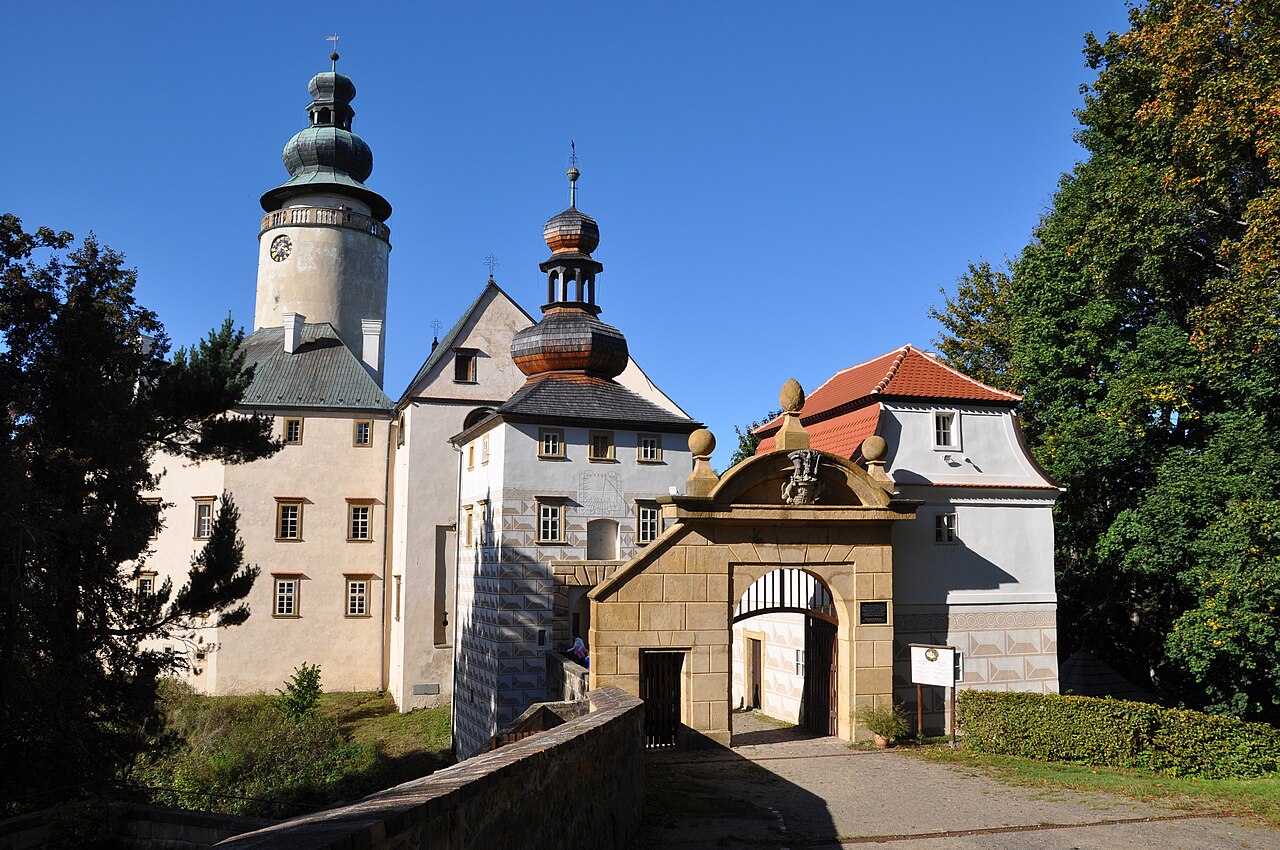
The courtyard facades feature sgraffito rustication, a decorative plaster technique revealing contrasting layers beneath, while interiors preserve rich Baroque elements. The bergfried tower underwent a Neo-Gothic renovation in 1846, giving it the distinctive appearance it retains today.
Lower castle and surrounding grounds
At the northern foot of the hill lies the lower castle, or Nový zámek, a two-story Empire-style building with a central risalit, facing a one-story inn. This section reflects 19th-century architectural and functional adaptations related to estate management and hospitality.
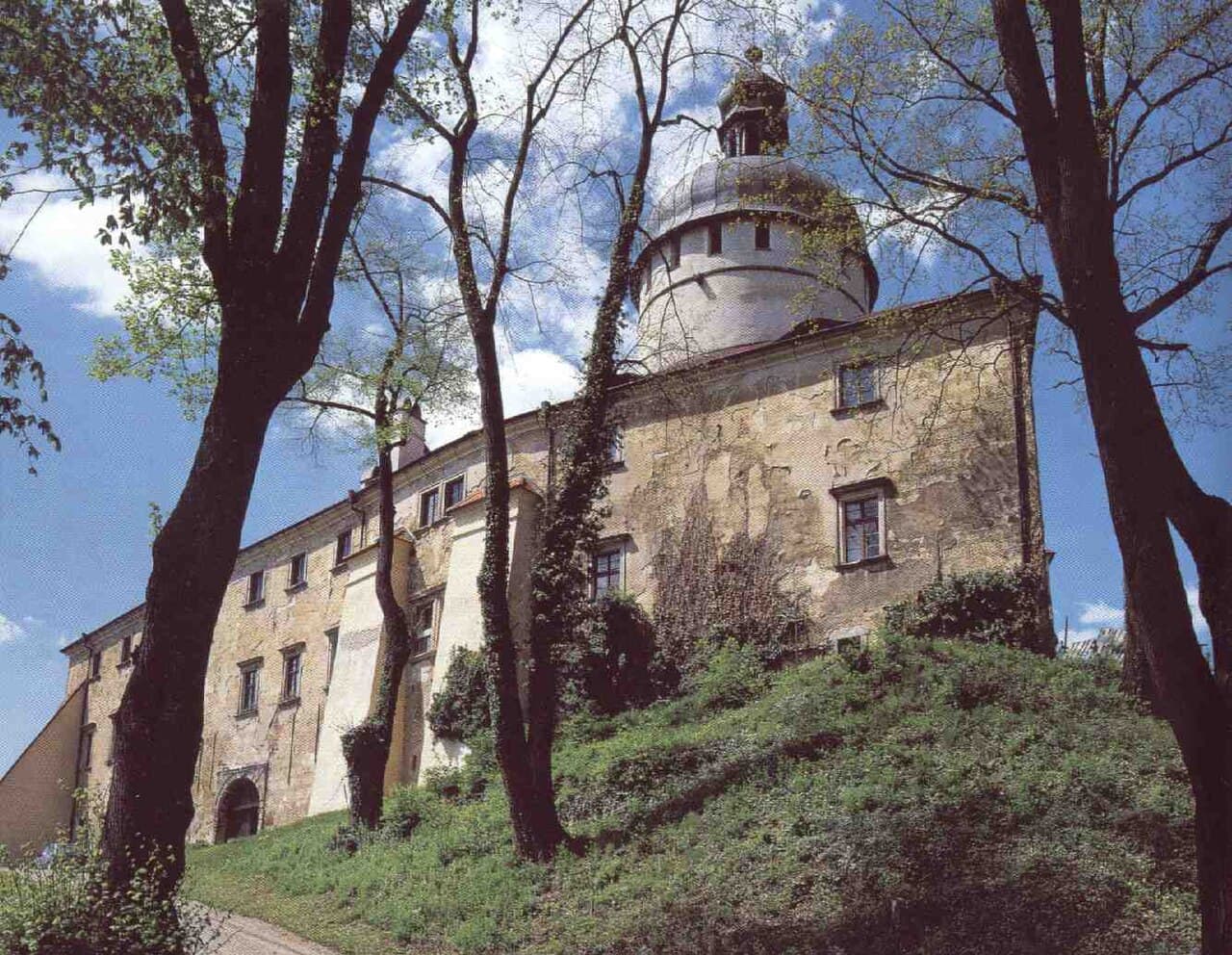
The castle grounds include a large central courtyard enclosed by multiple wings and a smaller courtyard adjacent to a round corner tower topped with a dome-shaped roof. Nearby archaeological remains of a 15th-century siege camp, including fortified command posts and artillery emplacements, provide valuable insights into medieval military history.
Cultural significance and visitor experience
Declared a national cultural monument of the Czech Republic in 2008, Grabštejn Castle is a site of considerable historical, architectural, and cultural importance. Its preservation and restoration have ensured that visitors can experience a tangible connection to the region's medieval and Renaissance past.
The castle's St. Barbara chapel remains a highlight for art historians and tourists alike, showcasing rare Renaissance and early Mannerist frescoes. The castle tower provides sweeping views of the unique tri-border area, enhancing its appeal as a destination for cultural tourism.
Today, the castle is accessible to the public with guided tours that illuminate its rich history, architectural evolution, and the stories of the noble families who shaped its legacy. The combination of well-preserved interiors, historical artifacts, and scenic surroundings makes Grabštejn a must-visit for enthusiasts of medieval fortifications and Renaissance architecture.
Frequently asked questions (FAQ)
- How do I get to Grabštejn Castle?
- Grabštejn Castle is located in Hrádek nad Nisou, Czechia, accessible by car and public transport from nearby cities like Liberec. The castle is well signposted and has parking facilities for visitors.
- What are the opening hours and ticket prices for Grabštejn Castle?
- The castle is open daily from 10:00 to 17:00. Tickets cost €5 for adults and €3 for children, with guided tours available to enhance the visitor experience.
- What architectural styles are represented at Grabštejn Castle?
- Grabštejn Castle showcases a blend of Gothic, Renaissance, Baroque, and Neoclassical styles, reflecting its historical evolution from a medieval fortress to a Renaissance chateau and later modifications.
- Is the St. Barbara chapel open to visitors?
- Yes, the St. Barbara chapel is a key highlight of the castle and is accessible during guided tours. Visitors can admire its exquisite Renaissance frescoes and early Mannerist artwork.
- Can I see panoramic views from the castle?
- Visitors can climb the castle's bergfried tower, which offers stunning panoramic views of the surrounding landscape, including the unique three-border area where Czechia, Germany, and Poland meet.
Photo gallery

Photo by Roman Kursa;•Public domain
Information
Opening hours
10:00-17:00, daily
Ticket prices
€5 adult, €3 child
Current owner
National Heritage Institute
Website
Visit websiteSources & official resources
Verify the information above using these authoritative references.
Loading map...
Visitor reviews
No reviews yet. Been here? Write the first review and help other travelers!
Write the first reviewVisited this castle? Share your experience
Your review helps other travelers and adds first-hand knowledge to our encyclopedia.