Tukums
Tukums Castle stands as a significant historical monument in Tukums, Latvia, embodying the defensive architecture and medieval history of the region. Originally constructed by the Livonian Order in the late 13th century, this hill castle was strategically positioned on a high bank overlooking the River Slocene, utilizing natural topography to enhance its defensive capabilities.
The initial decision to build a fortified structure in Tukums was made after the Teutonic Knights occupied the territory in the mid-13th century. Early on, the site may have hosted a fortified granary or a similar economic building, reflecting the practical needs of the Order in securing their holdings. The precise date when the stone castle was erected is uncertain but is generally accepted to be around the beginning of the 14th century, with some sources suggesting construction commenced as early as 1277.
Architectural design and defensive features
The castle was modest in size, built on a rectangular plan enclosing a courtyard surrounded by a substantial stone wall approximately 7.5 meters tall and 1.6 meters thick. Along the western curtain wall stood the main building, which likely served multiple functions including residential and administrative purposes for the Order's local officials.
Its defensive system was supplemented by an artificial moat, deep and wide, which, combined with the elevated position on the riverbank, made direct assaults difficult. The castle's location was chosen not only for defense but also for control over the route connecting Courland to Prussia and Riga, serving as a strategic waypoint rather than a major military fortress.
Surviving structures and restoration
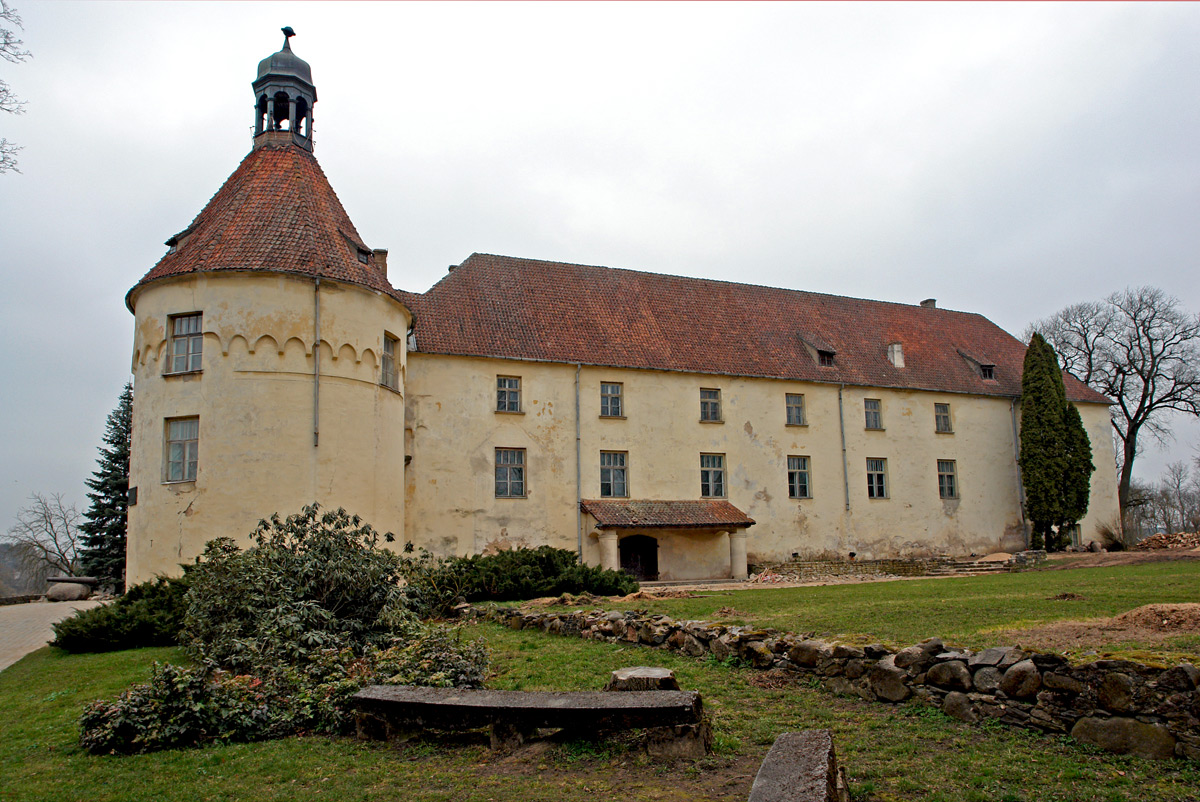
Today, only a fragment of the original castle remains. The most prominent remnant is the northern part of the western wing, which survives as a tower measuring approximately 11.5 by 11.5 meters with thick stone walls. This tower has been restored and now houses the Tukums History Museum, showcasing the town's heritage from ancient times through the modern era.
In addition to the tower, a free-standing segment of the original stone curtain wall, several meters long, remains visible. These remnants provide valuable insight into the castle's scale and construction techniques.
Historical context and significance
The castle's relatively small size and modest fortifications reflect its limited military importance, as the territory was directly governed by the masters of Livonia. Its primary role was to serve as a secure stopover and administrative center on the Order's route rather than as a frontline fortress.
In the second half of the 15th century, Tukums Castle was destroyed during conflicts between the citizens of Riga and the Teutonic Order. Despite this, it was quickly rebuilt and remained in use until the secularization of Livonia in 1561, when the castle and surrounding lands became part of the Duchy of Courland and Semigallia.
The Great Northern War (1700–1721) marked the end of the castle's functional life. By 1712, reports described it as abandoned and in a state of disrepair, suitable only for demolition. Over subsequent centuries, urban development enveloped the site, with modern buildings constructed over much of the former castle grounds.
Later uses and cultural legacy
In the 18th century, the surviving tower was adapted for various civic functions, including serving as a prison and housing the carceral stocks. These utilitarian uses preserved the structure through changing times.
Today, the restored tower functions as the Tukums History Museum, offering visitors a glimpse into the town's rich past and the castle's role within it. Exhibits cover the early medieval period, the Livonian Order's influence, and the evolution of Tukums through the centuries.
Visiting tukums castle today
Visitors to Tukums Castle can explore the restored tower and museum, which provide interpretive displays and artifacts related to the castle's history and the broader region. The castle's location offers scenic views of the River Slocene and the surrounding town.
The site is accessible to the public, and the museum operates regular visiting hours, making it a valuable cultural and educational destination in Latvia.
Architectural significance in the baltic context
Tukums Castle exemplifies the smaller-scale fortifications typical of the Livonian Order in the Baltic region during the High Medieval period. Its design prioritizes strategic placement and practical defense over grandiose scale, reflecting the Order's administrative and military needs in a contested frontier zone.
The castle's preservation and adaptive reuse as a museum highlight the importance of maintaining medieval heritage sites for cultural identity and historical education in Latvia.
Frequently asked questions (FAQ)
- How do I get to Tukums Castle?
- Tukums Castle is easily accessible by car or public transport. If you are traveling from Riga, you can take a bus that runs regularly to Tukums, making it convenient for visitors.
- What is the historical significance of Tukums Castle?
- Tukums Castle, originally built in the 13th century, played a crucial role in the defense and administration of the region. It reflects the historical struggles of the Livonian Order and the development of local governance throughout the centuries.
- When was Tukums Castle constructed?
- Construction of Tukums Castle began in 1253, and it was completed in the 14th century. The castle has undergone various renovations and restorations, preserving its historical essence while adapting to modern needs.
- Can I take guided tours of Tukums Castle?
- Yes, guided tours are available for visitors, offering deeper insights into the castle's history and architecture. These tours are led by knowledgeable guides who can enhance your experience and answer any questions you may have.
- Why is the architecture of Tukums Castle unique?
- The architecture of Tukums Castle showcases a blend of Gothic and Renaissance styles, making it a fascinating study for architecture enthusiasts. The castle features distinct defensive structures, including thick walls and towers, which highlight its historical purpose.
- Is it possible to host events at Tukums Castle?
- Yes, Tukums Castle is available for various events, including weddings and corporate gatherings. The picturesque setting and historical ambiance make it an attractive venue for special occasions.
- What are the opening hours of Tukums Castle?
- Tukums Castle is open to visitors from 10 AM to 6 PM daily, with extended hours during the summer months. It is advisable to check the official website for any seasonal changes or special events that may affect these hours.
- What are the ticket prices for visiting Tukums Castle?
- Ticket prices for Tukums Castle are quite reasonable, with discounts available for students and seniors. Children under a certain age may enter for free, making it an affordable outing for families.
- When is the best time to visit Tukums Castle?
- The best time to visit Tukums Castle is during the late spring to early autumn months when the weather is mild and outdoor activities are plentiful. This is also when many historical reenactments and events take place, enhancing your visit.
- What nearby attractions can I visit while in Tukums?
- While visiting Tukums Castle, you can also explore the beautiful Tukums Town Park and the charming local shops in Tukums. Additionally, nearby attractions include the scenic Lake Tukums and various historical sites that reflect the rich culture of Latvia.
Information
Loading map...
Visitor reviews
No reviews yet. Been here? Write the first review and help other travelers!
Write the first reviewVisited this castle? Share your experience
Your review helps other travelers and adds first-hand knowledge to our encyclopedia.