Slokenbeka
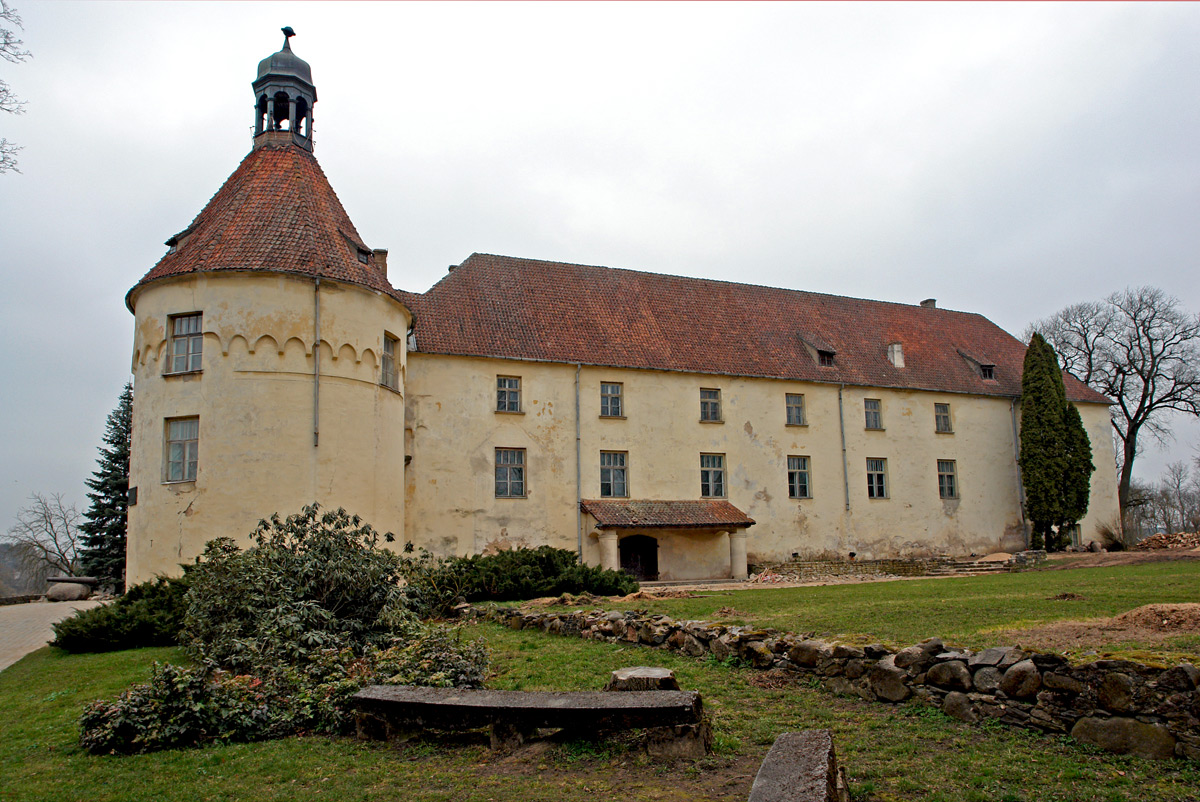
Šlokenbeka Castle stands as a remarkable example of a fortified manor in Latvia, uniquely preserving the architectural and historical legacy of a bastioned fortress integrated with a manor estate. Constructed originally in the 15th century by the Livonian Order, this site embodies the transition from medieval military fortifications to early modern residential and agricultural functions. Its strategic location near the Slocene river valley and along the vital Riga–Tukums road underscores its historical role in regional defense and control of transportation routes.
Historical origins and military significance
The earliest written mention of Šlokenbeka dates to 1544, although its foundations likely trace back to the late 15th century. The Livonian Order granted lands in the Tukums province to the noble von Butlar family, who are credited with initiating the construction of the fortified manor. This followed the 1484 conflict between the Archbishopric of Riga and the Livonian Order, during which the nearby Tukums Castle was captured and plundered by Riga's townspeople. These events prompted the Order and Werner von Butlar, a prominent knight, to erect a defensive stronghold to safeguard the road towards Riga and secure the surrounding territory.
Šlokenbeka was built on the right bank of the Slocene river, positioned on a gentle slope within an elongated bend of the river. The fortress was designed as a trapezoidal enclosure measuring approximately 128 by 111 by 123 by 84 meters. The outer walls, constructed from fieldstones about one meter thick, featured regularly spaced gun loops every five meters, carefully crafted with brick linings to accommodate the use of firearms. This architectural detail reflects the adaptation of fortifications to gunpowder weaponry during the Late Medieval period. The presence of a moat on the western side, the weakest point of the defenses, further enhanced the site's security.
Architectural features and defensive structures
The castle's defensive perimeter is characterized by its thick ring wall encompassing the courtyard, which originally housed a residential manor building at its center. The walls are punctuated by between 31 and 35 surviving firing slits, many of which were rediscovered and restored during conservation efforts in the late 20th century. These narrow openings are wider on the interior side, allowing defenders to fire while maintaining protection.
Two prominent gate towers stand at the northern and southern ends of the enclosure, although these date from the 17th and 18th centuries when Šlokenbeka transitioned from a military fortress to a manor estate. These towers feature mansard roofs and were part of a broader adaptation of the site for domestic and agricultural use, including the addition of farm buildings such as barns, a distillery, and animal shelters constructed against the inner side of the walls.
The castle's location on a plateau overlooking the Slocene river valley provided a natural defensive advantage, with the terrain sloping down approximately five meters from northwest to southeast. The moat on the higher ground side and the robust walls formed a formidable barrier against attackers in its early history.
Ownership changes and historical events
Šlokenbeka's ownership history reflects the complex political and religious shifts in the region. In 1537, the Livonian Order's master Hermann von Brüggeneye confiscated the estate from Dietrich von Butlar due to his support for the Reformation and involvement in the Saaremaa Rebellion. The property was subsequently granted to Dietrich Schenking in 1544, marking the first documented mention of the manor by name.
Throughout the 16th and early 17th centuries, the castle remained militarily relevant, but it suffered plundering during the Polish-Swedish wars in 1605 and 1622 when Swedish forces twice raided the estate. These events diminished its defensive importance, leading to a gradual transformation into an agricultural manor.
By the late 17th century, Šlokenbeka was owned by Chancellor Putthammer of the Duchy of Courland and Semigallia, who initiated significant renovations. These included the construction of the two gate towers and the integration of domestic buildings within the walls, signaling the end of its military function.
In the 18th and 19th centuries, the estate changed hands frequently among noble families, including the von Grothus, von Medem, von Bulmering, and von der Recke lineages. During World War I, the manor served as a German army field hospital, illustrating its continued strategic utility in times of conflict.
Following the agrarian reforms of 1920, the manor was transferred to the Tukums forestry administration. Its use as a road machinery storage facility during the Soviet era led to neglect and partial ruin of several buildings. Restoration efforts began in 1977, focusing on stabilizing the medieval walls and preserving the site's heritage.
Architectural evolution and current state
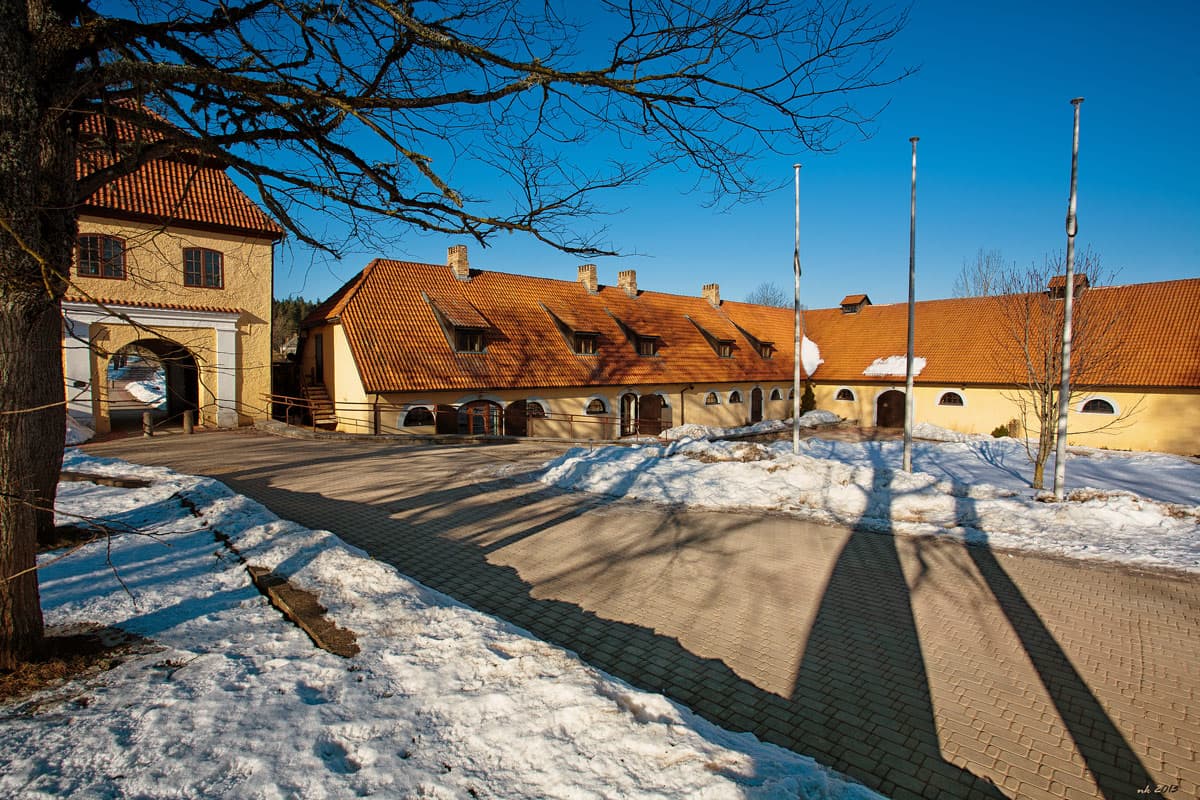
The original medieval manor house located at the center of the courtyard was dismantled, and most of the current buildings date from the 19th century. These include barns, distilleries, and other agricultural structures built against the fortress walls. The 18th-century gate towers remain prominent features, capped with characteristic mansard roofs.
Šlokenbeka is unique as the only surviving fortified manor in Latvia, exemplifying the Kuronian road fortress typology, designed specifically to protect key transportation routes. The site's walls and gun loops represent a significant adaptation to early firearm technology, bridging medieval and early modern military architecture.
Today, Šlokenbeka is a protected cultural heritage site with largely intact defensive walls and two restored gate towers. It hosts the Latvian Road Construction History Museum and includes hospitality facilities such as a hotel and restaurant within the restored manor buildings. Archaeological excavations have uncovered artifacts from the 16th and 17th centuries, enriching the understanding of the castle's multifaceted history.
Visiting Šlokenbeka Castle
Visitors to Šlokenbeka can explore the extensive defensive walls with their numerous firing slits, gaining insight into the fortress's military design. The two gate towers provide a glimpse into the later manor period architecture. The museum offers exhibitions on the history of road construction in Latvia, linking the site's historical role in protecting vital routes to its current cultural function.
The castle's picturesque setting along the Slocene river and its well-preserved ruins make it a compelling destination for history enthusiasts, architecture scholars, and cultural tourists alike. Restoration efforts have ensured safe access to key areas, while the combination of museum, hotel, and restaurant facilities supports a comprehensive visitor experience.
Frequently asked questions (FAQ)
- What is the historical significance of Slokenbeka Castle?
- Slokenbeka Castle, built in the late 15th century, represents a remarkable example of medieval architecture in Latvia. It has served various roles throughout its history, including a defensive fortification and a noble residence, reflecting the region's rich cultural heritage.
- When was Slokenbeka Castle constructed?
- The construction of Slokenbeka Castle began in 1490 and was completed in the early 16th century. Over the centuries, it has undergone several renovations, preserving its historical essence while adapting to modern needs.
- Can I visit Slokenbeka Castle?
- Yes, Slokenbeka Castle is open to visitors, offering guided tours that delve into its history and architecture. Be sure to check the official website for specific visiting hours and any seasonal events that may enhance your experience.
- Is it possible to access Slokenbeka Castle by public transport?
- Yes, Slokenbeka Castle is accessible by public transport, with local buses running from major cities in Latvia. Visitors can also enjoy scenic walks from nearby towns, making it a convenient stop for those exploring the region.
- What are the opening hours of Slokenbeka Castle?
- Slokenbeka Castle is typically open from 10 AM to 6 PM during the summer months, with shorter hours in the winter. It's advisable to check their official website for any changes in timings or special holiday hours before planning your visit.
- What is the best time to visit Slokenbeka Castle?
- The best time to visit Slokenbeka Castle is during the late spring and summer months when the weather is pleasant and the grounds are lush. Additionally, various cultural events and festivals often take place during this period, providing a richer experience.
- Are there any nearby attractions to Slokenbeka Castle?
- Yes, nearby attractions include the beautiful Slokenbeka Manor and the scenic landscapes of the surrounding countryside. Visitors can also explore other historical sites and enjoy local Latvian cuisine at nearby restaurants.
- What are the ticket prices for visiting Slokenbeka Castle?
- Ticket prices for Slokenbeka Castle are generally affordable, with discounts available for students and seniors. Children under a certain age may enter for free, making it a great family-friendly destination.
Photo gallery

Information
Website
Visit websiteSources & official resources
Verify the information above using these authoritative references.
Loading map...
Visitor reviews
No reviews yet. Been here? Write the first review and help other travelers!
Write the first reviewVisited this castle? Share your experience
Your review helps other travelers and adds first-hand knowledge to our encyclopedia.