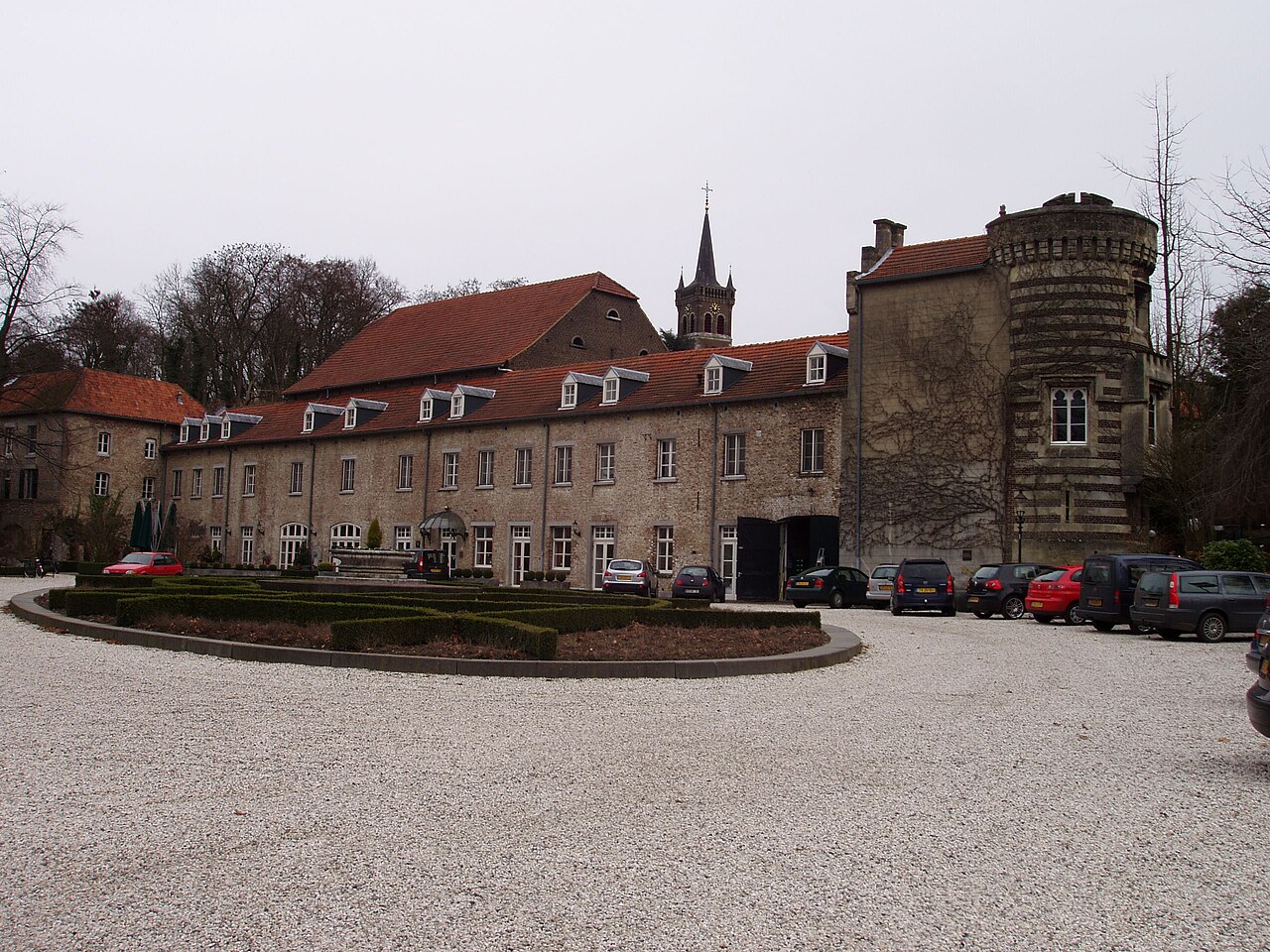
Jansgeleen Castle Ruins
Jansgeleen Castle, originally known as House Spaubeek, was established in the 13th century along the small Geleen river in what is now Spaubeek, the Netherlands. It served as the initial seat of the former County of Geleen during the 16th century, marking its importance in the region's medieval governance and territorial organization. The castle's strategic location by the river provided natural defense advantages and access to water resources, which were critical for sustaining its inhabitants and supporting its agricultural and milling activities.
The castle acquired the name Heer Jansgelene in the 15th century, named after one of its notable owners, Lord Jan Rode van Opsinnich. Over time, a linguistic confusion led to its erroneous renaming as Sint Jansgeleen, mistakenly associating it with St. John the Baptist. This misnomer persisted despite the castle's secular origins and ownership history.
Architectural features and layout
Jansgeleen Castle was a typical high medieval fortified residence, constructed primarily as a water castle, utilizing the nearby river to form defensive moats. Its design included a main residential building surrounded by protective walls and water defenses, common for castles of this period in the Low Countries. The castle complex featured a forecourt dating from the 16th century, which served as a functional space for service buildings and access points.
One of the most significant surviving structures linked to Jansgeleen Castle is the Jansmolen water mill. This mill was integral to the castle's economy, harnessing the river's flow for grain milling. The mill building, along with the forecourt, has been preserved as provincial monuments, providing valuable insight into the castle's operational infrastructure.
Historical significance and ownership
Throughout its history, Jansgeleen Castle played a pivotal role as a noble residence and administrative center. Its position as the first seat of the County of Geleen underscores its regional importance. Ownership by figures such as Lord Jan Rode van Opsinnich reflects the castle's connection to local aristocracy and feudal governance during the Middle Ages.
The castle's decline began in the late 19th century, as its structures fell into disrepair. The industrial developments of the 20th century, particularly the mining activities associated with the nearby Maurits mine in Geleen, inflicted further damage. The extensive mine galleries undermined the castle's foundations, accelerating its deterioration.
Demolition and preservation efforts
By the 1930s, Jansgeleen Castle was largely demolished due to its poor condition and the impact of mining subsidence. Despite the loss of most of the original structures, preservation efforts have maintained the water mill (Jansmolen) and the forecourt, both recognized as provincial monuments. These remnants offer a tangible link to the castle's medieval past and its role in the region's history.
Current status and visitor information
Today, the site of Jansgeleen Castle is classified as archaeological ruins, with limited above-ground remains. The preserved mill and forecourt are accessible and provide educational opportunities for visitors interested in medieval architecture and regional history. The castle's story is emblematic of many medieval fortifications in the Netherlands that have been lost or transformed due to industrialization and changing land use.
Legacy and cultural importance
Although Jansgeleen Castle no longer stands in its original grandeur, its legacy endures through the surviving structures and historical records. The castle's evolution from a medieval noble seat to ruins impacted by modern industry reflects broader themes in Dutch heritage preservation. It remains a subject of interest for historians, archaeologists, and visitors exploring the medieval landscape of the Limburg province.
Frequently asked questions (FAQ)
- What is the historical significance of Jansgeleen Castle Ruins?
- Jansgeleen Castle Ruins, located in Spaubeek, is a remnant of a medieval castle that dates back to the 13th century. It played a vital role in the regional power dynamics of the time, serving as a stronghold for local nobility.
- When was Jansgeleen Castle originally built?
- The original construction of Jansgeleen Castle began in the 13th century, making it a significant historical site in the region. Over the centuries, it underwent various renovations and expansions until its eventual decline.
- Can I visit Jansgeleen Castle Ruins?
- Yes, visitors are welcome to explore the ruins of Jansgeleen Castle. The site is open to the public, allowing you to walk through its remnants and enjoy the surrounding scenic landscape.
- What are the opening hours for Jansgeleen Castle Ruins?
- Jansgeleen Castle Ruins are generally accessible to visitors year-round. However, it's best to check local guidelines or contact nearby tourist information for any seasonal variations in opening hours.
- Is it possible to access the castle ruins with a wheelchair?
- The accessibility of Jansgeleen Castle Ruins can be challenging due to uneven terrain and the nature of the ruins. Unfortunately, many parts of the site may not be wheelchair accessible, so it's advisable to plan accordingly.
- When is the best time to visit Jansgeleen Castle Ruins?
- The best time to visit is during the spring and early autumn when the weather is mild, and the surrounding nature is at its most beautiful. This allows for an enjoyable experience while exploring the historical site.
- Are there any nearby attractions to visit after Jansgeleen Castle Ruins?
- Yes, after visiting the ruins, you can explore the charming village of Spaubeek, which offers local shops and cafes. Additionally, nearby attractions include other historical sites and beautiful walking trails in the Limburg region.
- What are the ticket prices for visiting Jansgeleen Castle Ruins?
- Visiting Jansgeleen Castle Ruins is typically free of charge, as it is a public historical site. However, donations are often appreciated to help maintain the area and its historical significance.
Information
Loading map...
Visitor reviews
No reviews yet. Been here? Write the first review and help other travelers!
Write the first reviewVisited this castle? Share your experience
Your review helps other travelers and adds first-hand knowledge to our encyclopedia.