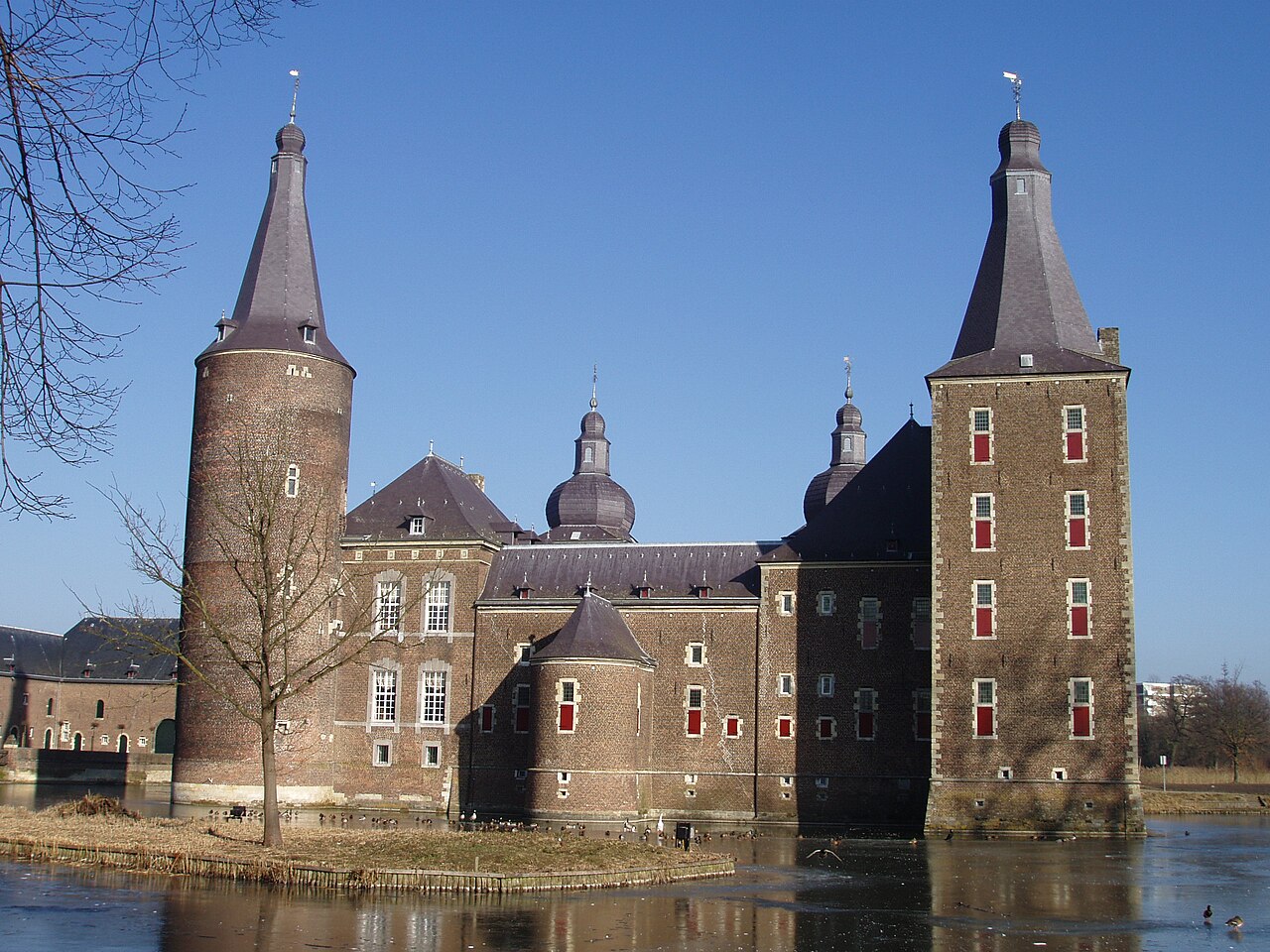
Hoensbroek Castle, also known as Gebrookhoes or Gebrook Castle, stands as one of the largest and most historically significant castles in the Netherlands. Located in the province of Limburg, this castle has a rich history that dates back to the early 13th century. Its strategic position on key trade routes to Maastricht, Aachen, and Cologne made it a vital stronghold in the region between the Meuse and the Rhine rivers. The castle complex, which covers approximately 3,000 square meters, features a remarkable blend of architectural styles reflecting its various phases of construction and renovation from the 14th to the 18th century.
The oldest surviving part of the castle is the tall round tower, dating from around 1360, built during the renovations led by Herman Hoen. However, the site's history extends further back to approximately 1225, when a motte-and-bailey precursor stood on the swampy terrain. By 1250, a fortified house had been established on the site of the present castle, marking the beginning of its evolution into a major fortress. Over the centuries, the castle was expanded in successive stages, reflecting the changing needs of defense and residence, eventually becoming the largest castle in Limburg with 67 corridors, rooms, and spaces.
Historical significance and ownership
The castle was originally the seat of the knight Herman Hoen, the first lord of Hoensbroek, whose family name became synonymous with the castle itself. After his support in the 1388 conflict against Gulik and Gelre, he was rewarded by Duchess Joan of Brabant with the manor of Gebrook, which was separated from Heerlen's territory. For nearly six centuries, Hoensbroek Castle remained the ancestral residence of the Hoen van den Broeck family and their descendants, including the royal barons, counts, and marquesses of Van en tot Hoensbroeck.
In the late 18th century, the family ceased to inhabit the castle, leading to a period of decline. The property changed hands in 1927 when Count Frans Lothar sold it to the "Ave Rex Christe" foundation. This marked the beginning of extensive restoration efforts. Between 1930 and 1940, the castle was restored under the guidance of architect Nic. Ramakers. Further restoration took place from 1986 to 1989, preserving the castle's architectural heritage. Today, the castle is managed by the municipality and functions as a museum, welcoming visitors to explore its rich history and remarkable architecture.
Architectural evolution and styles
Medieval origins and fortifications
The castle's initial medieval structure included a motte-and-bailey design, typical of early fortifications, with a wooden or stone keep on a raised earthwork. The surviving round tower from the 14th century is a testament to the castle's early defensive purpose. The complex is surrounded by a moat, enhancing its defensive capabilities, and the main building is accessed via a bridge crossing this water barrier.
Mosan Renaissance expansion (17th century)
The most significant architectural transformation occurred between 1640 and 1660, when the castle was extensively rebuilt in the Mosan Renaissance style. This phase was commissioned by Baron Adria Hoen van Hoensbroek, heir to the duchy marshalship of Gelre. The architect Matthieu Dousin of Visé led the project, resulting in the construction of the square-shaped buildings around the third courtyard, which now define much of the castle's present appearance.
This 17th-century wing, occupying three-quarters of the complex, features elegant details including fireplaces from around 1650 in the dining room and other chambers. A notable feature is the secret room hidden behind a bookcase, illustrating the castle's blend of residential comfort and defensive intrigue. The castle's exterior includes two squat, square towers with distinctive onion-shaped spires flanking the entrance, and two taller, semi-independent corner towers at the rear with varying shapes and slender spires, creating an imposing and picturesque silhouette.
18th-century renovations and French influence
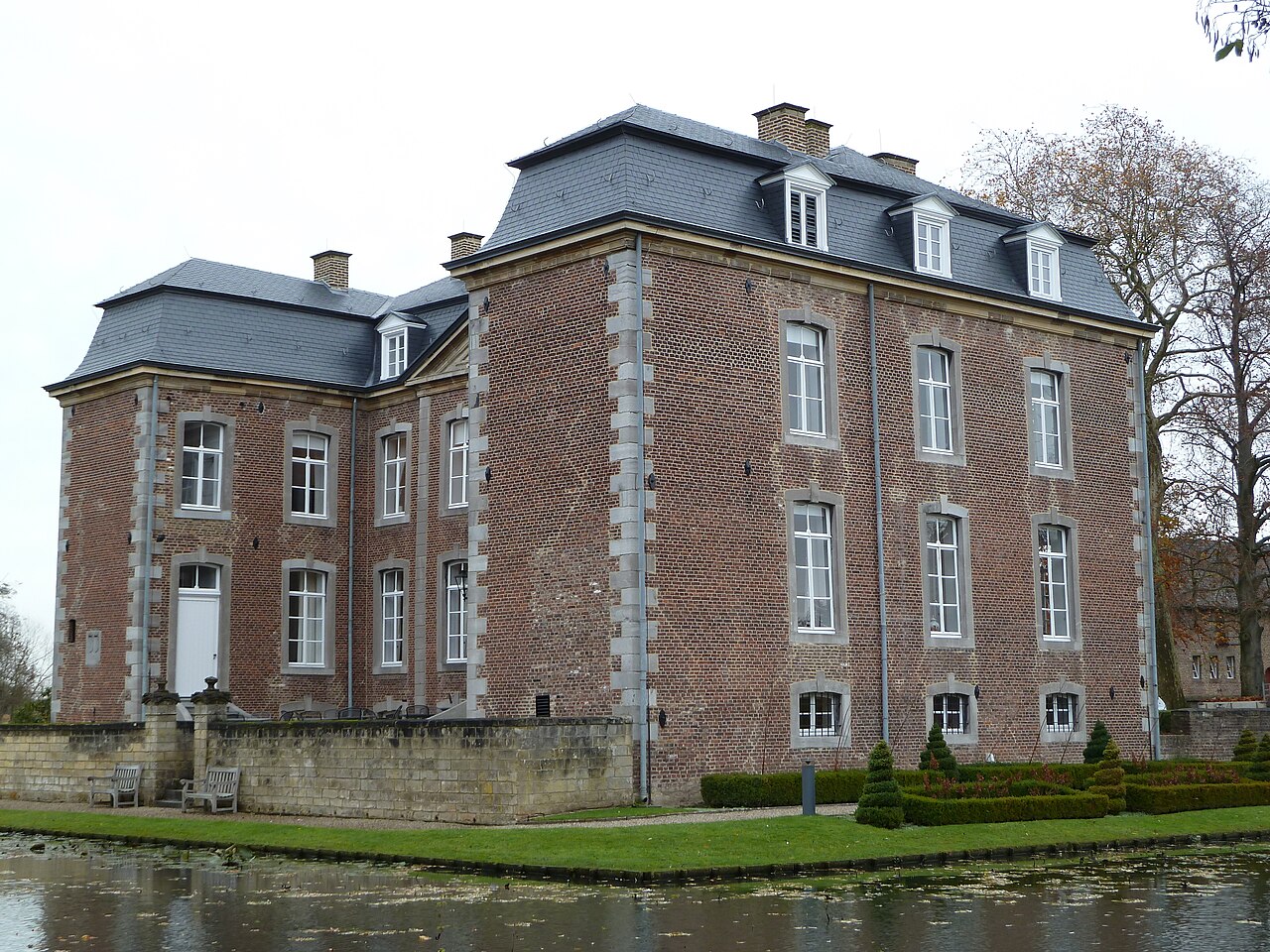
Between 1720 and 1722, another major renovation was undertaken by Frans Arnold Reichsgraaf van Hoensbroek. This work produced the renewed north-western wing of the castle, which showcases fine furnishings and decorative elements reflecting French artistic influence. The knights' hall and two-room fireplaces, along with beautiful illusionistic ceiling paintings, exemplify the refined taste and cultural connections of the castle's owners during this period.
The last lord to reside in the castle was Lotharius Frans, son of Frans Arnold, who lived there until 1787, shortly before the upheavals of the French Revolution altered the region's social and political landscape.
Layout and notable features
The castle complex is arranged around a rectangular courtyard enclosed by four wings, with additional external balconies forming U-shaped piazzale and nederhof spaces that surround two large courtyards. The overall footprint of approximately 50 by 60 meters makes it one of the largest castles in the region.
The castle's defensive features include the moat and the bridge leading to the main entrance, flanked by its characteristic towers. The rear facade, with its wide water defenses and imposing towers, is particularly striking and contributes significantly to the castle's charm and grandeur.
Current use and cultural significance
Today, Hoensbroek Castle is a treasured cultural monument and museum, open to the public for tours and events. It is part of the Historisch GOUD heritage society alongside the Thermenmuseum and the Rijckheyt regional archives. The castle offers visitors a unique glimpse into the architectural evolution from medieval fortifications to Renaissance and Baroque residential grandeur, as well as the history of the noble families who shaped the region.
The castle's extensive restoration and preservation efforts ensure that its rich history and architectural beauty continue to be appreciated by future generations. Its combination of medieval defensive structures, Mosan Renaissance elegance, and 18th-century French-influenced interiors make it a remarkable example of a multi-period castle complex in the Netherlands.
Frequently asked questions (FAQ)
- How do I get to Hoensbroek Castle?
- Hoensbroek Castle is located in Limburg, Poland, and can be easily accessed by car or public transportation. If you are driving, there are parking facilities available nearby. For public transport, check local bus schedules that service the area.
- What is the historical significance of Hoensbroek Castle?
- Hoensbroek Castle has a rich history dating back to the 13th century, making it one of the oldest castles in the region. It served as a residence for various noble families and played a significant role in local history. Today, it stands as a testament to medieval architecture and heritage.
- When was Hoensbroek Castle built?
- The construction of Hoensbroek Castle began in the 13th century, with various renovations and expansions occurring over the centuries. The castle showcases elements from different architectural styles, reflecting its long history and the changes in design preferences over time. Its oldest parts date back to around 1250.
- Can I take guided tours of Hoensbroek Castle?
- Yes, guided tours are available at Hoensbroek Castle, providing visitors with in-depth knowledge about its history and architecture. Tours typically run throughout the day and are led by knowledgeable guides who share fascinating stories about the castle. It's advisable to check the schedule and book in advance during peak seasons.
- Why is Hoensbroek Castle a popular tourist destination?
- Hoensbroek Castle attracts visitors due to its stunning architecture, beautiful gardens, and rich history. The castle offers a unique glimpse into medieval life and features a variety of exhibits that showcase its past. Additionally, the picturesque surroundings make it a delightful spot for photography and leisurely walks.
- Is it possible to host events at Hoensbroek Castle?
- Yes, Hoensbroek Castle offers facilities for hosting various events, including weddings and corporate gatherings. The enchanting backdrop of the castle provides a unique atmosphere for any occasion. It is recommended to contact the castle management for availability and specific arrangements.
- What are the opening hours of Hoensbroek Castle?
- Hoensbroek Castle is typically open to visitors from 10 AM to 6 PM during the summer months, with reduced hours in winter. It is closed on certain holidays, so it's best to check the official website for the most current information. Planning your visit within the operating hours will ensure you have ample time to explore.
- What are the ticket prices for visiting Hoensbroek Castle?
- Ticket prices for Hoensbroek Castle vary depending on age and group size, with discounts often available for children and seniors. Generally, adult tickets are priced reasonably, making it accessible for families. It's a good idea to review the official website for up-to-date pricing and any special promotions.
- What is the best time to visit Hoensbroek Castle?
- The best time to visit Hoensbroek Castle is during the spring and early fall when the weather is mild and the gardens are in full bloom. These seasons offer a pleasant atmosphere for exploring the castle grounds and nearby attractions. Summer can be busy, but it’s also a vibrant time with special events and activities.
- Are there nearby attractions to visit after Hoensbroek Castle?
- Yes, there are several nearby attractions to enjoy after visiting Hoensbroek Castle. The surrounding Limburg area is known for its beautiful landscapes, hiking trails, and quaint villages. Additionally, you can explore local museums and cultural sites that further enrich your experience of the region.
Loading map...
Visitor reviews
No reviews yet. Been here? Write the first review and help other travelers!
Write the first reviewVisited this castle? Share your experience
Your review helps other travelers and adds first-hand knowledge to our encyclopedia.