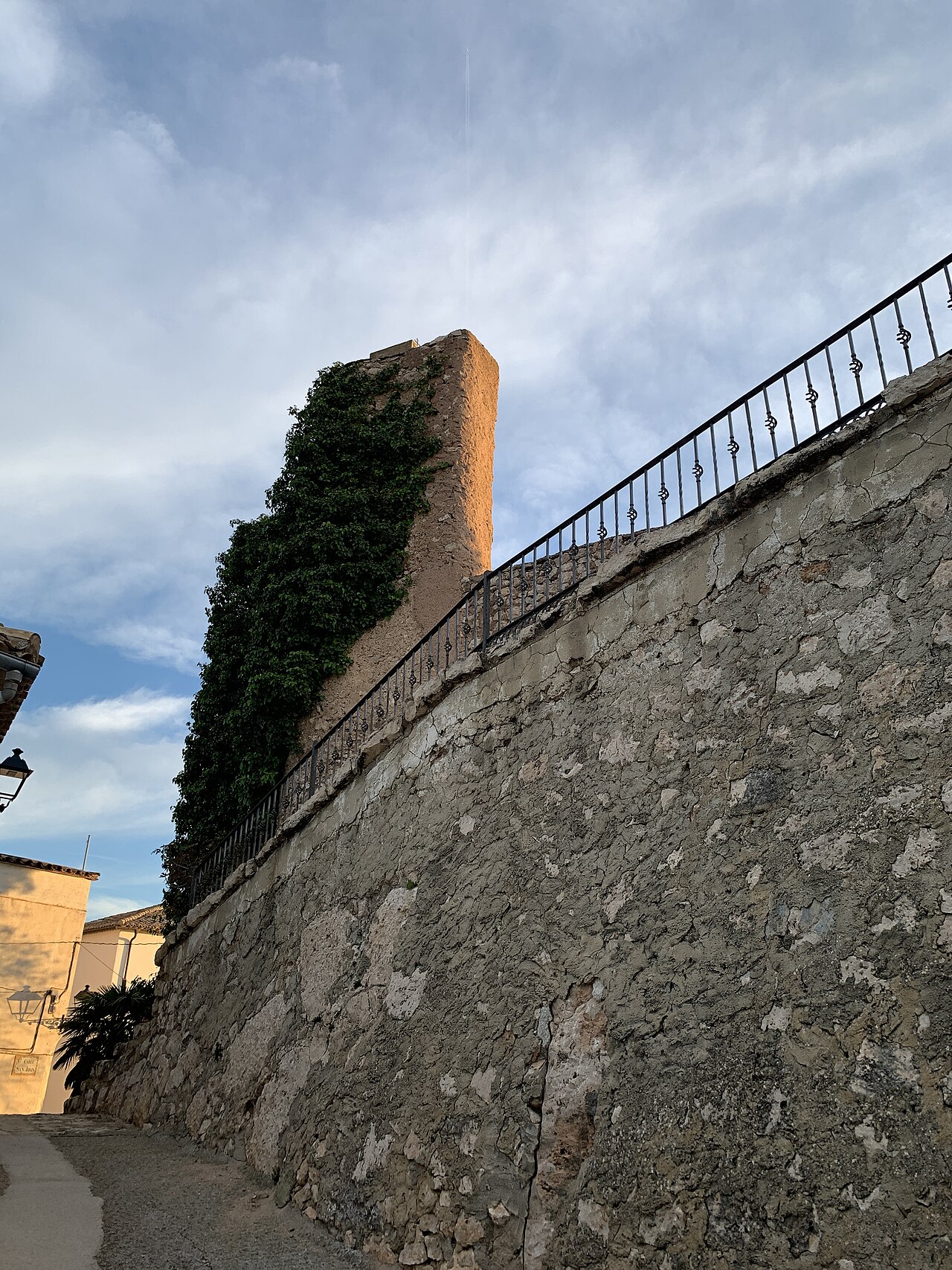
Jalance Castle
Jalance Castle stands as a significant example of a Muslim-origin fortress constructed in the 11th century, during the high medieval period. Located on a prominent hill overlooking the town of Jalance in the Ayora-Cofrentes Valley of Spain, the castle's strategic position allowed it to serve as a vital defensive structure for the surrounding lands and inhabitants. Unlike many castles built primarily as feudal strongholds, Jalance Castle's primary role was protective, guarding the local population and territory through various historical periods.
Architectural layout and features
The castle features a distinctive ten-sided polygonal layout, a design that reflects both its military purpose and the architectural influences of its Muslim origins combined with later Christian modifications. The fortification walls are punctuated by arrow slits for archers and are reinforced by circular corner towers, which provided vantage points for surveillance and defense. The castle is divided into two main sections: the upper fortified area and the lower area.
The upper fortified area
Access to the upper section is gained via a staircase leading to a corridor that connects various functional rooms. These include living quarters, essential for the garrison or caretakers; ovens for food preparation; storage areas for supplies; a circular silo likely used for grain storage; and a rectangular cistern designed to collect and store water, crucial during sieges. This area exemplifies the castle's role as a self-sufficient defensive position.
The lower area and its transformation
The lower section of the castle was originally an Islamic albacar, a fortified enclosure used to protect livestock and agricultural resources. Following the Christian reconquest, this space was repurposed into a parade ground, reflecting the change in military and social functions during the post-Islamic period.
Historical context and significance
Jalance Castle's history is deeply intertwined with the town and region it protects. Archaeological excavations have uncovered ceramic remains spanning from the 11th century through to the 19th century, indicating continuous habitation and use over many centuries. This long-term occupation highlights the castle's enduring importance as a defensive and residential site.
During the Carlist Wars in 1836, the castle became a battleground. It was notably defended against attacks led by the Carlist leader Quílez, demonstrating its ongoing military relevance well into the 19th century. The castle's strategic location made it a focal point in regional conflicts.
Natural disasters and restoration efforts
The castle and its surroundings have been affected by natural events, including devastating floods in 1740 and again in 1864. These floods destroyed the castle's orchards and mills and washed away the stone bridge over the Júcar River, a vital access point to the fortress. Despite these challenges, the castle's walls were restored in the 19th century to bolster its defenses during civil conflicts.
In subsequent years, the castle fell into disrepair, but modern efforts focus on consolidating and preserving the structure. These initiatives aim to maintain the castle as a cultural heritage site and a point of historical interest.
Modern use and cultural relevance
Today, Jalance Castle is not only a historical monument but also a site for recreational activities. It provides an ideal setting for adventure sports such as Rugir Pala, attracting visitors seeking outdoor experiences. Additionally, the castle offers scenic views and a unique atmosphere, especially during summer nights when it is illuminated by the nearby Cofrentes nuclear power plant, creating a striking contrast between ancient architecture and modern industry.
Visitors to the castle can explore its architectural features, appreciate its historical significance, and enjoy the natural beauty of the surrounding valley. The castle remains a testament to the layered history of Muslim and Christian influences in Spain and the evolving role of fortifications through the centuries.
Frequently asked questions (FAQ)
- What is the historical significance of Jalance Castle?
- Jalance Castle was originally a Muslim fortress built in the 11th century and later modified by Christians. It played a defensive role for the town of Jalance and was involved in the Carlist Wars of 1836.
- Can I visit Jalance Castle today?
- Yes, Jalance Castle is partially preserved and open to visitors. It offers historical insights and scenic views, making it a popular site for tourists and adventure sports enthusiasts.
- What are the main architectural features of Jalance Castle?
- The castle has a ten-sided polygonal layout with arrow slits and circular corner towers. It includes an upper fortified area with living quarters, ovens, storage, a silo, and a cistern, plus a lower area originally an Islamic albacar.
- When was Jalance Castle built and by whom?
- Jalance Castle was built in the 11th century during the Muslim period in Spain. It was later modified by Christian occupants after the Reconquista.
- Why was the castle important during the Carlist Wars?
- During the Carlist Wars in 1836, Jalance Castle served as a defense point against attacks led by the Carlist leader Quílez, highlighting its strategic military importance even in the 19th century.
Information
Loading map...
Visitor reviews
No reviews yet. Been here? Write the first review and help other travelers!
Write the first reviewVisited this castle? Share your experience
Your review helps other travelers and adds first-hand knowledge to our encyclopedia.