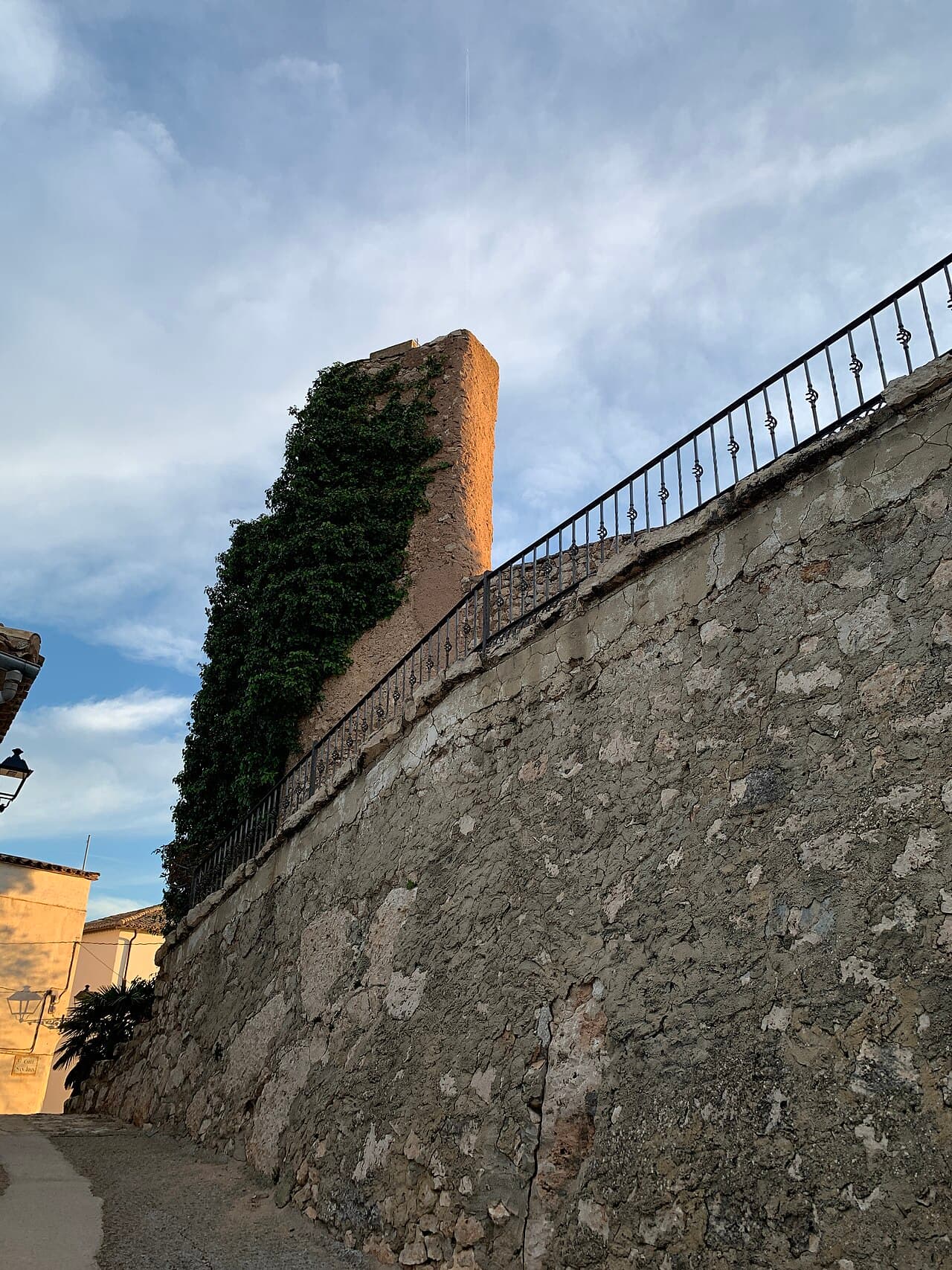
Castle of Jarafuel
The Castle of Jarafuel stands as a significant medieval hill castle located in the town of Jarafuel, Spain. Constructed in the 12th century during the period of Islamic rule on the Iberian Peninsula, this fortress exemplifies the military architecture and strategic defensive needs of its era. Its prominent position atop a hill provided a commanding view of the surrounding landscape, making it a vital stronghold for controlling local territory and protecting the settlement that eventually grew around it.
Historical context and significance
The Castle of Jarafuel was originally built by Muslim builders in the 12th century, a time when the Iberian Peninsula was a patchwork of Muslim and Christian territories. This period was marked by frequent military conflicts and shifting borders as the Christian Reconquista advanced southward. Although detailed records of the castle’s specific military engagements or ownership changes are scarce, it is known that the fortress eventually fell under Christian control, reflecting the broader political transformations occurring across Spain during the late Middle Ages.
The castle’s role as a defensive bastion was crucial in securing the region, serving as a military outpost and a refuge for the local population during times of conflict. Its location on a hilltop not only facilitated surveillance and communication but also made it difficult for attackers to mount successful sieges, a common feature of hill castles designed for defense and control.
Architectural features and remains
Fortification elements
Today, the Castle of Jarafuel remains largely in ruins, yet the surviving structures offer valuable insights into its original design and function. Among the most notable remnants is the base of a cylindrical tower, or torreón in Spanish, which would have served as a lookout point and strong defensive position. Such towers were integral to medieval fortifications, allowing defenders to observe enemy movements and provide flanking fire against attackers.
The construction techniques and materials used in the castle’s walls and tower bases reflect typical 12th-century military architecture in the region, characterized by robust stone masonry designed to withstand assaults. Although much of the castle’s layout is no longer discernible, the extant wall fragments attest to a fortified enclosure that once protected the inhabitants and controlled access to the hilltop.
Chapel remains and religious adaptation
In addition to its military structures, the site also features evidence of a small chapel that was built adjoining a section of the defensive wall. This chapel had a square floor plan measuring approximately six by six meters, with a two-pitched roof supported by wooden beams and covered with tiles. The presence of this chapel indicates a phase of religious use or adaptation following the castle’s initial military purpose, a common occurrence in medieval fortresses that evolved to meet the spiritual needs of their occupants.
While the chapel no longer stands above ground, archaeological documentation of its dimensions and construction provides important clues about the castle’s later history and the multifunctional nature of such sites.
Strategic location and cultural heritage
The castle’s location on a prominent hilltop in the center of Jarafuel underscores its strategic importance throughout history. This elevated position not only offered defensive advantages but also symbolized authority and control over the surrounding territory. Although the castle has suffered damage and decline over the centuries, its ruins remain a tangible link to the region’s medieval past and the complex interplay of cultural influences during the Islamic and Christian periods in Spain.
Today, the site is valued for its historical and cultural significance, attracting visitors interested in medieval military architecture and the history of the Iberian Peninsula. The combination of surviving tower bases, wall fragments, and chapel remains illustrates the layered history of the castle and its evolution from a Muslim fortress to a Christian stronghold.
Frequently asked questions (FAQ)
- When was the Castle of Jarafuel built and by whom?
- The Castle of Jarafuel was built in the 12th century by Muslim builders during the period of Islamic rule on the Iberian Peninsula.
- What remains of the Castle of Jarafuel can visitors see today?
- Visitors can see the ruins including the base of a cylindrical tower (torreón), fragments of defensive walls, and archaeological evidence of a small chapel that once stood on the site.
- What was the strategic importance of the Castle of Jarafuel?
- Its hilltop location provided a commanding view for defense and control of the surrounding area, making it a key military stronghold during the medieval period.
- Did the Castle of Jarafuel serve any religious function?
- Yes, a small chapel with a square plan and two-pitched roof was built adjoining the castle walls, indicating a later religious use of the site.
- Is the Castle of Jarafuel accessible to visitors today?
- The castle is in a ruined state and can be visited as an archaeological site, though specific visiting hours and facilities may vary.
Photo gallery

Information
Loading map...
Visitor reviews
No reviews yet. Been here? Write the first review and help other travelers!
Write the first reviewVisited this castle? Share your experience
Your review helps other travelers and adds first-hand knowledge to our encyclopedia.



