Jaigarh Fort
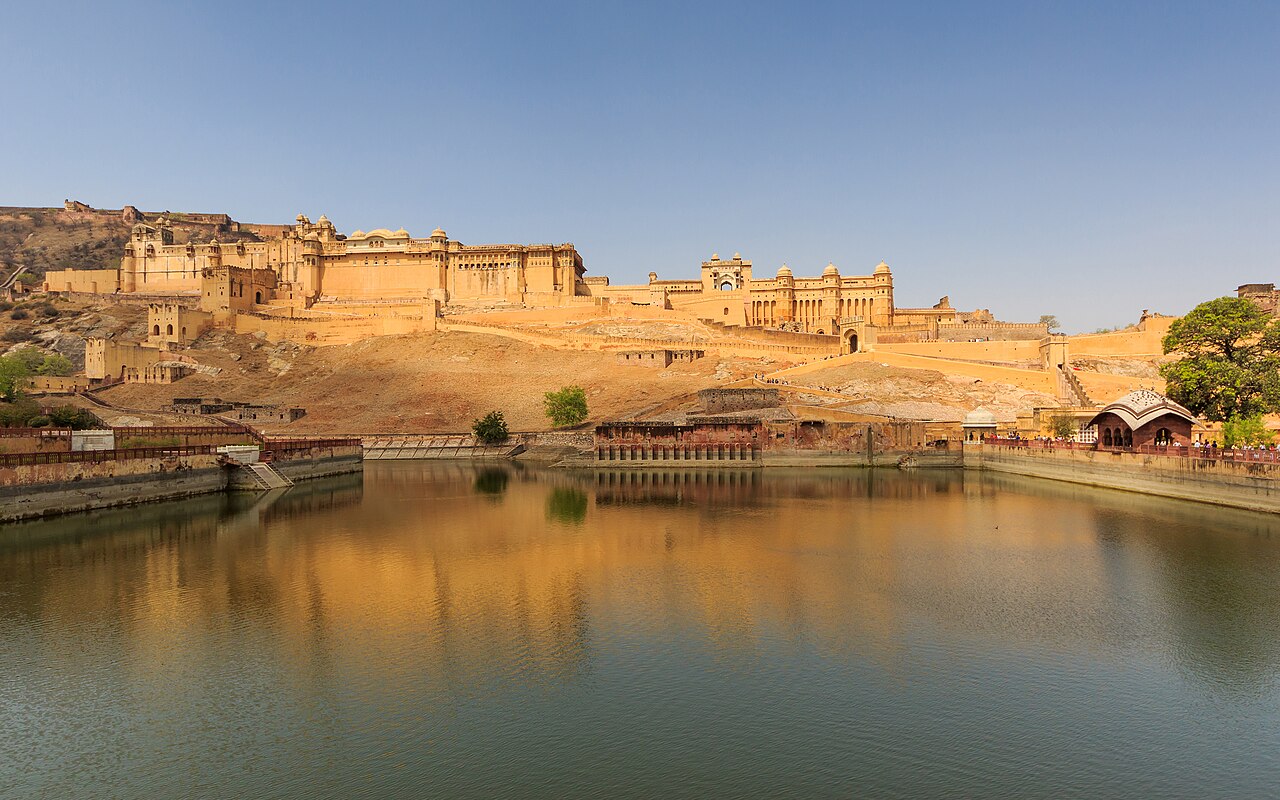
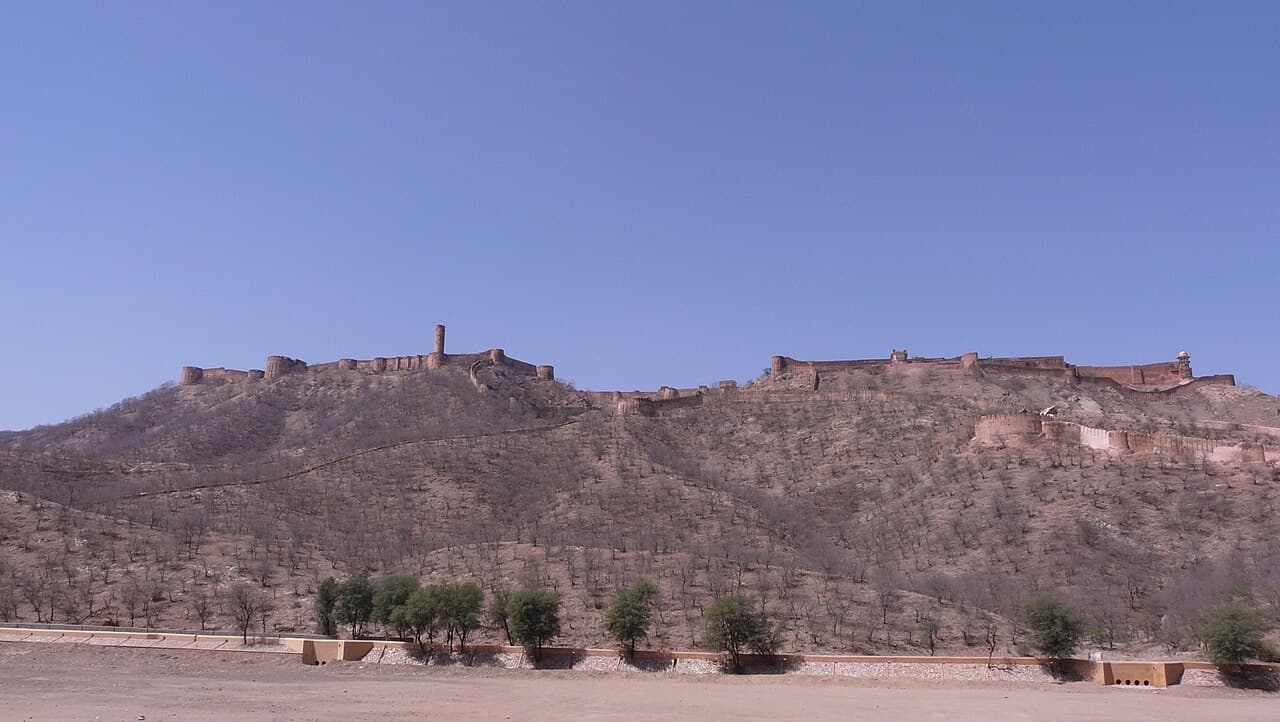
Jaigarh Fort stands prominently on the Cheel ka Teela or Hill of Eagles, part of the Aravalli mountain range near Amer in Jaipur, Rajasthan, India. This bastioned fortress overlooks the Amer Fort and Maota Lake, forming a strategic defensive complex with its neighbor. The fort's elevated position offers commanding views of the surrounding landscape, a key factor in its military significance.
The origins of Jaigarh Fort trace back to the early 18th century, constructed under the reign of Maharaja Jai Singh II, a prominent ruler and military engineer of the post-Renaissance period. While earlier fortifications existed in the region, the current fort's main construction dates to this era, designed to serve as a stronghold protecting the Amer Fort and the capital of Jaipur. The fort's name, meaning "Victory Fort," reflects its martial purpose and the ambitions of its builders.
Architectural design and fortifications
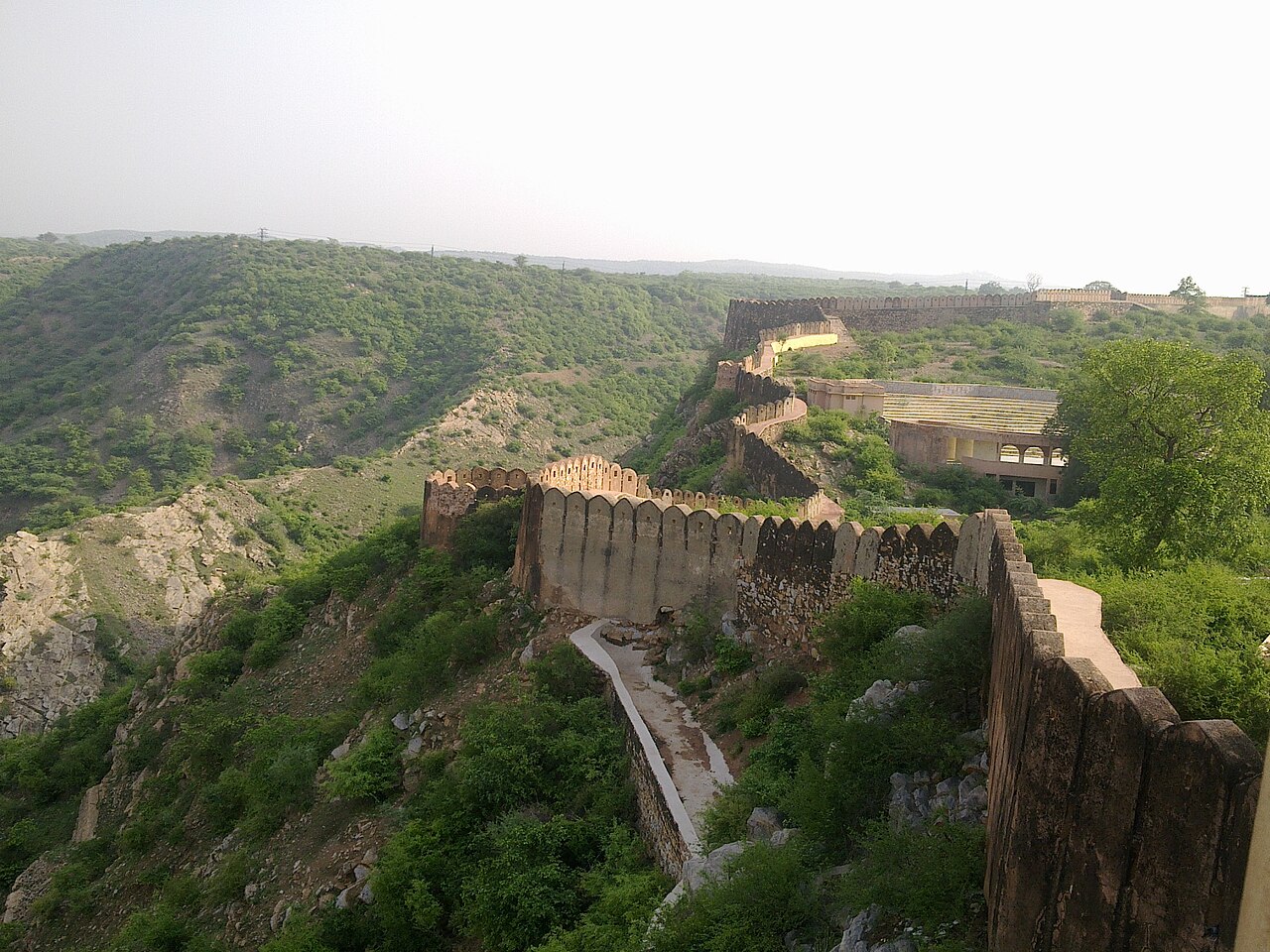
Jaigarh Fort is a classic example of a bastioned fortress featuring massive walls and robust defensive structures typical of 18th-century Indian military architecture. The fort extends approximately 3 kilometers in length north to south and about 1 kilometer in width, encompassing a vast complex of buildings, courtyards, and defensive works.
Walls and bastions
The fort's thick, high walls are punctuated by numerous bastions designed to mount artillery and provide overlapping fields of fire. These bastions allowed defenders to repel attacks efficiently and protect the fort's interior. The walls are constructed from locally sourced stone, with a rugged finish that blends with the natural terrain of the Aravalli hills.
Gates and entrances
Access to the fort is controlled through heavily fortified gates, featuring traditional Indian defensive elements such as heavy wooden doors reinforced with iron spikes and intricate stone carvings. These gates were designed to withstand sieges and slow down enemy advances, adding layers of security to the fortress.
Palace apartments and internal structures
Within the fort, palace apartments were added by Maharaja Jai Singh II to serve as royal residences and administrative quarters. These structures combine functional military design with elements of Rajasthani architecture, including ornate windows, balconies, and courtyards. The fort also contains granaries, water storage tanks, and armories, ensuring self-sufficiency during prolonged sieges.
The jaivana cannon and military significance
One of the fort's most famous features is the Jaivana cannon, manufactured within the fort precincts in the early 18th century. At the time of its creation, it was the world's largest cannon on wheels, weighing approximately 50 tons and capable of firing massive cannonballs over long distances. The cannon symbolizes the military prowess and technological advancement of the fort's builders.
Jaigarh Fort was strategically designed to protect the region from invasions and served as a military base for the rulers of Jaipur. Its connection to the Amer Fort via subterranean passages allowed for secure communication and troop movements between the two forts, enhancing their defensive capabilities.
Historical context and rulers
The area around Jaigarh Fort has a long history of occupation and conflict. While the current fort was primarily built in the 18th century, earlier fortifications and settlements existed under rulers such as Raja Kakil Dev, who captured the Amber region in the 11th century. The fort was continuously maintained and improved by subsequent rulers, reflecting the evolving military and political landscape of Rajasthan.
Maharaja Jai Singh II, the fort's most notable patron, was not only a ruler but also an accomplished astronomer and engineer. His contributions to Jaigarh Fort include its extensive fortifications and the installation of advanced artillery like the Jaivana cannon. Jai Singh II's reign marked a period of architectural innovation and consolidation of power in the region.
Cultural heritage and tourism today
Today, Jaigarh Fort is a well-preserved monument attracting visitors interested in military history, architecture, and Rajasthan's royal heritage. Its rugged walls, expansive courtyards, and historic cannon provide insight into 18th-century fortress design and the region's strategic importance.
The fort is accessible to tourists, who can explore its ramparts, palace apartments, and underground passages linking it to the nearby Amer Fort. Visitors often combine trips to both forts to gain a comprehensive understanding of Jaipur's historic defenses.
Efforts to maintain and restore parts of the fort ensure that its architectural and historical significance endures for future generations. The site also serves as a venue for cultural events and educational programs that highlight Rajasthan's rich history.
Frequently asked questions (FAQ)
- When was Jaigarh Fort built and by whom?
- Jaigarh Fort was primarily constructed in the 18th century under Maharaja Jai Singh II, who was a ruler and military engineer.
- What is the Jaivana cannon and why is it significant?
- The Jaivana cannon, located at Jaigarh Fort, was the world's largest cannon on wheels at the time of its creation and symbolizes the fort's military strength.
- How are Jaigarh Fort and Amer Fort connected?
- Jaigarh Fort and Amer Fort are linked by underground passages, allowing secure movement and communication between the two forts.
- Is Jaigarh Fort open to visitors and what can be seen there?
- Yes, Jaigarh Fort is open to visitors who can explore its massive walls, palace apartments, the Jaivana cannon, and underground tunnels.
- What architectural features characterize Jaigarh Fort?
- The fort features thick bastioned walls, fortified gates, palace apartments, and extensive defensive structures typical of 18th-century bastioned fortresses.
Photo gallery

Information
Loading map...
Visitor reviews
No reviews yet. Been here? Write the first review and help other travelers!
Write the first reviewVisited this castle? Share your experience
Your review helps other travelers and adds first-hand knowledge to our encyclopedia.