Izmail Fortress
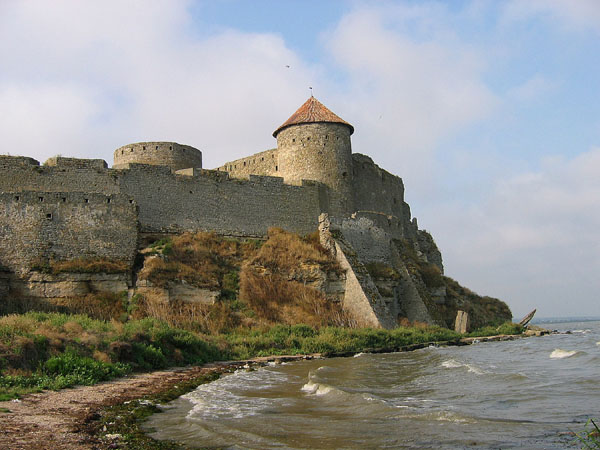
Izmail Fortress is a significant historic military structure located in the southern region of modern-day Ukraine, near the border with Romania and situated on a branch of the Danube Delta. This fortress was originally constructed during the 16th century as an Ottoman stronghold, designed to control the strategic waterways and defend the empire's northern frontiers.
Strategic location and historical importance
The fortress’s position on the Danube Delta gave it immense strategic value, controlling access to the Danube River, a vital trade and military route. Its location near the borderlands made it a crucial point of defense and conflict between the Ottoman Empire and neighboring powers, particularly the Russian Empire and various European states. Throughout its history, the fortress was a focal point during multiple military campaigns, especially the Russo-Turkish wars.
Architectural features and design
Izmail Fortress is classified as a bastioned fortress, a style that emerged prominently during the Renaissance period. This design incorporated angled bastions projecting outward from the main walls, allowing defenders to cover adjacent walls with gunfire, reducing blind spots and increasing defensive capabilities against artillery attacks. The fortress’s layout was adapted to the local terrain and waterways, integrating moats and water defenses that enhanced its resilience.
Bastions and walls
The fortress featured multiple bastions constructed with thick stone walls, designed to withstand cannon fire. These bastions were connected by curtain walls, creating a polygonal shape typical of bastioned fortifications. The walls were equipped with embrasures for cannons and musketry, allowing defenders to repel sieges effectively.
Water defenses
Given its location near the Danube Delta, Izmail Fortress utilized natural water features as part of its defense system. Moats filled with water surrounded parts of the fortress, complicating enemy approaches and siege operations. The proximity to the river also allowed for supply and communication lines to remain open during conflicts.
Significant historical events
The fortress is most famously known for the Siege of Izmail in 1790 during the Russo-Turkish War (1787–1792). Russian forces, led by General Alexander Suvorov, launched a daring and well-coordinated assault on the fortress, which was then under Ottoman control. Despite its formidable defenses, the fortress fell after intense fighting, marking a turning point in the war and demonstrating the effectiveness of modern siege tactics against bastioned fortresses.
Later history and current condition
Following its capture by Russian forces, the fortress underwent modifications and was used by the Russian Empire for regional defense. Over time, as military technology advanced and borders shifted, the fortress lost its strategic importance. Today, Izmail Fortress remains a site of historical and cultural interest. While parts of the structure have deteriorated, some bastions and walls are still visible, offering insight into the military architecture of the Renaissance period and the Ottoman Empire's northern defenses.
Visiting Izmail Fortress
The fortress is accessible to visitors interested in military history and architecture. Its location near the Danube Delta also makes it a point of interest for those exploring the natural and cultural heritage of southern Ukraine. Interpretive signs and guided tours provide context about the fortress’s role in regional history and its architectural features.
Frequently asked questions (FAQ)
- When was Izmail Fortress built and by whom?
- Izmail Fortress was constructed in the 16th century by the Ottoman Empire as a strategic stronghold to control the Danube Delta region.
- What architectural style characterizes Izmail Fortress?
- The fortress is designed as a bastioned fortress, a Renaissance military architectural style featuring angled bastions and thick walls optimized for artillery defense.
- What was the significance of the Siege of Izmail?
- The Siege of Izmail in 1790 was a pivotal battle during the Russo-Turkish War, where Russian forces captured the fortress, showcasing advanced siege tactics against Ottoman defenses.
- Can visitors explore the fortress today?
- Yes, Izmail Fortress is partially preserved and open to visitors, with accessible bastions and walls that illustrate its historical military architecture.
- Where is Izmail Fortress located?
- Izmail Fortress is located in the city of Izmail, Odesa Oblast, Ukraine, near the Danube Delta and the border with Romania.
Photo gallery

Information
Current owner
Municipality
Loading map...
Visitor reviews
No reviews yet. Been here? Write the first review and help other travelers!
Write the first reviewVisited this castle? Share your experience
Your review helps other travelers and adds first-hand knowledge to our encyclopedia.