Borgholm Castle
Borgholm Castle, perched on the limestone cliffs of Öland in Sweden, stands as a monumental ruin that encapsulates centuries of Nordic history and architectural evolution. Originally constructed in the late 12th century during the reign of King Canute I (1167–1195), the fortress was strategically established to defend the Swedish east coast against maritime threats across the Baltic Sea. Its commanding position atop the Landborg ridge, approximately 25 meters above the surrounding landscape, provided natural defensive advantages and sweeping views over the Kalmar Strait.
The castle's development spans multiple historical periods, reflecting the shifting political and military landscape of Scandinavia. Initial construction centered around a robust stone keep or donjon, surrounded by a thick ring wall and flanking towers, typical of medieval Scandinavian fortifications. Over the following centuries, Borgholm was repeatedly modified, expanded, and fortified to meet evolving defense needs and architectural trends.
Medieval origins and early fortifications
The earliest phase of Borgholm Castle began as a compact stone fortress, likely commissioned by King Canute I as part of a broader initiative to secure Sweden's eastern maritime borders. The castle's first documented mention dates to 1268, underscoring its early significance. Its medieval layout featured a central limestone donjon approximately 20 meters tall, encircled by a ring wall with three defensive towers positioned to the east, south, and west. A square gate tower controlled access routes, particularly from the nearby limestone alvar plains.
Throughout the 13th to 15th centuries, the fortress underwent multiple enhancements. Walls were thickened, new towers added, and defensive capabilities improved to withstand regional conflicts. Borgholm endured attacks such as the 1361 assault by King Valdemar IV Atterdag of Denmark, reflecting the turbulent power struggles in the Baltic region during the Kalmar Union era.
Strategic significance during the kalmar union
During the late medieval period, Borgholm Castle's proximity to the politically important city of Kalmar and the contested island of Gotland elevated its role as a military stronghold. The castle was a key point of defense and control over maritime routes in the Baltic Sea, frequently changing hands amid Danish-Swedish conflicts. Its fortifications were tested repeatedly, necessitating ongoing repairs and upgrades.
Renaissance transformation under king john iii
In the late 16th century, King John III (r. 1568–1592) initiated a major reconstruction of Borgholm Castle, transforming it from a medieval fortress into a Renaissance bastion fortress. This ambitious project, led by the Italian Pahr brothers—four engineers and architects from Milan—began in 1572 and introduced Italianate bastion-style fortifications to the site.
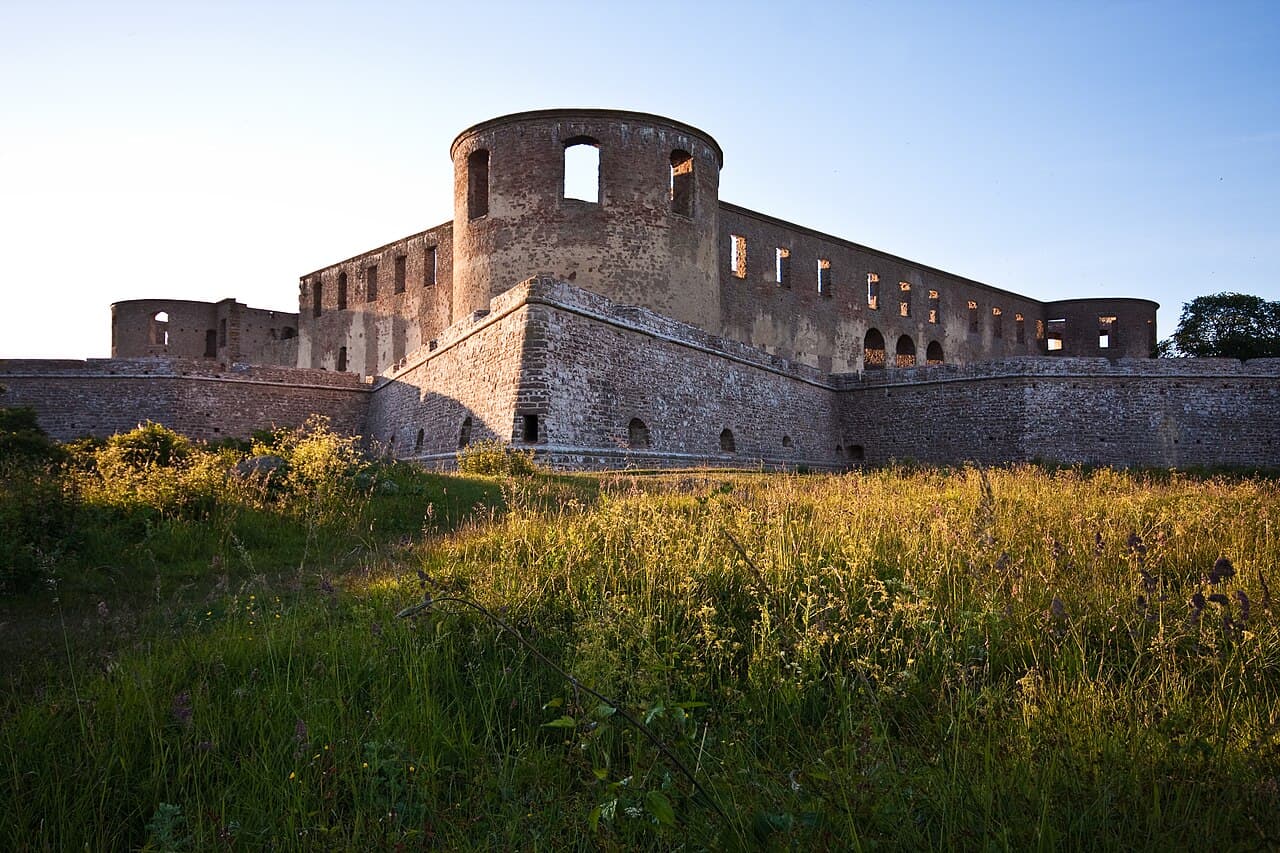
The Renaissance redesign reshaped the castle into a square plan with rounded bastion towers at each corner, enhancing its defensive capabilities against artillery. The original medieval donjon was preserved and restored within the courtyard as a symbolic link to the castle's origins. The use of locally quarried limestone from Öland's alvar and Gotland, combined with timber sourced from nearby Småland, reflects the integration of regional materials in construction.
This period marked Borgholm as one of Sweden's earliest examples of Renaissance military architecture, blending Gothic elements with modern bastion design. The castle's fortifications were tested during the Kalmar War (1611–1613) between Sweden and Denmark. It was captured by Danish forces in 1611, recaptured by Sweden later that year, and again surrendered after a siege in 1612. The subsequent Treaty of Knäred returned Borgholm to Swedish control, but the castle suffered significant damage.
Baroque reconstruction and decline
In 1654, under the reign of King Charles X Gustav, Borgholm Castle underwent a dramatic transformation into a Baroque palace. The renowned architect Nicodemus Tessin the Elder was commissioned to redesign the fortress into a grand residence with four wings arranged around a central courtyard. This ambitious plan reflected the Baroque ideals of symmetry, grandeur, and formal gardens.
Construction progressed slowly and was interrupted by the king's death in 1660, resulting in only three wings being completed. Subsequent monarchs Charles XI and Charles XII continued work sporadically until the project was abandoned in 1709. The castle gradually lost its military importance and fell into neglect.
By the 18th century, parts of Borgholm Castle served diverse functions including housing a small military garrison, a prison, and textile dyeing operations. However, on October 14, 1806, a devastating fire, likely caused by a chimney fault and fueled by strong winds, destroyed much of the roof and interior. The blaze reduced the castle to a ruin, leaving only the stone walls intact.
Archaeological discoveries and preservation efforts
Since the early 20th century, Borgholm Castle has been the subject of archaeological excavations revealing its layered history. Excavations have uncovered foundations, defensive walls, tower bases, and artifacts spanning the medieval, Renaissance, and Baroque periods. These findings have deepened understanding of the castle's architectural evolution and strategic role.
Today, Borgholm Castle is a protected cultural heritage site managed by the National Property Board of Sweden. It is open to the public as a museum and tourist attraction, offering visitors a glimpse into Sweden's medieval and early modern history. The ruins, set against the dramatic backdrop of the Baltic coast, remain a striking testament to the castle's enduring legacy.
Architectural highlights of the ruins
- The original medieval donjon, preserved within the Renaissance courtyard, exemplifies early Scandinavian stone keep design.
- Renaissance bastion towers at each corner illustrate the adaptation of Italian military architecture to Swedish needs.
- The Baroque palace wings, though incomplete, showcase the transition from fortress to stately residence.
- Remnants of the ring wall and gate towers reflect the castle's evolving defensive strategies.
Visitor experience and cultural significance
Visitors to Borgholm Castle can explore the extensive ruins, walk along the ancient walls, and learn about the castle's multifaceted history through exhibitions and guided tours. The site hosts cultural events and concerts during summer months, enhancing its role as a vibrant heritage destination. Its location on Öland, a UNESCO Biosphere Reserve, adds ecological significance to its historical importance.
Overall, Borgholm Castle stands as a remarkable example of a Scandinavian fortress that evolved through medieval, Renaissance, and Baroque phases. Its ruins offer invaluable insights into regional defense, architectural trends, and the complex history of Swedish-Danish relations in the Baltic Sea region.
Frequently asked questions (FAQ)
- What are the opening hours of Borgholm Castle?
- Borgholm Castle is typically open to visitors during the summer months, with opening hours usually from 10:00 to 18:00 daily. It is advisable to check the official website for seasonal variations and special events.
- How do I get to Borgholm Castle?
- Borgholm Castle is located in the town of Borgholm on the island of Öland, Sweden. Visitors can reach it by car via the Öland Bridge from the mainland or by local buses serving the area.
- Is Borgholm Castle accessible for visitors with mobility issues?
- The castle ruins are situated on a limestone cliff with uneven terrain and some steep paths, which may present challenges for visitors with mobility issues. However, some areas near the entrance and museum facilities are accessible.
- What is the historical significance of Borgholm Castle?
- Borgholm Castle played a crucial role in the defense of Sweden's eastern coast from the 12th century through the early modern period. It witnessed numerous conflicts, including attacks during the Kalmar Union and the Kalmar War, reflecting the turbulent history of the Baltic region.
- Can I visit the museum at Borgholm Castle?
- Yes, the castle hosts a museum that showcases artifacts and exhibits related to its long history, including medieval, Renaissance, and Baroque periods. The museum offers educational insights for visitors of all ages.
- When was Borgholm Castle rebuilt in the Renaissance style?
- The Renaissance reconstruction of Borgholm Castle began in 1572 under King John III, led by the Pahr brothers, who introduced Italianate bastion fortifications.
- Are there guided tours available at Borgholm Castle?
- Guided tours are often available during the tourist season, providing detailed historical and architectural information. Visitors are encouraged to check the castle's official website or visitor center for tour schedules.
Photo gallery

Information
Sources & official resources
Verify the information above using these authoritative references.
Loading map...
Visitor reviews
No reviews yet. Been here? Write the first review and help other travelers!
Write the first reviewVisited this castle? Share your experience
Your review helps other travelers and adds first-hand knowledge to our encyclopedia.