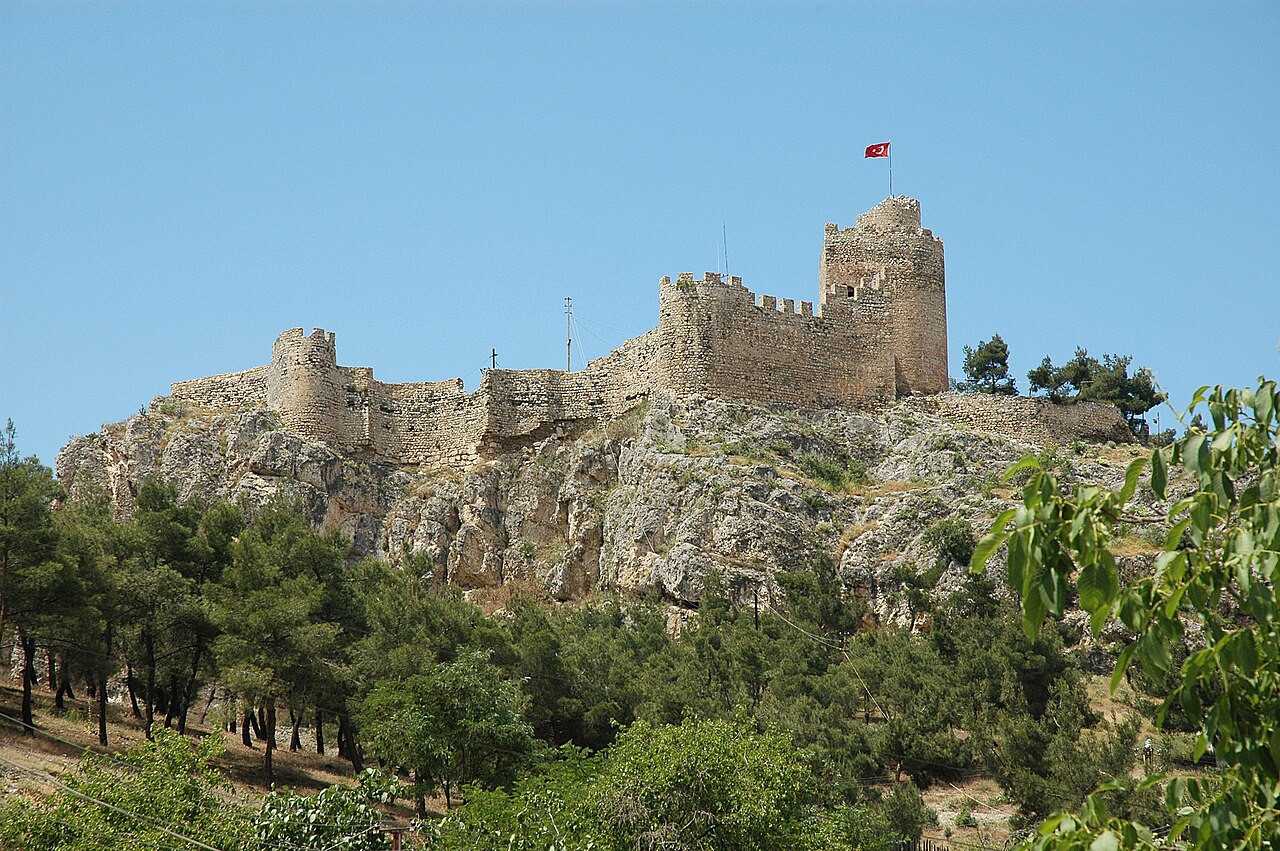
İskilip Castle
İskilip Castle, locally known as İskilip Kalesi, is a historic fortress located in the town of İskilip within the province of Çorum, Turkey. Positioned strategically on top of a towering limestone rock approximately 100 meters above the town center, the castle commands a significant vantage point over the surrounding landscape. This elevated position reflects the castle's historical role in controlling and overseeing key routes connecting the Black Sea region and the Anatolian interior.
The castle's origins are primarily attributed to the Ottoman period, yet the site itself bears a far older historical significance. The town of İskilip has been inhabited since the era of the Hittites, with its name evolving through various cultures and empires. In Ancient Greek times, the town was known as Asklepios or Aesculapius, named after the god of healing, reflecting its cultural importance. Later, during the Roman and Byzantine periods, it was called Blocium or Bloacium. This long history of settlement at a crossroads of major routes highlights the strategic importance of the location, which likely hosted earlier fortifications preceding the current castle.
Historical context and strategic significance
İskilip's location at the intersection of a route between the Black Sea coast and the Anatolian interior, as well as a route connecting Constantinople (modern-day Istanbul) and Amasya, made it a key military and commercial point throughout history. The castle's placement atop a natural limestone outcrop enhanced its defensive capabilities and provided a natural barrier against invaders.
While there is limited detailed historical record specifically about the castle's construction and use, it is reasonable to infer that the site served as a defensive stronghold during the Ottoman era, possibly incorporating or replacing earlier fortifications from Byzantine or even earlier periods.
Architectural features and layout
The castle exhibits an irregular plan that closely follows the natural contours of the limestone rock on which it stands. This adaptation to the terrain is a characteristic feature of many hilltop castles designed to maximize natural defensive advantages. The castle walls enclose the summit area, forming a protective perimeter that once included a keep, although no visible remains of this central tower survive today.
Historically, the interior of the castle accommodated a small neighborhood, with residential buildings constructed within the walls. Older photographs and accounts indicate that these residences were once numerous, but recent restorations and clearances have removed most of these structures. Currently, only a single derelict residence remains standing inside the castle grounds.
Restoration and current condition
İskilip Castle is freely accessible to visitors and appears to have undergone recent restoration efforts aimed at preserving its structural integrity and enhancing its appeal as a cultural heritage site. The removal of the internal residential buildings has opened up the castle's interior space, allowing visitors to better appreciate its architectural form and commanding views.
The castle's preserved walls and natural setting offer a tangible link to the region's layered history, from ancient times through the Ottoman period. Its elevated position continues to provide panoramic views over the town of İskilip and the surrounding Çorum province.
İskilip town and its historical heritage
The town of İskilip itself holds a rich historical legacy, having been a settlement since the Hittite civilization. Its evolving names through the Ancient Greek, Roman, and Byzantine periods reflect its enduring significance as a cultural and strategic hub. The castle complements this heritage as a physical monument representing the town's military and administrative past.
Visitors to İskilip Castle can explore not only the fortress but also the broader historical landscape of the region, which includes archaeological sites and remnants from various civilizations that have inhabited the area over millennia.
Visiting İskilip Castle
The castle is open to the public without an entrance fee, making it an accessible destination for those interested in Ottoman military architecture and regional history. Its elevated location requires a moderate ascent but rewards visitors with impressive views and a sense of connection to the area's deep historical roots.
Frequently asked questions (FAQ)
- How do I reach İskilip Castle?
- İskilip Castle is located in the town of İskilip in Çorum Province. Visitors can reach the castle by car or local transport, then follow a short uphill path to the castle entrance.
- What is the historical significance of İskilip Castle?
- İskilip Castle served as an Ottoman fortress built on a site with ancient historical importance, controlling key routes between the Black Sea and Anatolia.
- Is İskilip Castle open to visitors?
- Yes, İskilip Castle is freely accessible to the public, allowing visitors to explore its walls and enjoy panoramic views without an entrance fee.
- Are there any remains of the original keep at İskilip Castle?
- No visible remains of the original keep survive today, though historical accounts suggest it once existed atop the limestone rock.
- What can I see inside İskilip Castle today?
- Today, the castle interior is mostly open after removal of old residences, with only one derelict building remaining, offering visitors space to explore the fortress layout.
Information
Loading map...
Visitor reviews
No reviews yet. Been here? Write the first review and help other travelers!
Write the first reviewVisited this castle? Share your experience
Your review helps other travelers and adds first-hand knowledge to our encyclopedia.