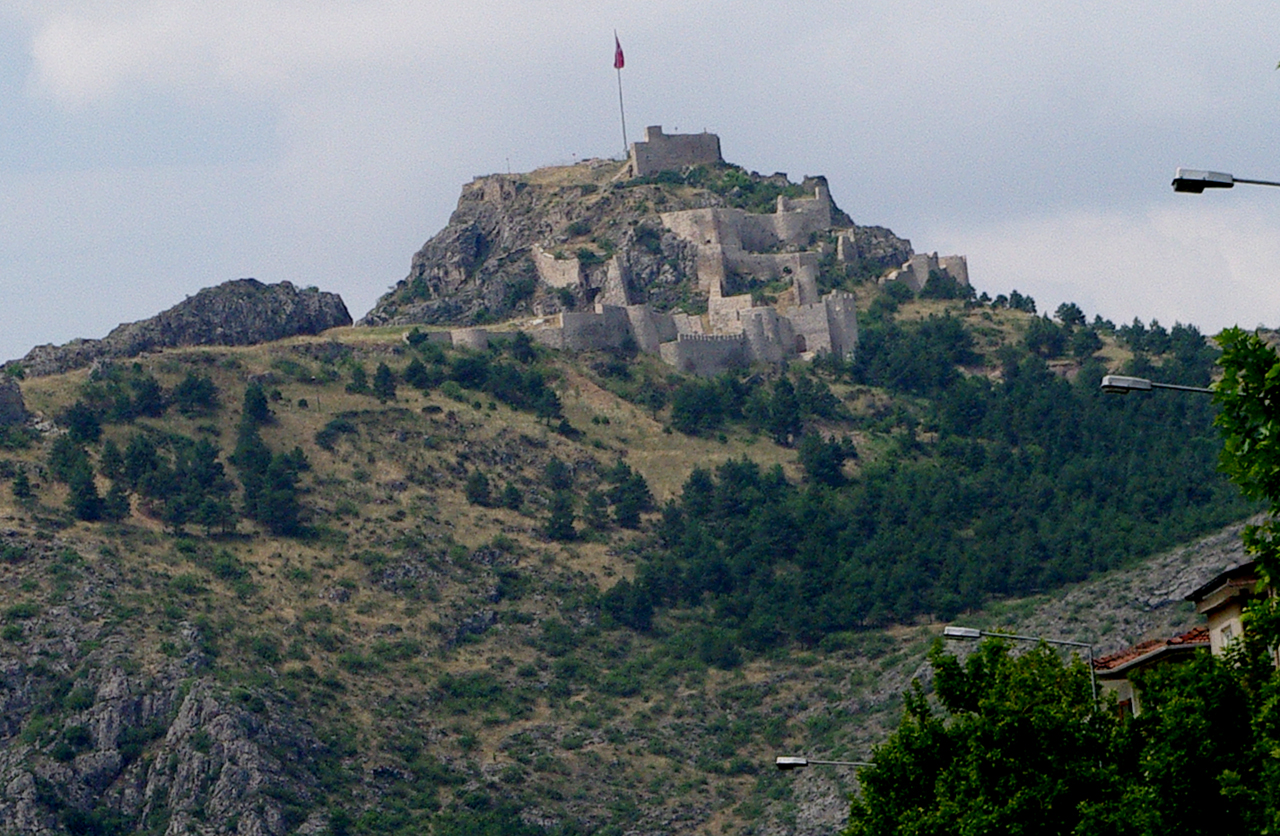
Çorum Castle

Çorum Castle: Seljuk fortress with medieval origins in Turkey
Kale, Turkey
High Medieval (11th–13th c.)

Çorum Castle, locally known as Çorum Kalesi, is a noteworthy example of medieval fortification located in the city of Çorum, within the Çorum Province of Turkey. This castle stands on a slight elevation, commanding strategic views over the surrounding landscape, a common feature for defensive structures of its era. Its historical and architectural significance is tied closely to the Seljuk period, with construction likely dating back to the 11th or 12th century.

Historical context and origins

The exact date of Çorum Castle's construction remains uncertain, but its architectural features strongly suggest a Seljuk origin. The Seljuks, a medieval Turko-Persian Sunni Muslim empire, were known for their distinctive military architecture, which combined robust defensive elements with Islamic artistic motifs. An inscription dated 1217 found on a window in the west wall provides a tangible chronological anchor, indicating significant construction or restoration during the early 13th century.

The castle was first documented in written records in 1571. By 1577, it was referred to as "Sultan Suleyman's Foundation," linking it to the Ottoman period and suggesting continued use or patronage under Ottoman rule. The famous Ottoman traveler and writer Evliya Çelebi visited Çorum in the 17th century and attributed the castle's construction to one of the Seljuk sultans named Kilij Arslan. Since there were four sultans with this name ruling between 1092 and 1265, the exact builder remains a subject of historical debate.

Architectural features and layout

Plan and defensive structures

Çorum Castle exhibits a square plan fortified by round corner towers and rectangular bastions integrated into the curtain walls. This combination of round and rectangular defensive elements reflects a transitional military architectural style common in the Seljuk and early Ottoman periods, designed to maximize defense against siege engines and infantry assaults.

The castle has two gates: a prominent main gate located in the north wall, and a smaller postern gate in the south wall, which has since been sealed. The main gate would have served as the principal point of entry and defense, often featuring fortified towers or gatehouses to control access.

Construction materials and techniques

The walls are constructed from a mix of rubble stones and dressed stone, incorporating numerous Roman and Byzantine spolia. The reuse of earlier building materials was a practical and symbolic practice, linking the castle to the region's layered history and demonstrating the Seljuks' adaptation of local resources.

Interior and surrounding structures

Inside the castle walls, there was once a small neighborhood, indicating that the castle functioned not only as a military fortress but also as a residential and community center. Directly behind the main gate lies the castle mosque, a feature that underscores the Islamic cultural identity of the fortress and its inhabitants.

Currently, visitors can only access the exterior of the castle, as the interior is inaccessible due to a locked door beyond the main gate. The neighborhood surrounding the castle appears somewhat rundown, reflecting the challenges of preserving historical sites within modern urban environments.

Significance and preservation

Çorum Castle is an important example of Seljuk military architecture in Anatolia, illustrating the fusion of defensive design with Islamic cultural elements. Its preservation state is primarily of the exterior walls and towers, which remain largely intact, allowing for study and appreciation of its construction techniques and strategic design.

The castle's location in the city of Çorum makes it accessible to visitors interested in medieval history and architecture, although limited access to the interior restricts a fuller understanding of its spatial organization and daily life within its walls.

Frequently asked questions (FAQ)

How do I get to Çorum Castle?
Çorum Castle is located in Kale, Turkey, and is easily accessible by car or public transport from the city center of Çorum. The castle is situated on a hill, providing a scenic view of the surrounding area, making the journey worthwhile.
What is the historical significance of Çorum Castle?
Çorum Castle dates back to ancient times and has served various purposes throughout history, including military defense and administrative functions. It is a vital part of the region's heritage, reflecting the architectural styles and historical events of different eras.
When was Çorum Castle built?
The origins of Çorum Castle can be traced back to the 12th century, although it has undergone numerous renovations and restorations over the centuries. The castle's structure showcases influences from various periods, marking significant historical transitions in the region.
Is it possible to explore the castle grounds?
Yes, visitors can explore the grounds of Çorum Castle, which include ancient walls, towers, and breathtaking views of the surrounding landscape. Walking around the castle provides a unique opportunity to appreciate its historical architecture and take memorable photographs.
What are the opening hours for Çorum Castle?
Çorum Castle is typically open to visitors from 9:00 AM to 6:00 PM daily, but it is advisable to check local listings for any seasonal changes. Visiting during the day allows you to fully enjoy the views and the historical ambiance of the castle.
Can I visit Çorum Castle year-round?
Yes, Çorum Castle is open to visitors throughout the year. However, the best time to visit is during the spring and fall when the weather is mild and conducive to outdoor exploration.
Are there any nearby attractions to visit after Çorum Castle?
Yes, after visiting Çorum Castle, you can explore nearby attractions such as the ancient city of Hattusa, a UNESCO World Heritage Site, and the picturesque town of Boğazkale. These sites offer further insights into the rich history and culture of the region.
What are the ticket prices for Çorum Castle?
Admission to Çorum Castle is generally free, making it an accessible destination for everyone. However, there may be small fees for guided tours or specific exhibitions, so it's best to inquire on-site for the latest information.
How accessible is Çorum Castle for visitors with mobility challenges?
Çorum Castle is situated on a hill, which may pose challenges for visitors with mobility issues. However, there are some accessible paths, and staff may be available to assist, making it worthwhile to contact the castle's administration in advance to discuss specific needs.

Loading map...

Visitor reviews

No reviews yet. Been here? Write the first review and help other travelers!

Write the first review

Visited this castle? Share your experience

Your review helps other travelers and adds first-hand knowledge to our encyclopedia.

Write a review

(5/5)

0/2000 characters

Your review will be visible after admin approval

Nearby castles

45.9 km

İskilip Castle

İskilip, Turkey

İskilip Castle, locally known as İskilip Kalesi, is a historic fortress located in the town of İskilip within the province of Çorum, Turkey. Positioned strategically on top of a towering limestone rock approximately 100 meters above the town center, the castle commands a significant vantage point over the surrounding landscape. This elevated position reflects the castle's historical role in controlling and overseeing key routes connecting the Black Sea region and the Anatolian interior. The castle's origins are primarily attributed to the Ottoman period, yet the site itself bears a far older historical significance. The town of İskilip has been inhabited since the era of the Hittites, with its name evolving through various cultures and empires. In Ancient Greek times, the town was known as Asklepios or Aesculapius, named after the god of healing, reflecting its cultural importance. Later, during the Roman and Byzantine periods, it was called Blocium or Bloacium. This long history of settlement at a crossroads of major routes highlights the strategic importance of the location, which likely hosted earlier fortifications preceding the current castle. Historical context and strategic significance İskilip's location at the intersection of a route between the Black Sea coast and the Anatolian interior, as well as a route connecting Constantinople (modern-day Istanbul) and Amasya, made it a key military and commercial point throughout history. The castle's placement atop a natural limestone outcrop enhanced its defensive capabilities and provided a natural barrier against invaders. While there is limited detailed historical record specifically about the castle's construction and use, it is reasonable to infer that the site served as a defensive stronghold during the Ottoman era, possibly incorporating or replacing earlier fortifications from Byzantine or even earlier periods. Architectural features and layout The castle exhibits an irregular plan that closely follows the natural contours of the limestone rock on which it stands. This adaptation to the terrain is a characteristic feature of many hilltop castles designed to maximize natural defensive advantages. The castle walls enclose the summit area, forming a protective perimeter that once included a keep, although no visible remains of this central tower survive today. Historically, the interior of the castle accommodated a small neighborhood, with residential buildings constructed within the walls. Older photographs and accounts indicate that these residences were once numerous, but recent restorations and clearances have removed most of these structures. Currently, only a single derelict residence remains standing inside the castle grounds. Restoration and current condition İskilip Castle is freely accessible to visitors and appears to have undergone recent restoration efforts aimed at preserving its structural integrity and enhancing its appeal as a cultural heritage site. The removal of the internal residential buildings has opened up the castle's interior space, allowing visitors to better appreciate its architectural form and commanding views. The castle's preserved walls and natural setting offer a tangible link to the region's layered history, from ancient times through the Ottoman period. Its elevated position continues to provide panoramic views over the town of İskilip and the surrounding Çorum province. İskilip town and its historical heritage The town of İskilip itself holds a rich historical legacy, having been a settlement since the Hittite civilization. Its evolving names through the Ancient Greek, Roman, and Byzantine periods reflect its enduring significance as a cultural and strategic hub. The castle complements this heritage as a physical monument representing the town's military and administrative past. Visitors to İskilip Castle can explore not only the fortress but also the broader historical landscape of the region, which includes archaeological sites and remnants from various civilizations that have inhabited the area over millennia. Visiting İskilip Castle The castle is open to the public without an entrance fee, making it an accessible destination for those interested in Ottoman military architecture and regional history. Its elevated location requires a moderate ascent but rewards visitors with impressive views and a sense of connection to the area's deep historical roots.

Post-Renaissance (17th–18th c.)
Details
49.3 km

Osmancık Castle

Osmancık, Turkey

Osmancık Castle, also known locally as Osmancık Kalesi or Kandiber Kalesi, is a historic fortress located in the town center of Osmancık, within the Çorum province of Turkey. The castle occupies a strategic position on an elongated rocky hill adjacent to the Kızılırmak River, the longest river entirely within Turkey. Its commanding vantage point provides extensive views over the surrounding landscape and the nearby Koyunbaba Bridge, a significant Ottoman-era stone arch bridge constructed in the 1480s. Historical background and origins The precise origins of Osmancık Castle remain uncertain, with various theories suggesting different builders and periods. While some architectural features hint at a Seljuk origin, other elements suggest it may have been initially constructed or significantly developed during the Byzantine Empire era. There are also claims linking the site to the ancient Hittites, though no definitive archaeological evidence supports this. The most plausible scenario is that the castle was primarily a Byzantine medieval fortress built on the site of an earlier structure, which was later rebuilt or modified by the Seljuks following their expansion into Anatolia. During the Islamic period, the castle held strategic importance as it was situated along the Istanbul-Amasya trade route, facilitating control over commerce and military movements in the region. Despite its significance, detailed historical records about the castle's role in specific events or sieges are scarce. Architectural features and layout Osmancık Castle is classified as a hill castle due to its location on a rocky elevation. The fortress's elongated shape follows the natural contours of the hill, maximizing defensive advantages. Although much of the original structure has deteriorated over time, some remnants of the walls and towers remain visible, providing insight into its military architecture. The castle's proximity to the Kızılırmak River was both strategic and practical. Historical accounts mention a network of tunnels descending from the castle down to the riverbank, likely used for water access or as secret escape routes during sieges. These tunnels, however, have not been extensively explored or preserved. Within the castle walls, there was a residential neighborhood up until the mid-19th century, indicating that the fortress was not only a military installation but also a lived-in community. This residential area would have included houses, storage facilities, and possibly small workshops. Later history and restoration efforts Following the medieval period, the castle's military importance declined, especially after the construction of the nearby Koyunbaba Bridge by the Ottoman Empire in the late 15th century, which enhanced regional connectivity. Over the centuries, the fortress gradually fell into ruin, with many architectural details lost due to natural decay and human activity. Between 2015 and 2019, significant efforts were made to consolidate the remaining structures and partially restore the site. These restoration works aimed to stabilize the ruins and transform the castle's interior into a public park, making it accessible and enjoyable for visitors. Today, Osmancık Castle is freely accessible during daytime hours, offering a combination of historical ambiance and scenic views. Visiting Osmancık Castle Visitors to Osmancık Castle can explore the castle grounds and appreciate its strategic location overlooking the Kızılırmak River and the historic Koyunbaba Bridge. While few detailed architectural elements remain, the site provides a tangible connection to the region's medieval past and the various cultures that influenced its development. The castle's elevated position offers excellent photographic opportunities and a peaceful environment for walking and relaxation. Due to the limited preservation of structural details, visitors interested in castle architecture should focus on the site's historical context and landscape setting. Significance and cultural heritage Osmancık Castle represents a layered historical narrative reflecting the diverse civilizations that have occupied Anatolia. Its uncertain origins and architectural features embody the complex interactions between the Byzantine Empire, the Seljuks, and later Ottoman influences. As a heritage site, it contributes to understanding the military and trade networks that shaped the region. Despite its modest remains, the castle continues to be a focal point for local identity and tourism in Osmancık, highlighting the importance of preserving and interpreting historical sites even when physical evidence is limited.

High Medieval (11th–13th c.)
Details
74.5 km
Amasya Castle — Turkey castle

Amasya Castle

Amasya, Turkey

Amasya Castle, also known as Harşena Castle, is a commanding hill castle located in the city of Amasya in northern Turkey. Perched atop the steep limestone cliffs of Mount Harşena, the fortress overlooks the Yeşilırmak River (historically known as the Iris), offering strategic views that have made it a significant military site for millennia. The castle’s origins trace back to antiquity, with archaeological evidence indicating the site was in use as early as the Hittite period. The earliest surviving structures date from the Kingdom of Pontus (281 BC–62 AD), marking the castle as a key stronghold in the region's complex history. Ancient origins and early history The site of Amasya Castle was initially utilized by the Hittites, one of Anatolia's earliest civilizations, though no substantial Hittite structures remain. The most significant early construction occurred during the Kingdom of Pontus, when the fortress served as a royal residence and military bastion. The kingdom’s rulers carved monumental rock tombs into the sheer cliffs beneath the castle, which remain a prominent feature today. These tombs, dating from the 3rd century BC, are a testament to the castle’s importance as a seat of power. During the Roman-Pontic Wars, the castle suffered extensive damage as control of the region shifted between the Romans and the Pontic kings. Despite this, the fortress was repeatedly rebuilt and fortified, underscoring its enduring strategic value. Medieval transformations and turkish rule By the 11th century, Amasya Castle was a Byzantine stronghold until it was conquered by the Danishmends in 1075. The Danishmends, a Turkmen dynasty, undertook significant restoration and reinforcement efforts, adapting the fortress to the military needs of the period. The castle later came under the control of the Seljuks and ultimately the Ottoman Empire by the late 14th century. During the early 15th century, the castle played a crucial role in Ottoman history when Prince Mehmed I sought refuge within its walls during the invasion of Timur’s forces. This event highlights the castle’s continued military and political relevance during times of upheaval. Ottoman period and decline Under Ottoman rule, the castle was maintained and used as a military fortress until the 18th century. However, advancements in warfare and changing military strategies gradually diminished the castle’s defensive importance, leading to its abandonment. Remnants of Ottoman architecture, including a mosque and the ruins of the Kızlar Sarayı (Maidens’ Palace), indicate the castle’s multifunctional role beyond purely military purposes. Architectural features and fortifications Amasya Castle’s fortifications are ingeniously integrated with the natural topography of Mount Harşena. The defensive system extends in eight tiers down the hillside, combining man-made walls with the steep cliffs to create a formidable barrier. The upper sections of the fortress are constructed from finely cut ashlar stone blocks, providing strength and durability, while the lower walls use rubble masonry, a technique involving rough stones set in mortar. The castle is accessed through four main gates: Helkıs, Saray, Maydonos, and Meydan. These gateways controlled entry and exit, serving as choke points for defense. Within the walls, a network of dungeons, rock-cut cisterns, and wells supported the castle’s inhabitants, especially during sieges. The cisterns and water management One of the most remarkable features is the Cilanbolu cistern, an extensive underground water reservoir accessed by a steep tunnel stairway with approximately 150 steps descending about 186 meters. The cistern itself stretches roughly 300 meters, carved directly into the rock to store water vital for sustaining the fortress during prolonged sieges. Additional water management structures include enclosed wells and smaller cisterns accessed via steep stair tunnels that descend the hillside, showcasing sophisticated hydraulic engineering adapted to the castle’s mountainous setting. Rock-cut tombs of the pontic kings Below the castle walls on sheer limestone cliffs are the famous rock-cut tombs of the Pontic kings. These 18 tombs, carved approximately 20 to 25 meters above ground level, date from the 3rd century BC and are among the most significant archaeological features in the region. The tombs are a striking visual reminder of the castle’s ancient royal heritage and remain a major attraction for visitors. Cultural significance and modern tourism Today, Amasya Castle is a well-preserved late medieval fortress that stands as a symbol of the city’s rich history. The castle’s integration with the surrounding old Ottoman neighborhood, including traditional houses, hamams (bathhouses), and mosques along the Yeşilırmak River, creates a unique cultural landscape that attracts tourists and historians alike. Visitors can explore the castle ruins, the Pontic rock tombs, and the historic urban fabric of Amasya, gaining insight into the region’s diverse past from ancient times through the Ottoman era. The castle is accessible for a fee and offers a fascinating glimpse into Anatolia’s layered history. Visitor information and recommendations Access to Amasya Castle involves climbing steep paths and stairways, so visitors should be prepared for a moderately challenging ascent. The best times to visit are during spring and autumn when the weather is mild. Guided tours are available, providing detailed historical context and architectural insights. The surrounding city of Amasya offers additional attractions, including museums, traditional Turkish houses, and scenic views of the Yeşilırmak River, making a visit to the castle part of a broader cultural experience.

Late Medieval (14th–15th c.)
Details