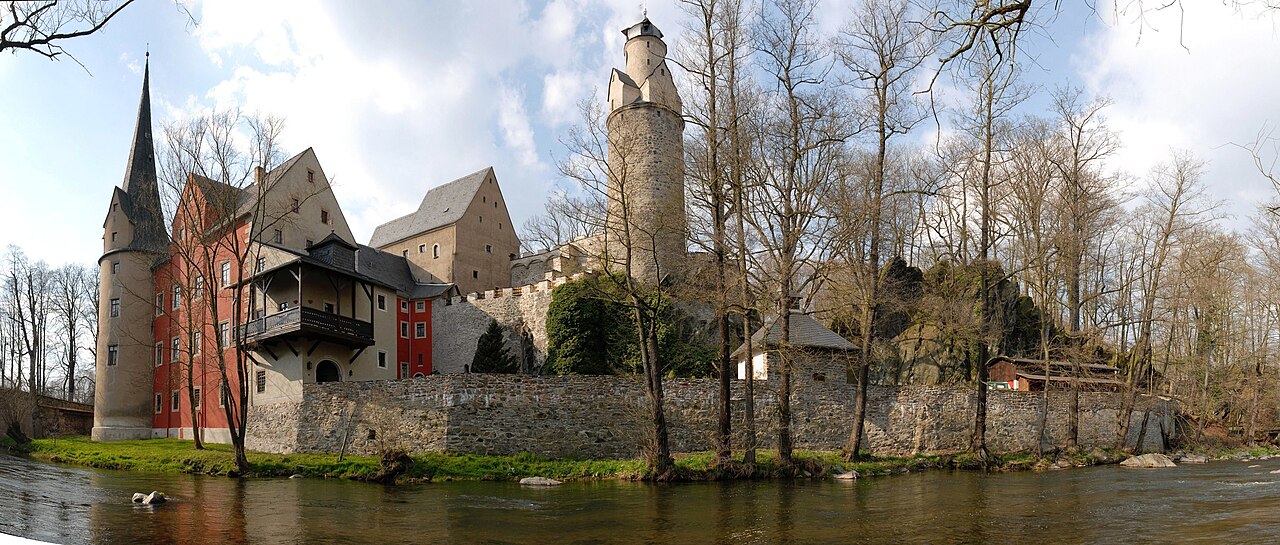
Isenburg Castle Ruins
Isenburg Castle ruins are perched high above the valley of the Zwickauer Mulde near Hartenstein, Germany. This high medieval spur castle dates back to the 12th century, as confirmed by archaeological finds, though its detailed history remains largely undocumented. The castle's strategic location on a rocky spur provided natural defense advantages, typical of medieval fortifications designed to control important river valleys and trade routes.
The origins and historical context of Isenburg Castle
Isenburg was constructed during the high medieval period, a time when numerous castles were built across the German lands to assert territorial control and protect against rival nobles and external threats. While no contemporary written records survive to detail the castle's founders or its role, archaeological evidence and later oral traditions provide clues about its significance. The castle was likely established by a local noble family seeking to dominate the surrounding region and control passage along the Zwickauer Mulde river.
The castle's name, Isenburg, is believed to derive from the German word for iron (eisen), reflecting either the strength of its fortifications or its association with robber barons, as local oral tradition suggests. The first known written reference to the castle dates to 1738, long after its destruction, when it was described as a "robber castle" or "robber baron stronghold" (Raubritterburg), indicating its reputation in regional folklore.
Architectural features and layout of the spur castle
Isenburg was a classic example of a spur castle, built on a narrow ridge or spur of a hill, which provided natural defenses on multiple sides. The castle's remains show typical medieval defensive elements, including stone curtain walls that once enclosed the inner ward, remnants of a gatehouse, and traces of towers that would have provided vantage points for surveillance and defense.
The castle's position above the valley allowed defenders to monitor and control traffic along the river and surrounding roads. The terrain limited the size of the castle, which was likely compact but efficiently designed for defense. The use of local stone in construction contributed to the castle's durability, though much of the masonry was later dismantled.
Destruction and subsequent use of the ruins
Isenburg Castle was destroyed by the 14th century under circumstances that remain unclear due to the absence of contemporary records. Theories range from military siege to deliberate demolition during regional conflicts or feuds common in the medieval period. After its destruction, the castle was never rebuilt as a noble residence or fortress.
Despite its ruinous state, the castle's remnants served a practical purpose for local inhabitants. From the 15th to 17th centuries, villagers used the ruins as a refuge during times of unrest, such as peasant uprisings or military incursions. This adaptive reuse highlights the continuing strategic value of the site even after its original function had ended.
In the mid-18th century, around 1750, much of the remaining stonework was quarried to provide building materials for the construction of the stone church in Wildbach. This recycling of castle masonry was common in the region, contributing to the gradual disappearance of many medieval fortresses.
Visiting Isenburg Castle ruins today
The ruins of Isenburg Castle are accessible primarily by foot, offering visitors a scenic and historically rich hiking experience. The recommended route begins at Hartenstein railway station, approximately a 30-minute walk from the site. Just 200 meters from the station lies Stein Castle, another historic site, before the path crosses the Zwickauer Mulde river near Schloss Wolfsbrunn.
From there, the trail leads through the Poppenwald forest, running upstream alongside the river. Visitors encounter a steep climb known locally as "Sanfter Heinrich" ("Gentle Henry"), after which the path forks. Taking the right fork leads past the Wildbach Church on an easy forest trail, with signs directing hikers to the ruins about 700 meters further on.
The left fork offers a more adventurous route called the "Raubrittersteig" or "Robber Baron Climb," a narrow and romantic path along the riverbank. This trail is celebrated for its natural beauty and historical atmosphere, making it one of the most attractive walks in the Mulde Valley.
Isenburg's place in regional heritage and folklore
Though Isenburg Castle's historical record is sparse, its legacy endures through local legend and cultural memory. The castle's reputation as a "robber baron" stronghold reflects the turbulent medieval period in Saxony, when many castles were centers of feuding and banditry. This folklore adds a layer of intrigue to the ruins and attracts visitors interested in medieval history and mystery.
Today, the ruins are protected as a cultural monument, offering insight into medieval castle construction and the dynamics of territorial control in the high medieval era. The site also provides educational opportunities for archaeology and history enthusiasts, with ongoing interest in uncovering more about the castle's origins and role.
Frequently asked questions (FAQ)
- What is the historical significance of Isenburg Castle Ruins?
- Isenburg Castle Ruins, located in Hartenstein, Germany, dates back to the 13th century and was once a vital fortress for the Counts of Isenburg. It played a significant role in regional politics and military strategy during its time, reflecting the feudal system of the Middle Ages.
- When was Isenburg Castle built?
- The construction of Isenburg Castle began in the early 1200s, and it was completed in the subsequent decades. Over the centuries, it underwent several renovations and expansions, adapting to the changing needs of its inhabitants.
- What are the opening hours for visiting Isenburg Castle Ruins?
- Isenburg Castle Ruins are typically open to visitors from April to October, with specific hours varying by season. It’s best to check the official website or local tourist information for the most current opening times before your visit.
- Can I access the castle ruins with children?
- Yes, Isenburg Castle Ruins are accessible for families with children. While some areas may require careful navigation due to uneven terrain, the site is generally suitable for family visits, offering a great opportunity for exploration and learning.
- Is it possible to take guided tours of Isenburg Castle?
- Yes, guided tours are available at Isenburg Castle Ruins, providing visitors with in-depth historical context and architectural insights. These tours are usually led by knowledgeable guides who enhance the experience with stories and facts about the castle's past.
- What is the best time to visit Isenburg Castle Ruins?
- The best time to visit Isenburg Castle Ruins is during the late spring and early autumn months when the weather is pleasant, and the surrounding landscape is beautiful. This period also allows for enjoyable hiking and outdoor activities in the nearby area.
- Are there any nearby attractions to Isenburg Castle Ruins?
- Yes, there are several attractions near Isenburg Castle Ruins, including scenic hiking trails and other historic sites. Visitors can explore the charming town of Hartenstein and enjoy the natural beauty of the surrounding hills and forests.
- What are the ticket prices for entering Isenburg Castle Ruins?
- Entry to Isenburg Castle Ruins is typically free, although some special events or guided tours may have a small fee. It's advisable to check the official site or local tourist information for any updates on pricing.
- How do I get to Isenburg Castle Ruins?
- Isenburg Castle Ruins can be accessed by car, with parking available nearby, or via public transport from major cities in the region. Walking trails also lead to the castle, making it a pleasant hike for those who prefer a more adventurous approach.
Information
Loading map...
Visitor reviews
No reviews yet. Been here? Write the first review and help other travelers!
Write the first reviewVisited this castle? Share your experience
Your review helps other travelers and adds first-hand knowledge to our encyclopedia.