Insterburg Castle Ruins
Insterburg Castle ruins, located in the town of Chernyakhovsky in the Russian Federation, represent a significant relic of late medieval military architecture and the turbulent history of the Baltic region. Originally constructed by the Teutonic Knights in 1337, this fortress was strategically positioned on the high banks where the Angrapa and Inster rivers converge. Its primary purpose was to serve as a bastion on the eastern frontier of the Teutonic State, from which raids against Lithuania were launched and regional control was asserted. Today, although largely in ruins, the site preserves a compelling story of medieval warfare, political shifts, and architectural evolution.
Early foundation and strategic significance
The origins of the castle date back to 1311 when Teutonic mercenaries known as Landsknechts established a camp at this vital confluence of waterways. The decision to build a permanent stone fortress was made in 1337 under the auspices of the Teutonic Order, with construction largely completed by 1347. The castle was intended as the seat for a local commander or komtur, but persistent threats from neighboring Lithuanian forces forced a reorganization of its administrative role. Instead of serving as a commandery, it was managed by a procurator and became an important military base within the commandry of Königsburg.
Historical turmoil and military role
Insterburg Castle endured numerous assaults throughout its history, reflecting the volatile nature of the region. In 1376, it was sacked and burned by the Lithuanian Duke Skirgaila. Later, during the Prussian cities' war in 1457, the castle suffered another destructive fire. Despite this, the foundational masonry of large field stones survived, allowing for subsequent reconstruction efforts. The castle's military importance persisted through the centuries, as it also played a role during the Napoleonic Wars, serving as a hospital and supply center.
Notable historical figures and events
The castle's history is intertwined with several notable personalities. From 1643 to 1647, Maria Eleonora, sister of the Prussian Prince Elector George Wilhelm and widow of King Gustaw Adolf of Sweden, resided here after her exile from Sweden. In 1812, Napoleon Bonaparte stopped at the castle on his campaign to Russia, and in 1814, Elisabeth Alexeievna, wife of Tsar Alexander I, passed through. Additionally, the castle was the place of death and burial of Anchen von Tarau, a heroine of East Prussian folklore, in 1689.
Architectural features and layout
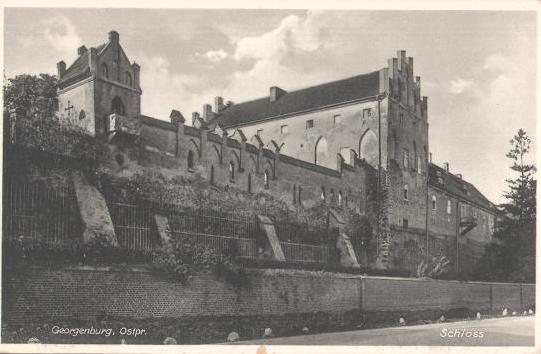
Insterburg Castle was originally constructed as a water castle, ingeniously utilizing the natural waterways of the Angerapp River and the Tchernouppa stream to form a protective moat around the fortress. This design provided a formidable defense on all sides. The castle's inner core, or citadel (Konventhaus), was a square, two-story structure with thick blind walls and narrow loopholes for archers. A central courtyard with a well supplied water to the inhabitants, crucial during sieges.
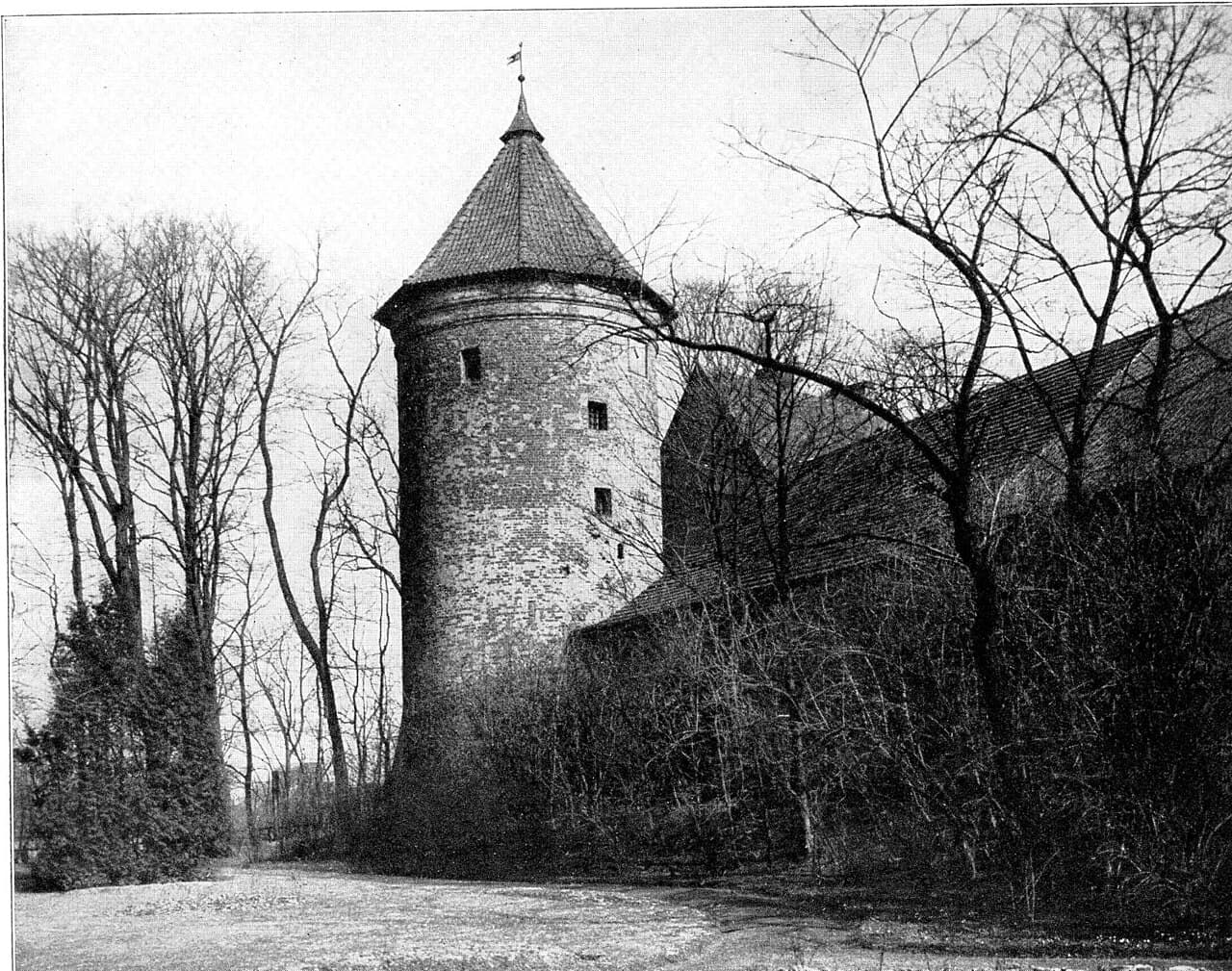
The citadel was crowned by a covered fighting gallery called a verand or "vergang," allowing defenders to move and fire weapons under shelter along the walls. The main entrance was a single arched gateway on the western wing. Surrounding the citadel was the Vorburg or outer bailey, an elongated enclosure fortified by angular defensive walls and two tall watchtowers equipped with loopholes for surveillance and defense.
In the early 16th century, the outer bailey was expanded with additional buildings along the inner walls to support the castle's administrative and military functions. By the 19th century, surviving structures included the citadel walls, several Vorburg buildings, and the distinctive Pein-Turm corner tower, which featured a clock installed during that period.
Decline, damage, and preservation efforts
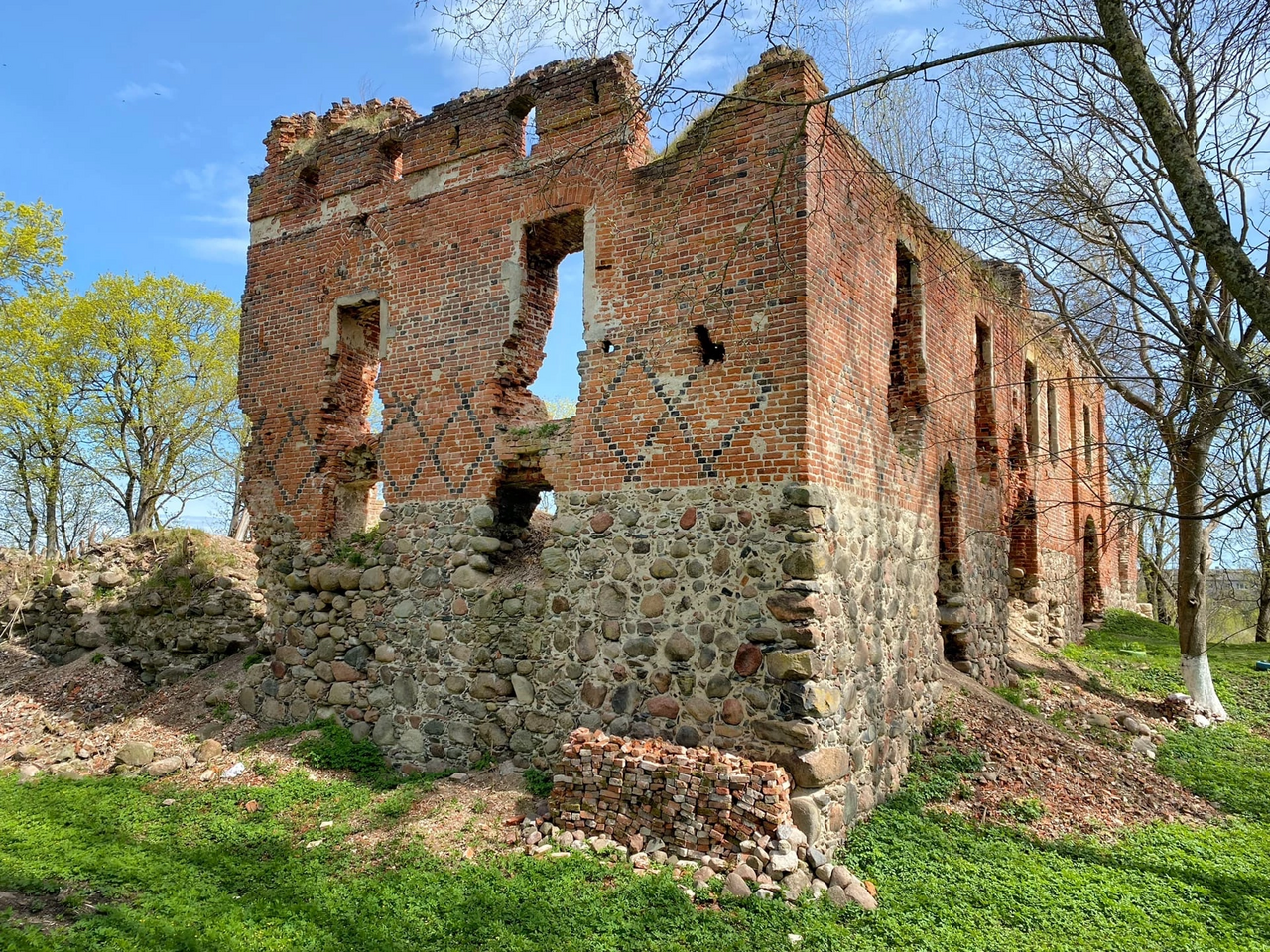
Over the centuries, Insterburg Castle underwent numerous changes in function and structure. It served as a court of law, military barracks, and hospital, which led to alterations that compromised its medieval character. The castle suffered heavy damage during the Soviet offensive in 1945, and a fire around 1949 further devastated the citadel, leaving only the outer walls intact. Postwar dismantling removed some parts for building materials, notably the western wing of the citadel and the Pein-Turm tower.
Today, the site remains a picturesque ruin in the center of Chernyakhovsky. The northern section of the castle's outer yard has survived and now houses a museum. The square in front of the museum hosts cultural events such as concerts and contests, keeping the castle's legacy alive in the community. Since the late 20th century, local enthusiasts have worked to conserve and research the site, although restoration efforts face challenges due to changes in ownership and funding.
Current condition and cultural significance
The castle is classified as a hill castle built in the late medieval period with a predominantly Gothic architectural style. Its condition is best described as ruins, with only partial structures remaining. Despite this, Insterburg Castle holds a significant place in the heritage of the region, symbolizing the complex history of the Teutonic Order, Prussian statehood, and the shifting geopolitical landscape of Eastern Europe.
Visitors to the site can explore the surviving walls and towers, gain insight into medieval fortification techniques, and participate in cultural events that enliven the historic atmosphere. The hope for eventual reconstruction persists among local residents, reflecting the enduring importance of Insterburg Castle as a cultural and historical landmark.
Frequently asked questions (FAQ)
- What is the historical significance of Insterburg Castle Ruins?
- Insterburg Castle, founded in the 14th century, played a vital role in the defense and administration of the region during the Teutonic Knights' expansion. The ruins reflect the rich history of the area, showcasing a blend of architectural styles influenced by various periods of occupation and conflict.
- When was Insterburg Castle built?
- The construction of Insterburg Castle began in 1336 and was completed in the following decades. It served as a stronghold for the Teutonic Knights and has since witnessed numerous historical events, making it a significant landmark in the region.
- Can I visit Insterburg Castle Ruins?
- Yes, visitors are welcome to explore the Insterburg Castle Ruins. The site provides a fascinating glimpse into medieval architecture and history, allowing guests to walk through the remnants of the castle and imagine its past.
- What are the opening hours for Insterburg Castle Ruins?
- Insterburg Castle Ruins are generally open to the public from 9 AM to 6 PM daily. However, it's advisable to check local listings or the official tourism website for any seasonal changes to these hours.
- Is it possible to access Insterburg Castle by public transport?
- Yes, Insterburg Castle is accessible via local public transport options, including buses that connect to Chernyakhovsky. Visitors can easily reach the ruins, making it a convenient destination for day trips.
- What is the best time to visit Insterburg Castle Ruins?
- The best time to visit Insterburg Castle Ruins is during the late spring and early autumn months when the weather is mild and pleasant. These seasons also provide an opportunity to enjoy the beautiful surrounding landscapes.
- Are there any nearby attractions to visit?
- Yes, the area around Insterburg Castle offers various attractions, including local museums and scenic parks. Visitors can also explore the charming town of Chernyakhovsky, which is rich in history and culture.
- What are the ticket prices for visiting Insterburg Castle Ruins?
- Entry to Insterburg Castle Ruins is typically free, but there may be nominal fees for guided tours or special events. It’s recommended to check for any updates on pricing before your visit.
- How do I get the most out of my visit to Insterburg Castle Ruins?
- To maximize your experience, consider taking a guided tour that provides insights into the castle's history and architecture. Additionally, bring a camera to capture the stunning views from the ruins and enjoy a picnic in the surrounding area.
Photo gallery

Photo by Kirchoff•Public domain
Information
Loading map...
Visitor reviews
No reviews yet. Been here? Write the first review and help other travelers!
Write the first reviewVisited this castle? Share your experience
Your review helps other travelers and adds first-hand knowledge to our encyclopedia.