Georgenburg Castle
Georgenburg Castle, situated in the town of Chernyakhovsk in modern-day Russia, stands as a remarkable testament to the medieval military and administrative prowess of the Teutonic Order. Founded in 1264 by the knight Hartmann von Grumbach, the castle was established on the site of the former Old Prussian settlement known as Kapzowin. Named after Saint George, the fortress played a pivotal role in the turbulent history of the Baltic region, serving as a defensive stronghold, administrative center, and later a renowned stud farm.
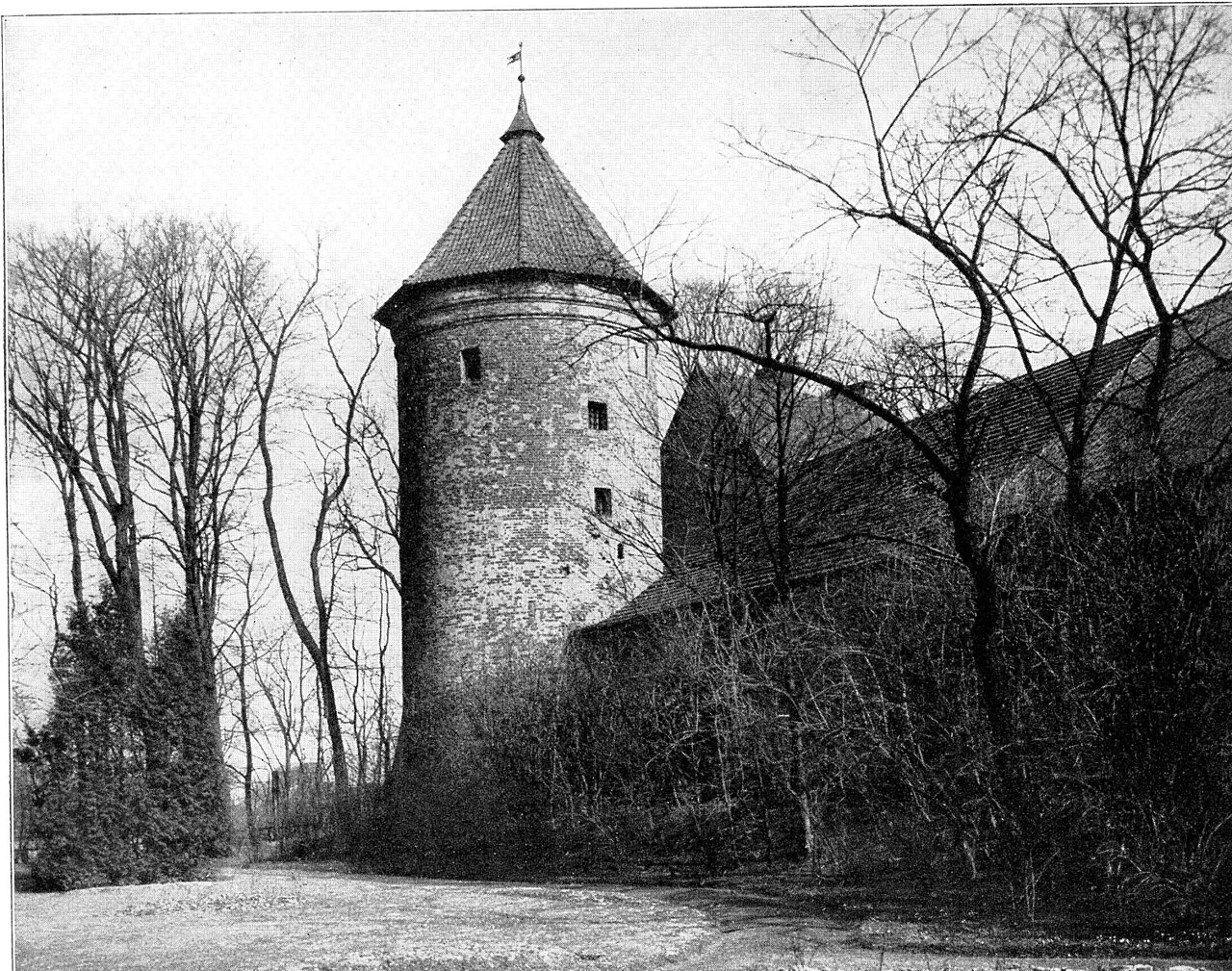
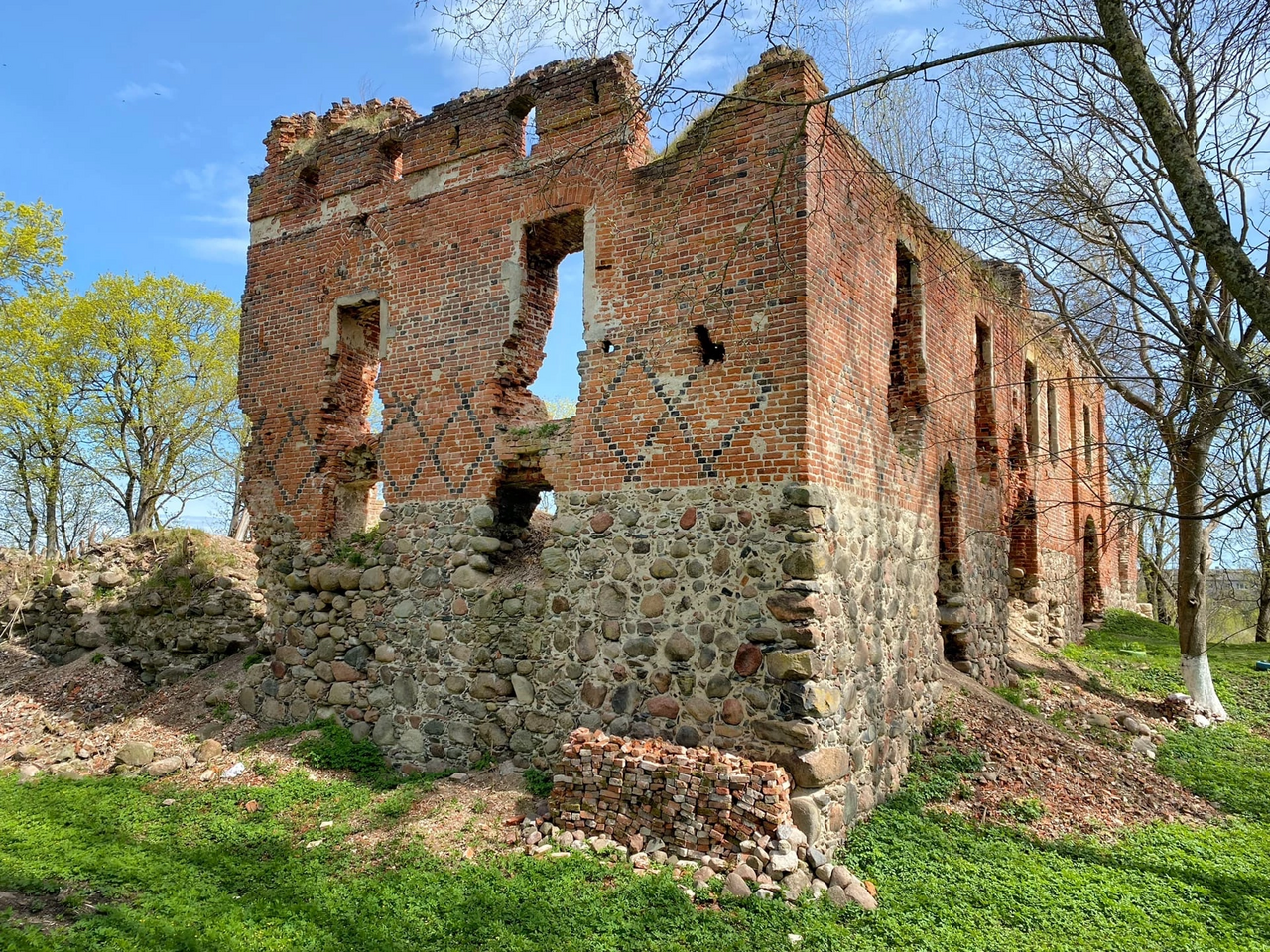
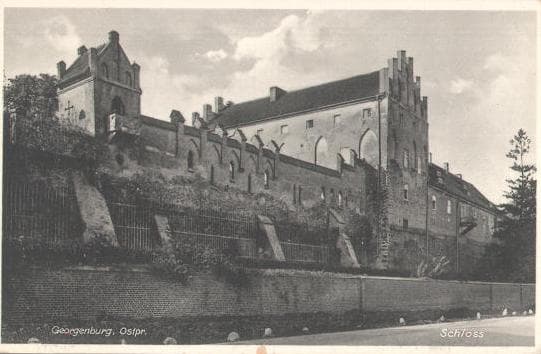
The castle’s initial fortifications, constructed in 1337, consisted of wooden and earthworks defenses, which were replaced by more enduring stone walls in 1351. This transition marked Georgenburg as a significant hill castle within the region, embodying the Gothic architectural style typical of the Teutonic Order’s military constructions. The castle’s layout features a nearly square citadel measuring approximately 40 by 44 meters, built primarily from fieldstone and brick. This citadel enclosed a central courtyard and was complemented by a larger western foreburg, which housed the economic and logistical facilities necessary for the castle’s operation.
Historical significance and military role
Throughout its history, Georgenburg Castle was a focal point of military activity and regional power struggles. After the division of land in 1352 between the Teutonic Order and the Bishop of Samland, the castle came under the bishop’s control until 1525. During this period, it endured several attacks, notably being burned twice by Lithuanian forces in 1364 and 1376, and captured by Vytautas, Grand Duke of Lithuania, in 1403. The castle also suffered damage from Tatar raids in 1657 and was occupied by Swedish troops under General Gustav Horn in 1679.
Following the secularization of the Teutonic Order’s territories in 1525, the castle’s function shifted from a purely military fortress to an administrative hub. It became the seat of a kammeramt, a government office responsible for managing state domains. This transformation reflects the broader political and social changes in the region during the Late Medieval and Renaissance periods.
Transition to stud farm and estate development
By the early 18th century, Georgenburg Castle had evolved into a significant agricultural estate. Leased to private tenants such as the von Keudel family in 1709, the estate developed horse breeding activities that would later gain international recognition. The castle’s stud farm became especially prominent under the ownership of William Simpson, a Scottish breeder who contributed to the development of the Trakehner horse breed.
The estate expanded further in the 19th and early 20th centuries, incorporating the Gudwallen stud in 1929. Facilities included a landscaped park, stables, workers’ housing, and a chapel dedicated to Saint George. The presence of a sophisticated water supply system and ornamental fountains highlighted the estate’s blend of functionality and aesthetic appeal.
Modern history and restoration efforts
After World War II, the castle and stud farm were repurposed by Soviet authorities as a camp for German prisoners of war from 1945 to 1949. Approximately 250,000 prisoners passed through, with an estimated 16,000 deaths recorded. Subsequently, the site served various roles, including a prison and an infectious diseases hospital. The nearby cemetery and church remained until around 1960.
By the 1990s, Georgenburg Castle was in a state of serious disrepair. Plans to convert it into a cultural and entertainment complex began in the mid-1990s under a lease to the Russian Insurance Bank, accompanied by archaeological excavations that were unfortunately halted due to the financial crisis of 1997–1998. In 2010, ownership transferred to the Russian Orthodox Church, which initiated restoration and cultural revitalization efforts, including hosting a symphony orchestra concert in 2017.
Since 2024, comprehensive restoration work has been underway, focusing on rebuilding the castle’s walls and reinforcing its foundations, with completion targeted for 2026. The castle’s designation as a regional cultural heritage site since 2007 underscores its importance as one of the best-preserved medieval castles in the Kaliningrad region, alongside Tapiau and Waldau.
Architectural features and castle layout
The citadel and foreburg
The castle complex consists of two main parts: the citadel and the larger western foreburg. The citadel is a nearly square enclosure built of fieldstone and brick, characteristic of Gothic architecture. It encloses a central courtyard and once contained the main administrative and residential buildings.
The foreburg served as the economic heart of the estate, containing stables, warehouses, barracks, and auxiliary buildings essential for the castle’s daily functions. While much of the foreburg has not survived intact, archaeological excavations have revealed the foundations and layout of these structures.
Religious and landscape elements
The castle’s chapel, dedicated to Saint George, highlights the religious significance attached to the site from its inception. The surrounding estate included a landscaped park and water management features such as fountains and a water supply system, demonstrating the integration of utility and aesthetics in the castle’s design.
Cultural and heritage significance
Georgenburg Castle is not only a monument to medieval military architecture but also a symbol of the region’s complex history, reflecting the shifts from Teutonic military dominance to Prussian state administration and later Soviet-era transformations. Its ongoing restoration and cultural programming aim to preserve this heritage and promote public engagement with the castle’s multifaceted past.
Frequently asked questions (FAQ)
- How do I visit Georgenburg Castle?
- Georgenburg Castle is located in Chernyakhovsk, Kaliningrad Oblast, Russia. Visitors should check seasonal opening hours and ticket prices on official websites or local tourism offices before planning their visit.
- What is the historical significance of Georgenburg Castle?
- Georgenburg Castle was founded in 1264 by the Teutonic Order and served as a military fortress, administrative center, and later a stud farm, playing a key role in the Baltic region's history.
- When was Georgenburg Castle built and what architectural style does it represent?
- The castle was originally established in 1264 with major stone fortifications built in 1351, showcasing Gothic architectural features typical of the Teutonic Order’s constructions.
- Is Georgenburg Castle accessible for visitors with mobility issues?
- The castle’s partially restored state and historic layout may present challenges for visitors with mobility issues. It is advisable to contact the site management for specific accessibility information.
- What are the best times to visit Georgenburg Castle?
- The castle is best visited during the warmer months when restoration work allows public access and cultural events are held. Checking local event calendars can enhance the visitor experience.
- Are there any cultural events held at Georgenburg Castle?
- Yes, since 2010, the Russian Orthodox Church has organized cultural events at the castle, including concerts such as a symphony orchestra performance in 2017.
Photo gallery

Photo by Sendker•Public domain
Information
Opening hours
Seasonal, check local listings
Ticket prices
Varies, check official sources
Current owner
Russian Orthodox Church
Loading map...
Visitor reviews
No reviews yet. Been here? Write the first review and help other travelers!
Write the first reviewVisited this castle? Share your experience
Your review helps other travelers and adds first-hand knowledge to our encyclopedia.