Taplacken Castle
Taplacken Castle is a historic fortress located in Talpaki, Kaliningrad Oblast, Russia. Founded in the 14th century by the Teutonic Order, this castle exemplifies the military and administrative strategies of the Order during their territorial expansion in the Baltic region. Originally constructed as a wooden fortification in 1336 under the command of Heinrich Dusemer von Arfberg, the castle was strategically positioned near the Prussian village of Taplacken to assert control over the surrounding lands.
Medieval origins and teutonic military architecture
The initial fortress was built using typical early medieval defensive materials—wood and earthworks—which were common before the widespread adoption of stone in castle construction. This early structure served as a military outpost during the Order's campaigns against Baltic tribes. In 1376, the castle was destroyed by Lithuanian forces led by Prince Kėstutis, reflecting the turbulent conflicts between the Teutonic Order and neighboring powers. The reconstruction in 1379 marked a significant architectural shift, as the castle was rebuilt in stone, enhancing its defensive capabilities and durability.
Layout and fortifications
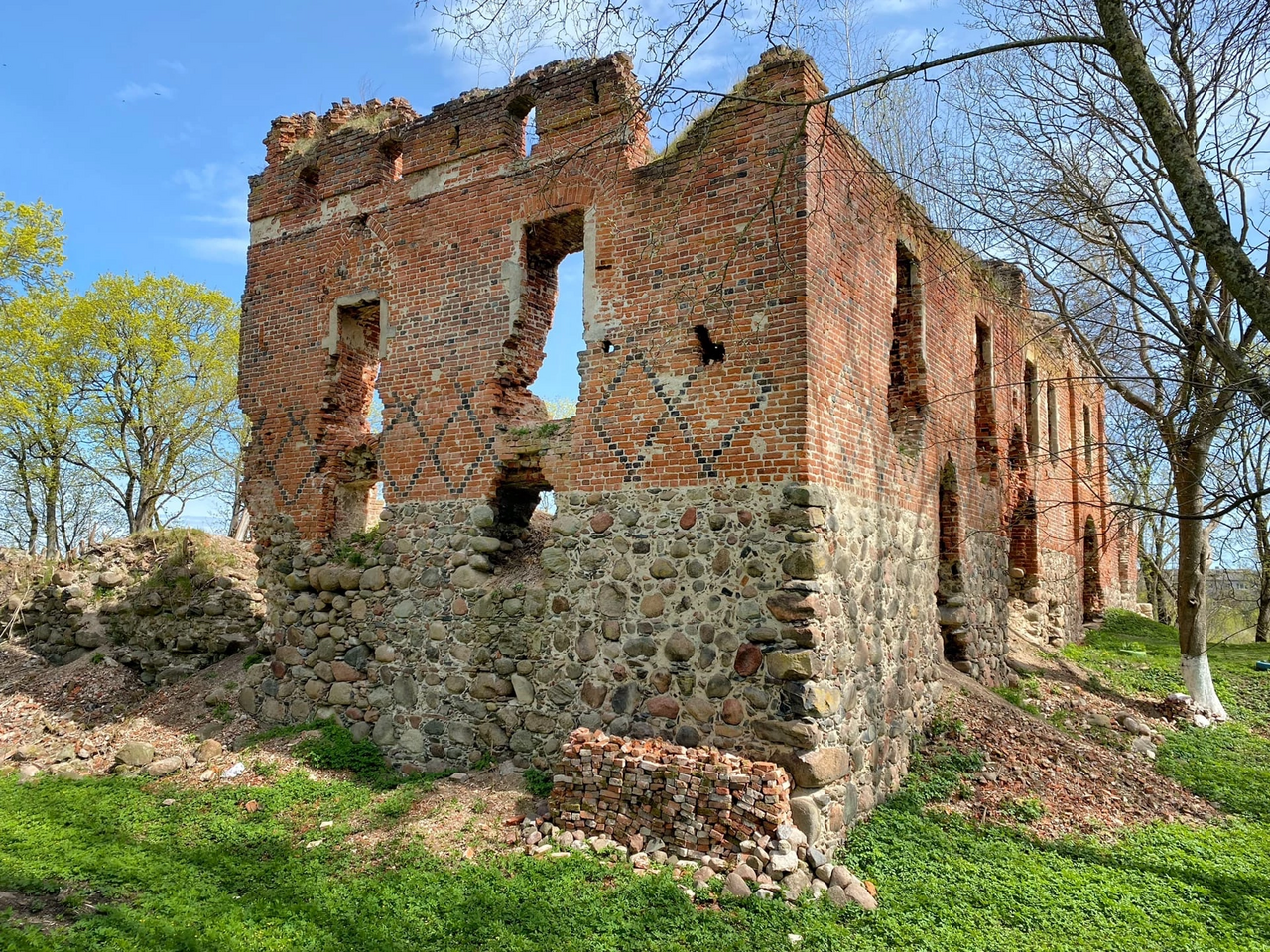
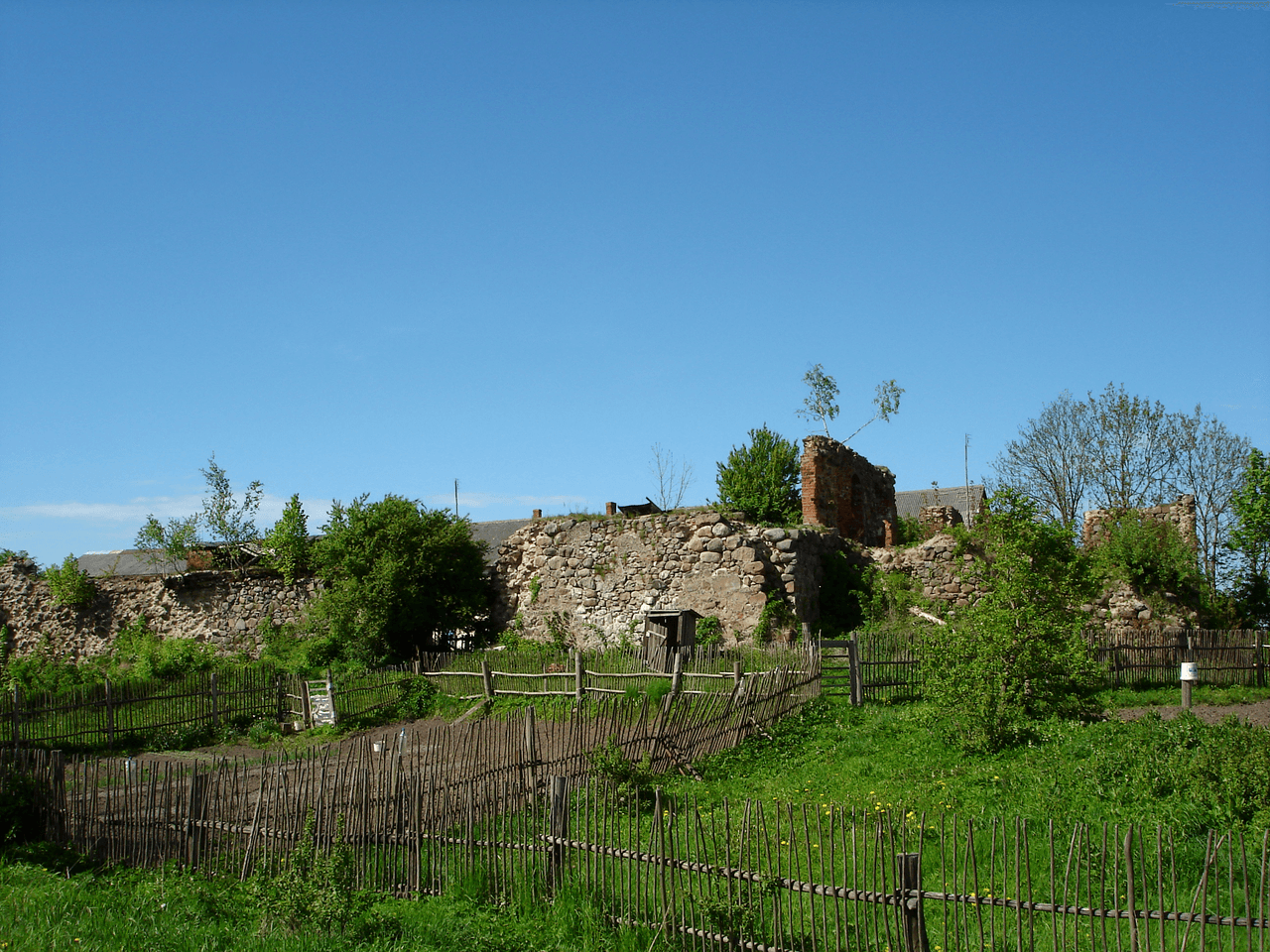
Taplacken Castle features a roughly square courtyard enclosed by a fieldstone ring wall, remnants of which still define the castle's core perimeter. Small defensive towers once stood at the southern corners of the enclosure, with the base of the southeastern tower still visible today. The castle’s location on a narrow strip of land surrounded by marshy terrain influenced its design, particularly the absence of traditional underground cellars due to the wet ground conditions.
Transition to ducal estate and architectural evolution
Following the secularization of the Teutonic State in 1525, Taplacken Castle was transformed into a ducal estate within the newly formed Duchy of Prussia. Between 1525 and 1530, the fortress underwent remodeling to serve as a noble residence rather than solely a military stronghold. This included the construction of a three-story residential wing with a basement on the western side and the addition of a chapel on the northern side, which introduced religious functions to the castle complex.
Administrative role and later history
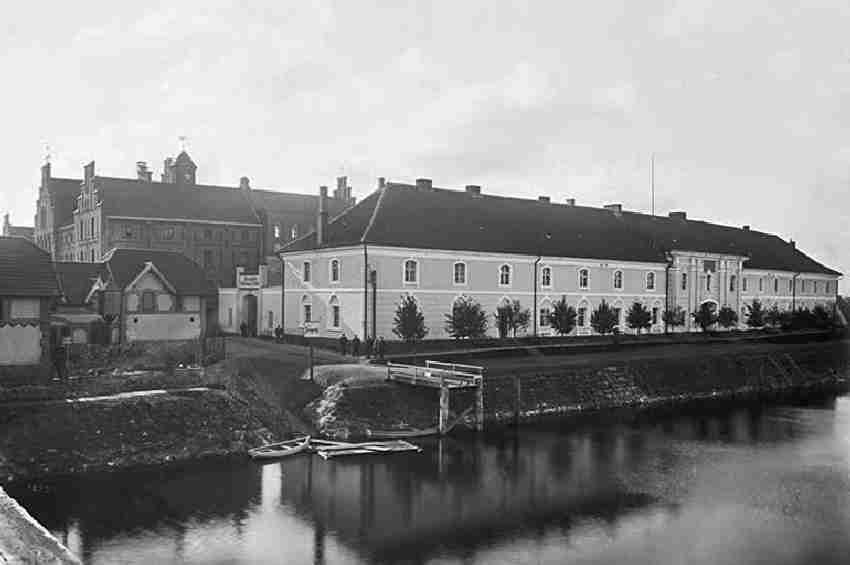
By the late medieval period, Taplacken had become an administrative center known as a kammeramt, overseeing local governance and resource management for the Teutonic Order. In the 18th century, it continued to serve as an administrative district center, reflecting its sustained importance in regional affairs. However, by the 19th century, the castle's military significance had diminished, and it functioned primarily as a rural estate.
Damage, preservation, and modern ownership
During the final months of World War II, the castle suffered damage and partial destruction, particularly to its main building. In 1946, Soviet settlers occupied the northern wing, repurposing parts of the castle for their use. The site was officially recognized as a regional cultural heritage monument in 2007, underscoring its historical and architectural value. In 2012, ownership transferred to the Russian Orthodox Church, marking a new phase in the castle’s long history.
Surviving structures and architectural features
The castle's surviving elements include the ring wall enclosing the courtyard, the northern residential wing with its three-story structure and basement, and the chapel. While most of the defensive towers have not survived, the base of the southeastern tower remains visible. Additionally, a western economic building, likely from a post-medieval period, still stands and is habitable, indicating the estate's continued adaptation over centuries.
Architectural significance and regional context
Taplacken Castle represents a typical example of a hill castle built by the Teutonic Order during the late medieval period. Its evolution from a wooden fortification to a stone administrative and residential complex illustrates broader trends in castle architecture and political changes in the Baltic region. The castle’s adaptation to its marshy environment and its transition from military to noble functions reflect the shifting priorities of its owners over time.
Today, Taplacken Castle stands as a partially preserved monument that offers valuable insights into the Teutonic Order's military strategies, medieval architectural practices, and the historical development of the Kaliningrad region. Its layered history, from a crusading fortress to a ducal estate and finally a cultural heritage site, makes it a significant landmark in Russian and Baltic medieval history.
Frequently asked questions (FAQ)
- When was Taplacken Castle originally built?
- Taplacken Castle was originally built in 1336 as a wooden fortification by the Teutonic Order under Heinrich Dusemer von Arfberg.
- What architectural style characterizes Taplacken Castle?
- The castle exhibits characteristics of late medieval military architecture with stone fortifications typical of Teutonic Order constructions.
- Can visitors see the chapel at Taplacken Castle?
- Yes, the chapel added during the early 16th-century remodeling is part of the surviving structures and can be viewed by visitors.
- What happened to Taplacken Castle during World War II?
- The castle sustained damage and partial destruction in 1945 during combat, especially to its main building.
- Who owns Taplacken Castle today?
- Since 2012, Taplacken Castle has been owned by the Russian Orthodox Church.
Photo gallery

Information
Sources & official resources
Verify the information above using these authoritative references.
Loading map...
Visitor reviews
No reviews yet. Been here? Write the first review and help other travelers!
Write the first reviewVisited this castle? Share your experience
Your review helps other travelers and adds first-hand knowledge to our encyclopedia.